Cost of living impact UK spending 2026 is already changing how people shop, save, and decide what counts as “worth it.” If you run a business, that means your customers are being more careful, your sales cycles may take longer, and your pricing needs to make more sense than ever.
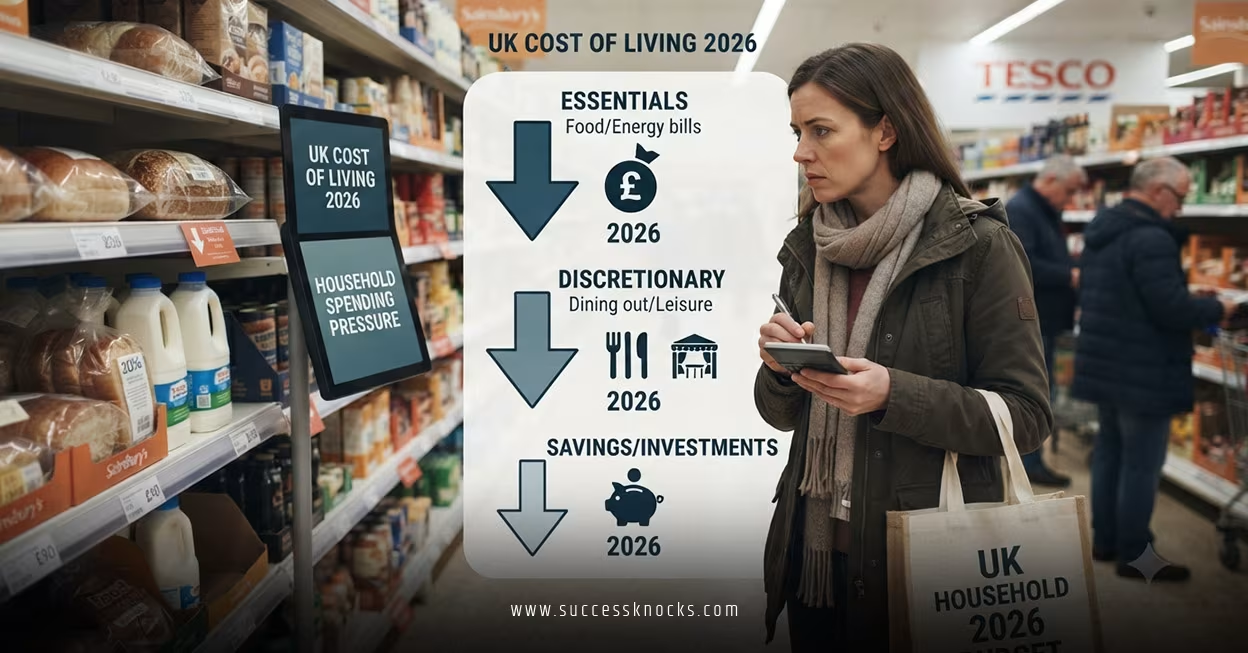
When household budgets get tighter, people do not simply stop spending. They shift spending toward essentials, look for smaller basket sizes, compare more prices, and delay purchases they can live without. The Bank of England has repeatedly warned that inflation and cost-of-living pressure can shape consumer behaviour, while the UK’s Office for National Statistics tracks how household spending patterns move as prices change[1][2]. In this article, we’re going to be taking a look at cost of living impact UK spending 2026, and how you can protect demand, keep trust, and make smarter choices for your business. If you would like to find out more, feel free to read on.
Pic – CC0 License
cost of living impact UK spending 2026: Why buyers are more cautious
The biggest change is simple: your customer is thinking harder before every purchase. That does not mean they are broke. It means they want clear value, less waste, and fewer surprises at checkout.
In the UK, this usually shows up in a few ways. Customers trade down to cheaper brands, wait for discounts, reduce impulse buys, and buy only when the need feels immediate. For small businesses, this can affect everything from footfall in physical stores to conversion rates online. If you sell premium products, the challenge is not just price. It is proving why your offer is still the better choice.
For entrepreneurs in the USA, AUS, Singapore, and Dubai, the lesson still applies. Cost pressures may look different in each market, but when living expenses rise, buyers everywhere become more selective. Your business should assume that value matters more than polish.
What this means for your pricing
This is where many owners get stuck. They either panic and cut prices too deeply, or they keep prices high without explaining the value. Neither approach works well for long.
A better move is to tighten your pricing story. Show what the customer gets, why it lasts, and how it saves money or time over the long run. If you sell services, make the result easy to understand. If you sell products, make the cost per use or the practical benefit obvious.
You do not need fancy language to do this. You need clarity. A simple price can still feel premium if the customer understands the outcome. That is especially important now, because people are comparing more options and reading more carefully before they buy.
cost of living impact UK spending 2026 and your sales strategy
The cost of living impact UK spending 2026 is also changing how sales happen. Short, direct sales messages are working better than long, vague ones. Customers want to know what the product solves, how fast it helps, and whether it is a sensible spend right now.
This is the point where trust becomes your biggest asset. Keep your message plain. Avoid overpromising. If your product is not the cheapest, explain why it is still the smarter buy. If you can reduce risk with samples, trials, guarantees, or flexible payment options, do it.
The best businesses are also watching category shifts closely. People may cut back on luxuries but spend more on convenience, repair, durability, and useful basics. That gives you room to adjust your offer without changing your whole business model.
How to keep customers buying
You do not need to chase every trend. You need to make it easier for customers to say yes.
Here are the simplest moves:
- Offer smaller entry-level options so people can try you without a big commitment.
- Bundle products in a way that feels like real savings, not a forced upsell.
- Improve repeat purchase value with subscriptions, refills, or loyalty perks.
- Make checkout fast and easy, because friction hurts more when budgets are tight.
- Use clear, plain-language offers so buyers do not have to work hard to understand you.
If you want a useful benchmark for consumer spending behaviour, the UK’s Office for National Statistics is one of the best places to track household trends over time[2]. For inflation context, the Bank of England’s coverage of UK inflation remains a strong reference point for business planning[1].
What smart owners should watch next
The cost of living impact UK spending 2026 is not just about lower spending. It is about changed spending. That means businesses that stay close to customers can still grow, even in a tighter market.
Watch for three signals. First, are customers buying less often? Second, are they choosing cheaper alternatives? Third, are they asking more questions before purchase? If the answer is yes, your messaging, pricing, and product mix need a reset.
You should also keep an eye on supply costs and wage pressure. If your own expenses are rising while customer budgets are under strain, your margin can disappear fast. That is why strong operators review pricing more often, test offers in smaller batches, and keep a close grip on cash flow. For a wider picture of UK economic conditions, the OECD’s economic outlook pages are useful for context[3].
We hope that you have found this article enlightening in some way. If you are running a business in 2026, the main takeaway is straightforward: people are still spending, but they are spending with more care. Your job is to meet them there with honest value, simple offers, and a business model that can handle slower, more selective buying.