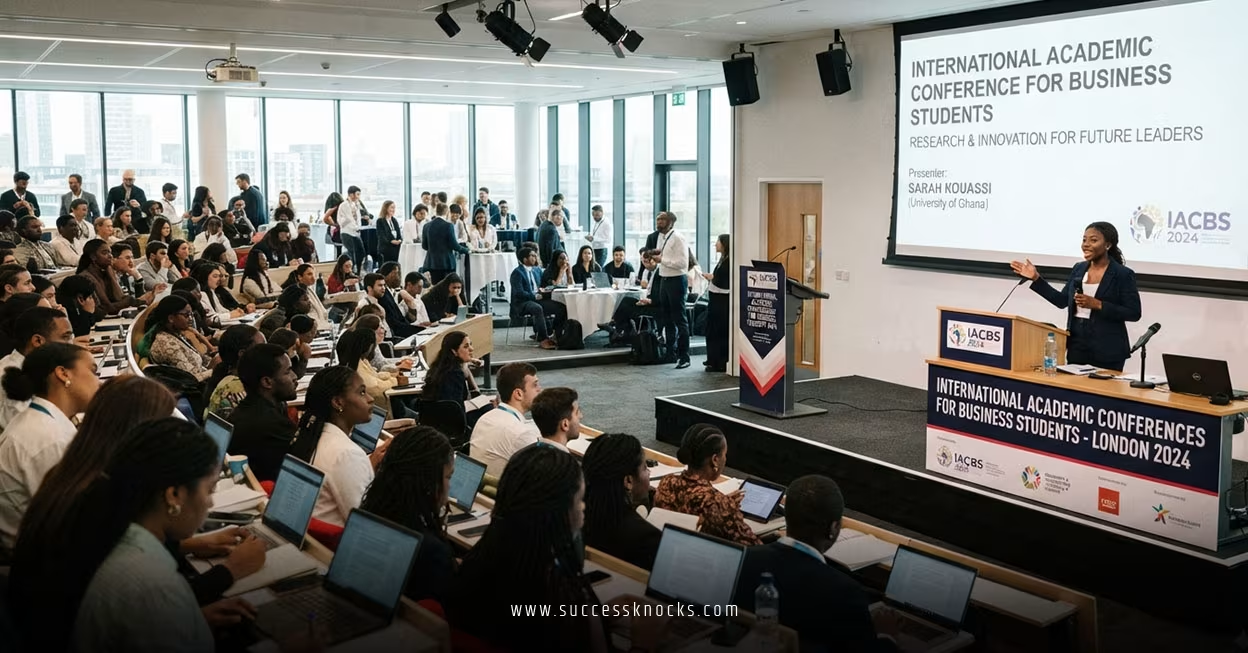
International academic conferences for business students are one of the most underused career accelerators in higher education — and most students don’t tap into them until it’s almost too late to matter on a CV.
Quick Overview — What This Guide Covers:
- 📌 What international academic conferences are and why they’re genuinely different from local seminars or campus events
- 🎯 Who should attend — from first-year undergrads to MBA candidates and early PhD researchers
- 🌏 How to find the right conference for your subject area, budget, and career stage
- 📄 What the paper submission process looks like — and how to avoid the mistakes that get abstracts rejected
- 🔗 A direct recommendation for US-based students looking for an accessible, structured entry point into international business publishing in 2026
Why International Academic Conferences for Business Students Actually Matter
Let’s be direct. A lot of students go through four-year business degrees and never set foot inside a real academic conference. They graduate, put “strong communication skills” on a LinkedIn profile, and wonder why they’re not standing out.
Here’s the thing — international academic conferences aren’t just networking events with nicer lanyards. They’re credentialing opportunities. Publishing in conference proceedings is a tangible, verifiable line on a CV that says: my research was peer-reviewed, accepted, and presented on an international stage.
That matters to graduate school admissions committees. It matters to employers who want evidence of original thinking. And it matters to academic supervisors looking for research collaborators.
Think of it this way: a business degree is the ticket into the stadium. A peer-reviewed conference presentation is proof you actually played on the field.
What Exactly Is an International Academic Conference?
At its core, an international academic conference is a structured event where researchers, students, academics, and industry professionals gather — in person or virtually — to present original work, exchange ideas, and push the boundaries of a field forward.
For business students specifically, conferences typically span disciplines like:
- Leadership and organizational management
- Entrepreneurship and innovation
- Finance, economics, and accounting
- Marketing, digital business, and e-commerce
- Supply chain, operations, and logistics
- Sustainability, governance, and corporate ethics
Most reputable international conferences operate on a call for papers (CFP) model. You submit an abstract or full paper. It goes through peer review. If it meets the academic standard, you get accepted and present your findings to a live audience of peers.
That process — submit, review, revise, present — is the foundation of how academic knowledge is built, shared, and validated globally.
International Academic Conferences for Business Students: Who Should Actually Go?
Not every conference is right for every student. Here’s a practical breakdown:
| Student Profile | Best Conference Type | Primary Goal | Budget Range (USD) |
|---|---|---|---|
| Undergraduate (Year 2–4) | Open-submission international forums (e.g., ICLEBM) | First publication + CV building | $150–$300 |
| MBA Candidate | Applied research & practitioner-focused conferences | Industry networking + applied insights | $300–$700 |
| Master’s Researcher | Mid-tier peer-reviewed academic conferences | Thesis-aligned publication + mentorship | $250–$500 |
| Early PhD Student | Discipline-specific ranked conferences (e.g., AOM) | Research visibility + committee connections | $500–$1,200+ |
| Industry Professional (Returning to Study) | Cross-disciplinary open forums | Publishing applied research, global exposure | $200–$400 |
The Real Benefits — Not the Brochure Version
University career offices love listing “networking” as a benefit of conferences. That’s technically true but practically useless without specifics. Let’s get specific.
1. Peer Review Is Your First Real Quality Test
Submitting a paper to a conference forces you to write research that holds up under scrutiny from people outside your department. That’s a completely different standard than an assignment marked by your own professor.
According to the University at Albany’s graduate studies program, PhD students specifically cite constructive peer feedback as the primary reason conference participation improves their research quality over time. The same principle applies to undergrads and master’s students.
2. International Exposure Opens Doors That Local Events Can’t
A US-based business student who presents at a conference in Melbourne, Australia — or connects virtually with researchers from Southeast Asia and Europe — gains a genuinely different credential than someone who only attends local industry mixers.
The Asia-Pacific region, in particular, represents one of the fastest-growing research and innovation ecosystems globally. Getting exposure to those academic networks early creates optionality: future collaborations, co-authorship opportunities, and international program applications.
3. Published Proceedings Are a Tangible Output
Conference proceedings are published records. They show up in searches. They’re citable. For a student applying to a PhD program or competitive graduate school, one line reading “Peer-reviewed paper published in the proceedings of [International Conference], [City], [Year]” outweighs a dozen extracurricular club memberships.
4. You Learn What Real Research Looks Like in Practice
Classroom research and conference-quality research are not the same thing. Attending — even as a listener — exposes you to how researchers frame arguments, handle criticism, and present complex ideas to mixed audiences. That education doesn’t happen in a lecture hall.
How to Find the Right International Academic Conference for Business Students
The volume of conferences out there is staggering. The Conference Index lists over 2,000 international business conferences across 2025–2026 alone. So how do you filter signal from noise?
Use these criteria:
Scope alignment. Does the conference’s call for papers match your specific research topic? Don’t stretch your work to fit a conference — find the conference that genuinely fits your work.
Peer review process. A legitimate conference has a stated peer review process. If the website doesn’t mention how papers are evaluated, that’s a red flag.
Organizer credibility. Who’s running it? Look for a named organizing institution, an identifiable program committee, and a track record of previous editions. Transparency is everything.
Proceedings publication. Will your paper be published? In what format? Is it indexed anywhere? For CV purposes, a published proceedings paper beats an unpublished presentation every time.
Cost vs. value. Be honest about your budget. In-person attendance at a top-tier conference like the Academy of Management Annual Meeting is a career-defining experience — but at $700+ for non-members, it’s not always realistic for a first-year researcher. Accessible, well-organized alternatives exist.
International Academic Conferences for Business Students: Step-by-Step Action Plan for Beginners
If you’ve never attended an international academic conference before, this is your runway checklist.
Step 1 — Identify Your Research Focus
What’s the central argument or question in your work? Write it in one sentence. That sentence is the core of your abstract. If you can’t do this, your paper isn’t ready to submit yet.
Step 2 — Search for Relevant Conferences
Use resources like GlobalEDGE’s conference listings (hosted by Michigan State University) to find conferences matched to international business and management themes. Filter by date, location, and submission deadline.
Step 3 — Read the Full Call for Papers
Don’t skim the CFP. Read it in full. Note the topic tracks, paper length requirements, formatting guidelines, submission deadline, and notification date. Build a timeline backwards from the deadline.
Step 4 — Prepare and Submit Your Abstract First
Most conferences allow abstract-only submissions before requiring a full paper. Submit your abstract early. It’s a low-stakes test of whether your topic fits the conference’s scope — and if rejected, you still have time to pivot.
Step 5 — Format to Spec. Every Time.
Formatting errors are the fastest way to get a technically sound paper knocked back. Follow the formatting template precisely — margins, font size, citation style, column layout. No exceptions.
Step 6 — Plan for Virtual if In-Person Isn’t Feasible
The rise of hybrid conference formats means geography is no longer a barrier. Virtual attendance fees are consistently lower — often 30–40% less — and you still receive the certificate and published proceedings. For US-based students attending an Asia-Pacific conference, virtual is a completely legitimate option.
Step 7 — Prepare Your Presentation
A 10–15 minute research presentation is a specific skill. Practice it separately from writing the paper. Structure it as: problem → method → findings → implications. Anticipate two or three questions you might get asked, and have clear, confident answers ready.
Step 8 — Follow Up After the Conference
This is where most beginners drop the ball entirely. Within 48 hours of presenting, connect on LinkedIn with the people you spoke to or whose work intersected with yours. Send a one-line message referencing a specific conversation. That’s how conference contacts become long-term professional relationships.
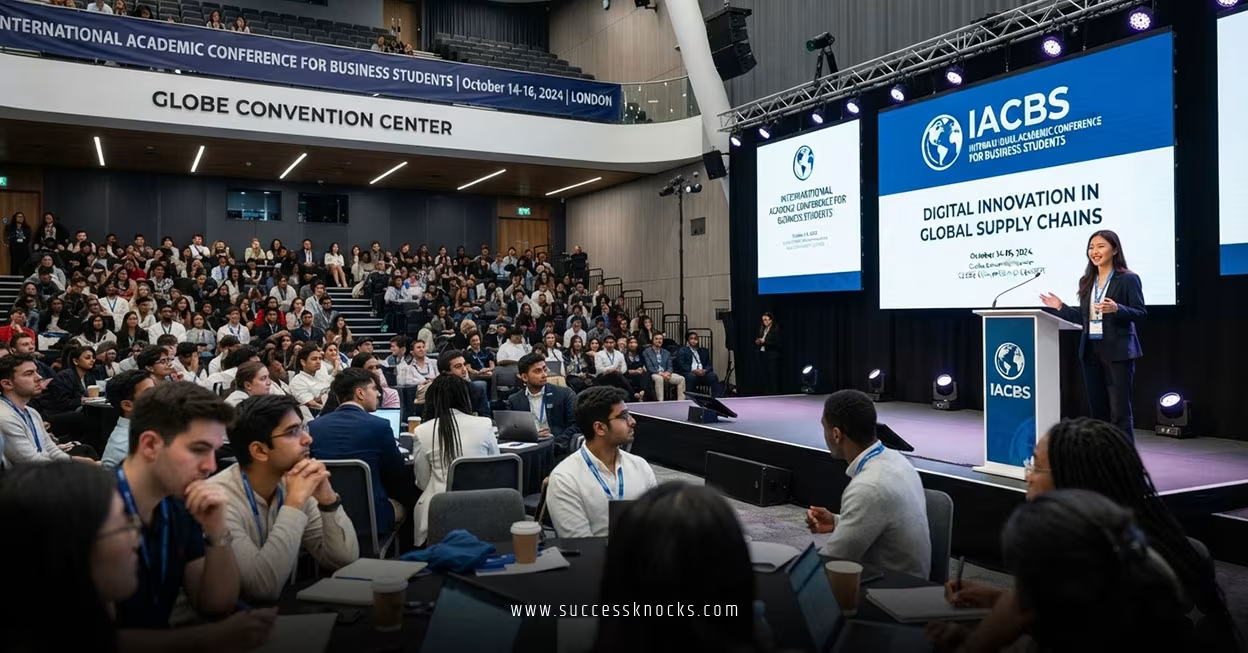
Common Mistakes Business Students Make With Conference Submissions (And How to Fix Them)
Mistake 1: Submitting to Conferences Without Checking the Scope
Sending an entrepreneurship paper to a conference focused on supply chain optimization is wasted effort. Reviewers reject out-of-scope papers fast.
Fix: Cross-reference your paper’s keywords against the conference’s listed topic tracks before submitting anything.
Mistake 2: Underestimating How Long the Paper Takes to Write
Most students assume they can write a conference-quality paper in a weekend. They’re wrong. A tight 6–8 page research paper with a clear methodology, literature review, and original contribution typically takes 4–6 weeks of serious work.
Fix: Start writing the moment you identify the conference. Don’t wait for the abstract deadline to begin the full paper.
Mistake 3: Ignoring the Abstract Word Limit
A 300-word abstract that runs 450 words signals to reviewers that the author doesn’t follow instructions. That’s not a minor flaw — it’s a credibility hit before a single research idea is even evaluated.
Fix: Write your abstract to exactly the specified word count. Edit ruthlessly. Every sentence should earn its place.
Mistake 4: Attending With No Goal in Mind
Showing up to a conference without a clear intention — whether that’s meeting three specific researchers, learning about a new methodology, or scoping future submission opportunities — is the academic equivalent of browsing a store with no shopping list. You’ll leave with nothing useful.
Fix: Before you register, write down three specific outcomes you want from attending. Treat it as a professional objective, not a field trip.
Mistake 5: Skipping the Virtual Option Because It Feels “Less Legitimate”
Virtual conference attendance carries the same proceedings publication, the same certificate, and in many cases the same networking access via breakout rooms and message boards. For students with tight travel budgets, skipping virtual attendance is leaving real value on the table.
Fix: If cost or logistics make in-person impossible, register virtually without hesitation. The credential is the same.
A Strong Starting Point: ICLEBM Melbourne 2026
For US-based business students who want a structured, accessible, and genuinely international first conference experience in 2026, the ICLEBM Melbourne Australia business conference 2026 is worth serious consideration.
Organized by LeadershipForum, ICLEBM covers leadership, entrepreneurship, and business management across a broad range of subtopics — from startup finance and digital marketing to corporate governance and organizational behavior. It’s open to students at bachelor’s, master’s, and PhD level, with dedicated fee categories for each.
The early bird speaker fee starts at USD $330 for in-person or USD $299 for virtual attendance. A student bachelor author registration begins at USD $250 early bird. The Melbourne location places you at the intersection of Asia-Pacific research networks and Western academic standards — a genuinely strategic geography for anyone researching global business, cross-cultural management, or international entrepreneurship.
For a first-time conference attendee, the combination of transparent pricing, inclusive scope, virtual access, and printed proceedings makes ICLEBM Melbourne one of the more practical on-ramps available in 2026.
Key Takeaways
- International academic conferences for business students are peer-reviewed, structured platforms for publishing, presenting, and building global professional networks — not just glorified seminars.
- The best conference for you depends on your academic level, research topic, budget, and career goal — there’s no single universal answer.
- Published conference proceedings are a tangible, citable credential that carry real weight on graduate school applications and early-career CVs.
- Virtual attendance is a fully legitimate option — especially for US-based students targeting Asia-Pacific events — and typically costs 30–40% less than in-person.
- Preparation is everything. A clearly scoped paper, formatted correctly, submitted to a topically aligned conference is worth five rushed submissions to random events.
- The follow-up after the conference — LinkedIn connections, brief follow-on emails, tracking collaborators — is where the long-term value actually lives.
- Resources like GlobalEDGE by Michigan State University are genuinely useful for finding reputable international business conferences by region and date.
- For students ready to take the leap in 2026, the ICLEBM Melbourne Australia business conference offers an accessible, organized, internationally attended entry point with transparent fees and a broad business management focus.
Your Next Move
The gap between business students who build strong international academic profiles and those who don’t isn’t talent. It’s action. Find one conference aligned with your current research, read the call for papers tonight, and draft your abstract this week.
The students who treat international conference participation as an investment — not a luxury — are the ones who show up to post-grad applications and job interviews with something nobody else in the room has: proof.
Frequently Asked Questions
Q1: How do I know if an international academic conference for business students is legitimate?
Check for a named organizing institution, a transparent peer review process, a published program committee, and evidence of previous editions. Legitimate conferences list their proceedings publicly and have verifiable contact information. If the website is vague about how papers are reviewed, investigate further before submitting.
Q2: Can undergraduates present at international academic business conferences, or are they only for PhD students?
Undergraduates absolutely can — and do — present at international academic conferences. Events like the ICLEBM Melbourne Australia business conference 2026 specifically offer student-category registrations for bachelor’s and master’s degree holders. Entry-level academic conferences are designed with emerging researchers in mind, not just senior academics.
Q3: Is virtual conference attendance worth it, or should I always aim to attend in person?
Virtual attendance is worth it when in-person isn’t feasible. You still receive the peer-reviewed publication, the certificate, and access to the conference program. In-person attendance adds richer networking and cultural exposure — particularly valuable at international events. But don’t skip a strong conference opportunity just because you can’t fly. A virtual proceedings credit is still a proceedings credit.