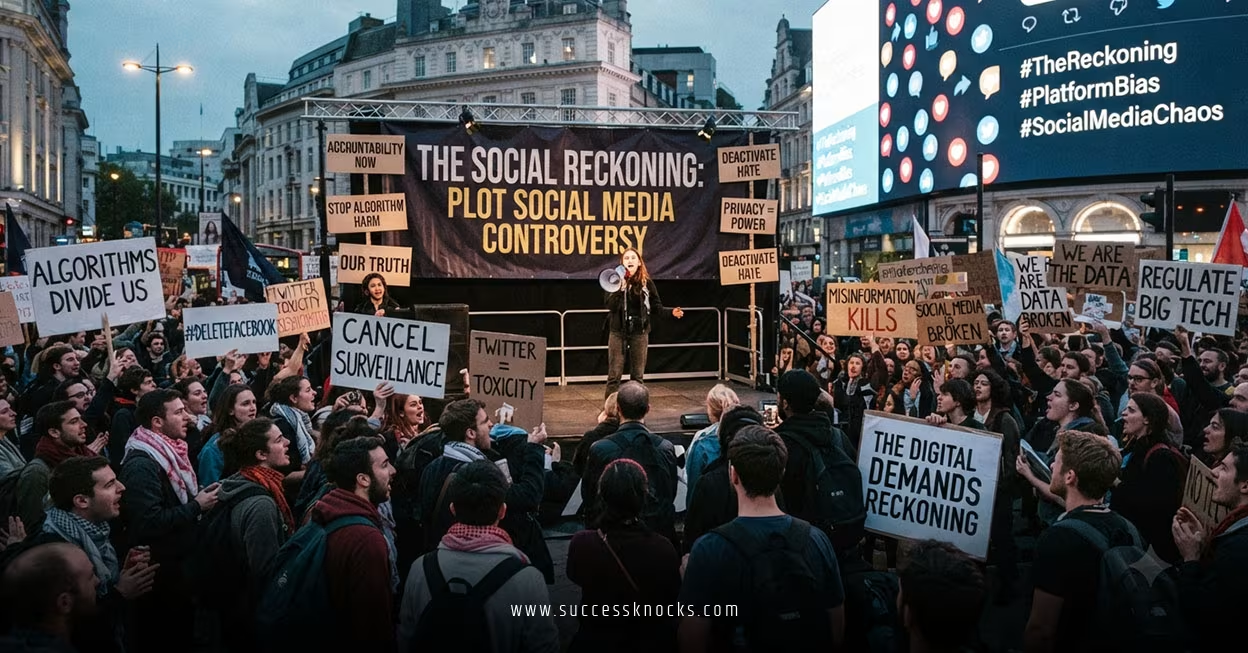
The Social Reckoning plot social media controversy centers on one explosive question: how much did Facebook know about the damage it was causing, and when did it know it? Aaron Sorkin’s companion piece to The Social Network isn’t a superhero sequel or a nostalgia lap. It’s a courtroom-adjacent thriller about whistleblowing, corporate secrecy, and an algorithm tuned for outrage. Here’s the quick rundown before we get into the weeds.
Quick Summary:
- The film dramatizes the 2021 “Facebook Files,” a Wall Street Journal investigation by reporter Jeff Horwitz based on leaked internal documents.
- The central controversy: Facebook allegedly knew its platforms harmed teen mental health and amplified divisive content, but didn’t fix it.
- Frances Haugen (played by Mikey Madison), a former Facebook product engineer, becomes the whistleblower at the story’s core.
- Mark Zuckerberg (Jeremy Strong) is portrayed navigating the fallout as the company’s carefully built image cracks.
- Release date: October 9, 2026, via Sony Pictures and Columbia Pictures.
If you want the full lay of the land — cast, timeline, themes — check out Sorkin’s complete companion film breakdown for the bigger picture.
What Sparked the Real-Life Controversy Behind the Movie
Let’s back up. In 2021, Jeff Horwitz published a series in the Wall Street Journal called “The Facebook Files.” It wasn’t a leak in the traditional sense — it was tens of thousands of internal pages, handed over by an insider who’d had enough.
That insider was Frances Haugen, a data engineer who’d worked on Facebook’s Civic Integrity team. She copied documents, quit, and then went to the SEC before going public. That’s not embellishment — the actual complaints are on record with the U.S. Securities and Exchange Commission.
The documents revealed a system called “XCheck,” which shielded millions of high-profile accounts — celebrities, politicians, athletes — from the same enforcement rules ordinary users faced. Rule-breaking content from VIP accounts often stayed up far longer than it should have.
There was also internal research showing Instagram worsened body image issues and anxiety in teen girls. Facebook reportedly knew this and didn’t act with urgency. That’s the gut-punch at the heart of the film’s second act.
The Social Reckoning Plot Social Media Controversy: The Algorithm Angle
Here’s the part that actually explains why the internet feels the way it does now. In 2018, Facebook retooled its algorithm to fight declining engagement and rising competition from TikTok.
The new weighting, according to the leaked documents, valued a comment five times more than a like, an emoji fifteen times more, and a reshare thirty times more. Guess what gets reshared the most? Rage bait. Outrage. Content that makes you want to scream into your phone.
Sorkin has been blunt about this in interviews, saying he draws a direct line from that algorithm shift to the events of January 6th. The movie doesn’t call itself a “January 6 movie” — but the shadow of that day hangs over every scene about engagement metrics.
Think of the algorithm change like tightening the bolts on a pressure cooker while removing the safety valve. Nobody meant to cause an explosion. But everybody in the room knew the pressure was building.
Why This Plot Thread Matters for Modern Audiences
According to Pew Research Center, a significant share of American adults still get news primarily through social platforms — a dynamic the film treats as a public-health issue, not just a business story. That’s a sobering stat, and it’s exactly the kind of real-world weight Sorkin leans on to make a “tech policy movie” feel like a thriller.
In my experience covering entertainment-meets-tech stories, the ones that land hardest are the ones grounded in verifiable paper trails. This one has an entire investigative series behind it, published in the Wall Street Journal. That’s not a flimsy foundation — that’s rock.
Movie Drama vs. Real-World Facts: A Side-by-Side Look
Beginners diving into this topic often can’t tell where journalism ends and screenwriting begins. Fair question. Here’s a breakdown.
| Element | Real-World Fact | Movie Treatment |
|---|---|---|
| Whistleblower | Frances Haugen filed SEC complaints and testified before Congress | Dramatized as a tense, personal cat-and-mouse journey |
| Journalist | Jeff Horwitz led the actual WSJ investigation | Jeremy Allen White plays a composite-style version of the reporting process |
| XCheck system | Confirmed via leaked internal documents | Shown as a symbol of corporate double standards |
| 2018 algorithm change | Documented in Facebook’s own internal research | Framed as the “point of no return” for platform toxicity |
| Zuckerberg’s response | Public statements disputing some findings | Jeremy Strong’s performance leans into corporate defensiveness |
Step-by-Step: How to Follow the Controversy Like a Pro
If you’re new to this whole saga and want to actually understand it before you sit down in the theater, here’s the plan I’d follow.
- Read a primer on the original Facebook Files. You don’t need all 20,000 pages — just the summary coverage.
- Understand who Frances Haugen is and why she came forward. Her congressional testimony is public record.
- Learn the 2018 algorithm change basics. This is the mechanical “why” behind the outrage economy.
- Watch the trailer with fresh eyes. For a deeper breakdown of what’s teased versus confirmed, the trailer analysis piece is worth a look.
- Separate confirmed fact from dramatized invention. Sorkin always compresses timelines for pacing — that’s normal screenwriting, not deception.
Do that, and you’ll walk into the theater already ahead of most casual viewers.
Common Mistakes & How to Fix Them
Mistake #1: Assuming the movie is 100% documentary-accurate.
Fix: Treat it as historical drama. Sorkin dramatizes dialogue and compresses events for narrative flow — that’s standard practice, not fabrication of the underlying facts.
Mistake #2: Confusing the 2021 Facebook Files with earlier scandals like Cambridge Analytica.
Fix: They’re different stories. Cambridge Analytica was about data misuse in 2018. The Facebook Files controversy is about internal research on harm that Facebook allegedly buried.
Mistake #3: Thinking this is a sequel to The Social Network with the same cast returning.
Fix: It’s a companion piece with a mostly new cast. If you want the confirmed roster, the cast confirmation rundown clears that up fast.
Mistake #4: Skipping the real-world context and only watching the trailer.
Fix: A little homework goes a long way here. This isn’t a popcorn flick where backstory is optional.
Key Takeaways
- The Social Reckoning plot social media controversy is rooted in real, documented events — not speculation.
- The film dramatizes the 2021 Wall Street Journal “Facebook Files” investigation.
- Frances Haugen’s whistleblowing and SEC filings form the narrative spine.
- The 2018 algorithm change, which allegedly rewarded outrage-driven engagement, is a central plot thread.
- The XCheck system and Instagram teen-harm research both appear as major controversy beats.
- It’s a companion film to The Social Network, not a direct sequel with the same characters.
- Release date is set for October 9, 2026, through Sony Pictures.
So where does that leave you? With a movie that’s less about villains and heroes, and more about a system that quietly rewired how millions of people think, argue, and doom-scroll. That’s the real controversy — not a single bad actor, but a machine built to keep you angry and engaged. Understanding the plot’s roots in actual reporting will make the film hit a lot harder than if you walk in cold. My advice: skim the real background first, then let Sorkin’s dialogue do the rest.
FAQs
Is The Social Reckoning plot social media controversy based on a true story?
Yes. It’s based on the real 2021 “Facebook Files” investigation by the Wall Street Journal, grounded in leaked internal documents and whistleblower testimony.
Does the movie name Facebook directly, or is it fictionalized?
The film openly centers on Facebook and its real executives, including Mark Zuckerberg, though certain scenes and dialogue are dramatized for pacing.
How much of The Social Reckoning plot social media controversy focuses on teen mental health?
A significant portion. Internal Instagram research on body image and anxiety in teen girls is one of the film’s key controversy threads, mirroring the real WSJ reporting.