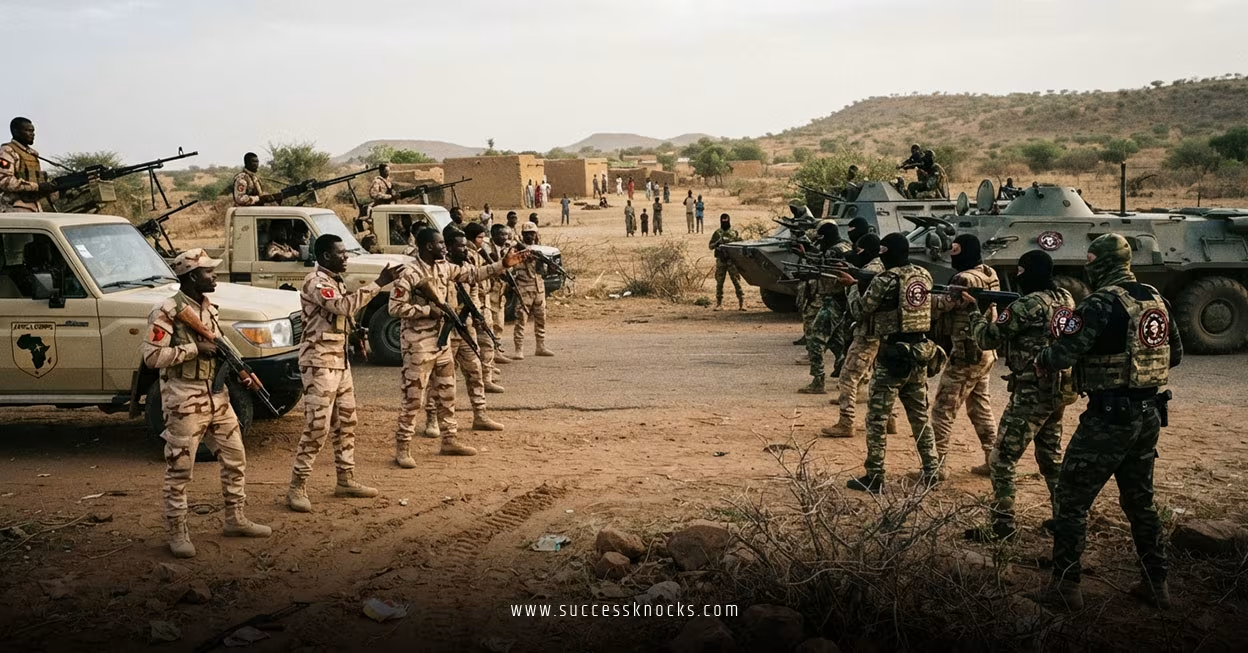
Africa Corps vs Wagner Group differences confuse a lot of people, and honestly, that confusion is exactly what the Kremlin wants. Same soldiers, same missions in some cases — but a completely different chain of command.
Here’s the quick breakdown before we dig into the weeds.
- Wagner Group operated as a private mercenary outfit under Yevgeny Prigozhin until his death in August 2023.
- Africa Corps is the state-controlled replacement, reporting directly to Russia’s Ministry of Defense and GRU military intelligence.
- Wagner ran on a mix of loyalty, cash, and Prigozhin’s personal network. Africa Corps runs on formal military structure.
- The rebrand shifted operational control from a private warlord to the Russian state itself.
- This distinction matters directly for understanding Russian military expansion at six Libyan airbases 2026, since Africa Corps personnel now staff most of those sites.
That’s the skeleton. Now let’s build out the body.
The Origin Story: How Wagner Became Africa Corps
Wagner didn’t die a natural death. It got absorbed.
Prigozhin built Wagner as a deniable arm of Russian foreign policy — mercenaries doing dirty work in Syria, Ukraine, and across Africa while Moscow shrugged and claimed no official involvement. That arrangement worked great until Prigozhin marched troops toward Moscow in June 2023.
Two months later, his plane went down. Convenient timing, if you ask most analysts.
The Kremlin didn’t waste time filling the void. By early 2024, Russia’s Ministry of Defense had folded most of Wagner’s African operations into a new structure called Africa Corps, placing it under a deputy defense minister and GRU oversight [1].
That’s the core shift. Deniability out. Direct state control in.
Why the Rebrand Actually Matters
Here’s the thing most casual coverage misses: this isn’t just a name change on a letterhead.
Wagner operated with plausible deniability — Moscow could claim, with a straight face, that mercenaries weren’t official policy. Africa Corps kills that excuse. It’s a state military formation, funded and directed through official channels [1].
Think of it like a contractor who used to work off the books suddenly getting hired full-time with a badge and a company truck. Same guy swinging the hammer, but now there’s a paper trail straight to the boss.
Africa Corps vs Wagner Group Differences: Side-by-Side Comparison
Numbers and structure tell the story better than adjectives do.
| Feature | Wagner Group | Africa Corps |
|---|---|---|
| Command structure | Private, loyal to Prigozhin | State-run, under Russian MoD and GRU |
| Funding source | Mixed private contracts, resource deals | Direct Russian state budget allocation |
| Legal accountability | Deniable, “not officially Russian” | Formally tied to the Russian government |
| Key regions | Libya, Mali, CAR, Sudan, Syria | Libya, Mali, Burkina Faso, expanding into Sahel |
| Leadership after 2023 | Collapsed following Prigozhin’s death | Absorbed most personnel and contracts |
| Role in Libyan air bases | Established initial presence pre-2023 | Currently staffing and expanding operations at six confirmed bases |
| Public transparency | Almost none | Slightly more visible due to formal state ties |
Notice the pattern. Everything that made Wagner useful to Moscow — the deniability, the “rogue mercenary” cover story — got traded away for tighter control and steadier funding.
Step-by-Step: How to Tell Wagner-Era Operations from Africa Corps Activity
If you’re reading news reports and trying to figure out which era a story belongs to, here’s what I’d check.
- Look at the date. Anything after mid-2024 involving Russian military contractors in Africa almost certainly falls under Africa Corps, not Wagner.
- Check who’s named as commanding. Wagner-era reports mention Prigozhin or his lieutenants. Africa Corps reports cite Russian Ministry of Defense officials or GRU-linked figures.
- Watch the funding language. Wagner often got paid in mining concessions and resource-extraction deals. Africa Corps increasingly ties back to formal Russian state budgets [2].
- Note the base locations. If a report discusses construction and personnel growth tied to Russian military expansion at six Libyan airbases 2026, that’s Africa Corps territory now, not legacy Wagner infrastructure.
- Cross-reference sanctions lists. The U.S. Treasury’s OFAC has issued designations distinguishing Wagner-linked entities from newer Africa Corps-connected individuals and companies [3].
Common Mistakes People Make (And How to Fix Them)
I’ve seen the same errors pop up again and again in casual analysis. Let’s clear them up.
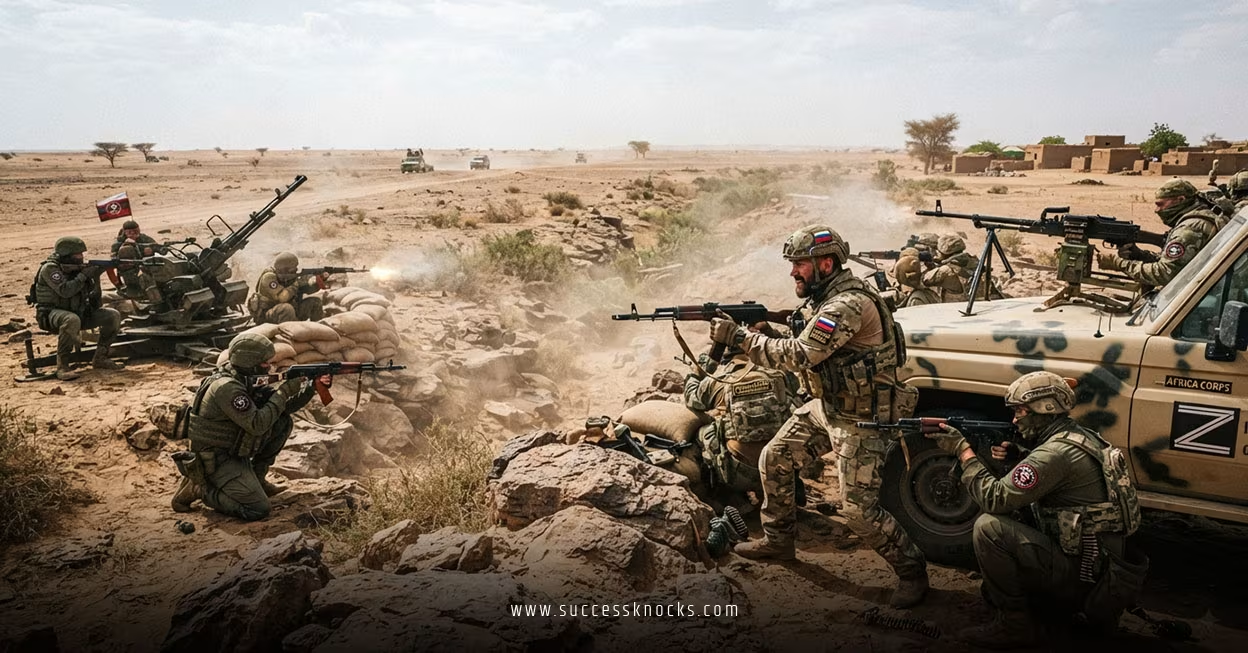
Mistake #1: Assuming Africa Corps is just “Wagner with a new logo.” Not accurate. The command structure fundamentally changed — this is a state military unit now, not a mercenary company with state backing.
Mistake #2: Believing every former Wagner fighter joined Africa Corps. Some didn’t. Reports indicate splits, with certain units resisting integration or drifting toward other private arrangements.
Mistake #3: Treating sanctions against Wagner as covering Africa Corps automatically. They don’t, necessarily. Governments have had to issue new, specific designations as the organizational picture shifted [3].
Mistake #4: Ignoring how this rebrand affects legal accountability. Because Africa Corps ties directly to Russian state structures, host countries and international bodies have a clearer target for diplomatic pressure — something Wagner’s ambiguous status deliberately avoided.
What This Means Practically for Libya and the Sahel
In my experience tracking these shifts, organizational rebrands like this usually signal one thing: the parent government wants more control, not less.
Wagner had autonomy. It negotiated its own deals, sometimes at odds with official Kremlin interests. Africa Corps doesn’t get that luxury — it answers up the chain, which means Moscow now directs operations at places like Al-Jufra and Tamanhint with far more precision than before.
Is that better or worse for regional stability? Depends who you ask. A state-controlled force is more predictable, sure, but predictability isn’t the same as restraint.
What’s clear is this: understanding Africa Corps vs Wagner Group differences isn’t academic anymore. It’s the lens you need to correctly interpret every new development tied to Russian military expansion at six Libyan airbases 2026, since Africa Corps personnel and funding now drive that entire operation.
Key Takeaways
- Africa Corps vs Wagner Group differences boil down to one core shift: private mercenary control replaced by direct Russian state command.
- Wagner collapsed organizationally after Prigozhin’s death in August 2023.
- Africa Corps now reports through Russia’s Ministry of Defense and GRU rather than operating with deniable, off-the-books status.
- Funding moved from mixed private deals toward formal Russian state budget allocations.
- Sanctions and legal designations have had to catch up separately, since Wagner-era measures don’t automatically apply to Africa Corps.
- The rebrand directly shapes current operations tied to Russian military expansion at six Libyan airbases 2026.
- Not every former Wagner fighter transitioned smoothly into the new structure.
- Africa Corps offers Moscow tighter control but sacrifices the plausible deniability Wagner once provided.
Bottom line: Africa Corps and Wagner might share personnel and old playbooks, but they’re not the same animal. One operated in the shadows with a wink and a nod from Moscow. The other operates in daylight, wearing the Kremlin’s insignia whether it admits it publicly or not. Keep that distinction straight, and stories about Russian activity in Libya and across the Sahel suddenly make a lot more sense.
FAQs
Did Africa Corps take over all of Wagner’s contracts in Africa?
Mostly, yes — Africa Corps absorbed the bulk of Wagner’s personnel and operational footprint across Libya and the broader Sahel, though some fragmentation occurred during the transition.
Are Africa Corps and Wagner Group sanctioned the same way by the U.S. government?
No. The U.S. Treasury’s OFAC has issued distinct designations for Africa Corps-linked entities and individuals separate from earlier Wagner-focused sanctions.
How does understanding Africa Corps vs Wagner Group differences help explain current events in Libya?
It clarifies who’s actually in charge — since Africa Corps, not the defunct Wagner Group, now directs personnel and construction tied to Russian military expansion at six Libyan airbases 2026.