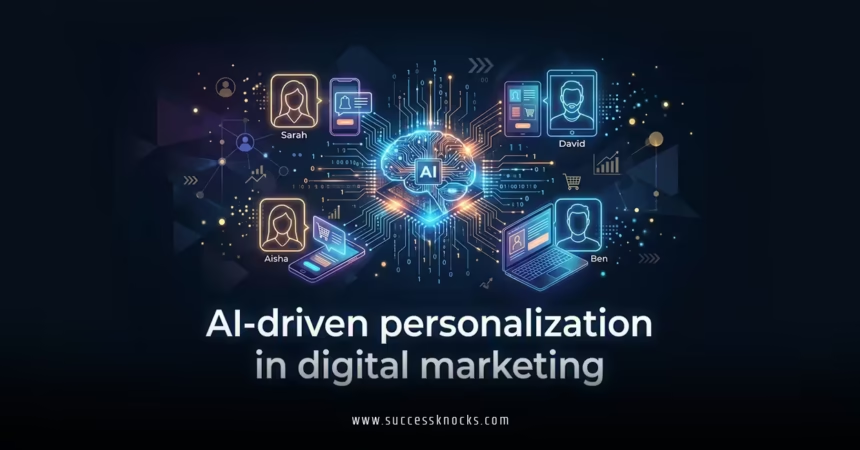
AI-driven personalization in digital marketing isn’t a nice-to-have anymore. It’s the baseline for staying competitive in 2026.
AI-driven personalization in digital marketing uses machine learning, predictive analytics, and real-time data processing to deliver tailored experiences to individual users across channels. Think dynamic website content, hyper-relevant email offers, and ads that actually match what someone wants right now.
- It analyzes behavior, preferences, purchase history, and context to predict needs before customers express them.
- Brands see higher engagement, better conversions, and stronger loyalty as a result.
- In a world where consumers expect relevance, it separates winners from also-rans.
Here’s the thing: most marketers know they should do it. Few execute it well at scale. This guide cuts through the hype and gives you practical steps that actually work.
What AI-Driven Personalization in Digital Marketing Really Delivers
Forget generic blasts. Today’s systems process massive datasets in milliseconds. They adjust everything from product recommendations to email send times on the fly.
The kicker? It scales one-to-one experiences without needing an army of copywriters. Real-time signals—like browsing behavior, location, or even weather—feed into models that decide the best next message or offer.
Why it matters in 2026: Consumer expectations keep climbing. People bounce from irrelevant experiences. Brands that nail personalization keep them engaged longer and spending more.
93% of brands and 94% of agencies agree AI improves personalization, yet only one in five have fully integrated it across channels. That gap creates massive opportunity for those who move fast.
Key Benefits Backed by Real Outcomes
AI-driven personalization in digital marketing drives measurable lifts:
- Higher conversion rates—AI personalization can improve them significantly by serving spot-on recommendations.
- Increased customer retention—personalized experiences make people feel understood, boosting repeat business.
- Better ROI on ad spend—targeting gets tighter, waste drops.
- Stronger lifetime value—loyal customers engage more deeply over time.
One analogy that sticks: it’s like having the world’s best salesperson who remembers every interaction with every customer, across millions of people, and never sleeps. That’s the power at work here.
How AI-Driven Personalization in Digital Marketing Works Under the Hood
Machine learning models ingest first-party data from your site, CRM, email platform, and analytics tools. They identify patterns, build customer profiles, and score individuals on intent, preferences, and predicted behavior.
Predictive analytics forecasts what someone might buy next. Generative AI creates variations of content—headlines, images, offers—that match those predictions. Real-time orchestration then serves the right version across web, email, social, or ads.
Privacy rules shape everything. First-party data reigns supreme while third-party cookies fade further into history.
Pro move I’d make: Start with your owned channels. Clean data there first before expanding.
Comparison: Traditional vs. AI-Driven Personalization
| Aspect | Traditional Personalization | AI-Driven Personalization (2026) |
|---|---|---|
| Data Sources | Demographics, basic segments | Real-time behavior + predictive signals |
| Speed | Batch processing (days/weeks) | Real-time adjustments |
| Scale | Limited to broad segments | True 1:1 at millions of users |
| Content Creation | Manual, static | Generative + dynamic variations |
| Accuracy | Rule-based, often outdated | Continuously learning models |
| ROI Potential | Moderate lifts | 5-8x marketing spend in strong cases |
| Privacy Compliance | Harder to manage at scale | Built-in consent and first-party focus |
This table shows why the shift feels inevitable. Old methods simply can’t keep up.
Step-by-Step Action Plan for Beginners and Intermediate Marketers
Ready to implement AI-driven personalization in digital marketing without getting overwhelmed? Follow this roadmap.
Step 1: Audit your data. Map what you already collect—website analytics, CRM entries, email engagement. Identify gaps. Clean duplicates and inconsistencies. Garbage data poisons even the best AI.
Step 2: Define clear goals. Want more cart completions? Higher email open rates? Better customer lifetime value? Tie every personalization effort to a business metric.
Step 3: Choose your starting tools. Many platforms offer accessible entry points. Look for ones that integrate with your existing stack. Test with a single use case like abandoned cart recovery.
Step 4: Build initial segments and rules. Start simple—new visitors vs returning, past purchasers vs browsers. Layer in basic AI recommendations.
Step 5: Launch, measure, iterate. Run A/B tests relentlessly. Track engagement, conversions, and revenue lift. Feed results back into models for continuous improvement.
Step 6: Expand across channels. Once email and web feel solid, add SMS, push notifications, or paid ads.
What usually happens is teams skip the data cleanup and wonder why results disappoint. Don’t be that team.
For deeper platform insights, check Salesforce’s guide to AI personalization.
Common Mistakes & How to Fix Them
Even seasoned pros trip here. Watch for these traps.
Mistake 1: Over-personalization that feels creepy. Mentioning someone’s exact recent search in an ad can backfire.
Fix: Focus on value. Recommend based on broader patterns, not hyper-specific surveillance vibes. Test for comfort levels.
Mistake 2: Relying on poor or siloed data. Models trained on incomplete info deliver irrelevant experiences.
Fix: Invest time in unification. Prioritize first-party collection with clear consent.
Mistake 3: No human oversight. Pure AI output can miss brand voice or create tone-deaf messages.
Fix: Keep editors and strategists in the loop. Use AI as a co-pilot, not the solo driver.
Mistake 4: Ignoring privacy and ethics. Regulations tighten every year.
Fix: Build transparency into your process. Offer easy opt-outs and explain data use clearly.
Mistake 5: Scaling too fast without testing. Jumping to full omnichannel without pilots leads to costly flops.
Fix: Prove value in one channel first. Document wins to get buy-in for bigger moves.
Advanced Tactics That Separate Pros from Everyone Else
Once basics click, layer these in:
- Predictive lead scoring that flags high-intent users early.
- Dynamic content blocks on websites that change per visitor.
- AI-optimized send times for emails based on individual behavior.
- Cross-channel journey orchestration where one interaction influences the next touchpoint automatically.
Gartner highlights how agentic AI will drive more autonomous, one-to-one interactions. Smart teams prepare now.
Key Takeaways
- AI-driven personalization in digital marketing turns generic campaigns into relevant conversations that drive real revenue.
- First-party data plus clean integration beats everything else in 2026.
- Start small, measure obsessively, and scale what works.
- Human strategy still beats pure automation—use AI to amplify, not replace, judgment.
- Privacy compliance isn’t optional; it’s your license to operate.
- Continuous testing separates good results from great ones.
- The brands winning today treat personalization as a core capability, not a project.
- Expectation: customers now assume you’ll understand them. Meet it or lose them.
AI-driven personalization in digital marketing gives you the edge to build deeper relationships at scale. The technology exists. The data is there. The only question left is whether you’ll move fast enough to claim the advantage.
Pick one use case this week. Audit your data. Run a small test. Momentum builds from action, not planning.
Start where your customers feel the most friction today, and personalize your way out of it.
FAQs
How does AI-driven personalization in digital marketing differ from basic segmentation?
Basic segmentation groups people by demographics or broad behavior. AI-driven personalization creates unique experiences for individuals using real-time data, predictive models, and dynamic content generation. It evolves as customer behavior changes.
What tools work best for small teams implementing AI-driven personalization in digital marketing?
Look for platforms with strong integrations, pre-built models, and easy testing features. Many offer starter tiers that handle email, web, and basic recommendations without massive upfront costs. Focus on solutions that emphasize first-party data handling.
Is AI-driven personalization in digital marketing worth the investment for beginners?
Yes—when you start focused. Early wins in conversion lift and efficiency quickly justify costs. The real payoff compounds as models learn your audience over time. Just prioritize data quality and clear goals from day one.