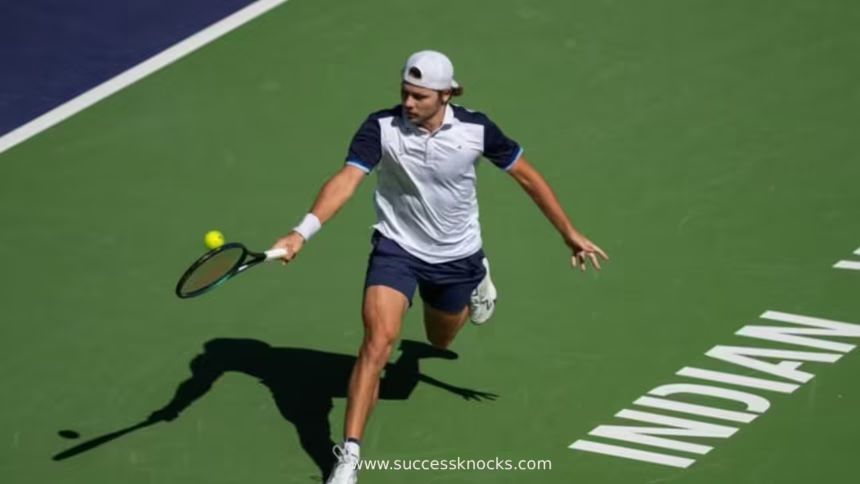
ATP Masters 1000 Schedule Explained one rung below the four Grand Slams, and in 2026, it’s become the center of a heated debate about player health. Nine tournaments make up this tier, each one mandatory for top-ranked players chasing ranking points and title runs. Miss one without a valid reason, and you’re looking at penalties. That’s the trade-off elite tennis players live with every season.
Here’s the fast breakdown before we go deeper:
- Nine Masters 1000 events run across hard, clay, and indoor surfaces from March through November.
- Seven of the nine now use an expanded 12-day format; only Monte-Carlo and Paris kept the older one-week sprint.
- Draws range from 56 players (Paris) up to 96 players at most other stops.
- The packed calendar is exactly what pushed Carlos Alcaraz to announce he’ll take deliberate breaks going forward — a story we broke down in our piece on how Alcaraz plans long breaks tennis schedule changes after his 2026 wrist injury.
- Understanding this schedule helps you follow the season smarter, whether you’re a casual fan or building your own playing calendar.
Let’s map out the whole thing, tournament by tournament.
What Exactly Is the ATP Masters 1000 Schedule?
ATP Masters 1000 Schedule Explained Think of the ATP tour as a pyramid. Grand Slams sit at the top — four events, biggest prize money, most prestige. Right below that sits the Masters 1000 tier.
These nine tournaments award 1000 ranking points to the champion. That’s massive. A single Masters title can reshape a player’s entire season ranking, second only to winning a Slam outright.
Here’s the thing casual fans miss: Masters 1000 events aren’t optional for top players. The ATP requires those ranked inside a certain cutoff to compete in all of them, barring injury or an approved exemption. Skip too many, and you’re staring down fines or ranking penalties.
Why the ATP Masters 1000 Schedule Expanded in the First Place
Back before 2025, most Masters events ran a tight, one-week format. Fast, brutal, exciting — but also cramped for scheduling and broadcast windows.
The ATP pushed seven of the nine events to a 12-day format starting in 2025, following the model Indian Wells and Miami had already used for years. More rest days between rounds. More broadcast slots. More ticket-sale windows for host cities, frankly — this is a business decision as much as a competitive one.
Only Monte-Carlo and Paris kept their compact one-week structure. Everything else stretched out.
The Full 2026 ATP Masters 1000 Schedule
Here’s every stop on the calendar, laid out clean:
| Tournament | Location | 2026 Dates | Surface | Format | Draw Size |
|---|---|---|---|---|---|
| BNP Paribas Open | Indian Wells, USA | Mar. 4–15 | Outdoor hard | 12-day | 96 |
| Miami Open | Miami Gardens, USA | Mar. 18–29 | Outdoor hard | 12-day | 96 |
| Rolex Monte-Carlo Masters | Monte-Carlo, Monaco | Apr. 5–12 | Outdoor clay | 1-week | 56 |
| Mutua Madrid Open | Madrid, Spain | Apr. 22–May 3 | Outdoor clay | 12-day | 96 |
| Internazionali BNL d’Italia | Rome, Italy | May 6–17 | Outdoor clay | 12-day | 96 |
| National Bank Open | Montreal, Canada | Aug. 2–13 | Outdoor hard | 12-day | 96 |
| Cincinnati Open | Cincinnati, USA | Aug. 13–23 | Outdoor hard | 12-day | 96 |
| Rolex Shanghai Masters | Shanghai, China | Oct. 7–18 | Outdoor hard | 12-day | 96 |
| Rolex Paris Masters | Paris, France | Nov. 2–8 | Indoor hard | 1-week | 56 |
Dates and results confirmed through ATP Tour’s official 2026 calendar as of early September 2026.
Why the Masters 1000 Schedule Is Tied to Alcaraz’s Long-Break Decision
ATP Masters 1000 Schedule Explained Here’s where this gets personal for the sport’s biggest stars. Stack all nine Masters events plus four Grand Slams, and top-ranked players face roughly 40 mandatory competitive weeks a year.
That’s not a light workload. That’s a highway with no exits, and eventually something gives.
Alcaraz found that out the hard way in 2026. A wrist injury at the Barcelona Open in April knocked him out for over four months — costing him both Roland Garros and Wimbledon. When he returned at the US Open, he didn’t blame the calendar for causing the injury directly. But he made it clear the packed Masters 1000 schedule made recovering without a forced layoff nearly impossible.
That’s the exact reasoning behind why Alcaraz plans long breaks tennis schedule adjustments going forward — one or two months off, on his own terms, rather than another injury dictating the pause. Our full breakdown of that decision lives in Alcaraz plans long breaks tennis schedule.
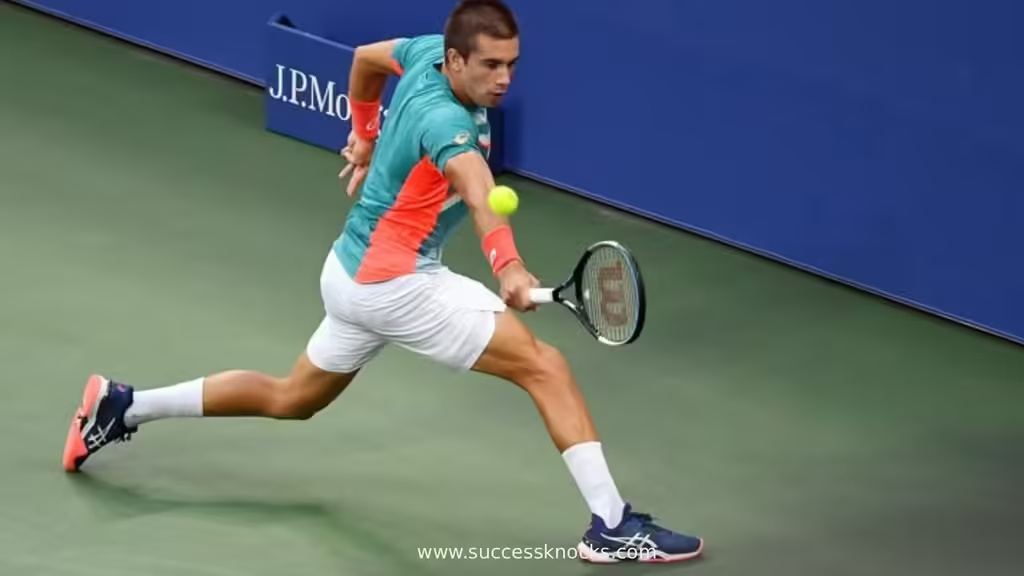
Step-by-Step: How to Follow (or Plan Around) the ATP Masters 1000 Schedule
Whether you’re tracking the season as a fan or mapping your own tennis calendar for inspiration, here’s a simple approach.
- Anchor your calendar around the four surface swings. Hard court (Indian Wells, Miami), clay (Monte-Carlo through Rome), North American hard court (Montreal, Cincinnati), and the fall Asian/European swing (Shanghai, Paris).
- Watch for player workload announcements early in the season. Top players often signal skipped events by January or February.
- Check draw sizes before assuming a full field. Monte-Carlo and Paris run smaller 56-player draws, meaning fewer early-round surprises.
- Track recovery patterns after Grand Slams. Players returning from deep Slam runs often skip the very next Masters stop.
- Note the back-to-back North American swing. Montreal into Cincinnati is brutal — just eleven days between finals, back-to-back hard-court grinding.
If I’m advising a casual fan on which events actually shift the season’s storylines, I’d point to Indian Wells (early form check), Rome (clay-season form before Roland Garros), and Cincinnati (US Open tune-up). Those three tell you more about title contenders than any other stops.
Common Mistakes & How to Fix Them
Mistake 1: Assuming every Masters event has the same format.
Fix it by remembering Monte-Carlo and Paris are shorter, one-week events — everything else runs 12 days.
Mistake 2: Confusing “mandatory” with “unbreakable.”
Fix it by understanding injury exemptions exist. That’s precisely how Alcaraz plans long breaks tennis schedule moves without facing ranking penalties — legitimate medical documentation covers it.
Mistake 3: Ignoring surface transitions when predicting winners.
Fix it by checking recent clay, hard, or indoor form specifically — a player dominant on hard court can look completely different on Rome’s red clay.
Mistake 4: Overlooking how the 12-day format changes momentum.
Fix it by tracking rest days between rounds. Extended formats let injured or fatigued players sneak through early rounds with lighter loads, something the Association of Tennis Professionals’ official tour guide explains in more detail if you want the full technical breakdown.
Key Takeaways
- The ATP Masters 1000 schedule includes nine tournaments, each awarding 1000 ranking points to the champion.
- Seven of the nine events now run a 12-day format; Monte-Carlo and Paris kept the shorter one-week structure.
- Draw sizes range from 56 (Monte-Carlo, Paris) up to 96 at most other stops.
- Top-ranked players face near-mandatory attendance, with limited exemptions for injury.
- The grueling combination of Masters events and Grand Slams pushes elite players toward roughly 40 competitive weeks a year.
- This workload directly influenced why Alcaraz plans long breaks tennis schedule changes for future seasons.
- Fans can track season momentum by watching surface transitions and back-to-back event stretches like Montreal-Cincinnati.
The ATP Masters 1000 schedule isn’t just a list of tournaments — it’s the backbone of how a tennis season actually unfolds, shaping form, fatigue, and title races from March through November. Once you understand the format shifts and mandatory structure, storylines like Alcaraz’s decision to step back suddenly make a lot more sense. Bookmark this calendar breakdown, and pair it with our deeper look at how Alcaraz plans long breaks tennis schedule changes to get the full picture of where men’s tennis is heading next.
FAQs
How many events make up the ATP Masters 1000 schedule each year?
Nine tournaments make up the tier, spread across hard, clay, and indoor hard surfaces from March through November.
Why did Alcaraz’s long-break tennis schedule decision get linked to the Masters 1000 calendar?
Because the Masters 1000 schedule’s expanded 12-day format contributes heavily to the near-40-week workload that pushed Alcaraz toward planning deliberate rest periods instead of risking another forced injury layoff.
Are all Masters 1000 events mandatory for top players?
Yes, generally — top-ranked players must compete in all nine unless they have an approved exemption, most commonly for injury, which is part of why moves like the Alcaraz plans long breaks tennis schedule strategy require official documentation.