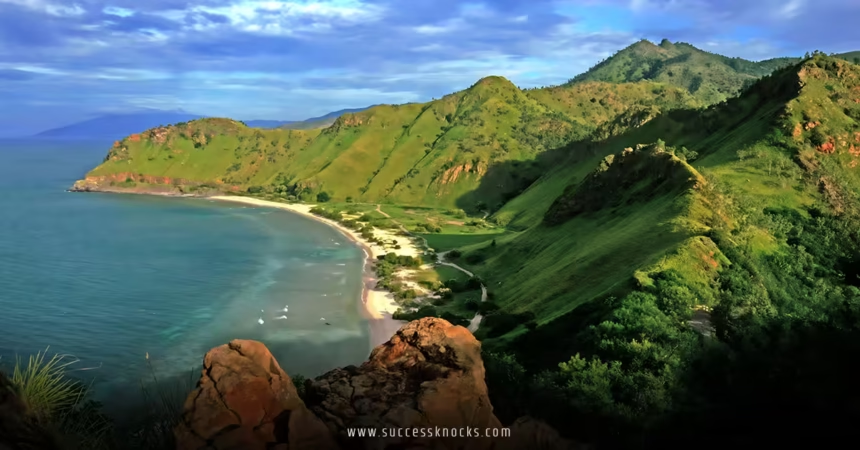
Best Beaches in Timor-Leste for Swimming 2026 aren’t hidden anymore — they’re just incredibly inconvenient to reach, which is exactly why they’re still pristine. Here’s the quick version, because you’ll need time to plan logistics if you’re serious about going.
Quick Overview — What You Need to Know
- 🏖️ Safest swimming zones: Dili (Cristo Rei, Dolok Oan, Areia Branca, Tasi Tolu), Atauro Island, and Jaco Island proper — all crocodile-free or low-risk.
- 🏖️ No-swim zones (non-negotiable): Com Beach, south coast (Suai to Betano), Valu Beach mainland, Metinaro, and Hera — regular saltwater crocodile presence, high attack rates.
- 🏖️ Best season: May to October (dry season) — calm seas, clear water, 26–30°C, ideal for diving and snorkeling.
- 🏖️ Infrastructure reality: Most beaches have zero facilities. Bring your own water, shade, food, and supplies. Leave no trash.
- 🏖️ Why you haven’t heard about them: Timor-Leste remains one of Southeast Asia’s least-visited countries, meaning no jet skis, no hawkers, no resort sprawl — just turquoise water and white sand.
Best Beaches in Timor-Leste for Swimming 2026: The Complete Regional Guide
Let’s cut through the marketing. Timor-Leste’s coastline tells three completely different stories depending on which side you’re on.
The north coast — protected by an island chain — has calm waters and is genuinely safer for swimming. Dili’s capital beaches are crocodile-free, a detail that matters more here than anywhere else in Southeast Asia. The south coast faces the open Timor Sea with monster swells, rip currents, and what may be the highest saltwater crocodile attack rate per capita in the world. The eastern tip, where Jaco Island sits, offers the most jaw-dropping scenery on the planet — but reaching it requires a serious 8-hour overland commitment and a 15-minute boat crossing.
Here’s the tension: best scenery doesn’t equal safest swimming. And Timor-Leste won’t let you forget that distinction.
Best Beaches in Timor-Leste for Swimming 2026 — Quick Reference
| Beach/Area | Location | Best For | Safety | Accessibility | Facilities |
|---|---|---|---|---|---|
| Cristo Rei + Dolok Oan | Dili (east) | Swimming, views, local scene | ★★★★★ Crocodile-free | Car/walk, 15 min city | Bars, restaurants nearby |
| Areia Branca | Dili (east) | Popular weekend swimming | ★★★★★ Crocodile-free | Car/walk, 20 min city | Basic amenities |
| Tasi Tolu | Dili (west) | Swimming + birdwatching | ★★★★☆ Safe, bird area | Car, 25 min city | Minimal |
| Atauro Island (Atecru) | 30 km north of Dili | Snorkeling, pristine scenery | ★★★★★ Safe (effort-intensive) | Ferry $4–5, then boat | None (wilderness) |
| Atauro (Dollar Beach) | East coast, Atauro | Snorkeling, reef access | ★★★★★ Safe, crystal clear | Ferry + boat scramble | None |
| Atauro (Adara) | South coast, Atauro | Snorkeling, calmer entry | ★★★★☆ Safe, new road access | Ferry $4–5, 45 min drive | None |
| Jaco Island | Far east, Tutuala | Best reef, remote beauty | ★★★★☆ Safe on island; risky mainland | 8 hr 4WD + boat | Basic guesthouses ($10–15) |
| Valu Beach (mainland) | Near Tutuala | Photo ops only | ☆☆☆☆☆ Crocodiles present | 8 hr drive | None |
| Com Beach | North coast | Surfing visual (don’t swim) | ☆☆☆☆☆ Crocodiles regular | Accessible | None |
| South Coast (Suai–Betano) | South | Scenery only | ☆☆☆☆☆ Crocodiles + currents | Accessible but poor roads | None |
Sources: Rezerva, Atlas Guide, Timor-Leste Tourism (2026)
The Crocodile Problem Is Real — And It’s Not Hypothetical
Here’s where I’m going to be blunt with you. Saltwater crocodiles in Timor-Leste aren’t a cautionary tale or a “probably fine” situation. Fatal attacks occur every year, marking some of the highest per-capita crocodile attack rates in the world. These are large animals — 4 to 6 meters — and they’re fast.
The south coast has a significant croc population. Com Beach, despite its allure for surfers, has regularly present crocodiles. Valu Beach on the mainland (different from Jaco Island itself) has frequent sightings and warning signs posted. Hera and Metinaro, east of Dili, are no-swim zones. River mouths and estuaries? Don’t even think about it.
But here’s the good news. Dili’s waters are notably crocodile-free. Atauro Island is safe. Jaco Island itself — the actual island — is secure. There are places where you can swim without playing Russian roulette with a prehistoric apex predator.
The rule is simple: always ask locals before entering the water anywhere new. If there are warning signs, you’re not being overcautious by skipping the swim. If locals aren’t swimming, you’re not either.
Dili Beaches — Safe, Accessible, Better Than Expected
Dili’s beaches won’t stage a nature documentary. The capital is a working city with colonial-era architecture and genuine warmth, but the coastline is a functional urban beach scene, not a tropical fantasy.
But here’s the kicker: that urban beach is one of the safest places to swim in the entire country.
Cristo Rei & Dolok Oan Beach (east of the city center) are the anchors. Cristo Rei itself is a 27-meter white Christ statue on a headland, reached by a stairway through forest — the views alone are worth the climb. The far side of the headland drops into Dolok Oan, a genuinely good swimming beach with calm, warm, clear water. On weekends, local families pack in. Restaurants and bars sit within walking distance. The vibe is casual, social, and safe. This is your starter beach in Timor-Leste.
Areia Branca (nearby, also east) is the other popular weekend spot. Same advantages: crocodile-free, local families, restaurants, calm entry. Less crowded than Dolok Oan if you’re looking for breathing room.
Tasi Tolu (further west) is your two-for-one play. It’s an Important Bird Area with 71 recorded species — that’s right, a genuinely significant birding destination. The beach itself offers calm water, easy entry, and decent snorkeling if you’ve brought gear. The scenery is less dramatic, but the bird life makes it worth a morning or afternoon.
Best Beaches in Timor-Leste for Swimming Getting there is straightforward: car or taxi from central Dili, 15–25 minutes depending on the beach. Hotels rent scooters for $5–8/day if you’re comfortable navigating potholes and livestock. Bring sunscreen, reef shoes, and water. Most of Dili’s budget places run $40–90/night; restaurants serve passable Portuguese cuisine for $10–20 per meal.
Atauro Island — Reef Biodiversity That Breaks Records
Twenty-five kilometers north of Dili, Atauro is where the real story lives. Marine surveys have recorded higher reef-fish biodiversity per dive site here than anywhere else surveyed on earth. The reefs exist in close-to-pristine condition precisely because the island has stayed isolated from major tourism infrastructure.
There’s no Hilton. No spa. No infinity pool overlooking the reef. What you get is eco-lodges, snorkeling directly off multiple beaches, and water so clear you’re counting fish from the shore on your first day.
Atecru (west coast) is arguably the finest beach on the island. A sweep of white sand backed by forest, with a dramatic reef drop-off just offshore. The catch: reaching it requires either a 5.5-hour hike from Beloi (the main village) or a $130 boat charter. If you take the boat, you get a day trip that reads like National Geographic. If you hike, you’re earning it.
Dollar Beach (east coast, near Beloi) is the practical play. Crystal-clear water, outstanding snorkeling, reachable by boat or a scramble along rocks from Beloi. The name is meme-grade silly, but the reef access is genuinely world-class. Bring your own snorkel gear.
Adara (south coast) just got a major accessibility upgrade. A new road completed in mid-2025 now connects it, turning a previously epic hike into a 45-minute drive from Beloi. Spectacular coastline, calm water on the island side, no crowds.
Akrema (closer to main villages) is about 1.5 hours from Bikeli with gorgeous white sand and reef access. Easier than Atecru, more accessible than the hikes of a few years ago.
Getting to Atauro requires planning. The ferry from Dili runs most days except Mondays (Success $5, Nakroma $4 one way). The crossing takes 30–45 minutes depending on seas. Boat transfers from dive resorts around the island run $70–75 per person. There are no ATMs. Electricity is limited. Phone signal is patchy. Guesthouses cost $15–30/night. A guided two-tank dive runs $60–100.
Pack reef shoes, snorkel gear, reef-safe sunscreen, and your own water. Leave with every piece of trash you create. The isolation that makes Atauro magical is the same thing that means you’re responsible for your own impact.
Jaco Island — The Hardest-to-Reach Gem
If Atauro is Southeast Asia’s best-kept secret, Jaco Island is the secret inside the secret. Coral reefs start at the waterline. The island itself is postcard-grade scenery — dramatic, pristine, untouched by resort sprawl.
Here’s the problem: getting to Jaco requires an 8-hour drive from Dili via Baucau and Lautem (4WD essential for the last section), then a 15-minute boat crossing. The drive is punishing. Road conditions are rough. It’s a two-day commitment minimum.
Most visitors base themselves in Tutuala, a small town on the mainland near the boat launch. Basic guesthouses cost $10–15/night. The boat from the southern end of Valu Beach costs $10 return per person — but make sure you agree on a pickup time before your boatman disappears.
Here’s the key: Jaco Island itself is safe for swimming. The reef is extraordinary. The island feels like you’ve traveled back 50 years. But the Valu Beach mainland (where you stage the boat) has regular crocodile sightings. Stay on the boat. Get to Jaco. Enjoy the water on the island. Don’t wade or snorkel off the mainland shore no matter what the light looks like.
For 95% of swimmers and casual visitors, Jaco is overkill. For divers, reef enthusiasts, and people with serious time and physical tolerance for rough roads, it’s the destination.
Best Beaches in Timor-Leste for Swimming 2026: A Beginner’s Action Plan
You’re new to Timor-Leste or thinking about a beach trip? Here’s how to actually execute this without getting lost in logistics.
Step 1: Pick your commitment level.
Are you a Dili-based relaxer (Cristo Rei + Tasi Tolu), an Atauro explorer (2–3 days, ferry access), or a hardcore Jaco chaser? Each requires different setup. Dili works as a long weekend. Atauro needs 3–5 days. Jaco is a full week minimum.
Step 2: Nail the season.
May to October is peak. May to September is even better — that’s when the seas are flattest, visibility is best, and whale migrations happen offshore. Avoid November to April wet season unless you love waterfalls and don’t mind road flooding and landslide risk.
Step 3: Get your visa sorted early.
Citizens of 40+ countries, including the US, EU, Australia, Canada, and Japan, can get a visa on arrival for $30, valid for 30 days and extendable. Schengen citizens get 90 days visa-free. Book it anyway to skip queues.
Step 4: Arrange transport before you land.
Direct flights to Dili exist from Bali, Kuala Lumpur, and Darwin. Once there, GPS is unreliable outside Dili. Hire a 4WD with a driver ($60–100/day). Don’t rent a scooter if you’re heading to Atauro or beyond.
Step 5: Bring reef shoes, not flip-flops.
Reef shoes are non-negotiable. Coral will shred your feet. Bring them from home if possible — they’re expensive and hard to find in Dili.
Step 6: Pack reef-safe sunscreen and your own water.
Most beaches have zero facilities. You’re carrying everything. Tap water in Dili is not potable — use bottled ($0.50–$1 per 1.5L).
Step 7: Ask locals before you swim anywhere new.
This is not a formality. Locals know where crocs have been spotted recently. If they say “don’t,” you listen.
Common Mistakes Beginners Make — And How to Fix Them
Mistake 1: Assuming All Timor-Leste Beaches Are Safe
The country’s coastline is split into genuinely safe zones (Dili, Atauro, Jaco Island itself) and genuinely dangerous zones (south coast, Com, Valu mainland). This isn’t a spectrum. It’s binary. Fix it by getting the crocodile map in your head before you book anything.
Mistake 2: Showing Up Without a Plan, Expecting “Authentic” Infrastructure
You can’t just turn up to Atauro on a whim. Ferries don’t run daily. Lodges have limited capacity. Boats need booking. There are no food vendors. No ATMs. No last-minute solutions. Fix it by booking accommodations and ferries 1–2 weeks ahead, and by carrying enough cash for the island portion (USD or local currency).
Mistake 3: Taking Photos From Valu Beach and Assuming it’s Safe
Valu Beach is stunning. It looks safe. It’s a regular crocodile habitat. Don’t wade. Don’t snorkel off the mainland. Crocodiles don’t announce themselves. Fix it by staying on the boat, taking your photos, and respecting the warning signs.
Mistake 4: Overpacking for Beach Days
You’re going to sweat. You’ll get salt and sand everywhere. Heavy luggage is useless. The roads are rough. Bring one set of clothes that doubles as reef-walking gear, reef shoes, snorkel equipment, sunscreen, hat, and a light rain layer (Atauro can surprise you). Leave the suitcase in Dili.
Mistake 5: Ignoring Tides and Seasonal Swells
Atauro and Jaco have seasonal swell variation. May to October is calm-to-choppy depending on week. November to April brings heavier seas and landslide risk on access roads. Com Beach is a dry-season swell magnet, which is why people want to surf it. But you still can’t swim there because of crocs. Fix it by checking real-time local conditions a few days before your trip, and asking your lodge for the current week’s vibe.
Key Takeaways
- Dili’s beaches (Cristo Rei, Dolok Oan, Areia Branca, Tasi Tolu) are your safest bet — crocodile-free, accessible, with basic amenities and weekday calm.
- Atauro Island delivers unmatched reef biodiversity and pristine snorkeling — ferry access, 2–5 day trip, zero facilities, premium isolation.
- Jaco Island is the ultimate remote destination — extraordinary scenery, best reef access, 8+ hour drive commitment, staging from Tutuala required.
- The south coast and Com Beach are photography zones only — crocodile populations, strong currents, no swimming under any circumstance.
- May to October is the window — dry season, calm seas, clear visibility, whale migrations offshore, ideal conditions across all zones.
- Crocodiles are not theoretical here — they’re large, fast, territorial, and fatal attacks occur yearly. Ask locals, read signs, don’t guess.
- Infrastructure doesn’t exist on remote beaches — bring your own water, food, shade, and pack out your trash. Atauro and Jaco have no ATMs, patchy electricity, and spotty signal.
- Visa on arrival is straightforward — $30, 30 days, extendable, or visa-free for Schengen citizens up to 90 days.
The best beaches in Timor-Leste for swimming 2026 aren’t secret anymore, but they’re still challenging. That’s the entire point. The moment a beach gets “easy,” it stops being pristine. You’re trading convenience for authenticity, infrastructure for isolation, and crowds for genuinely world-class marine life and clarity. The official Timor-Leste tourism site has updated 2026 regional information if you want to cross-check beach access and current conditions.
If you’re comfortable with “no facilities” and you can navigate crocodile zones using a combination of local knowledge and common sense, Timor-Leste’s beaches will obliterate every expectation you brought.
Frequently Asked Questions
Q: What are the best beaches in Timor-Leste for swimming in 2026, and which ones are actually safe?
The best beaches in Timor-Leste for swimming 2026 are Dili (Cristo Rei, Dolok Oan, Areia Branca, Tasi Tolu), Atauro Island (Dollar Beach, Atecru, Adara), and Jaco Island — all with crocodile-free or low-risk water. Dili is the safest and most accessible. Atauro requires ferry access but offers unmatched reef biodiversity. Jaco demands an 8-hour overland journey but rewards with pristine isolation. Avoid Com Beach, the south coast (Suai–Betano), and Valu Beach mainland due to regular crocodile presence.
Q: Is it actually dangerous to swim in Timor-Leste because of crocodiles?
Yes and no. Some areas have fatal crocodile attack rates among the world’s highest per capita. But Dili’s waters are crocodile-free, Atauro is safe, and Jaco Island proper is secure. The danger is real in specific zones — south coast, Com, Valu Beach mainland — but entirely avoidable if you swim in designated safe areas. Always ask locals before entering the water anywhere unfamiliar. If warning signs are posted, they’re not decoration.
Q: When is the best time to visit the best beaches in Timor-Leste for swimming?
May to October (dry season) is ideal — warm temperatures around 26–30°C, calm seas, clear visibility, and minimal flood/landslide risk on roads. May to September is peak because swells stay low and whale migrations occur offshore. November to April brings heavier rains, waterfalls at maximum flow, but also increased risk of road flooding and landslides in the mountains. Beach conditions degrade during the wet season.
Read More:successknocks.com