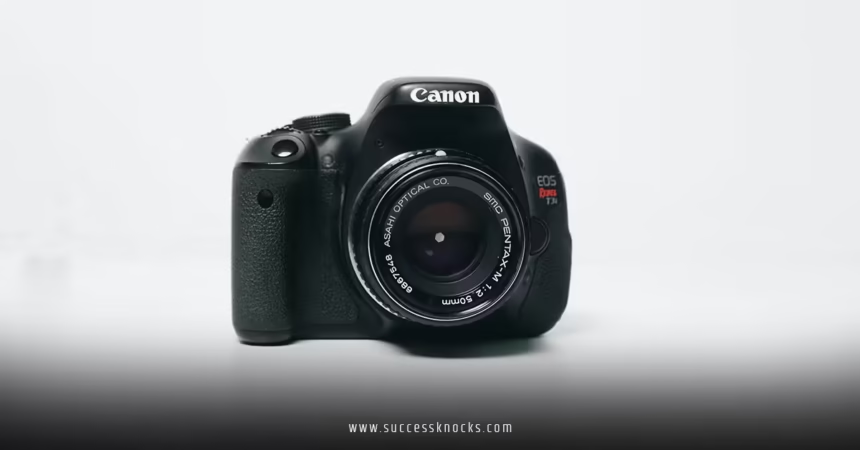
best camera for beginners in 2026 isn’t about finding the most expensive or feature-packed model—it’s about discovering a camera that grows with your skills without overwhelming you on day one. Whether you’re stepping up from smartphone photography or diving into your first serious creative pursuit, the right beginner camera should feel intuitive, forgiving, and genuinely exciting to use.
Quick Overview:
- Entry-level mirrorless cameras currently offer the best balance of features, size, and learning tools for most beginners
- Budget range of $400-$800 provides excellent options without breaking the bank
- Kit lenses included with most cameras handle 80% of beginner shooting scenarios effectively
- Auto modes have become sophisticated enough to produce great results while you learn manual controls
- Video capabilities are now standard, giving you creative flexibility beyond still photography
The key is finding a camera that doesn’t intimidate you but doesn’t limit your potential either. Let’s cut through the marketing noise and find your perfect starting point.
What Makes a Great Beginner Camera?
Forget about impressing other photographers for a moment. The best camera for beginners needs to nail these fundamentals:
Ease of Use Without Dumbing Down Your camera should have excellent auto modes that work reliably, but also provide easy access to manual controls when you’re ready to experiment. The interface should feel logical, not like you need a computer science degree to change basic settings.
Forgiving Performance Beginners make mistakes—missed focus, camera shake, poor exposure decisions. A good starter camera compensates for these learning-curve issues with effective image stabilization, reliable autofocus, and decent low-light performance.
Room to Grow You don’t want to outgrow your camera in six months. Look for models that offer manual exposure modes, decent lens selection, and features you can grow into over time.
Entry-Level Camera Categories: Your Options Explained
Mirrorless Cameras: The Modern Choice
Mirrorless cameras have become the go-to recommendation for beginners, and for good reason. They’re smaller, lighter, and packed with beginner-friendly features that DSLRs often lack.
Why mirrorless works for beginners:
- Electronic viewfinders show exactly how your photo will look before you take it
- Smaller size makes them less intimidating and more portable
- Superior video features for content creation
- Advanced autofocus systems that nail focus consistently
Top beginner mirrorless picks for 2026:
- Sony a6000 series: Still incredibly capable and now very affordable
- Fujifilm X-T30 II: Retro styling with modern performance
- Canon EOS M50 Mark II: User-friendly with excellent tutorials built-in
DSLR Cameras: The Traditional Route
Don’t write off DSLRs completely. They still offer some advantages for beginners, particularly around battery life and the feel of a “real” camera.
DSLR benefits for new photographers:
- Longer battery life means less worry about power management
- Optical viewfinders provide a natural, lag-free view
- Extensive used lens market keeps costs down
- Physical controls often feel more intuitive
Understanding the complete mirrorless vs DSLR comparison can help you make the right format decision based on your specific needs and shooting style.
Smartphone Cameras vs Dedicated Cameras
Let’s address the elephant in the room: your phone probably takes pretty good photos already. So why buy a separate camera?
Where dedicated cameras still win:
- Interchangeable lenses for creative flexibility
- Better performance in challenging light
- Physical controls for faster adjustments
- Superior image quality for prints
- Learning tool for understanding photography fundamentals
Best Camera for Beginners: Our Top Recommendations
| Camera | Price Range | Best For | Key Strengths |
|---|---|---|---|
| Sony a6100 | $600-$700 | All-around versatility | Fast autofocus, good video, compact |
| Canon EOS Rebel T8i | $700-$800 | Traditional DSLR experience | User-friendly, long battery, extensive tutorials |
| Fujifilm X-T30 II | $800-$900 | Style + substance | Beautiful design, excellent image quality |
| Nikon Z30 | $700-$800 | Content creators | Flip screen, superior video features |
| Canon EOS M50 Mark II | $500-$600 | Budget-conscious beginners | Great value, guided modes, compact |
Essential Features Every Beginner Camera Needs
Reliable Autofocus System
Nothing kills enthusiasm faster than consistently blurry photos. Modern cameras use sophisticated autofocus systems that track subjects across the frame and nail focus even in challenging conditions.
What to look for:
- Face and eye detection
- Subject tracking capabilities
- Good low-light focusing performance
- Quick focus acquisition speed
Image Stabilization
Camera shake ruins more beginner photos than any other technical issue. Image stabilization—whether in the lens or camera body—dramatically improves your success rate when shooting handheld.
Types of stabilization:
- In-body stabilization: Works with any lens
- Lens-based stabilization: Often more effective but limited to specific lenses
- Digital stabilization: Better than nothing, but inferior to optical systems
Intuitive Menu System
Camera menus can be overwhelmingly complex. The best beginner cameras organize settings logically and provide helpful explanations for technical terms.
Look for cameras with:
- Clear, well-organized menu structures
- Built-in help systems
- Customizable quick-access buttons
- Touch screen interfaces (where available)
Lens Considerations: Start Simple, Expand Later
Most beginner cameras come with kit lenses that cover the most common shooting scenarios. These typically range from mild wide-angle to short telephoto—perfect for landscapes, portraits, and general photography.
Typical kit lens coverage: 18-55mm (equivalent to about 28-85mm in full-frame terms)
Why kit lenses work well for beginners:
- Cover most shooting situations
- Lightweight and compact
- Usually include image stabilization
- Affordable way to start building a system
Don’t let lens snobs convince you that kit lenses are terrible. Modern kit lenses are remarkably capable, and you’ll learn more by shooting extensively with one lens than by obsessing over gear upgrades.
Budget Planning: What You Really Need to Spend
The Sweet Spot: $600-$800
This price range offers the best balance of features, build quality, and future-proofing for most beginners. You’ll get:
- Current-generation sensors
- Reliable autofocus systems
- Good low-light performance
- Decent video capabilities
- Room to grow your skills
Budget Option: $400-$600
Plenty of excellent cameras live in this range, especially if you’re willing to consider models that are 1-2 generations old. You might sacrifice some cutting-edge features, but image quality remains excellent.
Higher Investment: $800-$1,200
This range opens up more advanced features and better build quality. Consider spending more if:
- You’re serious about learning photography as a long-term hobby
- You plan to shoot in challenging conditions
- You want the latest autofocus and video technology
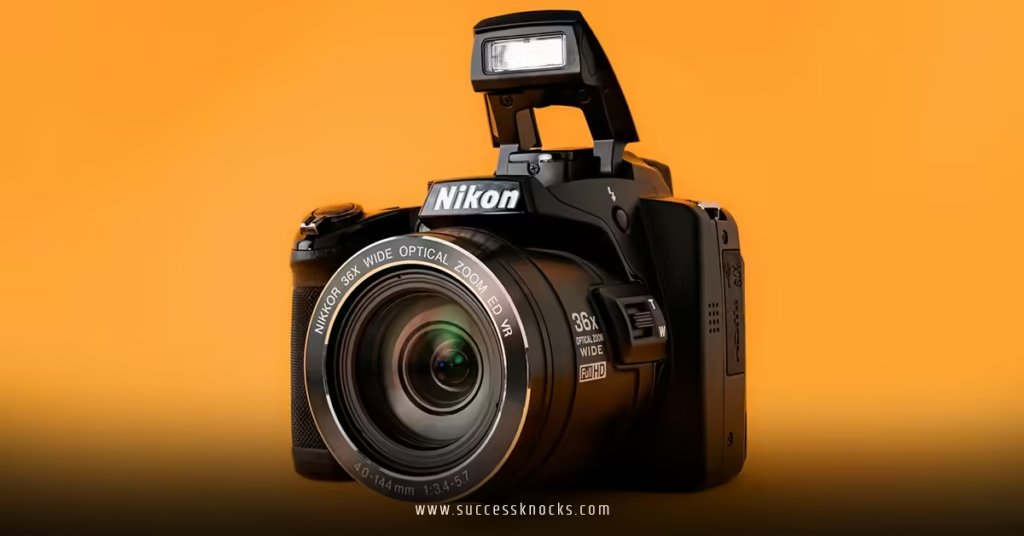
Step-by-Step Buying Process
- Determine your primary subjects: What do you want to photograph most? Portraits, landscapes, travel, family events?
- Set a realistic budget: Include the camera, an extra battery, memory cards, and potentially a second lens
- Choose your format: Review [mirrorless vs DSLR](link-to-previous-article)** considerations to pick your preferred system
- Research 2-3 specific models: Read reviews and watch video comparisons of your shortlisted cameras
- Handle them in person: Visit a camera store to see how each feels in your hands
- Check local deals:Look for bundle packages that include accessories you’ll need anyway
- Make the purchase: Buy from a reputable dealer with good return policies
Common Beginner Camera Mistakes
Mistake #1: Buying too much camera initially Fix: Start with a capable mid-range model and invest savings in lenses or accessories.
Mistake #2: Obsessing over megapixels Fix: Focus on sensor size, autofocus performance, and low-light capabilities instead.
Mistake #3: Ignoring video features Fix: Even if you think you only want photos, good video capabilities add creative flexibility.
Mistake #4: Skipping the kit lens Fix: Kit lenses are genuinely useful and help you learn what focal lengths you prefer.
Mistake #5: Not budgeting for accessories Fix: Plan for memory cards, extra batteries, and basic cleaning supplies from day one.
Mistake #6: Buying based on brand loyalty alone Fix: Evaluate cameras based on your actual needs, not manufacturer reputation.
Learning Resources and Next Steps
The best camera for beginners becomes truly valuable when paired with quality learning resources. Here’s how to accelerate your photography education:
Essential learning approaches:
- Start with auto modes, then gradually experiment with manual controls
- Practice with available light before investing in flash equipment
- Focus on composition before worrying about technical perfection
- Shoot regularly—consistency beats sporadic intensive sessions
Recommended progression:
- Master your camera’s auto modes
- Learn aperture priority mode
- Understand exposure compensation
- Experiment with manual focus
- Explore creative scene modes
According to the National Association of Photoshop Professionals, beginners who practice consistently for 30 days see dramatic improvement in both technical skills and creative confidence.
Future-Proofing Your Camera Choice
Technology moves fast, but good cameras remain capable for years. When evaluating your options, consider:
Long-term viability factors:
- Lens ecosystem size and growth
- Manufacturer support history
- Software update frequency
- Resale value trends
The camera industry has stabilized significantly since the smartphone photography revolution. Today’s entry-level cameras offer image quality that exceeded professional standards just a decade ago.
Video Capabilities: Why They Matter for Beginners
Even if you’re primarily interested in still photography, video capabilities have become essential for several reasons:
Modern video advantages:
- Content creation opportunities
- Learning tool for understanding exposure
- Creative storytelling options
- Practical documentation needs
Most beginner cameras now offer 4K video recording, advanced autofocus during video, and flip-out screens optimized for self-recording. These features cost nothing extra but provide significant creative flexibility.
When to Upgrade: Signs You’ve Outgrown Your Beginner Camera
Your first camera won’t be your last, and that’s perfectly normal. Here are signs it might be time to upgrade:
- You consistently bump against your camera’s limitations
- Your shooting style has evolved beyond your camera’s strengths
- You need specific features for new creative projects
- You’re shooting professionally and need backup bodies
But remember: upgrading your skills always trumps upgrading your gear.
Key Takeaways
- Mirrorless cameras currently offer the best beginner experience with superior learning features and compact designs
- Budget $600-$800 for a camera that won’t limit your growth while remaining beginner-friendly
- Kit lenses handle most beginner shooting scenarios effectively—don’t skip them
- Autofocus performance matters more than megapixel count for consistently good results
- Video capabilities add creative flexibility even for primarily still photographers
- Hands-on testing beats online research—visit a store before buying
- Consistent practice with a modest camera beats sporadic use of expensive gear
- Learning resources and community matter as much as the camera itself
Conclusion
The best camera for beginners in 2026 is one that inspires you to shoot regularly while providing room to grow your skills. Whether you choose a compact mirrorless model or a traditional DSLR, focus on cameras that balance user-friendly operation with genuine creative potential.
Don’t get paralyzed by endless options and technical specifications. Modern entry-level cameras are remarkably capable—your biggest limitation will be experience, not equipment.
Start with a camera that fits your budget and shooting interests, then spend your time learning composition, understanding light, and developing your unique photographic voice. The gear will evolve, but the skills you build will last forever.
Your photography journey starts with that first intentional shot. Pick a camera and start shooting.
Frequently Asked Questions
Q: Should beginners start with mirrorless or DSLR cameras in 2026?
A: Mirrorless cameras generally offer better beginner experiences with electronic viewfinders that preview your exposure, superior autofocus systems, and more compact designs. However, DSLRs provide longer battery life and extensive used lens markets that can keep costs down.
Q: How much should a beginner spend on their first camera?
A: The sweet spot for most beginners is $600-$800, including a kit lens. This budget provides current-generation features without overspending on capabilities you won’t use immediately. You can find excellent options for less, but avoid going below $400 for new cameras.
Q: Are expensive cameras better for learning photography?
A: Not necessarily. Mid-range cameras often provide the best learning experience with helpful automatic modes plus full manual controls. Expensive cameras can actually hinder learning by offering overwhelming options and complex menus that distract from fundamental photography skills.
Q: Can I learn photography seriously with a beginner camera?
A: Absolutely. Today’s entry-level cameras offer image quality and features that exceeded professional standards just a few years ago. Many professional photographers started with basic cameras and developed their skills through consistent practice rather than expensive equipment.
Q: Should I buy a camera bundle or individual components?
A: Camera bundles often provide good value for beginners by including essential accessories like extra batteries, memory cards, and basic cases. However, avoid bundles packed with low-quality accessories you’ll never use. Focus on bundles that include genuinely useful items you’ll need anyway.