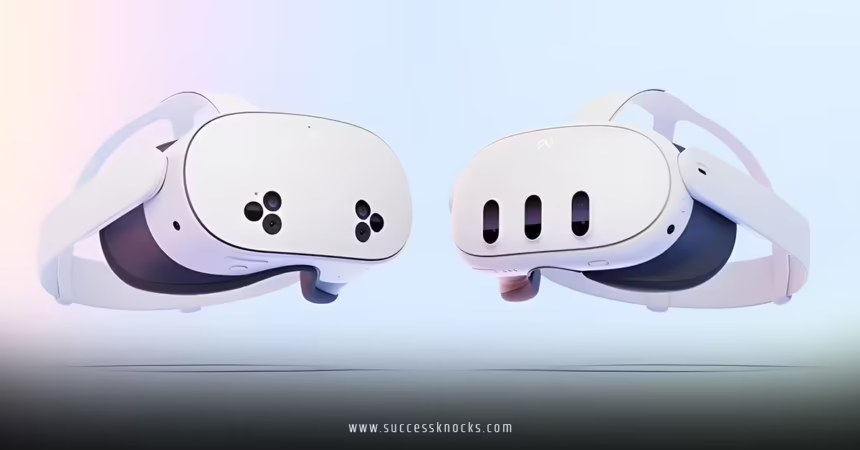
best VR gaming headsets for competitive esports means prioritizing low latency, crystal-clear visuals, and tracking precision that won’t fail mid-tournament. We’re talking gear that handles sweat, rapid head movements, and hours of intense action without breaking stride. No more motion sickness wiping out your leaderboard spot.
These headsets aren’t just for casual play. They’re built for how VR is changing esports competitions—turning gamers into athletes who need reliable hardware to dominate.
Quick comparison: Top contenders for esports dominance
| Headset | Price (2026) | Resolution (per eye) | Refresh Rate | Best For | Wireless Capability |
|---|---|---|---|---|---|
| Meta Quest 3 | $499 | 2064 x 2208 | Up to 120Hz | All-around competitive play | Yes (standalone/PC) |
| Meta Quest 3S | $299 | 1832 x 1920 | Up to 120Hz | Budget entry to esports | Yes (standalone) |
| Valve Index | $999 | 1440 x 1600 | Up to 144Hz | PC esports precision | Tethered |
| PlayStation VR2 | $549 | 2000 x 2040 | Up to 120Hz | Console esports fighters | Tethered (PS5/PC) |
| HP Reverb G2 | $599 | 2160 x 2160 | 90Hz | Sim racing esports | Tethered |
Prices reflect current market averages. Higher refresh rates mean smoother motion—critical for competitive edge.
Why headset choice matters in VR esports
Latency kills. In traditional esports, a frame drop is annoying. In VR? It’s disorienting and game-ending. Competitive players need headsets with sub-20ms latency, wide fields of view, and controllers that track finger-level precision.
Comfort ranks next. Tournaments last hours. Sweat-soaked padding and adjustable straps prevent headset slip during crucial moments.
The kicker? Versatility. Your headset must handle both standalone practice and PC-tethered tournament play.
Top picks for competitive VR esports
1. Meta Quest 3: The esports workhorse
At $499, the Quest 3 dominates best VR gaming headsets for competitive esports lists for good reason. Its Snapdragon XR2 Gen 2 chip delivers buttery 120Hz performance wireless or tethered to PC.
Resolution hits 2064 x 2208 per eye—sharp enough for spotting distant enemies in shooters like Pavlov VR. Color passthrough means quick safety checks without removing the headset.
Esports edge: Inside-out tracking eliminates base stations. Set up in seconds at LAN events. Battery lasts 2+ hours of intense play, swappable for non-stop sessions.
Downside? LCD panels wash out blacks compared to OLED rivals. Still, the wireless freedom outweighs it for most competitors.
2. Meta Quest 3S: Budget beast for rising stars
New in 2026, the $299 Quest 3S punches way above its weight. Same XR2 Gen 2 power as its pricier sibling, just dialed-back lenses and 1832 x 1920 resolution.
Perfect for beginners grinding ranked Beat Saber or Onward matches. Full Quest library access means endless practice opponents.
Esports edge: Affordable entry lets teams equip full rosters without breaking bank. Color passthrough and mixed reality support future-proof it for evolving tournament formats.
Trade-off: Slightly softer visuals than Quest 3. Fine for most esports, but sim racers might notice.
3. Valve Index: Precision for PC purists
$999 buys the ultimate tethered PC VR experience. 144Hz refresh rate feels like cheating in fast-paced shooters. Finger-tracking controllers sense every trigger pull nuance.
Field of view stretches 130 degrees—see your flanks without turning. SteamVR ecosystem supports every competitive title.
Esports edge: Base station tracking is rock-solid. No drift during marathon sessions. Ideal for pro circuits demanding pixel-perfect accuracy.
Catch? Requires powerful gaming PC and setup time. Not for quick pick-up games.
4. PlayStation VR2: Console killer with PC adapter
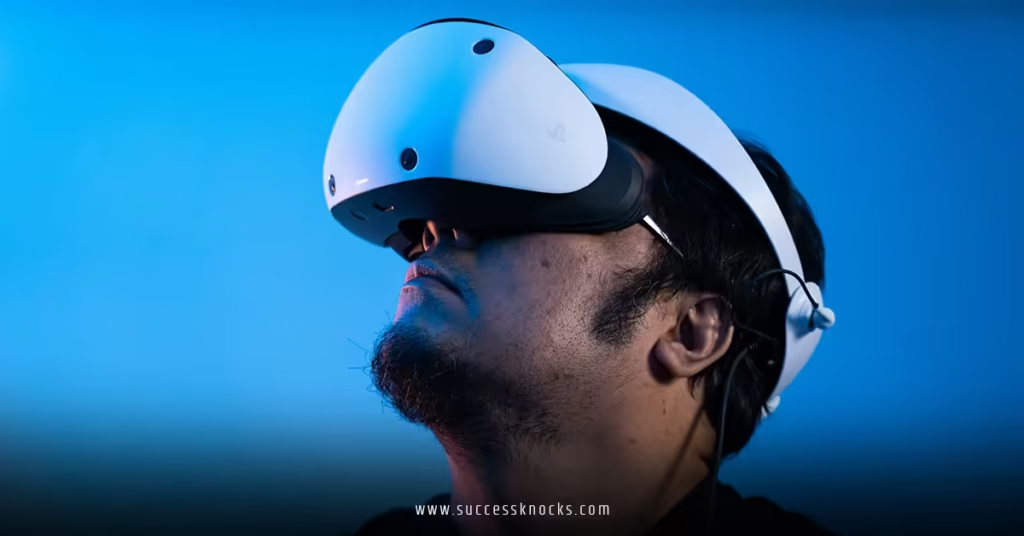
Sony’s $549 gem shines with OLED panels delivering infinite blacks and 2000 x 2040 resolution. Eye-tracking enables foveated rendering—PS5 renders only where you look, squeezing max performance.
Sense controllers’ adaptive triggers simulate weapon recoil realistically.
Esports edge: Expanding PC support via adapter opens it to SteamVR titles. Haptic feedback adds immersion edge in fighting games.
Requires PS5 or beefy PC. Cable can snag during room-scale action.
5. HP Reverb G2: Sim racing esports specialist
Forget generalists. At $599, Reverb G2’s 2160 x 2160 per-eye resolution crushes cockpit details in iRacing or Assetto Corsa Competizione. Distant apexes and gauges pop.
Esports edge: Clarity trumps refresh rate (90Hz) for precision racing lines. Sim communities swear by it for tournament consistency.
Weak inside-out tracking demands base stations. Best for stationary sim rigs.
Key factors for esports headset selection
Tracking precision
Outside-in (base stations) beats inside-out for zero-drift reliability. Valve Index excels here. Quest series’ cameras suffice for most, improving yearly.
Refresh rate vs. resolution
144Hz feels responsive. But 4K-ish resolution reveals hidden details. Balance both—Quest 3 nails it.
Battery and comfort
Wireless = freedom. Quest series wins. For tethered, prioritize breathable straps and gel inserts.
PC requirements
Tethered headsets demand RTX 3070+ GPUs. Standalone like Quest handle lighter loads.
Common pitfalls when buying for esports
- Chasing gimmicks: Skip spatial computing like Apple Vision Pro ($3,499). Overkill for gaming, battery drains fast.
- Ignoring fit: Test before buying. Pro players mod headsets for custom comfort.
- Forgetting ecosystem: Quest owns standalone content. PC headsets need SteamVR mastery.
- Budget blindness: $300 headsets tempt, but upgrade sooner. Invest once.
- Neglecting controllers: Headset alone useless. Match tracking quality.
Fix? Prioritize your game type. Shooters need high refresh. Sims crave resolution.
Step-by-step: Building your competitive VR setup
- Assess your games: List top esports titles (Beat Saber, Pavlov, sim racers).
- Budget check: $400-1000 sweet spot for pros.
- Test locally: VR arcades let you try before buying.
- PC audit: Ensure GPU handles high settings.
- Buy accessories: Extra straps, batteries, cable organizers.
- Practice rig: Clear 6x6ft space. Mark boundaries.
- Join communities: Discord servers for headset-specific tips.
Follow this, and you’re tournament-ready in weeks.
Key takeaways
- Quest 3 offers best balance of price, wireless freedom, and performance for most esports.
- Budget? Quest 3S delivers pro-level access without premium cost.
- PC esports demands Valve Index or Reverb G2 for ultimate precision.
- Prioritize refresh rate for shooters, resolution for sims.
- Comfort mods extend playtime—essential for ranked grinding.
- Always match headset to your primary games; no universal “best.”
- Test tracking in-store; drift kills competitive viability.
- Future-proof with PC tether options on standalone headsets.
Conclusion
The best VR gaming headsets for competitive esports boil down to matching tech to your playstyle—Quest 3 for versatility, Index for precision, Reverb for sims. As VR transforms esports competitions, reliable gear separates contenders from spectators.
Don’t overthink. Grab a Quest 3, clear space, and start competing. The leaderboard awaits.
Frequently Asked Questions
Q: Which is the absolute best VR gaming headset for competitive esports?
A: Meta Quest 3. Wireless freedom, solid 120Hz performance, and full PC VR support make it unbeatable for most titles. Only sim racers might prefer Reverb G2’s superior resolution.
Q: Can budget headsets like Quest 3S handle pro-level esports?
A: Absolutely. Same processor as Quest 3, vast game library. Visuals slightly softer, but tracking and refresh rate compete fine in Beat Saber or Onward tournaments.
Q: Do I need a high-end PC for VR esports headsets? A: Standalone like Quest series?
No. Tethered (Index, PSVR2)? RTX 3070 minimum for smooth 90+fps. Check SteamVR performance test first.
Q: How do I prevent motion sickness in competitive VR play?
A: Higher refresh rates help most (120Hz+). Start short sessions, use comfort settings, stay hydrated. Quest 3’s lenses minimize distortion effectively.
Q: What’s the biggest upgrade from Quest 2 to newer esports headsets?
A: Resolution jump and inside-out tracking improvements. Quest 3/3S feel generations ahead, crucial for spotting details in fast esports action.