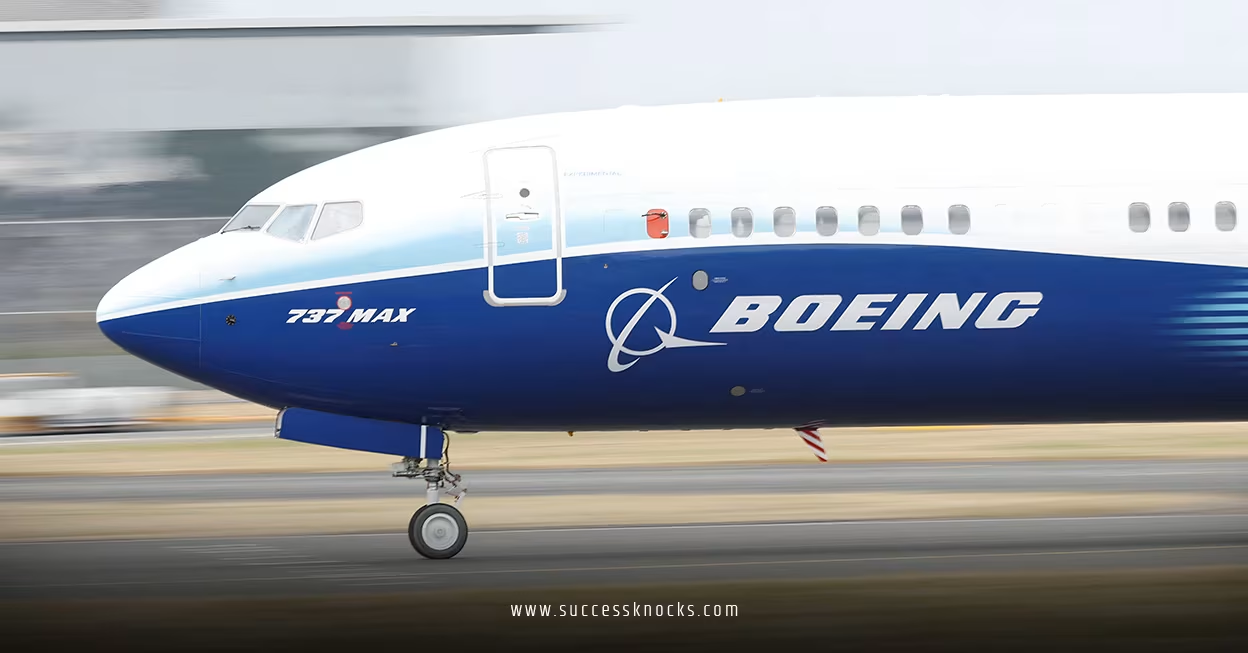
Boeing 737 MAX seat track assembly inspection issues show us that even big players can miss small details that put safety and reputation at risk. If you run a manufacturing business, supply parts, or manage any process where precision matters, this recent development hits close to home. One loose fitting or incomplete check can lead to costly fixes, regulatory pressure, and lost trust.
In this article, we’re going to be taking a look at Boeing 737 MAX seat track assembly inspection, and how you can apply its lessons to strengthen quality checks in your own operations. If you would like to find out more, feel free to read on.
Pic – CC0 License
What Sparked the Latest Boeing 737 MAX Seat Track Assembly Inspection
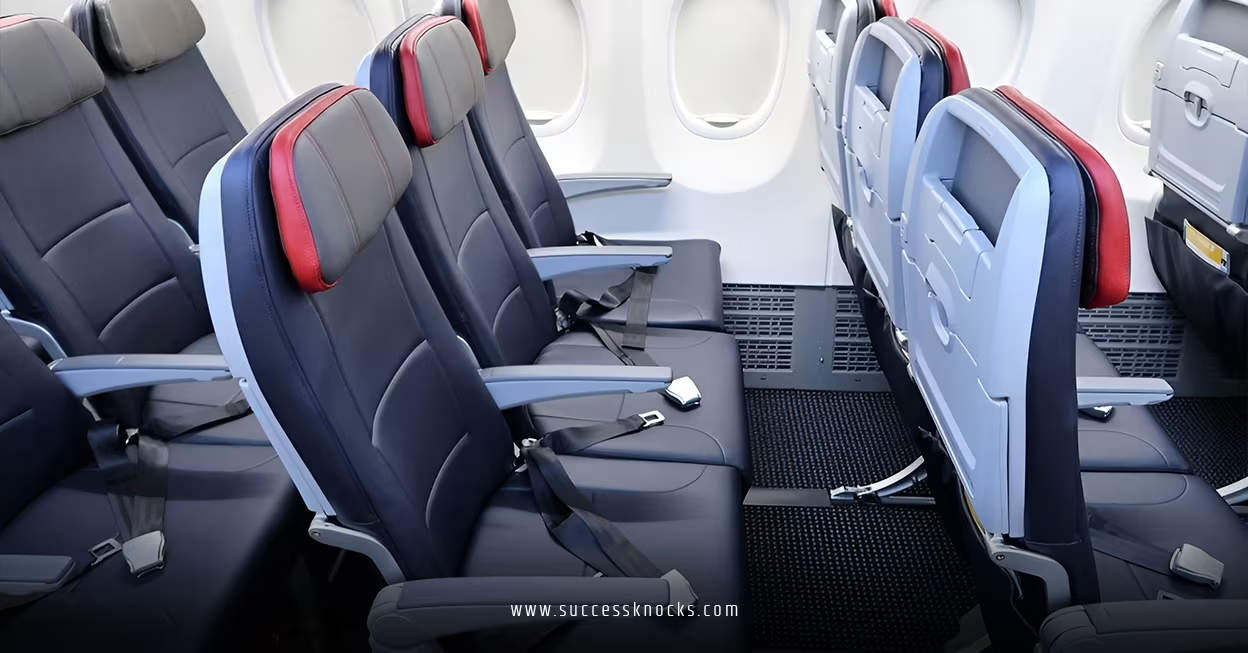
In late July 2026, the Federal Aviation Administration proposed an airworthiness directive covering 453 U.S.-registered Boeing 737 MAX jets. The concern centered on track-mounted passenger seat assemblies. Reports showed that the aft fitting shear plungers on some seats had not been fully lowered and engaged in the seat tracks.
If those seats face higher loads from turbulence or an emergency landing, they could come loose. That risks injury to passengers and crew or blocks the aisle during an evacuation. Each plane can carry up to 69 of these assemblies. Checking one takes about an hour. Fixing a problem adds another hour and needs no new parts.
Boeing had already issued guidance to operators in December 2025 through a Special Attention Requirements Bulletin. The FAA now wants that guidance made mandatory. You can read the full proposed directive on the Federal Register. Airlines face an estimated total cost of roughly $2.7 million for U.S. operators, though Boeing may cover some or all under warranty.
This is not a design flaw in the plane itself. It is an installation and verification problem. That distinction matters for anyone who builds, assembles, or maintains products.
Why Boeing 737 MAX Seat Track Assembly Inspection Matters for Your Business
You might think aircraft manufacturing sits far from your daily work. The principles travel well. Every business that assembles components, installs fittings, or relies on suppliers faces the same risk: something looks done but is not fully locked in place.
When checks stay surface-level, small misses pile up. Customers notice. Regulators notice. Your insurance costs rise. Your team spends time on reactive fixes instead of growth. The 737 MAX case shows how a single report of incomplete engagement can trigger fleet-wide inspections and public attention.
As Reuters reported, the FAA acted after receiving notice that certain assemblies were not correctly installed. Foreign regulators often follow U.S. moves, so the impact reaches beyond American airlines. If your products cross borders or serve regulated industries, similar scrutiny can land on you.
Building Stronger Inspection Habits Into Daily Work
Boeing 737 MAX seat track assembly inspection Start by treating installation as a two-step process: put the part in place, then confirm it is fully engaged. For seat tracks, that means verifying the shear plungers sit correctly. In your shop or warehouse, it might mean a torque check, a visual mark, or a simple go/no-go gauge.
Write the steps down. Make them short and clear so new hires can follow them without guesswork. Pair every installation task with a quick sign-off by a second person when the risk is high. Rotate who does the double-check so no one becomes blind to their own work.
Keep records simple. A checklist on a tablet or paper that notes date, person, and result gives you proof if questions arise later. When Boeing issued its bulletin in December 2025, operators already had a path to follow. Having your own documented process ready saves time when outside pressure arrives.
Managing Costs and Keeping Operations Moving
The FAA estimates $85 per seat assembly for inspection and the same again for any needed correction. Spread across hundreds of planes, the total adds up. Yet the fix itself is low-tech and parts-free. That is good news. Many quality problems cost far less to catch early than to repair after they leave the facility.
Plan for parallel work. Airlines can put several people on seat checks at once and finish a plane faster. In your business, that might mean cross-training staff so one absence does not stop the line. Build a modest buffer into schedules for verification steps instead of treating them as optional overtime.
Talk with suppliers about shared responsibility. If a component arrives ready to install, clarify who owns the final engagement check. Clear contracts reduce finger-pointing when something slips through.
Turning Regulatory Pressure Into a Competitive Edge
Boeing 737 MAX seat track assembly inspection Regulators exist to protect the public. When the FAA proposes a rule, it opens a comment window—here through early September 2026. Businesses that engage early often shape practical details. You can track similar moves through official channels or industry summaries such as those from AeroTime.
Use these moments to review your own processes before anyone forces the issue. A clean inspection record becomes a selling point with larger customers who care about reliability. It also lowers the chance of expensive recalls or grounded inventory.
Train your team to speak up when something feels off. The original report that triggered this directive came from someone noticing incomplete engagement. In a culture where people feel safe raising flags, you catch issues while they are still small.
We hope that you have found this article enlightening in some way. The Boeing 737 MAX seat track assembly inspection reminds us that quality is not a one-time event. It is a daily habit of checking that every piece is truly locked in place. Apply that mindset to your own assembly lines, installations, or service work, and you will reduce surprises, protect your customers, and keep your business moving forward with confidence.