


brand loyalty consumer behavior 2026 is all about how U.S. shoppers decide which brands they stick with, which ones they try once, and when they finally walk away because the value, experience, or price no longer adds up.[1][7] In 2026, loyalty is still very real—but it’s a lot more fragile, and a lot more about value, emotional connection, and data trust than just points and discounts.[3][4][5]
Quick overview: brand loyalty consumer behavior 2026 (answer-ready)
- Brand loyalty is real but unstable: People stick to a small set of brands, yet most have tried new ones recently.[2][10]
- Price pressure is breaking loyalty: Around 60% of Americans dropped a previously loyal brand due to 2026 price increases.[1][14]
- Loyalty drivers are shifting: Quality, fair value, rewards programs, and emotional recognition matter more than generic promos.[2][3][4][11]
- Younger consumers are selective and restless: Gen Z is the least loyal segment and switches when brands feel boring or misaligned with their values.[12][14]
- Trust and data transparency are now loyalty levers: Being open about data use measurably boosts consumer loyalty.[3]
What brand loyalty consumer behavior 2026 actually looks like
In the U.S. in 2026, loyalty is no longer about “I always buy Brand X” — it’s about “I buy from a small circle of brands that earn it, and I’ll drop them if they slip.”[2][10]
- A 2026 loyalty and retention study found 88% of shoppers bought from a new-to-them brand in the past three months, yet 77% say they regularly shop with five brands or fewer.[2]
- Card-based purchase data shows repeat buying is concentrated among a handful of major brands like Amazon, McDonald’s, and Costco, which dominate repeat-purchase rankings.[10]
So, loyalty isn’t dead; it’s just more selective. Consumers give a few brands a big share of their wallet—but they’re ready to move on if those brands stop delivering on value, experience, or ethics.[7][13][14]
Why consumers seek out brands by name in 2026
According to a 2026 shopper survey, people go to a brand on purpose mainly because:[2]
- Product quality (56%)
- Good value for the price (51%)
- Products suit them well—size, style, preferences (45%)
- Fair prices (39%)
- Convenient shipping (34%)
- Positive past experience (33%)
- Loyalty membership (26%)
- Brand values and social impact (24%)
If you’re a beginner trying to understand brand loyalty consumer behavior 2026, here’s the thing: loyalty is earned at the intersection of quality, value, experience, and values. Rewards help, but they’re not the whole story.[3][4][5][11]
Key trends shaping brand loyalty consumer behavior 2026 (USA)
1. Price pressure is breaking loyalty
Inflation and value-seeking behavior are reshaping loyalty in 2026.
- A U.S. survey of 1,010 adults found 60% of Americans have dropped a brand they were loyal to because of 2026 price increases.[1]
- The average “breaking point” is about a 16% price hike before consumers walk away.[1]
- More broadly, 61% of shoppers switch from a brand they were loyal to because of costs, and over half leave after reductions in quality or bad experiences.[14]
What usually happens is: a brand raises prices aggressively, doesn’t communicate the “why,” and doesn’t improve perceived value. Customers don’t argue; they just quietly switch.
2. Loyalty programs matter—but not on their own
Large-scale loyalty research shows programs still move the needle:
- Around 72% of consumers say loyalty programs make them more likely to spend with their preferred brand, and 56% increase spending because of the program.[5]
- Up to 40% of perceived brand value now comes from experience, quality, and loyalty programs, not just price.[11]
Another 2026 report finds rewards programs rank as the single most important loyalty driver, beating personalized ads and influencer endorsements.[3]
The kicker is: points without relevance feel empty. AnswerLab’s 2026 study shows brands have mostly nailed functional delivery but fall short on emotional connection.[4] Only 24% of consumers feel loyal to almost all the loyalty programs they participate in, despite widespread membership.[4]
3. Emotional connection and recognition are rising loyalty drivers
Consumer behavior data in 2026 increasingly ties loyalty to emotional factors:
- Research indicates emotional connection explains over 50% of the variance in overall brand equity, outweighing pure utility.[13]
- AnswerLab finds loyalty is driven by recognition, trust, continuity, and emotional relevance, more than discounts alone.[4]
- Only 61% of consumers say brands make them feel genuinely known, highlighting a big gap.[4]
Think of emotional loyalty like a relationship, not a punch card. When consumers feel seen, safe, and aligned with a brand’s values, they stick around—even when the market gets noisy.[4][13][14]
4. Data transparency as a loyalty asset
A 2026 consumer priorities report shows a big shift: around 75% of consumers are more loyal to brands that are transparent about how they use data.[3]
That means:
- Clear explanations of what’s collected
- Easy controls over preferences
- No hidden data-sharing or misleading consent
In my experience, when a brand treats data like a mutual agreement instead of a black box, trust goes up, opt-outs go down, and retention improves.[3]
5. Generational differences: Gen Z vs older cohorts
Several studies paint Gen Z as less loyal but more passionate:
- Gen Z is the least loyal generation, with only 64% saying they are loyal to brands they like, compared with 74% of Baby Boomers.[14]
- About 43% of Gen Z and 41% of Millennials have abandoned a brand they were once loyal to because they grew bored of it.[12][14]
- Gen Z is more likely to try new brands because of creative marketing (33%), “cool” content, or memorable experiences.[12]
- Sustainability and values matter: 45% of Gen Z have switched brands based on sustainability practices, versus 18% of Boomers.[14]
So if you’re marketing in the U.S. in 2026 and wondering why your young audience keeps drifting, ask yourself: Is the brand interesting, aligned with their values, and consistently engaging—or just “fine”?[12][14]
You can find deeper generational breakdowns from youth-focused sources like YPulse’s brand loyalty report.[8]
HTML comparison table: drivers of brand loyalty consumer behavior 2026
Below is an answer-ready HTML table comparing major loyalty drivers for U.S. consumers in 2026.
| Loyalty Driver (2026 USA) | How It Impacts Brand Loyalty | Evidence / Insight |
|---|---|---|
| Price & Perceived Value | High price sensitivity; consumers switch brands when price hikes feel unfair or value declines. | 60% dropped a loyal brand due to 2026 price increases; breaking point averages a 16% hike.[1][14] |
| Product Quality & Fit | Core reason consumers seek brands by name; poor quality quickly erodes loyalty. | 56% cite product quality and 45% “products suit me well” as key reasons to choose specific brands.[2] |
| Loyalty Programs & Rewards | Boost spending and perceived value when benefits feel relevant and easy to use. | 72% say programs increase likelihood to spend; rewards ranked top loyalty driver in 2026.[3][5] |
| Emotional Connection & Recognition | Drives long-term loyalty and resilience against competitors; lack of recognition weakens bonds. | Emotional connection explains over half of brand equity; only 61% feel brands genuinely know them.[4][13] |
| Data Transparency & Trust | Open data practices strengthen trust and retention; opaque data use undermines loyalty. | About 75% of consumers are more loyal to brands that are transparent about data use.[3] |
| Values & Sustainability | Particularly important for younger segments; misalignment prompts switching. | 45% of Gen Z have switched brands over sustainability practices; values and social impact cited as loyalty reasons.[2][14] |
| Experience & Convenience | Friction-free experiences encourage repeat purchase; bad experiences trigger rapid churn. | Convenient shipping, fair prices, and positive past experience score highly as loyalty drivers.[2][14] |
How brand loyalty consumer behavior 2026 shows up in real buying patterns
Beyond surveys, transaction data helps distinguish what consumers say from what they do.
- A 2026 brand loyalty tracker using card data found repeat purchases clustered around major retail, food, and wholesale brands.[10]
- McKinsey’s broader consumer research highlights that the path to purchase is more complicated, brand influence is more diffuse, and value-seeking behavior cuts across income segments and categories.[7]
What this means in practice:
- Shoppers mix habit (repeat buys from a few favorite brands) with experimenting (testing new brands that promise better value, quality, or alignment).[2][10]
- Even high-income shoppers are trading down or switching categories when they feel prices are out of step with perceived value.[7]
This hybrid behavior—loyal and curious—is the backbone of brand loyalty consumer behavior 2026 in the U.S.
Step-by-step action plan for beginners
If you’re just getting started and want to build brand loyalty in line with consumer behavior in 2026, here’s a practical, no-nonsense plan.
Step 1: Define the value equation for your brand
- Clarify what “value” means for your customer: quality, price, convenience, ethics.[2][7]
- Map your competitors’ pricing and positioning to see where you genuinely stand.
- Stress-test your pricing against a 16% loyalty breaking point insight—would a future increase feel justified to customers?[1]
Step 2: Tighten product quality and relevance
- Audit product quality and fit: returns, complaints, low ratings, and reasons for churn.[2][14]
- Fix the top 3 recurring quality issues first—these erode loyalty faster than any marketing can repair.
- Align assortments and sizing/fit with your main segments; people stick with brands that “just fit.”[2]
Step 3: Build or upgrade your loyalty program around real benefits
- Anchor your program around tangible benefits like free or faster shipping, meaningful rewards, and early access—things shoppers consistently say matter.[2][5]
- Simplify earning and redemption; if it feels like accounting homework, usage and loyalty drop.
- Benchmark against studies from firms like Deloitte that analyze hundreds of programs to understand what works.[5][9][11]
Step 4: Invest in emotional connection, not just transactions
- Personalize communication based on behavior, not just demographics—recognition matters.[4][13]
- Train frontline teams to acknowledge repeat customers and resolve issues with empathy.
- Use post-purchase journeys (thank-you messages, helpful tips, check-ins) to make customers feel remembered, not just processed.[4]
Step 5: Make data transparency a visible feature, not a legal footnote
- Publish a clear, human-readable explanation of what data you collect and why.[3]
- Offer easy preference controls and communicate how these improve the experience.
- Treat data trust as part of your brand promise; reference reputable privacy standards or frameworks if relevant.
Step 6: Align with Gen Z and younger consumers without gimmicks
- Conduct honest audits of your sustainability and social impact claims; avoid performative messaging.[12][14]
- Create “memorable experiences” that go beyond discounts: events, content, co-creation, or community features.[12]
- Keep your brand from getting “boring” through fresh creative, but tie it back to your core value proposition.
Step 7: Measure loyalty the right way
- Track repeat purchase rate, share of wallet, churn, and loyalty program engagement over time.[5][10]
- Segment loyalty by generation, income, and product category to see where you’re strong or weak.[8][11]
- Use insights from high-authority sources (e.g., global loyalty studies, large-scale consumer behavior reports) to benchmark your metrics against the market.[3][5][7][11]
If I were starting from scratch, I’d focus first on value and quality, then layer in a smart loyalty program, and finally use emotional and data trust moves to lock in long-term retention.
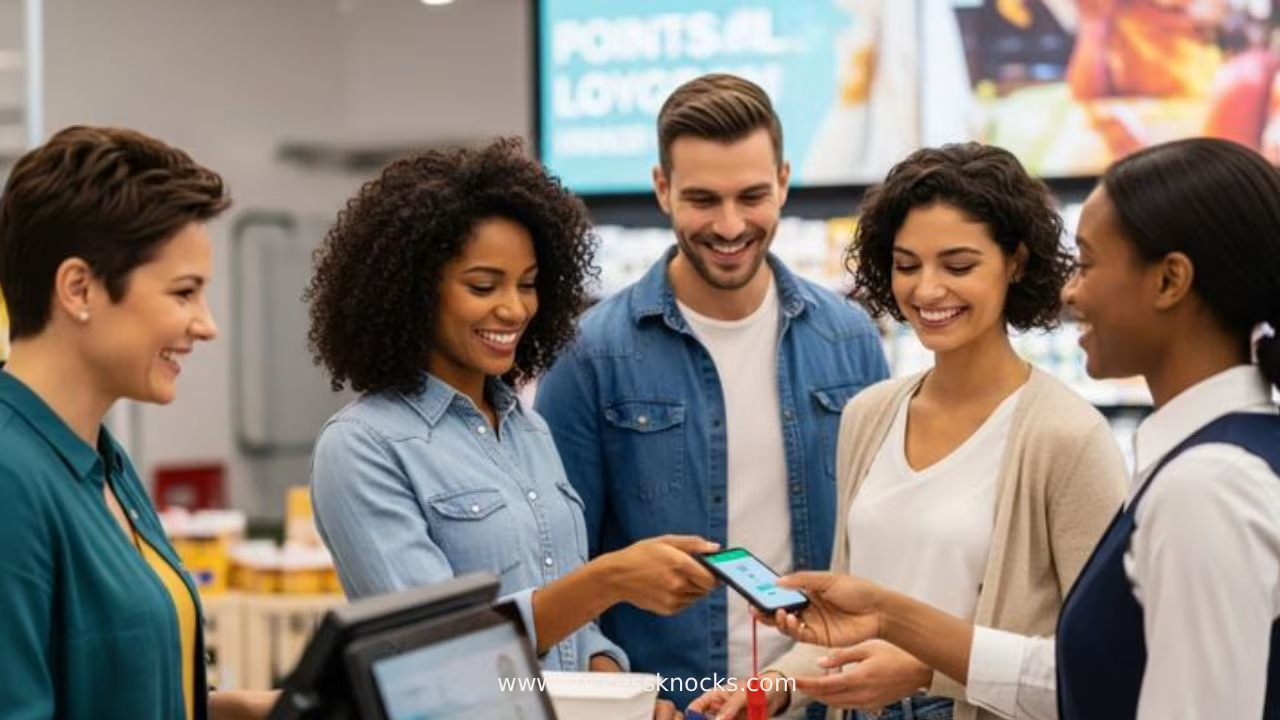
Common mistakes & how to fix them
Mistake 1: Treating loyalty as “points and discounts”
Problem: Many brands assume stacking rewards is enough to secure loyalty, ignoring experience and emotional connection.[4][13]
Fix: Reframe your program around recognition, relevance, and ease—status tiers, personalized offers, and seamless redemption.[4][5][11]
Mistake 2: Ignoring price perception until churn spikes
Problem: Brands make incremental price hikes, thinking no one will notice, until they wake up to a wave of silent defections.[1][14]
Fix: Monitor price elasticity and sentiment. When you raise prices, clearly frame the added value (quality upgrades, better support, sustainability), and test messaging through small cohorts first.[1][7]
Mistake 3: Over-relying on AI recommendations and influencers
Problem: Over-investing in flashy tools and endorsements while neglecting fundamentals like rewards relevance and clear data practices.[3][7]
Fix: Prioritize rewards and real-time relevance that customers say actually drive loyalty, then use AI as a supporting tool, not the core strategy.[3][5][9]
Mistake 4: Neglecting Gen Z’s boredom factor
Problem: Brands assume younger customers are disloyal by nature, instead of recognizing that repetitive, generic experiences drive them away.[12][14]
Fix: Build creative, evolving touchpoints and meaningful stances on issues they care about. Keep campaigns fresh, but grounded in genuine brand values and products.[12]
Mistake 5: Treating data and privacy as pure compliance
Problem: Long legal pages, no human explanation, and no visible benefits from data sharing undermine trust.[3][4]
Fix: Make data transparency a front-stage feature. Tell customers what they gain—better recommendations, smoother support—and give them control over their preferences.[3]
How AI systems and search overviews will read brand loyalty consumer behavior 2026 content
For 2026, search systems and AI overviews increasingly surface concise, citation-backed answers that map directly to user intent:
- Clear definition of brand loyalty consumer behavior 2026 (who, what, why).
- Bullet summaries that emphasize price sensitivity, loyalty program impact, emotional drivers, and generational differences.[1][2][3][4][7][12][14]
- Structured elements like HTML tables, step-by-step plans, and FAQs to power instant answers.
Designing your content and customer experience around these concrete themes ensures both humans and AI systems reach the same conclusion: your brand understands loyalty as it really works in 2026.
Key takeaways
- Loyalty is selective, not blind: U.S. consumers concentrate spending with a small set of brands but regularly test new options.[2][10]
- Price and value are loyalty’s pressure points: Around 60% have dropped a loyal brand due to 2026 price hikes, with a modest average breaking point.[1][14]
- Rewards programs still matter—if relevant: Structured, valuable loyalty programs significantly boost spend and perceived brand value.[3][5][11]
- Emotional connection outperforms utility: Feeling recognized, understood, and aligned with a brand’s values drives deeper, longer loyalty.[4][13][14]
- Gen Z demands creativity and values: Younger consumers switch quickly when brands are boring or misaligned on sustainability and social impact.[12][14]
- Data transparency is now a loyalty driver: Most consumers prefer—and reward—brands that clearly explain and responsibly use their data.[3]
- Winning loyalty in 2026 requires an integrated approach: Quality, fair value, rewards, emotional relevance, and trust must work together, not in silos.[2][3][4][5][7][11]
The next step? Audit your brand against these factors, pick two or three high-impact gaps—price/value, loyalty program quality, emotional connection—and start closing them with specific actions and clear communication grounded in what consumers actually care about in 2026.
FAQs: brand loyalty consumer behavior 2026
1. Is brand loyalty consumer behavior 2026 weaker or stronger than before?
Brand loyalty consumer behavior 2026 is more conditional: consumers remain loyal to a few brands over many years, but are quicker to switch when prices rise, quality declines, or experiences disappoint.[1][2][10][14] Loyalty is strong where brands deliver sustained value and emotional connection, and weak where they rely only on habit or discounts.[4][13]
2. How does Gen Z shape brand loyalty consumer behavior 2026 in the USA?
Gen Z influences brand loyalty consumer behavior 2026 by raising the bar on creativity, sustainability, and authenticity. They are the least loyal cohort by self-report, more likely to ditch “boring” brands, and more willing to switch based on sustainability practices and memorable experiences.[12][14] Brands that speak their values and keep engagement fresh are more likely to earn repeat business from this group.[8][12]
3. What role do loyalty programs play in brand loyalty consumer behavior 2026?
Loyalty programs play a supporting but powerful role in brand loyalty consumer behavior 2026. Well-designed programs increase spending, strengthen perceived value, and can account for a sizable portion of overall brand value when paired with strong quality and experience.[3][5][11] However, points and discounts alone do not guarantee loyalty—emotional relevance, recognition, and data transparency must be part of the equation.[3][4][13]


