

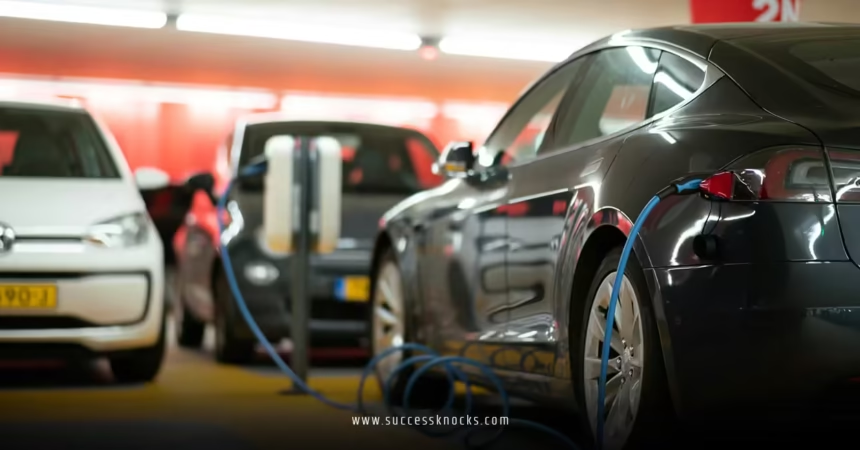
Car rental industry EV adoption trends are accelerating at breakneck speed, fundamentally transforming how companies operate, price services, and compete for market share. What started as a few experimental Tesla Model S vehicles in premium fleets has evolved into a full-scale industry transformation that’s reshaping everything from airport operations to corporate travel policies.
Here’s what’s driving this electric evolution:
• Corporate sustainability mandates forcing rental companies to offer zero-emission options • Regulatory pressure in major markets requiring fleet electrification targets • Consumer demand shifts toward eco-conscious travel choices • Total cost of ownership advantages emerging for high-utilization vehicles • Automaker partnerships creating preferential access to electric inventory
The Scale of Industry Transformation
Let’s talk numbers that matter. The rental car industry collectively operates roughly 2.5 million vehicles across North America. Even a 20% electrification rate represents 500,000 electric vehicles—more than most automakers sell annually.
Here’s the reality check: This isn’t just about swapping gas engines for batteries. We’re witnessing the most significant operational overhaul in rental industry history.
Consider the ripple effects. Every electric vehicle requires charging infrastructure, specialized maintenance protocols, and employee training. Multiply that across thousands of locations, and you’ve got a multi-billion dollar transformation underway.
Major Players and Their Electric Strategies
Hertz: The Early Mover Advantage
Hertz grabbed headlines with their massive Tesla order, but the execution story is more nuanced. Their approach focuses on premium markets where customers willingly pay extra for the Tesla experience.
The results so far? Mixed. High-demand markets like Los Angeles and Miami show strong utilization. Secondary markets? Not so much.
Enterprise: The Cautious Giant
Enterprise Holdings (which includes Enterprise, National, and Alamo) is taking a different approach. Instead of big splash announcements, they’re methodically testing electric vehicles across diverse market conditions.
Why the measured approach? Enterprise learned from the hybrid vehicle rollout in the 2000s. Customer acceptance varies dramatically by geography and use case.
Avis Budget Group: Strategic Market Positioning
The Avis Budget Group EV investment plans stock impact demonstrates how established players are balancing transformation speed with financial prudence. Their phased rollout prioritizes markets with robust charging infrastructure and demonstrated customer demand.
Geographic Deployment Patterns
Not all markets are created equal when it comes to EV adoption. Smart rental companies are following the data, not the hype.
Tier 1 Markets: The Early Adopters
California, New York, Florida major metros: These markets show consistent EV demand across business and leisure segments. Charging infrastructure is robust, and customers actively request electric options.
Success factors:
- Dense charging networks
- Tech-savvy customer base
- Corporate sustainability policies
- Premium pricing acceptance
Tier 2 Markets: The Wait-and-See Approach
Secondary cities and suburban markets: Rental companies are proceeding cautiously here. Limited charging infrastructure and range anxiety create utilization challenges.
Current strategies:
- Small test fleets (50-100 vehicles)
- Focus on airport locations with destination charging
- Premium pricing to offset lower utilization
Rural Markets: Still Waiting
Forget about finding EVs at rural rental locations for the next 2-3 years. The infrastructure simply isn’t there, and customer demand remains minimal.
Vehicle Segmentation Trends
| Vehicle Class | EV Adoption Rate | Primary Use Case | Key Challenges |
|---|---|---|---|
| Premium/Luxury | 35-45% | Business travel, special occasions | High acquisition costs |
| Mid-size | 15-25% | General purpose, corporate accounts | Limited model availability |
| Economy | 5-15% | Budget-conscious leisure | Price sensitivity |
| SUV/Truck | 8-18% | Family travel, cargo needs | Range anxiety, towing |
Premium Segment: Leading the Charge
Luxury EVs like Tesla Model S, BMW iX, and Mercedes EQS command premium pricing while delivering the performance customers expect. Utilization rates in major markets often exceed 80%.
Economy Segment: The Toughest Nut
Budget-conscious renters remain skeptical about electric vehicles. Range anxiety, charging concerns, and unfamiliarity with EV technology create resistance. Companies are experimenting with educational programs and simplified charging solutions.
Infrastructure Investment Realities
Charging Infrastructure: The Billion-Dollar Question
Every rental location needs charging capacity, but the investment requirements vary wildly:
Major airports: $2-5 million for comprehensive charging infrastructure Urban locations: $500,000-1.5 million depending on electrical capacity Suburban locations: $200,000-800,000 for basic Level 2 charging
The hidden costs: Electrical grid upgrades, permitting delays, and ongoing maintenance contracts add 30-50% to initial estimates.
Maintenance Facility Overhauls
Electric vehicles require different maintenance approaches. Traditional quick-lube operations become obsolete, replaced by battery diagnostics and software updates.
Training requirements: Technicians need certification for high-voltage systems. Insurance and safety protocols add complexity and cost.
Customer Acceptance Patterns
Business Travelers: The Early Adopters
Corporate customers are driving initial EV demand. Sustainability reporting requirements and employee preferences create natural demand for electric options.
Success factors:
- Simplified charging solutions
- Destination charging partnerships
- Corporate billing integration
- Range confidence for typical business trips
Leisure Travelers: Gradual Warming
Vacation renters show mixed acceptance. Urban destination trips work well for EVs. Road trips to national parks? Still problematic.
The generational divide: Millennial and Gen Z customers actively seek electric options. Baby Boomers remain skeptical about range and charging complexity.
Technology Integration Challenges
Fleet Management Systems
Traditional rental car systems weren’t designed for electric vehicles. Companies are investing heavily in:
- Real-time charge level monitoring
- Range-based vehicle assignment
- Charging schedule optimization
- Predictive maintenance for batteries
Customer-Facing Technology
Rental companies are developing apps and interfaces that address EV-specific customer needs:
- Charging station locators
- Range calculators for planned routes
- Charging tutorials and support
- Real-time vehicle availability by charge level
Financial Impact Analysis
Revenue Opportunities
Premium pricing: EVs command 20-40% higher daily rates in accepting markets Corporate contracts: Sustainability-focused companies pay premiums for electric fleets Partnership revenue: Charging network partnerships create new revenue streams
Cost Considerations
Higher acquisition costs: EVs typically cost $10,000-30,000 more than comparable gas vehicles Infrastructure investment: Charging and maintenance facility upgrades require substantial capital Training and certification: Specialized workforce development adds ongoing expenses
Total Cost of Ownership
The magic happens over time. Lower fuel costs, reduced maintenance, and potential resale value advantages can offset higher upfront investments—but only with sufficient utilization rates.
Regulatory Landscape Impact
Federal Initiatives
Government incentives and infrastructure investments are accelerating adoption timelines. Tax credits, grants, and charging network expansion reduce transformation costs.
State and Local Regulations
California’s Advanced Clean Cars program and similar initiatives in other states create compliance requirements for fleet operators. Rental companies must adapt or face restricted market access.
Corporate ESG Requirements
Environmental, Social, and Governance (ESG) reporting standards are pushing corporate customers toward electric vehicle rentals. This B2B demand drives fleet composition decisions.
Common Industry Challenges
Challenge #1: Range Anxiety Management
Industry Response: Partnerships with charging networks, customer education programs, and strategic vehicle placement in markets with robust infrastructure.
Challenge #2: Charging Time vs. Fleet Turnover
Industry Response: Overnight charging at rental locations, fast-charging partnerships, and adjusted operational procedures for vehicle prep.
Challenge #3: Seasonal Demand Variations
Industry Response: Geographic fleet rebalancing and seasonal pricing adjustments to optimize utilization across markets.
Challenge #4: Maintenance Expertise Gaps
Industry Response: Technician training programs, partnerships with automaker service networks, and gradual skill development.
Challenge #5: Customer Education and Support
Industry Response: Simplified charging instructions, 24/7 EV support hotlines, and partnership with charging network customer service.
Future Outlook: 2026-2030
Accelerating Adoption Timeline
Industry analysts predict 30-40% EV penetration in rental fleets by 2030, concentrated in major metropolitan markets. Secondary markets will follow as charging infrastructure develops.
Technology Convergence
Autonomous driving capabilities, integrated charging systems, and simplified user interfaces will address current adoption barriers.
Market Consolidation Effects
Smaller rental companies may struggle with transformation costs, potentially accelerating industry consolidation around major players with capital resources.
Competitive Advantage Factors
First-Mover Benefits
Early adopters in key markets are building customer loyalty and operational expertise that create competitive moats.
Partnership Strategies
Relationships with automakers, charging networks, and corporate customers become critical differentiators.
Operational Excellence
Companies that master EV fleet management, charging optimization, and customer education will dominate market share.
Key Industry Takeaways
• Geographic strategy trumps fleet size in determining EV program success • Infrastructure investment is unavoidable but creates long-term competitive advantages • Customer education and support remain critical adoption barriers to address • Corporate demand leads consumer adoption in most markets • Regulatory compliance increasingly influences fleet composition decisions • Technology integration separates successful programs from struggling implementations • Total cost of ownership advantages emerge only with high utilization rates • Partnership strategies with automakers and charging networks become competitive differentiators
The Road Ahead
Car rental industry EV adoption trends point toward inevitable electrification, but the timeline and success factors vary dramatically by company, market, and execution quality.
Smart operators focus on markets where infrastructure and demand align. Patient capital investment in charging infrastructure and operational capabilities creates sustainable competitive advantages.
The winners will be companies that view electrification as a complete business transformation, not just a fleet upgrade.
Conclusion
The car rental industry’s electric vehicle adoption represents one of the largest fleet transformation initiatives in business history. Success requires balancing customer demand, infrastructure investment, and operational complexity across diverse markets.
Companies that master this transition will gain substantial competitive advantages in an increasingly sustainability-focused business environment.
The electric future is arriving market by market, customer by customer. The race is on to execute transformation better than competitors.
Your move: watch how leaders like Avis Budget Group navigate the transition, then apply those lessons to evaluate industry investment opportunities.
Frequently Asked Questions
Q: Which car rental companies are leading EV adoption trends?
A: Hertz made early headlines with Tesla partnerships, while Enterprise takes a measured market-by-market approach. Avis Budget Group focuses on strategic deployment in high-demand markets. Leadership depends more on execution quality than announcement timing.
Q: What percentage of rental car fleets will be electric by 2030?
A: Industry projections suggest 30-40% EV penetration by 2030, concentrated in major metropolitan markets with robust charging infrastructure. Rural and secondary markets will lag significantly behind urban adoption rates.
Q: How do car rental industry EV adoption trends affect pricing?
A: Electric vehicles command 20-40% premium pricing in accepting markets, but only where customer demand supports higher rates. Companies must balance premium positioning with utilization optimization to maximize revenue impact.
Q: What’s the biggest challenge facing rental companies with EV adoption?
A: Charging infrastructure investment represents the largest barrier. Companies must build charging capacity before deploying vehicles, requiring substantial upfront capital with uncertain payback timelines depending on utilization rates.
Q: Which markets are best suited for rental car EV programs?
A: Major metropolitan areas in California, New York, Florida, and Pacific Northwest show strongest performance. These markets combine robust charging infrastructure, tech-savvy customers, and corporate sustainability requirements that support premium pricing.


