

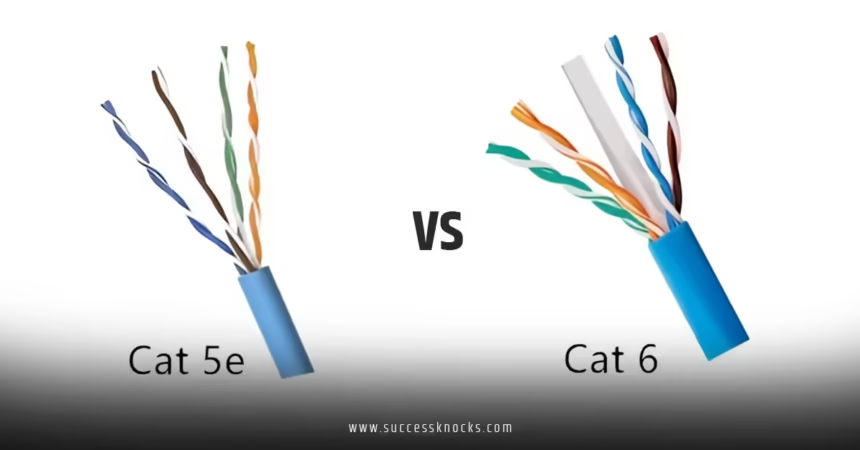
cat5e vs cat6 comes down to one simple truth: most people don’t need the fancier one, but picking wrong can quietly throttle your network for years.
Here’s the no-BS breakdown that search engines love and actual humans can use:
- Cat5e handles up to 1 Gbps reliably over 100 meters and costs less. It’s still perfectly fine for the majority of homes and small offices in 2026.
- Cat6 supports 10 Gbps up to 55 meters (and 1 Gbps much farther), reduces crosstalk better, and future-proofs your setup against faster speeds.
- Choose Cat5e if you’re on a tight budget and your needs top out at gigabit internet. Go Cat6 if you stream 4K/8K heavily, run NAS systems, or want headroom for Wi-Fi 7 and beyond.
- Both work with existing RJ45 connectors and switches. The real difference shows up in noisy environments or when pushing higher speeds.
That quick snapshot answers 80% of what beginners and intermediates search for. Now let’s dig into the details so you make the right call without overpaying.
What Cat5e and Cat6 Actually Are
Think of Ethernet cables like plumbing pipes for your data. Cat5e is the reliable ¾-inch pipe that handles everyday flow without drama. Cat6 is the thicker, better-insulated 1-inch version that moves more volume with less turbulence.
Cat5e (Category 5 enhanced) improved on the original Cat5 by tightening twist rates and reducing interference. It became the workhorse standard around the early 2000s and still powers millions of connections today.
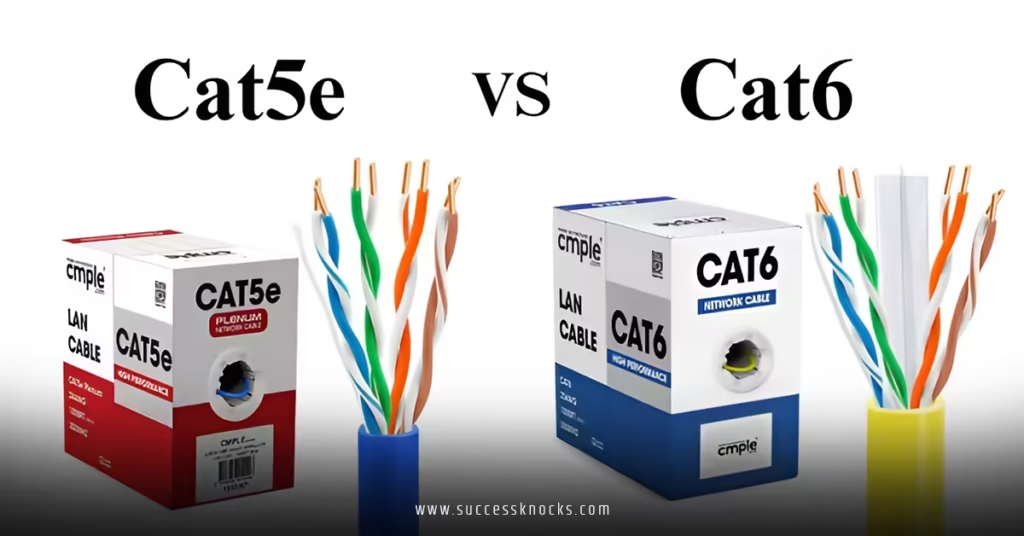
Cat6 (Category 6) arrived with even stricter manufacturing specs: tighter twists, often a plastic spline down the middle for separation, and better shielding options in some variants. The goal? Cut down on crosstalk—the electronic chatter between wire pairs that slows things down.
In practice, you can plug either into the same ports. Your router, switch, or PC won’t complain. The cable rating just sets the upper limit on clean, high-speed performance.
Speed and Bandwidth: The Numbers That Matter
Here’s where cat5e vs cat6 gets real.
Cat5e officially supports 100 MHz bandwidth and 1 Gbps (1000BASE-T) over 100 meters. In the real world, it often pushes a bit more, but don’t count on it for sustained 2.5 Gbps or higher without issues.
Cat6 bumps bandwidth to 250 MHz. It guarantees 10 Gbps (10GBASE-T) up to 55 meters, then drops gracefully to 1 Gbps beyond that. Some Cat6 runs hit 10 Gbps even at 60-70 meters if the installation is clean.
What does that mean for you?
- Home with 500 Mbps or 1 Gbps internet from Comcast, Verizon, or Spectrum? Cat5e is plenty.
- You’re running a home server, multiple 4K streams, large file transfers between computers, or planning multi-gigabit upgrades? Cat6 starts to shine.
- Gaming? Latency differences are usually negligible between the two unless your cable runs through walls with electrical interference.
The kicker is distance. Short runs (under 30 meters) make Cat6 overkill for most. Longer backbone runs in a house or office? That’s where Cat6 earns its keep.
Real-World Performance Differences
I’ve wired up everything from tiny apartments to mid-sized offices. Here’s what actually happens:
In quiet environments with short cables, you might not notice any difference between cat5e vs cat6 at 1 Gbps. Speed tests look identical.
But add interference—power lines nearby, fluorescent lights, bundled cables in a ceiling—and Cat6 pulls ahead. Its design fights alien crosstalk (interference from neighboring cables) much better.
For 10 Gbps? Cat5e usually fails or becomes unstable. Cat6 handles it cleanly up to that 55-meter mark.
Temperature matters too. Cables in hot attics or bundled tightly can see performance drop. Cat6 tolerates those conditions with more margin.
Cost Breakdown: How Much Extra Are You Paying?
In 2026, pricing still favors Cat5e for budget builds.
A 100-foot Cat5e cable might run you $15–25. The same length in Cat6 often lands at $25–40. Bulk boxes show similar gaps.
For a full home rewiring job? Expect Cat6 to add 20-40% to material costs. Labor stays roughly the same since both terminate the same way.
Is the premium worth it? For new construction or major remodels, yes—future-proofing beats ripping out walls again in five years. For quick patch cables or upgrading one room? Stick with Cat5e unless you have specific high-speed needs.
What I usually see: People overspend on Cat6 for simple setups and regret the extra cost. Others cheap out on Cat5e, then hit a wall when they upgrade their internet or add a 10G NAS.
Pros and Cons Comparison
Let’s make this scannable.
| Feature | Cat5e | Cat6 |
|---|---|---|
| Max Speed (official) | 1 Gbps | 10 Gbps (up to 55m) |
| Bandwidth | 100 MHz | 250 MHz |
| Max Distance (1Gbps) | 100 meters | 100 meters |
| Crosstalk Reduction | Good | Excellent |
| Typical Price (100ft) | Lower | 20-50% higher |
| Future-Proofing | Adequate for most homes | Better for multi-gig and beyond |
| Installation | Easier, more flexible | Slightly stiffer, needs more care |
| Best For | Basic internet, light use | Streaming, servers, high-bandwidth needs |
This table cuts through the marketing fluff. Notice how Cat5e still wins on value for everyday use.
Shielded vs Unshielded: Does It Matter?
Most consumer Cat5e and Cat6 cables are UTP (unshielded twisted pair). That’s fine for homes.
In commercial buildings or areas with heavy EMI (electromagnetic interference), look for STP or FTP versions. Cat6 often comes with shielding options more readily.
For the average US household? Skip the shielded stuff unless you’re running cables next to fluorescent ballasts or industrial equipment. It complicates grounding and costs more without real benefit.
Which One Should You Buy Right Now?
If your internet is 1 Gbps or less and you don’t run a home lab, grab Cat5e. Save the cash for better routers or access points.
Planning ahead for Wi-Fi 7 routers, 10G switches, or 8K video everywhere? Cat6 (or even Cat6a if you want to go nuts) makes sense.
Rule of thumb I give clients: If the run is under 50 meters and you’re not pushing 5 Gbps+, Cat5e is the smart play. Over that or with serious bandwidth hunger? Step up.
What would I do in 2026? For my own house, I’d run Cat6 to every room during any renovation. It’s cheap insurance. For temporary setups or rentals, Cat5e all the way.
Common Mistakes When Choosing Between Cat5e vs Cat6
People trip over the same things every time.
- Buying Cat6 thinking it automatically gives 10 Gbps — Nope. You need 10G-compatible switches, NICs, and short enough runs. The cable is only one piece.
- Using old, damaged, or super-cheap no-name cables — Even Cat6 performs like junk if it’s kinked, stretched, or from a shady seller. Buy from reputable brands like Monoprice, Belkin, or true Cable.
- Ignoring cable category on pre-installed wiring — Many older homes have Cat5 (not even 5e). Test it before assuming.
- Mixing categories in one chain — The whole link performs at the lowest common denominator. One Cat5e patch cord kills your Cat6 run.
- Overpaying for “Cat7” or higher at retail — Cat7 and Cat8 exist but are overkill and often not worth it for most. Stick to Cat5e or Cat6 unless you have enterprise needs.
Fix? Always check the printed legend on the cable sheath. It should clearly say “Cat5e” or “Cat6.” Test with iPerf or online speed tools after install.
Step-by-Step Action Plan for Upgrading Your Network
Ready to decide and act? Follow this:
- Audit your current setup — What’s your internet speed? How long are your cable runs? What devices need high bandwidth?
- Measure distances — Use a tape measure or laser tool for wall-to-wall runs. Factor in extra for slack.
- List your future needs — Planning 2.5G or 10G equipment in the next 3-5 years? Lean toward Cat6.
- Choose and buy — Match the category to your needs. Get pure copper (not CCA—copper-clad aluminum, which is junk for permanent installs).
- Install or hire — For DIY, watch termination videos. Poor crimps ruin everything. Professionals use proper tools and testers.
- Test thoroughly — Use a cable certifier if possible, or at least run speed tests end-to-end.
- Document it — Label both ends. You’ll thank yourself later.
This plan keeps beginners from wasting money and intermediates from half-measures.
Key Takeaways
- cat5e vs cat6 boils down to speed needs versus budget and future plans.
- Cat5e remains excellent value for standard gigabit connections in 2026.
- Cat6 gives breathing room for 10 Gbps and reduces interference headaches.
- Distance and environment affect real performance more than many realize.
- Don’t mix cable categories in critical paths.
- Buy quality cable and terminate properly—category alone doesn’t guarantee results.
- For most US homes, Cat5e still wins on price/performance. Cat6 wins on longevity.
- Test your actual setup rather than trusting box claims.
Conclusion
cat5e vs cat6 isn’t some epic battle—it’s a practical choice about matching the pipe to the flow you need today and tomorrow.
Pick based on your real usage, not hype. Most folks save money with Cat5e and never notice a difference. Others sleep better knowing Cat6 has their back when speeds climb.
Next step? Grab a cable tester and check what you’ve got running in the walls right now. Then decide if an upgrade makes sense.
Simple as that.
FAQs
1. Is Cat6 really faster than Cat5e?
Yes. Cat6 can handle up to 10 Gbps (short distances), while Cat5e is limited to 1 Gbps.
2. Do I need Cat6 for home use?
Not always—but it’s better if you want future-proofing or faster local network speeds.
3. Will Cat6 improve my internet speed?
Only if your router and plan support higher speeds. Otherwise, no major difference.
4. Can I use Cat5e with modern routers?
Yes. It’s fully compatible and still widely used.
5. Is Cat6 worth the extra cost in 2026?
Yes—usually just a small price increase for much better long-term performance.


