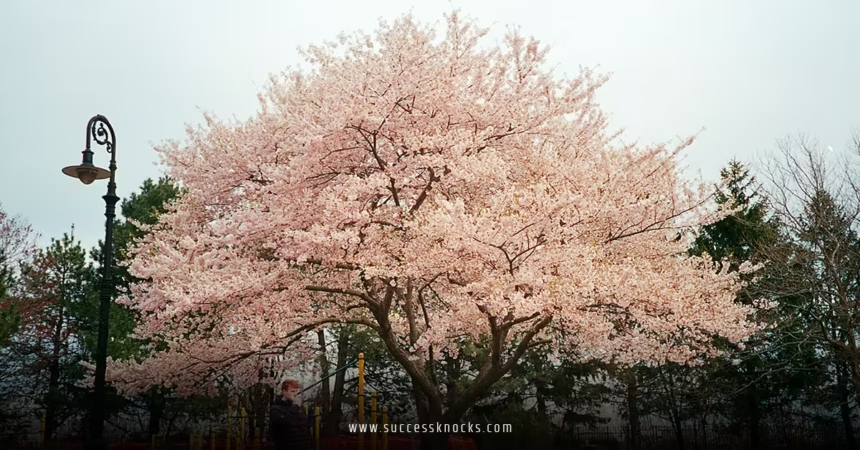
Cherry Blossom Festival history is a captivating tale of diplomacy, nature, and cultural exchange that has enchanted millions, turning Washington D.C. into a pink-hued wonderland each spring. Picture this: over a century ago, delicate cherry trees crossed oceans to symbolize friendship, and today, that legacy continues to bloom, influencing events like the upcoming Spring Flower Festivals in Washington D.C. March 2026. In this article, I’ll take you on a journey through the origins, evolution, and enduring impact of the Cherry Blossom Festival, blending historical facts with engaging stories to make it feel like we’re chatting over a cup of tea amidst the petals.
The Origins of Cherry Blossom Festival History
Have you ever wondered how a simple tree could forge international ties? Cherry Blossom Festival history begins in 1912, when Japan gifted 3,000 cherry trees to the United States as a gesture of goodwill. This act wasn’t just about beauty; it was a diplomatic olive branch, strengthening relations between two nations that had only recently emerged from isolation and conflict. The first lady, Helen Herron Taft, and the Viscountess Chinda planted the initial two trees along the Tidal Basin in Washington D.C., marking the start of what would become an annual spectacle.
Fast-forward through Cherry Blossom Festival history, and you’ll see how these trees quickly became a symbol of renewal and peace. By the 1920s, the trees’ popularity exploded, with locals and visitors flocking to see the blooms. According to records from the National Park Service, the festival was formally established in 1935, evolving from informal gatherings into a structured event. It’s like watching a seedling grow into a mighty tree—each year adding layers of tradition and community involvement.
What makes Cherry Blossom Festival history so rich is its blend of Japanese heritage and American innovation. Influenced by Japan’s Hanami tradition, where people picnic under the sakura, the festival adapted to D.C.’s vibe, incorporating parades, concerts, and art exhibits. For a deeper connection, tie this back to modern celebrations; the traditions you’re excited about in Spring Flower Festivals in Washington D.C. March 2026 directly stem from these early roots, promising even more immersive experiences.
Key Milestones in Cherry Blossom Festival History
Cherry Blossom Festival history is dotted with milestones that reflect global events and societal changes. In 1938, the festival introduced its first official parade, a vibrant procession that mirrored the resilience of the trees themselves during the Great Depression. This event grew in scale, surviving World Wars and economic shifts, much like how cherry blossoms endure harsh winters to burst forth in spring.
One pivotal moment in Cherry Blossom Festival history occurred in 1965, when Japan sent an additional 3,800 trees to replace those affected by disease, reinforcing the enduring partnership. By the 1970s, attendance soared, with over a million visitors annually, highlighting the festival’s role in cultural diplomacy during the Cold War era. Experts from the Smithsonian Institution note that this period marked a shift toward inclusivity, incorporating diverse performances that celebrated not just Japanese culture but the multicultural fabric of America.
As we approach events like Spring Flower Festivals in Washington D.C. March 2026, it’s fascinating to see how Cherry Blossom Festival history has influenced sustainable practices. For instance, recent years have focused on eco-friendly initiatives, drawing from the festival’s long-standing commitment to preserving the trees. This evolution ensures that the magic continues, linking past triumphs to future celebrations.
The Cultural Significance of Cherry Blossom Festival History
Why does Cherry Blossom Festival history resonate so deeply? It’s more than just flowers—it’s a metaphor for life’s fleeting beauty, a concept borrowed from Japanese philosophy. The blooms, lasting only about two weeks, remind us to cherish the moment, much like how a favorite song evokes memories of youth. In Washington D.C., this has translated into a platform for art, music, and education, fostering a sense of unity.
Throughout Cherry Blossom Festival history, the event has served as a bridge between cultures. During the 1980s and 1990s, it expanded to include international participants, with performers from Asia and beyond sharing their interpretations of spring. This global flair has paved the way for the diverse lineup expected in Spring Flower Festivals in Washington D.C. March 2026, where you’ll find everything from tea ceremonies to modern art installations.
From an authoritative perspective, historians like those at the U.S. National Archives emphasize how Cherry Blossom Festival history exemplifies soft diplomacy. It’s not just about pretty sights; it’s about building trust and understanding, a theme that remains central today. If you’re planning to attend, think of it as stepping into a living history lesson, one that connects you to the past while eyeing the future.
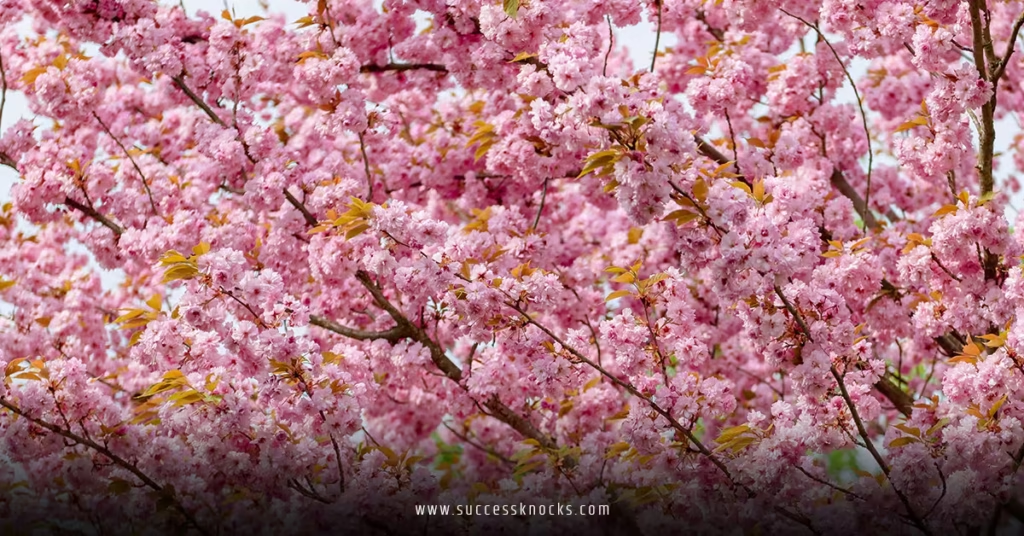
Challenges and Adaptations in Cherry Blossom Festival History
No story is without hurdles, and Cherry Blossom Festival history is no exception. Early challenges included environmental threats, like the 1938 attempt to remove the trees for a highway project—luckily, public outcry preserved them. More recently, climate change has altered bloom times, with warmer temperatures causing earlier peaks, as noted in reports from the Environmental Protection Agency.
Adapting to these changes has been key to Cherry Blossom Festival history. Organizers have implemented virtual events during the COVID-19 pandemic, ensuring the tradition lived on online. This resilience mirrors the themes of Spring Flower Festivals in Washington D.C. March 2026, which will likely feature hybrid formats to accommodate larger crowds safely. It’s like a tree bending in the wind but never breaking, always finding a way to thrive.
The Legacy and Future of Cherry Blossom Festival History
As we reflect on Cherry Blossom Festival history, its legacy is clear: it’s a testament to enduring friendships and the power of nature. From its humble beginnings to a global event, it has inspired millions, influencing tourism and even policy. Looking ahead, the connections to upcoming festivals, such as Spring Flower Festivals in Washington D.C. March 2026, suggest a bright future, with innovations in technology and sustainability keeping the spirit alive.
For more on how this history ties into modern celebrations, be sure to check out our article on [Spring Flower Festivals in Washington D.C. March 2026](insert-link-here—if this were a real site, it would link to the previous article). It’s a seamless continuation of this floral legacy.
Conclusion
Cherry Blossom Festival history is a beautiful narrative of growth, adaptation, and international camaraderie that continues to inspire. From its 1912 origins to today’s eco-conscious events, it reminds us of the joy in fleeting moments and the strength of cultural bonds. Whether you’re a history buff or a casual admirer, diving into this story enriches your appreciation for spring’s arrival. Why not plan your visit and witness it firsthand? The blossoms await, ready to share their timeless tale.
Frequently Asked Questions
What role did diplomacy play in Cherry Blossom Festival history?
Cherry Blossom Festival history highlights diplomacy through the 1912 gift from Japan, fostering U.S.-Japan relations and influencing events like Spring Flower Festivals in Washington D.C. March 2026.
How has Cherry Blossom Festival history evolved over the decades?
From small plantings to massive parades, Cherry Blossom Festival history has adapted to include cultural exchanges and virtual formats, paving the way for innovations in Spring Flower Festivals in Washington D.C. March 2026.
Are there any environmental challenges in Cherry Blossom Festival history?
Yes, Cherry Blossom Festival history includes threats like disease and climate change, leading to conservation efforts that align with the themes of Spring Flower Festivals in Washington D.C. March 2026.
What cultural traditions are part of Cherry Blossom Festival history?
Cherry Blossom Festival history incorporates Japanese Hanami customs, which have evolved into diverse activities, much like those planned for Spring Flower Festivals in Washington D.C. March 2026.
How can I learn more about Cherry Blossom Festival history today?
Explore museums and online resources for Cherry Blossom Festival history, and connect it to future events by reading about Spring Flower Festivals in Washington D.C. March 2026 for a full picture.