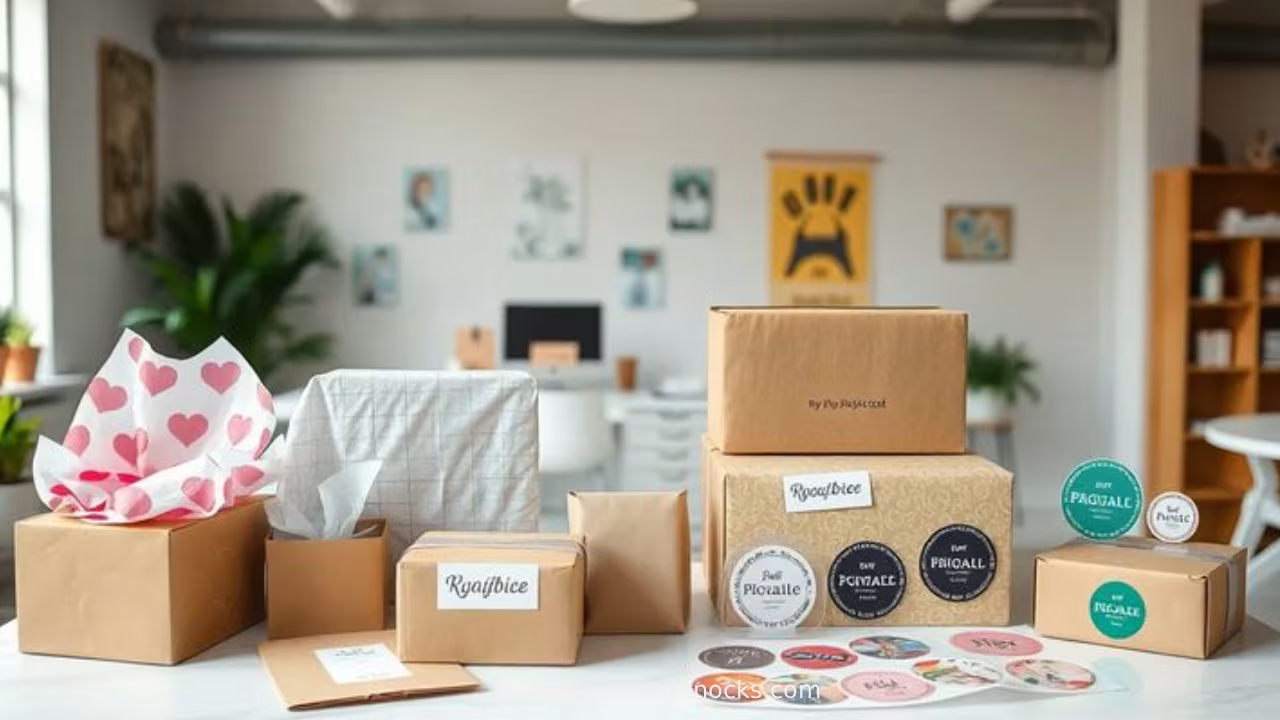
Cost comparison: reusable vs. single-use packaging for e-commerce starts with one hard question every operator eventually faces: does the higher sticker price of reusables ever pay for itself, or does single-use stay cheaper forever? The answer is not theoretical. It sits in the unit economics of your specific order volume, return rate, and how cleanly you close the loop.
Here’s the quick breakdown:
- Single-use packaging wins on day-one simplicity and low material cost—poly mailers often land under $0.25, corrugated boxes $0.50–$2 at volume.
- Reusable systems cost 3–10× more upfront but can drop per-use cost 60–80% once they hit enough cycles.
- Break-even typically lands between 5 and 40 uses, driven almost entirely by loss rate and reverse logistics expense.
- High product-return categories (fashion, apparel) give reusables a natural edge because the package already travels back.
- The bigger picture of building the entire operation sits in the full guide to a reusable packaging business for ecommerce.
Get the numbers wrong and you bleed margin. Get them right and packaging stops being pure cost and starts behaving like a controlled asset.
What actually drives the cost comparison: reusable vs. single-use packaging for e-commerce
Most people stop at the purchase price. That’s the easy part. The real cost comparison: reusable vs. single-use packaging for e-commerce lives in total cost of ownership across the full cycle.
Single-use is predictable. You buy it, fill it, ship it, and never see it again. Material cost is transparent. Labor is simple. No inventory of empties. No cleaning. No tracking. For many low-volume or highly variable SKUs, that simplicity still wins.
Reusable packaging flips the model. You buy fewer units that travel multiple times. The packaging becomes circulating inventory. Every extra trip lowers the amortized cost—until the return rate or cleaning bill ruins the math.
In my experience, the three variables that decide the winner are:
- Cycle count achieved before loss or damage.
- Cost and friction of getting the empty package back.
- Whether your category already generates product returns that can piggy-back the packaging return.
Miss any one of those and the spreadsheet lies to you.
Side-by-side cost table for typical e-commerce volumes
Here’s a realistic snapshot using 2025–2026 U.S. market ranges for mid-volume brands (roughly 2,000–10,000 orders per month). These are material-plus-handling figures, not full landed shipping rates.
| Cost Element | Single-Use (Poly Mailer / Box) | Reusable (Tote / Bag System) | Notes |
|---|---|---|---|
| Upfront unit cost | $0.10–$1.80 | $3–$15 | Volume pricing assumed |
| Cost per use at 5 cycles | $0.10–$1.80 | $0.60–$3.00 | Early stage |
| Cost per use at 20 cycles | Same | $0.15–$0.75 | Typical target |
| Cost per use at 40+ cycles | Same | $0.08–$0.40 | High-performing programs |
| Reverse logistics per cycle | $0 | $1.50–$4.50 | Biggest swing factor |
| Loss rate impact | None | 5–15% annual replacement | RFID or deposits reduce this |
| Cleaning / inspection | None | $0.20–$0.80 | Scales with volume |
Data drawn from industry benchmarks and operator reports. Your numbers will shift with negotiated carrier rates and whether you run your own return network or pay a third party.
Notice the pattern: single-use stays flat. Reusable starts higher and slopes downward—if the package comes back.
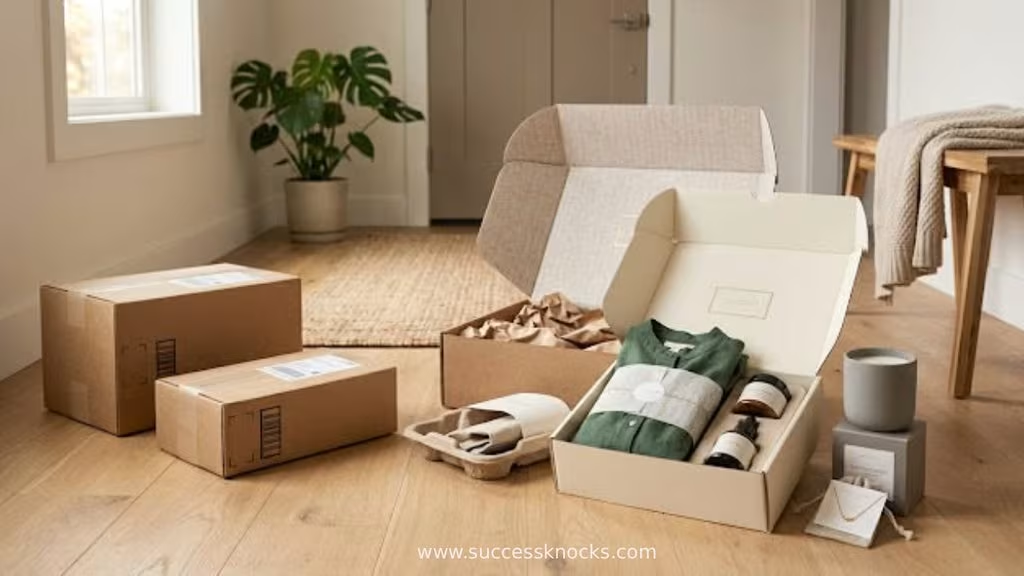
Where single-use still makes pure financial sense
Not every brand should switch tomorrow. Single-use remains the rational choice when:
- Order volume is low or highly seasonal.
- Product dimensions vary wildly (hard to standardize a reusable pool).
- Return rates sit under 10–12%.
- You lack warehouse space or process discipline for empty inventory.
Apparel brands with 25–35% returns often see the opposite. The package was coming back anyway. Why buy a new box for the return trip?
One clean analogy: single-use packaging is like disposable coffee cups on a road trip. Cheap and convenient until you notice the trash bag in the trunk is overflowing and you’re still buying more cups. Reusable is the insulated mug you wash at the next stop. Higher first cost, lower long-term mess—provided you actually bring it back.
Step-by-step action plan for beginners testing the numbers
If you’re intermediate or still early, don’t jump to a full fleet. Run a controlled pilot.
- Pull 90 days of order data. Segment by product category, average order value, and actual return rate.
- Price current single-use spend accurately—include tape, void fill, and labor minutes per package.
- Request quotes from two or three reusable providers for a matched SKU set. Ask for cycle life claims and real loss-rate data from similar clients.
- Model three scenarios: 10 cycles, 20 cycles, 30 cycles. Plug in realistic reverse-logistics costs (carrier return rates or drop-point fees).
- Launch a 500–1,000 order pilot on one product line. Track every package with simple QR or RFID.
- Measure actual return rate and condition after 60–90 days. Adjust the model with real data.
- Decide: scale, refine, or stay with single-use for that category.
What I’d do if I were starting a mid-size apparel brand today: start the pilot on the highest-return SKUs only. Use product returns as the free ride home for the packaging. That single decision often cuts the reverse-logistics cost in half.
For the operational details of getting empties back cleanly, the mechanics sit in the separate discussion of how return and reuse systems actually work.
Common mistakes & how to fix them
Most failed pilots share the same four errors.
Mistake 1: Treating loss rate as a soft number.
A 15% annual loss rate can erase every savings projection. Fix: deposit systems, RFID tagging, or clear customer messaging that the package is tracked and expected back.
Mistake 2: Ignoring cleaning and inspection labor.
Dirt, stickers, and minor damage add real dollars. Fix: design packaging that cleans fast or partner with a provider who handles sanitation at scale.
Mistake 3: Assuming every customer will return the empty package with the same enthusiasm they return a sweater.
They won’t. Fix: incentives that feel automatic—store credit, next-order discount, or prepaid return labels that travel with the original shipment.
Mistake 4: Running the pilot without a control group.
You need side-by-side cost and damage data. Fix: keep a parallel single-use stream on identical SKUs so the comparison is clean.
I’ve watched brands burn six figures because they skipped the control group and then blamed the packaging when the real issue was messy data.
External factors that tilt the scale in 2026
U.S. brands face rising corrugated prices and growing pressure from extended producer responsibility conversations at the state level. Packaging material costs as a percentage of revenue already sit in the 3–6% range for healthy D2C brands; anything higher signals room to optimize. Industry benchmarks from operators auditing hundreds of brands show median packaging cost per order around $1.80 across categories, with apparel often lower and home goods higher.
European regulatory pressure (especially the Packaging and Packaging Waste Regulation) is already pushing large retailers toward reusable formats, and those models are migrating. Collaborative, pooled systems with shared infrastructure can reach cost parity or better for certain product types once scale kicks in.
On the pure cost side, well-managed programs routinely report material cost reductions of 15–25% once RFID-tracked totes reach steady rotation, particularly in high-frequency fulfillment.
None of these numbers are guarantees. They are signals that the economics have moved past pure green marketing.
Key Takeaways
- Single-use packaging still wins on simplicity and low-volume or low-return operations.
- Reusable systems become cheaper per use after roughly 10–40 cycles when loss rates stay low and reverse logistics are controlled.
- High product-return categories (especially fashion) give reusables a structural advantage because the package already travels home.
- The three decisive variables are achieved cycle count, reverse-logistics cost, and actual package loss rate.
- Run a controlled pilot with real tracking data before scaling—spreadsheets lie until the field data arrives.
- Deposits, RFID, and automatic incentives raise return rates enough to change the math.
- Packaging cost as a share of revenue should stay in the 3–6% band for healthy mid-market brands; reusables can help hit the lower end of that range once optimized.
The cost comparison: reusable vs. single-use packaging for e-commerce is no longer a philosophical debate. It is a spreadsheet exercise with real operating levers. Map your return rates, price the reverse trip honestly, and test at small scale. The brands that treat packaging as circulating inventory instead of disposable cost are the ones quietly protecting margin while everyone else keeps buying more boxes.
FAQs
How many uses does reusable packaging need before it beats single-use on cost?
Most programs break even between 10 and 40 cycles. The exact number depends on upfront price, reverse logistics expense, and loss rate. Hit 20 clean cycles with low shrinkage and the per-use cost usually undercuts single-use by a clear margin.
Does the cost comparison: reusable vs. single-use packaging for e-commerce change for apparel brands?
Yes. Apparel return rates of 20–35% let the packaging ride home with the product return, cutting or eliminating the separate reverse-logistics bill. That single factor often flips the economics faster than in low-return categories.
What is the biggest hidden cost in reusable systems?
Empty-package recovery and the labor or fees required to inspect and clean them. If that line item is not modeled accurately, the projected savings disappear.