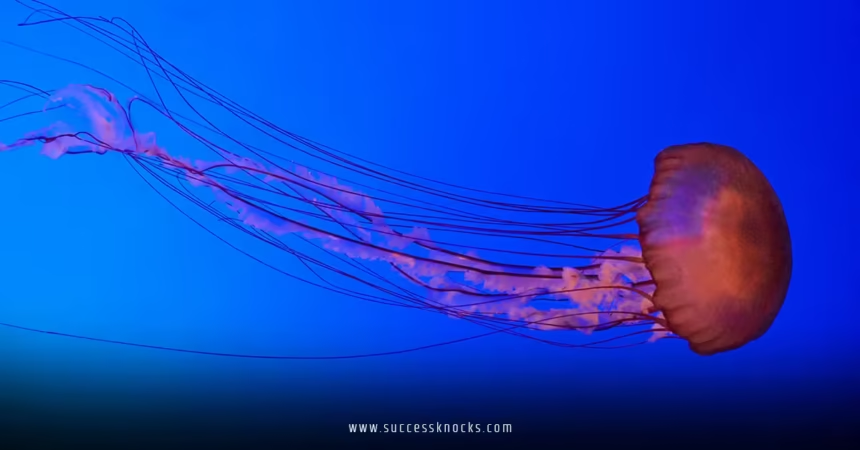
Deep sea jellyfish adaptations fascinate scientists and ocean enthusiasts alike. Imagine drifting through pitch-black waters under crushing pressure, with food scarcer than a desert oasis—yet these gelatinous wonders not only survive but flourish. How do they do it? Let’s explore the incredible ways deep sea jellyfish adaptations allow them to conquer one of Earth’s harshest environments.
The Harsh Realities of the Deep Sea: Why Adaptations Matter
The deep ocean, often called the midnight zone (below 1,000 meters), throws extreme challenges at its inhabitants. Pressure can exceed 1,000 atmospheres—enough to crush most surface creatures. Temperatures hover near freezing, sunlight vanishes entirely, and food arrives sporadically as “marine snow” from above.
Deep sea jellyfish adaptations evolved to tackle these issues head-on. Their soft, watery bodies and clever strategies turn disadvantages into strengths. Isn’t it amazing how evolution crafts perfection in such unforgiving places?
Gelatinous Bodies: Buoyancy, Efficiency, and Pressure Resistance
At the heart of deep sea jellyfish adaptations lies their jelly-like composition—mostly water with minimal solid tissue. This isn’t weakness; it’s genius.
These bodies provide neutral buoyancy, letting jellies float without constant swimming. In a low-energy world, this saves precious calories. Building and repairing a gelatinous form costs little, unlike bony or shelled structures.
Under immense pressure, flexible bodies compress without damage. Recent studies on related comb jellies reveal specialized cell membranes with curved lipids that maintain shape in the depths. True jellyfish likely use similar tricks, explaining why they thrive where others collapse.
Think of it as nature’s inflatable raft—light, resilient, and perfectly suited for drifting.
Camouflage in the Dark: Transparency and Coloration
In eternal darkness, visibility means vulnerability. Deep sea jellyfish adaptations include masterful camouflage.
Many species are nearly transparent, blending seamlessly with water. Predators swim right past these ghostly forms.
Others, like the deep-sea crown jelly (Atolla), sport deep red bells. In the abyss, where only blue light penetrates faintly, red appears black—perfect invisibility.
These color strategies highlight how deep sea jellyfish adaptations prioritize stealth over speed.
Bioluminescence: The Glow of Survival
Bioluminescence ranks among the most dazzling deep sea jellyfish adaptations. Over 90% of deep-sea animals produce light, and jellies excel at it.
Why glow in the dark? Defense tops the list. The Atolla jellyfish unleashes a spectacular “pinwheel” display—a circling blue light show that startles attackers or attracts bigger predators to handle the threat. It’s like setting off a burglar alarm!
Some use light for counter-illumination, matching faint downwelling light to erase their silhouette from below-hunting predators.
Feeding Strategies: Passive Predators in a Sparse World
Food scarcity demands efficiency. Deep sea jellyfish adaptations favor passive hunting over active chases.
Many drift with currents, trailing tentacles or oral arms like living nets. Prey—plankton, small fish, or other jellies—bumps into sticky surfaces and gets ensnared.
The helmet jellyfish (Periphylla periphylla) uses numerous tentacles to capture passing morsels. The crown jelly deploys one ultra-long tentacle, up to six times its bell width, for snagging food while pulsing slowly.
One standout example? The giant phantom jellyfish (Stygiomedusa gigantea). Its four ribbon-like oral arms stretch over 10 meters, creating a massive trap. As detailed in our article on [giant phantom jellyfish behavior and feeding methods explained], this rare giant relies entirely on passive entanglement without traditional stinging tentacles.
These methods conserve energy perfectly for the deep’s lean times.
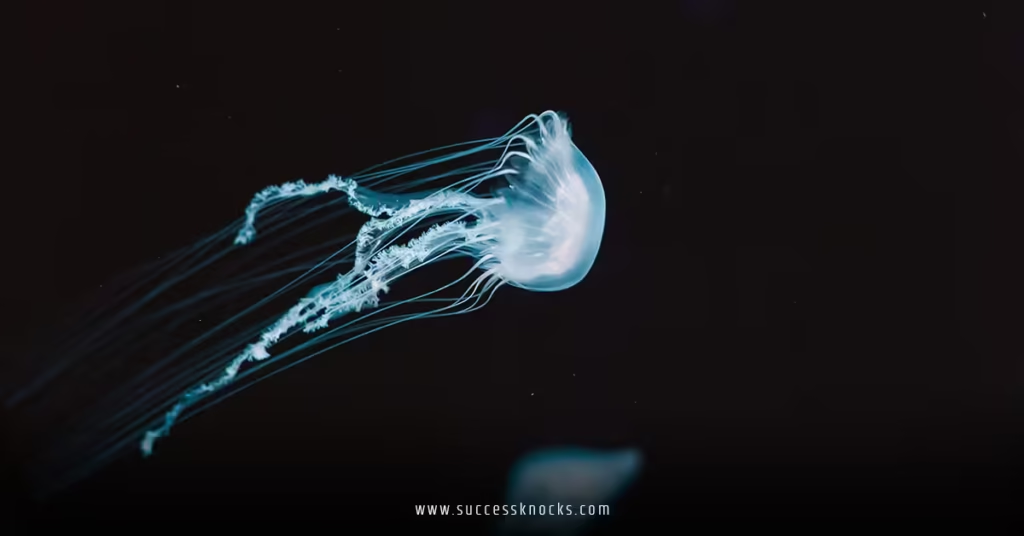
Locomotion: Slow and Steady Wins the Race
Active swimming wastes energy, so deep sea jellyfish adaptations emphasize minimal movement.
Gentle bell pulsations provide just enough propulsion to adjust position or follow currents. Many simply drift, letting ocean flows carry them to new feeding grounds.
This low-effort lifestyle suits their gelatinous build—why fight the water when you can flow with it?
Standout Examples of Deep Sea Jellyfish Adaptations in Action
The Crown Jelly (Atolla species)
This midnight zone resident boasts a grooved bell and that famous bioluminescent alarm. Its red color hides it, while the extended tentacle maximizes feeding reach.
The Helmet Jellyfish (Periphylla periphylla)
With a sturdy bell and 12 long tentacles, it pulses through the water column. Mild venom subdues prey in colder depths.
The Giant Phantom Jellyfish
Elusive and enormous, it features massive oral arms for passive capture and even hosts symbiotic fish under its bell for protection.
Comb Jellies (Ctenophores)
Though not true jellyfish, these relatives showcase rainbow-like light diffraction via comb rows and pressure-resistant membranes.
These species illustrate the diversity of deep sea jellyfish adaptations.
The Bigger Picture: Why Deep Sea Jellyfish Adaptations Matter
These creatures play vital roles in carbon cycling, transferring energy from surface to depths. Their carcasses feed benthic communities, linking ecosystems.
With climate change and deep-sea mining threats looming, understanding deep sea jellyfish adaptations becomes crucial for protection.
Conclusion: Masters of the Abyss
Deep sea jellyfish adaptations—from gelatinous efficiency and bioluminescent brilliance to passive feeding and perfect camouflage—paint a picture of evolutionary triumph. These fragile-looking drifters prove resilience in the extreme. Next time you ponder the ocean’s mysteries, remember these silent survivors lighting up the dark. Their story reminds us how much wonder lies beneath the waves, waiting for us to appreciate and safeguard it.
FAQs
What are the main deep sea jellyfish adaptations for handling pressure?
Gelatinous, water-filled bodies compress flexibly, while specialized cell membranes (seen in relatives like comb jellies) maintain structure under extreme depths.
How do deep sea jellyfish adaptations help with finding food?
Passive strategies like trailing long tentacles or oral arms act as nets, capturing scarce plankton without energy-intensive chasing.
Why is bioluminescence important in deep sea jellyfish adaptations?
It serves defense (startling predators or attracting help), camouflage (counter-illumination), and possibly communication in the lightless abyss.
How does the giant phantom jellyfish fit into deep sea jellyfish adaptations?
Its enormous oral arms and lack of stinging tentacles exemplify passive feeding; learn more in [giant phantom jellyfish behavior and feeding methods explained].
Are deep sea jellyfish adaptations different from surface jellyfish?
Yes—deep species prioritize energy conservation, pressure resistance, and light-based strategies over the stinging power common in shallower waters.