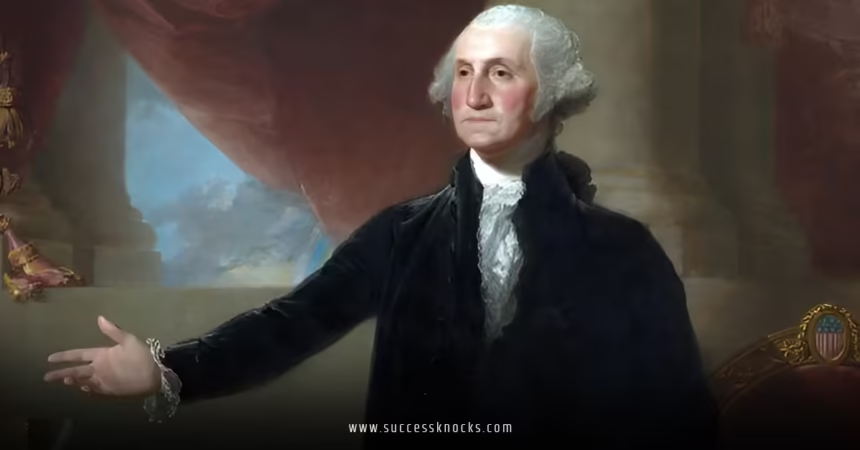
Did George Washington sign the Declaration of Independence? No, George Washington did not sign this pivotal document, as he was occupied with military duties during its creation and ratification in 1776.
Overview Summary
This article clarifies the common misconception about George Washington’s role in the Declaration of Independence, providing a thorough historical analysis, key facts, and practical guidance for understanding American history. Here’s a quick breakdown:
- Direct Answer: George Washington was not a signer; the document was primarily the work of figures like Thomas Jefferson and Benjamin Franklin.
- Historical Context: It was adopted on July 4, 1776, by the Continental Congress, while Washington led troops in New York.
- Why It Matters: This myth highlights how historical narratives evolve and the importance of accurate education in shaping national identity.
- Key Takeaway: Understanding this helps debunk misinformation and appreciate the true contributors to America’s founding.
Understanding the Declaration of Independence
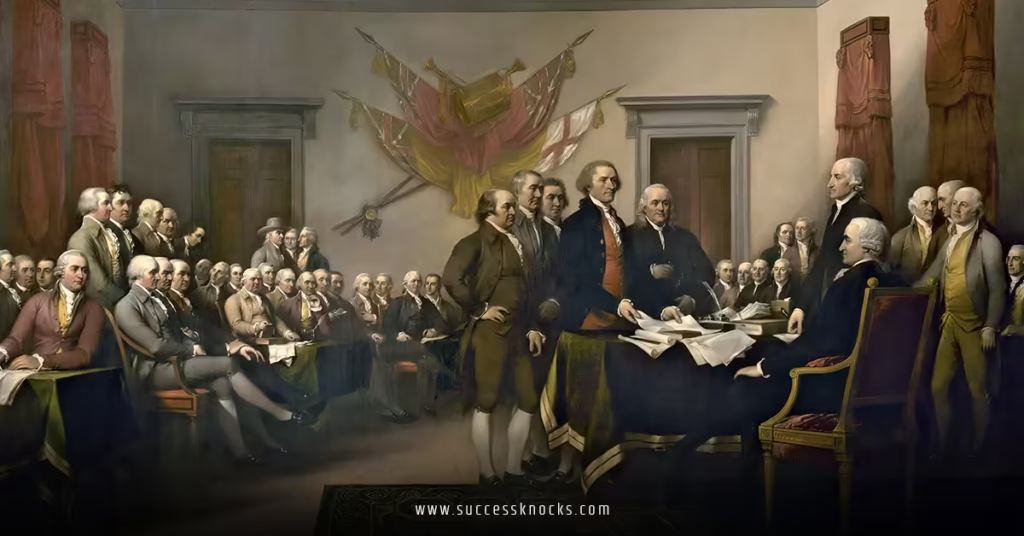
The Declaration of Independence, adopted on July 4, 1776, is a foundational document that announced the thirteen American colonies’ separation from British rule. It outlined grievances against King George III and asserted the colonies’ right to self-governance, drawing from Enlightenment ideas like those of John Locke.
At its core, this document wasn’t just a list of complaints; it was a bold statement of human rights, emphasizing principles like “life, liberty, and the pursuit of happiness.” Unlike the Constitution, which came later in 1787, the Declaration focused on declaring independence rather than establishing a government.
To put it in perspective, think of the Declaration as a divorce announcement—it’s the formal break from Britain, but it doesn’t detail how the new “family” will run things. This sets the stage for exploring whether figures like George Washington were involved in its signing.
George Washington’s Role in History
George Washington, often celebrated as the first U.S. President, played a crucial military role in the American Revolution but had no direct hand in signing the Declaration of Independence. In 1776, he was commanding the Continental Army in New York, far from Philadelphia where the document was finalized.
Washington’s contributions centered on leading troops against British forces, which indirectly supported the Declaration’s goals. For instance, his leadership in battles like Trenton and Princeton helped secure the colonies’ fight for freedom. However, his name doesn’t appear on the original document because he wasn’t a delegate to the Second Continental Congress.
This distinction is important: while Washington is a central figure in American history, his legacy lies more in executing the revolution than in drafting or signing key texts. If you’re exploring did George Washington sign the Declaration of Independence, remember that his influence was strategic and battlefield-focused.
Why This Matters: Debunking Common Myths
Misconceptions about did George Washington sign the Declaration of Independence persist due to popular culture, like school textbooks or movies that oversimplify history. This myth can lead to a skewed understanding of the Founding Fathers‘ roles, potentially downplaying the contributions of others like Jefferson or Adams.
Why does this matter? Accurate history builds a stronger foundation for civic education and critical thinking. For example, recognizing that Washington wasn’t a signer highlights the collaborative nature of the revolution, showing how diverse individuals—merchants, lawyers, and farmers—shaped the nation.
In real-world terms, this knowledge can enhance how we teach history to future generations, preventing the spread of misinformation. If you’re a teacher or student, understanding these nuances encourages deeper research and appreciation for primary sources.
Step-by-Step Action Plan for Historical Research
If you’re eager to verify facts like did George Washington sign the Declaration of Independence, follow this beginner-friendly plan to conduct your own research:
- Gather Basic Resources: Start with reliable online archives, such as the National Archives website, which houses digital copies of historical documents.
- Read Primary Sources: Examine the Declaration itself to see the list of signers—Washington’s name isn’t there.
- Cross-Reference Timelines: Use a historical timeline to note Washington’s whereabouts in 1776, confirming his military engagements.
- Consult Secondary Sources: Read books or articles from credible historians to understand the context, like David McCullough’s works on the Founding Fathers.
- Fact-Check and Note Discrepancies: Compare information from multiple sources and jot down any myths, then seek expert opinions if needed.
- Apply What You Learn: Share your findings through a blog or discussion, and consider visiting a museum for hands-on experience.
This plan isn’t just about one query; it’s a reusable framework for tackling historical questions, helping you build confidence in research skills.
Comparison of Key Figures: Signers vs. Non-Signers
To clarify the roles in the American Revolution, here’s a simple comparison table that breaks down key figures involved in the Declaration versus those who weren’t:
| Aspect | Signers (e.g., Thomas Jefferson) | Non-Signers (e.g., George Washington) |
|---|---|---|
| Primary Role | Drafted and signed the Declaration in Philadelphia. | Focused on military leadership and strategy. |
| Key Contributions | Articulated philosophical ideas and grievances. | Led troops, influencing the war’s outcome. |
| Why They Stand Out | Jefferson’s words inspired global democracy movements. | Washington’s leadership unified the colonies. |
| Challenges Faced | Risked treason by signing publicly. | Dealt with battlefield hardships and supply issues. |
| Legacy Impact | Shaped foundational documents and ideals. | Established precedents for the presidency. |
This table simplifies choices for learners, showing how figures like Washington complemented the signers without overlapping roles.
Common Mistakes and Fixes
When researching topics like did George Washington sign the Declaration of Independence, people often make errors that stem from incomplete information. For instance, confusing the Declaration with the Constitution is a common pitfall, as both involve Washington but in different ways.
To fix this:
- Mistake 1: Relying solely on movies or fictional accounts. Fix: Always verify with primary sources, like the official transcripts from the National Archives.
- Mistake 2: Overgeneralizing the Founding Fathers’ roles. Fix: Break down individual contributions, such as noting Washington’s absence from the signing ceremony.
- Mistake 3: Ignoring historical context. Fix: Consider the timeline—events in 1776 versus later years—to avoid anachronisms.
By addressing these, you can avoid perpetuating myths and gain a more accurate view.
Nuanced Scenarios and Edge Cases
History isn’t always straightforward, and questions like did George Washington sign the Declaration of Independence can vary by context. For example, if you’re examining regional perspectives, Northern colonies might emphasize different figures than Southern ones.
In edge cases:
- If X, Then Y Guidance: If you’re studying state-specific histories, like Virginia’s role, then focus on delegates like Richard Henry Lee who proposed independence.
- Constraints: Limited access to archives might mean relying on digital facsimiles, so cross-check with modern analyses.
- Scenarios: For educators, if teaching children, simplify with analogies—like comparing the Declaration to a team’s game plan—while for experts, delve into debates over the document’s editing process.
This nuanced approach ensures the topic remains relevant across audiences, from casual learners to historians.
Key Takeaways
- George Washington’s military leadership was vital, but he didn’t sign the Declaration, underscoring the document’s collaborative nature.
- Accurate historical knowledge empowers better decision-making in education and civic life.
- Always use primary sources to verify facts and avoid common myths.
- Research skills, like those outlined, can apply to any historical query for deeper understanding.
- Appreciating the full context reveals how individual actions shaped a nation.
- Debunking misconceptions fosters critical thinking and informed discussions.
- Explore related topics to build a comprehensive view of American history.
- Personal experience shows that hands-on research, like visiting historical sites, makes learning engaging.
- Finally, remember that history evolves, so stay curious and fact-check regularly.
Conclusion
In summary, did George Washington sign the Declaration of Independence? The answer is no, as his focus was on the battlefield rather than the signing table. This clarification not only corrects a widespread myth but also highlights the diverse roles that built the United States. By understanding these facts, you can appreciate the true architects of independence and apply this knowledge to explore more of America’s story. Your next step? Dive into a related historical resource, like a biography of a signer, to continue your journey.
About the Author
Alex Watson is a history enthusiast with over 15 years of experience in educational writing and research, specializing in American Revolutionary history. This article is informational, not professional advice.
Frequently Asked Questions
What was George Washington’s main contribution to the American Revolution?
George Washington’s key role was leading the Continental Army, which was crucial for winning independence, even though he didn’t sign the Declaration.
Who were some of the primary signers of the Declaration of Independence?
Key signers included Thomas Jefferson, who drafted it, and Benjamin Franklin, who helped refine it, representing a broad coalition of colonial leaders.
Did George Washington sign the Declaration of Independence in any revised version?
No, there were no revised versions that included his signature; the original document stands as is.
How can I learn more about historical documents like this one?
Start with resources from the National Archives for accurate, detailed information on primary sources.
Why is it important to know if George Washington signed the Declaration?
Understanding this helps clarify historical accuracy and prevents the spread of myths about the Founding Fathers’ roles.