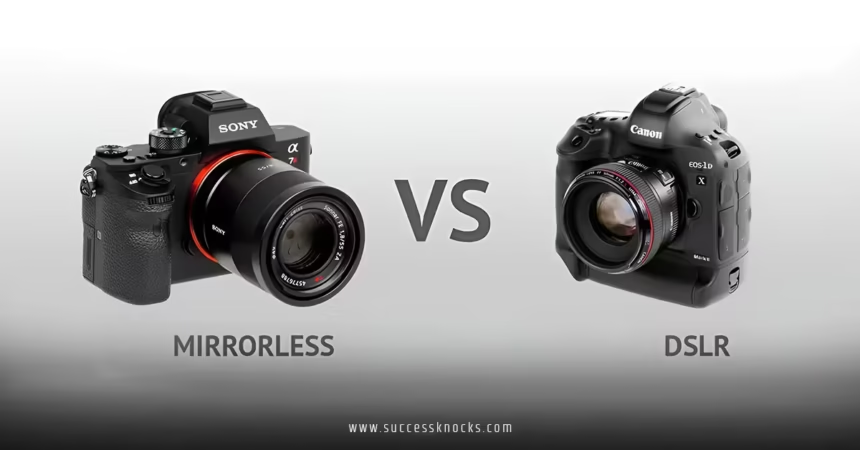
Digital SLR vs mirrorless camera debates rage on, but the gap has widened dramatically by 2026. Mirrorless systems now dominate new camera sales and innovation, while DSLRs linger as solid, often cheaper options—especially for budget buyers snapping up used or remaining stock gear.
Here’s the quick lowdown:
- Mirrorless wins on speed, size, autofocus, and video. Electronic viewfinders show exactly what your exposure and white balance will look like in real time.
- DSLRs still shine with optical viewfinders, longer battery life, and rugged ergonomics. Some photographers swear by that direct, lag-free feel.
- For most beginners and intermediates in the USA: Mirrorless is the smarter long-term pick. Manufacturers have largely stopped developing new DSLRs.
- Budget reality check: You can score excellent used DSLRs cheap, but new mirrorless bodies and lenses offer better future-proofing.
- Bottom line: Image quality is excellent on both. Your choice hinges on shooting style, budget, and whether you value tradition or modern features.
What Digital SLR vs Mirrorless Camera Actually Means
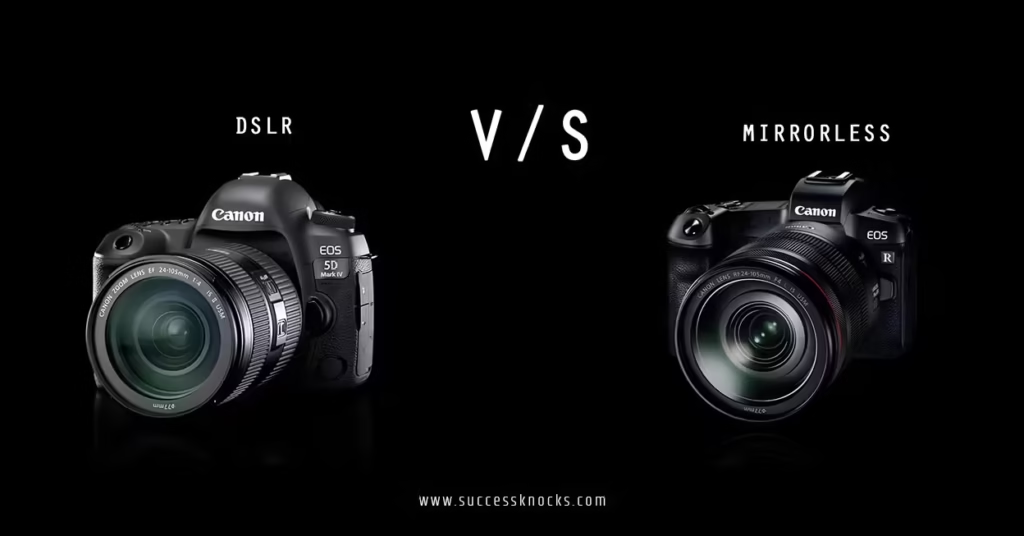
A digital SLR (DSLR) uses a movable mirror to bounce light from the lens up to an optical viewfinder. Flip the mirror up for shooting, and the sensor captures the image. Classic mechanical design.
A mirrorless camera skips the mirror entirely. Light hits the sensor directly, and you preview through an electronic viewfinder (EVF) or rear screen. This design allows smaller bodies, faster performance, and constant sensor access for smarter autofocus.
The kicker? Mirrorless tech has matured fast. What started as a gimmick is now the default for most new interchangeable-lens cameras.
Core Differences Side by Side
Let’s cut through the noise with a clear comparison. Here’s how they stack up in 2026:
| Feature | Digital SLR (DSLR) | Mirrorless Camera |
|---|---|---|
| Viewfinder | Optical (real light, no lag, no battery drain) | Electronic (shows exposure preview, can lag in extreme low light) |
| Size & Weight | Bulkier, heavier grip for big lenses | Smaller, lighter bodies and often smaller lenses |
| Autofocus | Strong through viewfinder; slower in live view | On-sensor phase detection across the frame; superior subject tracking (eyes, animals, vehicles) |
| Battery Life | Excellent (often 600–3000+ shots) | Shorter (300–600 shots typical; EVF drains power) |
| Video Capabilities | Limited on most models | Superior 4K/8K, better stabilization, eye AF |
| Burst Shooting | Good mechanical shutter speeds | Faster with electronic shutter; minimal blackout |
| Lens Ecosystem | Mature (especially Canon EF, Nikon F used market) | Rapidly expanding native lenses; adapters work well |
| Future Support | Minimal new bodies; repairs may fade | Active development; new features rolling out |
| Price (New/Used) | Often cheaper used; few new options | Higher entry for new bodies, but value rising |
This table highlights the trade-offs. No format is universally “better”—it depends on you.
Viewfinders: The Heart of the Debate
Ever peered through a DSLR’s optical viewfinder? It’s like looking straight through the scene. No screen simulation. No lag. Pure, instantaneous reality. Many veterans still prefer it for action or bright daylight.
Mirrorless EVFs? They simulate your final image—exposure, depth of field, white balance. Want to check if that sunset shot is properly exposed before you click? Done. Modern high-res EVFs (often 5+ million dots) feel fluid, with minimal lag in good conditions.
Here’s the thing: Some folks report getting more “in the moment” with DSLRs because the EVF doesn’t tempt constant chimping. Others love the what-you-see-is-what-you-get preview that speeds learning.
Which feels better? Try both in a store if possible. Your eyes and shooting habits decide.
Autofocus and Performance
Mirrorless cameras crush this category in 2026. On-sensor autofocus covers the entire frame with AI-driven subject detection—eyes, faces, birds, cars, whatever. Tracking sticks like glue, even in tricky light or clutter.
DSLRs rely on a dedicated phase-detect module. It’s fast through the optical viewfinder for stills, but live-view autofocus (for video or rear-screen shooting) often feels clunky by comparison.
Real-world result? Mirrorless makes nailing sharp shots of moving kids, wildlife, or sports way easier for beginners. You spend less time fiddling and more time creating.
Size, Handling, and Portability
Mirrorless bodies are noticeably smaller and lighter. Pair one with compact native lenses, and your travel or all-day hiking kit shrinks. Great if you’re hauling gear around the USA’s national parks or city streets.
DSLRs feel chunkier—bigger grips, more physical buttons. That heft helps balance long telephotos and gives a secure hold in cold or wet conditions. Some pros still grab DSLRs for weddings or events where all-day comfort matters.
Analogy time: Think of DSLRs as classic muscle cars—powerful, familiar, a bit thirsty on resources. Mirrorless? Nimble electric vehicles—efficient, tech-packed, accelerating into the future.
Battery Life and Reliability
DSLRs win here hands down. Many deliver 1,000+ shots per charge because the optical viewfinder uses zero power until you shoot. Mirrorless EVFs and constant sensor readout eat batteries faster.
In practice, carry spares for mirrorless (cheap insurance). Or use power-saving modes. For long events without easy recharging, a DSLR might still edge it out.
Mechanical reliability? Both hold up well. Mirrorless has fewer moving parts (no flipping mirror), which can mean less wear over years of heavy use. DSLRs have decades of proven toughness in pro hands.
Image Quality and Video
Sensor tech has equalized a lot. Both deliver fantastic stills in good light. Mirrorless often pulls ahead in high ISO noise handling and dynamic range thanks to newer designs.
Video? Mirrorless dominates. Better continuous autofocus, in-body stabilization, higher resolutions, and pro features like log profiles make them hybrids for photographers who also shoot clips. DSLRs feel dated for serious video.
Cost Considerations for Beginners and Intermediates
New DSLRs are scarce in 2026. You’re mostly looking at remaining stock or used market bargains—think solid Canon or Nikon bodies with great lenses for hundreds less than equivalent mirrorless.
Mirrorless entry points (like Canon EOS R50 or Nikon Z50II) start affordable and scale up. Used DSLR lenses adapt well to many mirrorless bodies, softening the switch cost.
Rule of thumb: If budget is tight and you shoot mostly stills, hunt used DSLRs. If you want growth room for video or fast action, invest in mirrorless now. Lenses are the real long-term expense—pick a system with a strong ecosystem.
Who Should Choose a DSLR in 2026?
- You love the optical viewfinder feel and don’t mind the bulk.
- Battery life and ruggedness matter more than cutting-edge AF.
- You’re on a tight budget and can grab excellent used gear (plenty of Canon Rebels or Nikon D-series still perform).
- Video isn’t a priority.
Some experienced shooters still prefer DSLRs for specific workflows. No shame in that.
Who Should Go Mirrorless?
Pretty much everyone else. Beginners learn faster with real-time previews and sticky autofocus. Intermediates gain speed, versatility, and future-proofing. Travel shooters appreciate the lighter kit.
In the USA market, mirrorless dominates sales for good reason. New models from Canon, Nikon, Sony, and others keep pushing boundaries.
Practical Buying Advice from the Trenches
I’ve seen too many beginners buy big based on hype, then regret it. Test in person. Rent if possible. Shoot the same scene with both formats.
Consider your lenses first. If you already own DSLR glass, adapters let you test mirrorless without ditching everything.
Prioritize what you shoot most:
- Portraits and events? Mirrorless eye AF is magic.
- Wildlife or sports? Fast tracking wins.
- Landscapes? Both work; weight might tip the scale.
Budget breakdown: Allocate 40-50% to the body, the rest to a versatile zoom and a fast prime. Don’t skimp on glass.
Key Takeaways
- Mirrorless leads in autofocus, video, size, and innovation in 2026.
- DSLRs hold advantages in battery life, optical viewfinders, and sometimes price/ergonomics.
- Image quality is outstanding on both—don’t obsess over specs alone.
- For beginners and intermediates, mirrorless offers the better learning curve and growth path.
- Used DSLRs remain viable bargains, but new development favors mirrorless.
- Your shooting style and priorities matter more than internet arguments.
- Try before you buy. Hands-on feel beats online specs every time.
- The industry has spoken: Mirrorless is the future for most users.
Common Mistakes When Choosing (and How to Fix Them)
- Ignoring ergonomics — A camera that feels awkward in your hands gets left at home. Fix: Handle both in a store for 10-15 minutes.
- Chasing megapixels over usability — More resolution isn’t always better if autofocus or handling suffers. Fix: Match specs to your actual needs.
- Forgetting lenses — Body is just the start. Fix: Research native lens availability and used options early.
- Assuming mirrorless batteries are a dealbreaker — They’re manageable. Fix: Buy extras and use power-saving features.
- Buying based on brand loyalty alone — Systems differ. Fix: Compare real-world reviews for your genre.
Step-by-Step Action Plan for Beginners
- Define your needs — Still photos only? Video too? Travel, sports, portraits? List must-haves.
- Set a realistic budget — Include body + one good zoom + spare battery/memory cards.
- Research systems — Look at Canon RF, Nikon Z, Sony E, etc. Check lens roadmaps.
- Try in person — Visit a local camera store (or big-box with demo models). Shoot test frames.
- Compare used vs new — Check reputable sellers for condition and warranty on used DSLRs.
- Buy and start simple — Master one lens first. Practice exposure and composition before chasing gear.
- Review and upgrade later — Reassess in 6-12 months as your skills grow.
Follow this, and you’ll avoid buyer’s remorse.
Conclusion
Digital SLR vs mirrorless camera comes down to trade-offs, not absolutes. Mirrorless gives you modern performance, learning aids, and longevity that most beginners and intermediates will appreciate right away. DSLRs offer timeless appeal and value that still works great in many scenarios.
Pick based on how you shoot today and where you want to go tomorrow. Grab a camera that excites you to get out and make photos—that’s the real win.
Next step? Head to your nearest camera shop or reputable online retailer and put both types through their paces. Your perfect match is waiting.
External links:
- DPReview’s mirrorless camera buying guide for in-depth testing and comparisons.
- PCMag’s best DSLR and mirrorless cameras for 2026 for expert picks and hands-on insights.
- Digital Camera World’s DSLR vs mirrorless feature for detailed performance breakdowns.
FAQs
Is digital SLR vs mirrorless camera still relevant in 2026?
Yes, but the scales have tipped. Mirrorless offers clear advantages for most new buyers, while DSLRs provide value for specific needs or tight budgets.
Can I use my old DSLR lenses on a mirrorless camera?
Often yes, with adapters from the manufacturer or third parties. Performance is usually excellent, though autofocus speed might vary slightly.
Which is better for video: digital SLR vs mirrorless camera?
Mirrorless, hands down. Superior autofocus tracking, stabilization options, and higher-end video specs make it the choice for hybrid shooters.
Do mirrorless cameras have worse battery life than DSLRs?
Generally yes, due to the EVF and sensor always being active. Carry a couple spares and you’re set for most shooting days.
Should beginners start with digital SLR vs mirrorless camera?
Mirrorless for most. The real-time preview and advanced autofocus accelerate learning without frustration.