E-commerce Payment Options for Small Businesses :
Choosing the right e-commerce payment options for small businesses can feel overwhelming when you’re just getting started. You want customers to check out easily, you need the money in your account quickly, and you don’t want high fees eating into your thin margins. The good news is you don’t need every payment method under the sun. A smart mix of a few reliable options is usually enough to keep sales moving and customers happy.
In this article we’re going to walk through the main e-commerce payment options that work well for small online stores in 2026, what each one actually costs you, and how to decide which ones belong on your checkout page.
Credit and Debit Cards Still Come First
Most online shoppers still expect to pay with a credit or debit card. Visa, Mastercard, American Express and Discover remain the baseline. If you don’t accept them, a large percentage of potential buyers will simply leave.
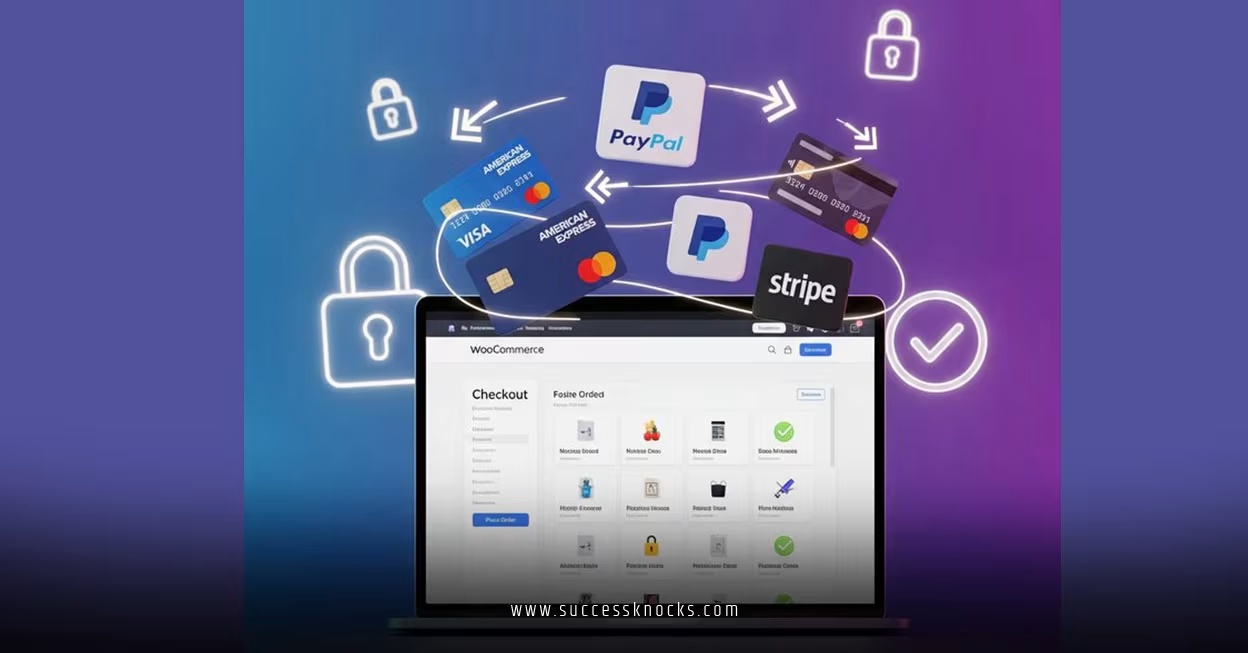
For small businesses the easiest way to accept cards is through a payment gateway or processor such as Stripe, Square or PayPal. These platforms handle the technical side, security and compliance for you. Fees typically sit around 2.6%–2.9% + a small fixed fee per transaction in the US and UK, though interchange-plus pricing from providers like Helcim can be cheaper once your volume grows.
Digital Wallets Are Now Expected
Apple Pay, Google Pay and similar digital wallets have moved from “nice to have” to standard. Customers like the speed and the fact they don’t have to type card details again. Adding these options usually lifts conversion rates, especially on mobile.
Most modern gateways (Stripe, Square, Shopify Payments) let you switch digital wallets on with a few clicks. The processing fees are generally the same as regular card rates.
PayPal and Similar Account-Based Options
PayPal remains one of the most trusted names for online shoppers, particularly for first-time buyers who feel safer using an existing account rather than entering card details on a new site. Many small businesses still see higher conversion when PayPal is offered alongside cards.
PayPal’s fees are often a little higher than pure card processors, and cross-border transactions can cost more. Still, the brand recognition frequently makes up for the extra cost, especially if you sell to international customers.
Bank Transfers and ACH Payments
For higher-value orders or B2B sales, bank transfers and ACH (in the US) or Faster Payments / Bacs (in the UK) can be useful. These methods usually carry lower fees than cards, sometimes just a flat fee or a very small percentage.
The downside is that the money can take a day or two to arrive, and the checkout experience is less instant. They’re best offered as an additional option rather than the primary one for most consumer e-commerce stores.
Buy Now, Pay Later Options
Flexible payment plans have become a regular feature of online checkouts. Customers can split purchases into instalments, which often increases average order value and reduces cart abandonment on bigger ticket items.
If you’re considering adding this option, it’s worth reading our deeper look at BNPL buy now pay later trends UK USA 2026. That piece covers the latest regulatory changes (especially the new UK rules that took effect in July 2026), how merchant fees compare, and practical tips for deciding whether BNPL makes sense for your particular products and margins.

Choosing the Right Mix for Your Store
Here’s a simple way to decide:
- Start with cards + one or two digital wallets. This covers the majority of everyday shoppers.
- Add PayPal if your audience values brand trust or you sell internationally.
- Test BNPL if your average order value is high enough that the extra sales will more than cover the higher merchant fees.
- Consider bank transfers only if you regularly take larger orders or sell to businesses.
Track three numbers closely for the first 60–90 days after any change: conversion rate, average order value, and total payment processing costs as a percentage of revenue. Those figures will tell you quickly whether the new option is helping or hurting.
Practical Tips for Small Businesses
Keep the number of payment buttons on the checkout page limited. Too many choices can actually slow people down. Most successful small stores offer three to five clear options.
Make sure your payment provider supports the countries you sell to and handles currency conversion cleanly if you trade internationally. Also check how quickly funds settle into your bank account — cash flow still matters more than almost anything else when you’re small.
Finally, look at the total cost of ownership, not just the headline percentage. Some platforms charge monthly fees, others take a cut of refunds, and some have higher rates for certain card types. Read the fine print before you commit.
Final Thoughts
The best e-commerce payment options for small businesses are the ones that make it easy for your specific customers to pay while keeping costs under control. You don’t need the most advanced system on the market. You need a reliable, reasonably priced setup that works smoothly on both desktop and mobile.
Start simple, measure the results, and only add more methods when the data shows a clear benefit. That approach will serve you better than chasing every new payment trend that appears.