

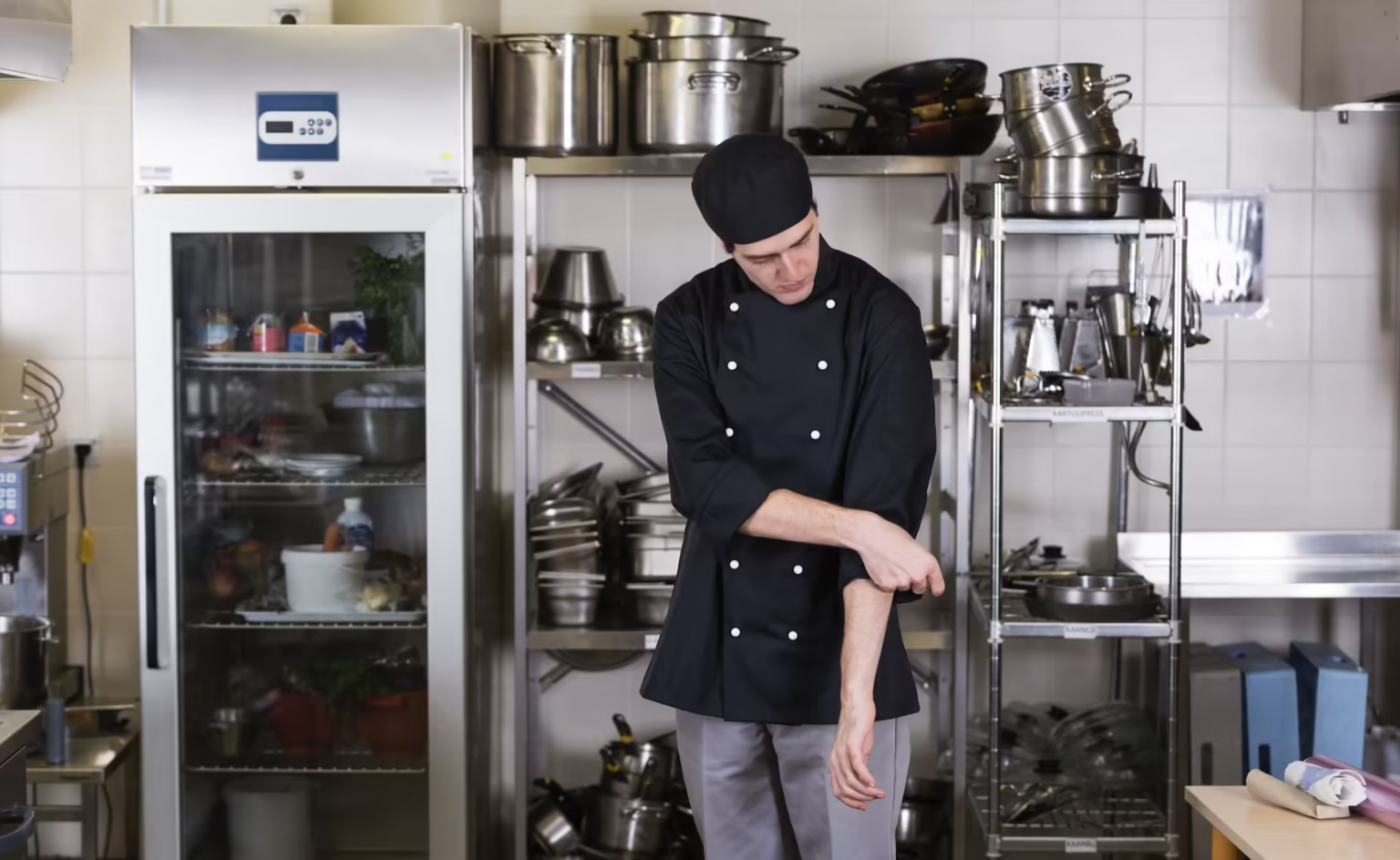
A clean and organized back-of-house area is the foundation of an efficient restaurant operation. When kitchens become cluttered with unused tools, misplaced ingredients, or poorly arranged stations, productivity suffers, and stress rises. Every inch of space in a restaurant kitchen must be used wisely to maintain smooth workflows and ensure that teams move seamlessly from preparation to plating. Reducing clutter not only improves speed and safety but also enhances food quality and staff morale. The modern kitchen requires thoughtful organization, smart design, and technology that helps staff stay focused and efficient during peak hours.
Strategic Layouts Enhance Productivity
One key to reducing clutter in any kitchen is designing a layout that encourages fluid movement. Strategic planning and equipment placement can significantly boost back-of-house efficiency. In busy kitchens, poor organization leads to congestion, with staff constantly bumping into one another or wasting time searching for utensils. A well-thought-out layout groups related tasks together—cutting stations near prep sinks, fryers beside plating areas, and dry storage within quick reach of the line. The “work triangle” principle, long used in residential kitchens, applies equally well in restaurants by minimizing unnecessary steps. By designing a space where tools, ingredients, and appliances are logically arranged, chefs can focus on cooking rather than coordination. The result is a kitchen that functions like a well-orchestrated performance, where every movement contributes to smoother service and higher productivity.
Smart Storage Solutions Reduce Disorganization
Storage plays a major role in keeping clutter under control. How effective storage solutions can transform a crowded back-of-house into a clean, functional workspace. Custom shelving, wall-mounted racks, and modular storage bins enable restaurants to use vertical and hidden spaces that are often overlooked. Clear labeling systems and transparent containers help staff quickly locate ingredients or tools without opening every drawer. Many restaurants now adopt mobile shelving units that can be rearranged during cleaning or reorganization, enhancing flexibility and hygiene. Technology also plays a part—digital inventory systems can track ingredient levels and automatically alert teams when stock runs low, helping prevent over-ordering or waste. To create a truly organized environment, managers should find proven tools to support your restaurant team that blend smart storage solutions with real-time tracking to streamline operations. To support their restaurant team, the right combination of physical and digital organization ensures that even small kitchens remain orderly and productive.
Equipment Optimization Improves Workflow
The right equipment arrangement can drastically reduce clutter and confusion. Optimizing kitchen tools and appliances creates a streamlined environment. Many restaurants make the mistake of overloading their kitchen with redundant or outdated tools that take up valuable counter space—streamlining starts by evaluating what is essential for daily operations and removing what isn’t. Compact multi-function appliances—such as combination ovens or prep stations—can replace several single-purpose tools, freeing up both space and time. Properly placing frequently used equipment near relevant stations minimizes backtracking, while ensuring that large or heavy machines stay out of high-traffic zones improves safety. Equipment should also be positioned to promote proper ventilation and easy cleaning, preventing the buildup of grease or debris that can slow performance. With thoughtful optimization, restaurants achieve a workspace that’s efficient, comfortable, and ready to handle even the most demanding rush periods without chaos.
Minimalism Encourages a Clean Kitchen Culture
Minimalism is more than a design choice—it’s a management philosophy that promotes simplicity and focus. How adopting a minimalist approach helps reduce back-of-house clutter. In practice, minimalism means prioritizing function over excess. Every item in the kitchen should serve a clear purpose, and anything that doesn’t contribute to workflow should be removed. This mindset encourages staff to clean as they go, reset stations between shifts, and take responsibility for shared spaces. It also creates visual order, making the kitchen feel more spacious and professional. A minimalist kitchen reduces mental fatigue by eliminating distractions, allowing cooks to concentrate on timing and quality. By regularly reassessing inventory and layout, managers can maintain this simplicity long term. When a team collectively values neatness and order, the entire operation benefits from improved morale, safety, and productivity. Cleanliness becomes second nature rather than an afterthought, keeping the kitchen running efficiently day after day.
Technology Streamlines Communication and Coordination
Modern kitchens rely heavily on communication, and technology is transforming how information flows between teams. How digital systems help reduce clutter and confusion. Replacing paper tickets with digital kitchen displays eliminates physical mess while improving order accuracy. Real-time updates keep chefs and servers aligned, preventing lost orders or duplicate tasks. Cloud-based scheduling tools help managers assign roles efficiently, avoiding overcrowded work areas. Technology also reduces the need for printed checklists or handwritten notes by digitizing recipes, prep guides, and cleaning logs. With everything accessible from tablets or displays, staff can work with clarity and confidence. These innovations not only declutter the workspace physically but also mentally, as staff no longer need to rely on memory or scattered paperwork. A connected kitchen fosters transparency, accountability, and smooth coordination—qualities crucial to maintaining order and consistency during high-pressure service hours.
Cleaning Systems Reinforce Long-Term Organization
Sustained organization depends on consistent cleaning routines. How structured cleaning systems contribute to long-term efficiency. Setting clear cleaning schedules and responsibilities ensures that clutter doesn’t accumulate unnoticed. Dividing tasks by station and assigning time slots for maintenance during slower hours prevents interruptions during peak service. Using color-coded bins for waste segregation promotes hygiene and simplifies disposal, while keeping cleaning supplies in dedicated, labeled areas prevents cross-contamination. Modern cleaning equipment—such as automated floor scrubbers or sanitizing systems—further enhances hygiene standards. When staff adhere to structured cleaning habits, it reinforces pride and discipline across the team. Management’s role is to support these routines through supervision and feedback. Over time, consistent cleaning not only maintains appearance but also extends equipment life, supports safety, and ensures the kitchen operates with sustained order and precision. A clean kitchen is, ultimately, a productive and profitable one.
Training Encourages Accountability and Efficiency
An efficient kitchen depends on trained, accountable staff who understand the value of order and how education and consistency improve workplace organization. Regular training sessions focused on workflow principles, cleanliness standards, and storage etiquette fostered a shared understanding among team members. When every staff member knows where tools belong and how to manage their space, clutter becomes easier to control. Encouraging open communication allows employees to suggest improvements or identify bottlenecks that disrupt efficiency. Recognizing staff who maintain exceptional organization reinforces positive behavior and builds a culture of accountability. Cross-training employees also promotes flexibility, enabling them to assist across stations without confusion. Over time, this collective sense of responsibility ensures that order and efficiency are sustained naturally. Training is not a one-time effort but an ongoing investment that strengthens teamwork and keeps the back-of-house running smoothly under any level of pressure.
Reducing back-of-house clutter is essential for improving restaurant performance and maintaining a positive work environment. Through strategic layouts, efficient storage, modern technology, and a culture of accountability, kitchens can achieve lasting organization. Minimalism and routine cleaning foster clarity, while automation and training enhance coordination. These methods not only increase speed and safety but also improve morale and customer satisfaction. A clutter-free kitchen reflects a disciplined, high-functioning team ready to deliver excellence at every meal. By combining design, systems, and people-focused leadership, restaurants can transform their kitchens into efficient, organized spaces that thrive under pressure.


