energy-efficient HVAC is the stuff that quietly cuts your utility bills, trims waste, and keeps your home comfortable without overworking the system. If your heating and cooling setup is old, oversized, leaky, or badly maintained, you’re paying for comfort you never fully get.
- It uses less electricity or fuel to deliver the same indoor comfort.
- It usually combines better equipment, tighter ductwork, smarter controls, and better airflow.
- It matters because HVAC is often one of the biggest energy users in a U.S. home.
- The best results usually come from fixing the whole system, not just swapping one box.
- Done right, energy-efficient HVAC can improve comfort, reduce noise, and lower monthly bills.
Here’s the thing: a shiny new unit alone does not guarantee efficiency. A properly sized, well-installed system with decent ductwork often beats a bigger-name unit installed sloppily. Which would you rather pay for—equipment, or wasted energy?
energy-efficient HVAC: the plain-English definition
energy-efficient HVAC means a heating, ventilation, and air conditioning system that delivers the same comfort using less energy than a standard setup. That can come from higher-rated equipment, better controls, better airflow, improved insulation around ducts, or a more balanced home.
Think of it like a car. A more efficient engine helps, sure. But if the tires are underinflated and the alignment is off, you’re still burning fuel for no good reason.
In HVAC, the same logic applies. The system works as a package.
What makes an HVAC system efficient?
- Right-sized equipment: Not too big, not too small.
- High-efficiency components: Better compressors, motors, heat exchangers, and blowers.
- Tight ductwork: Less conditioned air lost before it reaches the rooms.
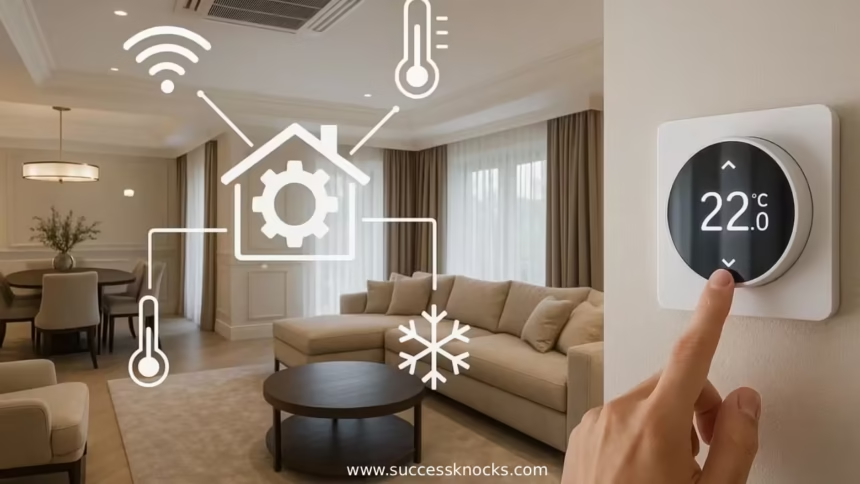
- Smart controls: Thermostats, zoning, occupancy-based scheduling.
- Good installation quality: The part nobody sees, and the part that often decides whether the upgrade pays off.
The U.S. Department of Energy has long emphasized that proper sizing, duct sealing, and maintenance matter just as much as equipment ratings for real-world performance, especially in homes. See the DOE’s guidance on home heating and cooling efficiency for the basics.
Why energy-efficient HVAC matters in the USA
In the U.S., HVAC is not a small line item. For many homes, heating and cooling are among the largest energy expenses. That makes efficiency upgrades one of the few home improvements that can affect comfort and monthly operating cost at the same time.
The kicker is this: efficiency is not only about bills. It also affects:
- Indoor comfort: fewer hot and cold spots
- Humidity control: especially important in humid regions
- Noise: better systems often run quieter
- Equipment life: less strain can mean fewer breakdowns
- Grid demand: lower energy use helps during peak seasons
If you’re in a hot climate, the cooling side may be the bigger money leak. If you’re in a cold climate, heat pump performance and backup heat strategy become the real story. Regional climate matters. A lot.
The EPA’s ENERGYSTAR heating and cooling guidance is a solid reference point for understanding performance labels and equipment categories.
energy-efficient HVAC options worth knowing in 2026
Not every home needs the same setup. Some homes need better duct sealing more than they need a new condenser. Some need a heat pump. Some need a tune-up and a smaller fix list.
| Option | Best for | What it helps with | Watch-outs |
|---|---|---|---|
| Heat pump | Most homes in moderate and many cold climates | Heating and cooling with one system | Needs correct sizing and cold-climate selection where relevant |
| Variable-speed HVAC | Homes with comfort swings and humidity issues | Longer, steadier operation and better humidity control | Higher upfront cost |
| Smart thermostat | Homes with predictable schedules | Scheduling, setback control, remote access | Won’t fix a bad system by itself |
| Duct sealing and insulation | Homes with ducts in attics, crawlspaces, or basements | Reduces energy loss and airflow problems | Needs proper diagnostics, not guesswork |
| Zoning | Large homes or homes with uneven comfort | Targets conditioned air where it is needed | Poor zoning design can create pressure issues |
If you’re trying to squeeze more performance out of an older system, don’t ignore the cheap wins. Sealing ducts, changing filters on time, and fixing airflow restrictions can produce more real-world benefit than people expect.
energy-efficient HVAC ratings that actually matter
Ratings are useful. But only if you know what they tell you.
- SEER2: cooling efficiency
- EER2: cooling performance under peak conditions
- HSPF2: heat pump heating efficiency
- AFUE: furnace efficiency for fuel-burning systems
- ENERGY STAR certification: a quick way to identify models that meet specific efficiency thresholds
For many buyers, SEER2 gets all the attention. That’s a mistake. A system that looks great on paper can still underperform if the ducts leak, the airflow is wrong, or the installation is sloppy.
What I’d do if I were buying in 2026
- Ask for a Manual J load calculation, not a guess.
- Get the duct system inspected before replacing equipment.
- Compare the total installed system, not just the unit’s sticker price.
- Check whether a heat pump fits your climate and fuel costs.
- Confirm the installer will commission the system after installation.
That last part matters more than most homeowners think. Commissioning is where a system gets tested, tuned, and verified. Without it, you’re rolling the dice.

Step-by-Step Action Plan for Beginners
Start simple. Don’t buy a new system on impulse.
energy-efficient HVAC action plan
- Check your current pain points
- Rooms too hot or too cold?
- High bills?
- Loud operation?
- Short cycling?
- Poor humidity control?
- Get a basic system assessment
- Ask an HVAC pro to inspect equipment age, duct condition, refrigerant issues, airflow, and thermostat behavior.
- Fix the low-cost problems first
- Replace filters on schedule.
- Seal obvious duct leaks.
- Clear blocked vents and returns.
- Repair insulation gaps around ducts where accessible.
- Compare repair vs. replace
- If the system is older, inefficient, or repeatedly breaking, replacement may make more sense.
- If the issue is airflow, duct leakage, or control settings, a full replacement may be premature.
- Request a properly sized replacement if needed
- Oversized systems cycle too much and often feel worse, not better.
- Ask for load calculations and installation details in writing.
- Choose controls that match your habits
- A smart thermostat helps if your schedule changes.
- Zoning helps if different parts of the house have different needs.
- Maintain it like it matters
- Annual service.
- Clean filters.
- Keep outdoor units clear.
- Watch for abnormal noise, frosting, or uneven temperatures.
If you want a simple rule: improve the envelope, fix the ducts, then buy equipment. That order saves a lot of regret.
Common Mistakes and How to Fix Them
Most HVAC regret comes from predictable mistakes. The good news? They’re fixable.
energy-efficient HVAC mistakes
- Buying the biggest unit available
- Fix: Size the system to the home, not to a sales pitch. Bigger is not better.
- Ignoring ductwork
- Fix: Inspect and seal ducts before or during replacement. Leaky ducts can waste a lot of conditioned air.
- Chasing the highest efficiency rating only
- Fix: Look at installed performance, climate fit, and maintenance needs. The best-rated unit is useless if the home setup is wrong.
- Skipping commissioning
- Fix: Ask the contractor to verify airflow, refrigerant charge, thermostat behavior, and overall operation.
- Using a smart thermostat as a magic wand
- Fix: Treat it as a control tool, not a cure. It cannot rescue a poor design.
- Replacing equipment without fixing insulation or air leaks
- Fix: Reduce the load first. Less wasted heat or cool air means the system can work less.
The DOE’s insulation and air sealing guidance is worth a look if the home itself is part of the problem. Often, it is.
What energy-efficient HVAC costs in practice
Cost depends on home size, region, fuel type, duct condition, and the scope of work. A thermostat swap is cheap. A heat pump replacement with duct repairs is not. But those numbers alone do not tell the whole story.
What matters is total ownership cost:
- upfront installation
- monthly energy use
- maintenance
- repair frequency
- expected lifespan
A slightly more expensive system can still win if it cuts energy waste and reduces service calls. That’s especially true in homes with poor airflow or serious temperature imbalance.
If your current system is limping along, ask yourself one blunt question: are you paying for comfort, or are you paying to keep a tired machine alive?
The smartest way to shop for energy-efficient HVAC
If you’re comparing bids, keep the conversation grounded in specifics.
Ask every contractor:
- What is the load calculation?
- How will the ducts be evaluated?
- What are the SEER2, EER2, and HSPF2 ratings?
- Will the system be commissioned after install?
- What maintenance does the warranty require?
- Is the proposal accounting for climate and home layout?
Also ask what happens if you do nothing else. Sometimes the right answer is not a replacement. Sometimes the right answer is duct repair, insulation, or a better thermostat strategy first.
That’s not a sexy answer. It is usually the smart one.
energy-efficient HVAC and comfort: the part people forget
Efficiency is not just a bill-cutting exercise. It changes how a home feels.
A better system often delivers:
- fewer drafts
- steadier temperatures
- better humidity control
- cleaner airflow
- less noise
That’s the hidden value. People notice it the first time they stop wrestling with one room that feels like a freezer while the hallway feels like a sauna.
Comfort is not fluff. It is the product.
Key Takeaways
- energy-efficient HVAC means more than buying a higher-rated unit.
- Real savings often come from the whole system: equipment, ducts, airflow, and controls.
- Right sizing matters. Oversized systems waste energy and comfort.
- Heat pumps, variable-speed systems, smart thermostats, and duct sealing are major 2026 options.
- SEER2, EER2, HSPF2, AFUE, and ENERGY STAR labels help, but they are not the whole story.
- Commissioning and installation quality can make or break performance.
- Fix low-cost issues first before replacing equipment.
- The best upgrade is the one that fits your climate, home, and usage pattern.
energy-efficient HVAC pays off when it is treated like a system, not a shopping cart. Start with the house, then the ducts, then the equipment. That sequence is boring. It also works.
FAQs
Is energy-efficient HVAC worth it for an older home?
Yes, especially if the home has duct leaks, poor insulation, or an oversized system. Older homes often have the most to gain because they usually waste more conditioned air.
What is the easiest energy-efficient HVAC upgrade to start with?
A smart thermostat or duct sealing can be a strong first move, but the real best first step is a system assessment. If the ducts are leaking badly, that can outrank equipment upgrades.
Does energy-efficient HVAC always mean a heat pump?
No. A heat pump is a major option, but energy-efficient HVAC can also mean better ductwork, variable-speed equipment, improved controls, and proper sizing. The right answer depends on the home and climate.