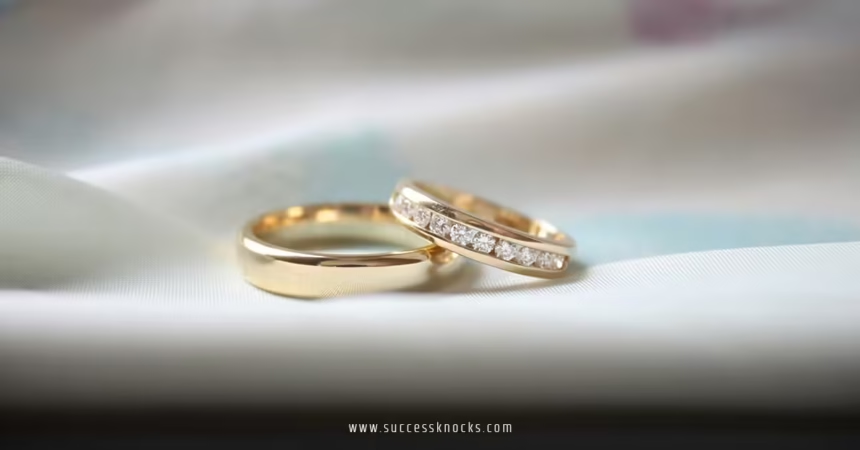
Engagement rings vs wedding rings — two pieces of jewelry, one big promise, one lifelong vow. If you’re knee-deep in wedding planning or just starting to shop, the confusion hits hard. Which one do you buy first? How much should you actually spend? Do they even need to match?
Here’s the straightforward breakdown: Engagement rings vs wedding rings comes down to timing, symbolism, design, and everyday wear. The engagement ring announces the “yes” with sparkle and intent. The wedding ring seals the deal during the ceremony, often as a simpler band that symbolizes enduring commitment.
Quick Overview: Engagement Rings vs Wedding Rings
- Purpose: Engagement ring = promise to marry (proposal stage). Wedding ring = official union (ceremony and beyond).
- When you get it: Engagement ring first, during or right after the proposal. Wedding ring exchanged at the wedding.
- Design vibe: Engagement rings usually feature a standout center stone (diamond or gem). Wedding rings lean simpler — plain metal, eternity bands, or subtle accents that stack comfortably.
- Cost reality: Engagement rings carry the bigger price tag because of that center stone. Wedding bands run lighter on the wallet.
- Do you need both? Most couples in the USA do, but plenty skip or combine them. Your call.
That covers the basics in under 30 seconds. Now let’s dig in so you avoid rookie mistakes.
What Is an Engagement Ring?
Think of it as the headline act. Someone drops to one knee (or plans something creative), slips this on your finger, and asks you to spend forever together. In US tradition, it signals the engagement period — that exciting, chaotic time of planning a wedding while still not technically married.
Key traits:
- Prominent center stone — classic round brilliant diamond, but 2026 sees more ovals, emeralds, pears, and colored gems gaining ground.
- Intricate setting — solitaires, halos, three-stone designs, or sculptural bezels.
- Worn daily from proposal through the wedding (and often after).
In my experience after years watching couples navigate this, the engagement ring becomes part of your identity for a while. People notice it. You field questions. It carries emotional weight because it marks the transition from “dating” to “building a life.”
What Is a Wedding Ring (or Wedding Band)?
This one hits during the vows. You exchange rings as a physical symbol of your commitment — a circle with no beginning or end. It’s less about flash, more about permanence.
Key traits:
- Usually a band — plain gold, platinum, or with small diamonds/melee stones.
- Designed for everyday durability and comfort.
- Often stacked with the engagement ring on the same finger.
The wedding ring doesn’t scream for attention. It whispers “we’re in this.” Many couples choose matching or coordinating bands for both partners now, a shift from older traditions where only the bride got the fancy stuff.
Side-by-Side Comparison: Engagement Rings vs Wedding Rings
Here’s a clean table to make the differences pop:
| Feature | Engagement Ring | Wedding Ring |
|---|---|---|
| Symbolism | Promise and proposal | Lifelong commitment and marriage vows |
| Timing | Given at proposal | Exchanged at ceremony |
| Design | Center stone focus, detailed setting | Simpler band, often flush-fitting |
| Stone/Carat | Larger center stone (0.5–2+ carats common) | Smaller or no center stone, emphasis on band |
| Typical Cost (USA, 2026 estimates) | $5,000–$8,500 average, varies widely | $500–$2,000 per band (often less for men’s) |
| Daily Wear | Yes, but can be swapped for active days | Built for constant wear |
| Stacking | Worn with wedding band after ceremony | Sits closest to the heart (base of finger) |
Numbers here draw from industry patterns and surveys like those from The Knot — averages fluctuate with lab-grown diamonds keeping some costs in check while gold prices push others up. Your budget, lifestyle, and taste matter more than any “rule.”
Cost Breakdown in 2026
Here’s the thing: the old “three months’ salary” guideline for engagement rings? It’s marketing folklore, not gospel. Real couples today stretch, save, or go intentional.
Engagement rings often land between $5,000 and $7,500 on average in the US, though plenty spend less with lab-grown options or more for natural stones and custom work. Wedding bands? Far more accessible — think $1,000–$1,800 for a nice women’s band, less for men’s plain versions. Gold prices have climbed, so metal choice impacts the final number.
What I’d do? Set a combined budget first. Prioritize the engagement ring’s center stone if sparkle matters most, then find a wedding band that nests perfectly. Many jewelers offer bridal sets that save hassle and ensure a flush fit.
How to Wear Them: The Traditional (and Modern) Order
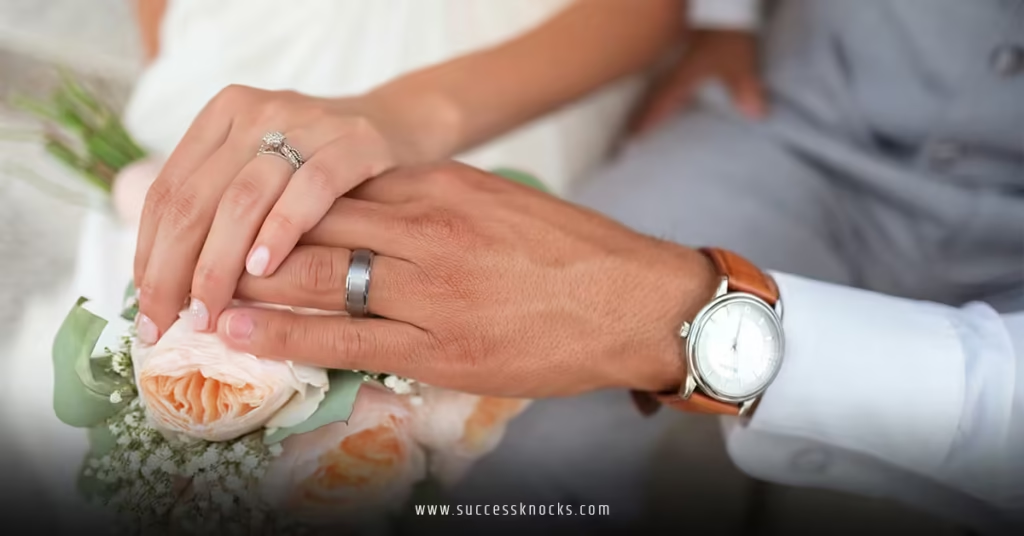
After the wedding, most stack the wedding band first (closest to the palm/heart), then the engagement ring on top. Why? Symbolism — the band represents the marriage foundation, with the engagement promise layered on.
But rules bend. Some weld them together for security. Others wear just the wedding band daily and save the engagement ring for date nights. Left hand, fourth finger remains standard in the USA, tracing back to the ancient “vena amoris” belief (a vein supposedly running straight to the heart).
Question worth asking yourself: Does your lifestyle demand a low-profile setup? Office work, gym sessions, or parenting tiny humans might push you toward durable, snag-free designs.
2026 Trends Shaping Engagement Rings vs Wedding Rings
This year, boldness meets meaning. Chunky bands, bezel settings, and architectural details stand out on engagement rings. Yellow gold surges back for warmth and everyday coordination with other jewelry. Colored gemstones and vintage-inspired cuts add personality without ditching diamonds entirely.
Wedding bands follow suit with wider profiles or subtle textures that complement — not compete with — the engagement piece. The kicker? Couples want rings that feel like them, not a Pinterest clone. Lab-grown diamonds keep ethical and budget options open, letting you splurge on design instead of just carats.
Step-by-Step Action Plan for Shopping Engagement Rings vs Wedding Rings
Beginners, breathe. Here’s a practical roadmap:
- Talk budget and priorities early — Decide together what “meaningful” looks like. Engagement ring first? Or shop as a set?
- Research styles — Visit jewelers or trusted online sites. Try on everything. Pay attention to how the engagement ring and potential wedding band sit together.
- Choose the center stone — Diamond, moissanite, sapphire? Consider cut, color, clarity, and carat (the 4Cs). Get certification.
- Nail the metal and setting — Platinum for durability, gold for warmth. Ensure the wedding band contours match the engagement ring’s shape.
- Get sized properly — Fingers swell or shrink. Measure multiple times.
- Factor insurance and care — Appraise the engagement ring. Consider resizing options down the line.
- Buy with confidence — Look for return policies, ethical sourcing, and a jeweler who explains trade-offs.
Pro tip from the trenches: Shop the wedding band with the engagement ring already chosen. Nothing worse than a gorgeous solitaire that refuses to play nice with any band.
Common Mistakes (and How to Fix Them)
- Ignoring the stack fit — A curved engagement ring might need a custom contoured band. Fix: Test nesting in-store or ask for CAD mockups.
- Overspending on trends — That viral design might not age well. Fix: Choose timeless elements with one trendy twist.
- Skipping durability checks — High prongs snag on everything. Fix: Opt for bezel or low-profile settings if you’re active.
- Buying solo without input — Surprise proposals are sweet, but mismatched tastes hurt. Fix: Hint heavily or shop together for the bands.
- Forgetting both partners — Modern weddings often mean two wedding bands. Fix: Budget and style for both from the start.
Key Takeaways
- Engagement rings vs wedding rings serve different moments: one sparks the journey, the other cements it.
- Design follows function — flashy for the proposal, practical for forever.
- Cost averages favor bigger spend on the engagement piece, but personalize everything.
- Stacking order and fit matter more than you think for daily comfort.
- Trends in 2026 reward individuality over strict tradition.
- Shop smart: test together, insure properly, and choose what feels right for your life.
- Both rings tell your story — make sure they harmonize.
Conclusion
Engagement rings vs wedding rings isn’t a competition. It’s a partnership of symbols — the sparkly promise meeting the steady vow. Nail the differences early, and the rest of wedding planning gets smoother. Start by talking openly about budget, style, and daily reality. Then visit a few jewelers or browse with clear eyes.
Your next step? Pull out a notebook (or phone notes) and list three must-haves for each ring. From there, the fun begins.
FAQs on engagement rings vs wedding rings:
1. What is the main difference between engagement and wedding rings?
An engagement ring is given during a proposal, while a wedding ring is exchanged during the marriage ceremony.
2. Which ring is more expensive?
Engagement rings are usually more expensive because they often feature a center gemstone (like a diamond), while wedding rings are simpler bands.
3. Do both partners wear engagement rings?
Traditionally, only one partner wears an engagement ring, but modern couples sometimes both wear them.
4. When do you wear each ring?
The engagement ring is worn after the proposal; the wedding ring is added during the wedding and typically worn together afterward.
5. Can you use one ring for both purposes?
Yes, some people choose a single ring to serve as both engagement and wedding ring for simplicity or budget reasons.