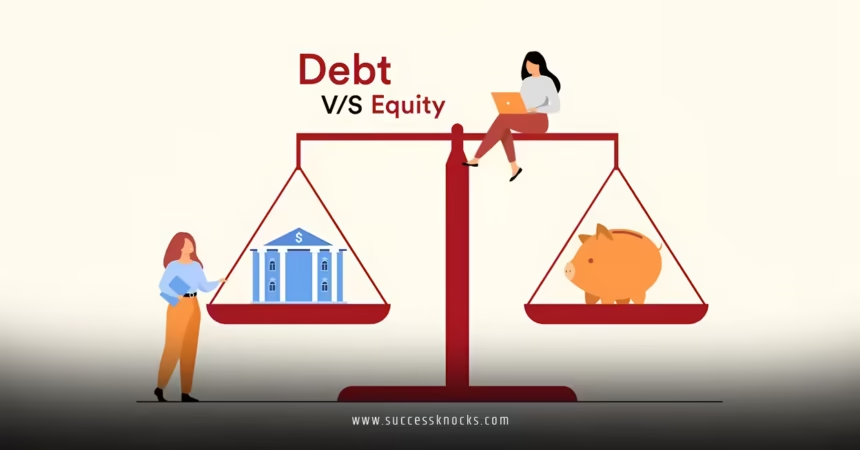
Equity funding vs debt financing small business choices shape your startup’s future. Owners sweat this decision daily. Get it wrong, and you’re saddled with regrets.
Here’s the quick hit: two main ways to fuel growth without maxing personal credit cards.
- Equity funding: Sell ownership slices to investors. No repayments, but you share control and profits forever.
- Debt financing: Borrow cash, promise to pay back with interest. Keep full ownership, but face repayment pressure.
- Why it matters: Equity suits high-risk dreamers chasing moonshots. Debt fits steady operators with reliable cash flow. In 2026 USA, with SBA loans hitting record lows on rates around 8-10%, timing’s everything.
Pick wrong? Your business stalls—or worse.
What Exactly Is Equity Funding vs Debt Financing Small Business?
Equity funding means trading company pieces for cash. Investors become part owners. Think angel investors, VCs, or crowdfunding platforms like Kickstarter.
Debt financing? Straight loans. Banks, SBA, online lenders. You owe principal plus interest. No ownership giveaway.
I’ve guided dozens of founders through this fork in the road. What usually happens: bootstrappers lean debt for control. Scalers grab equity for rocket fuel.
Equity Funding vs Debt Financing Small Business: The Head-to-Head Breakdown
Time for the real showdown. No fluff. Just facts in a table that cuts through noise.
| Factor | Equity Funding | Debt Financing |
|---|---|---|
| Ownership | Lost slice forever | 100% yours |
| Repayment | None required | Fixed schedule + interest |
| Cost | Dilution (20-50% typical rounds) | Interest (SBA: 8-13% as of 2026 per SBA.gov) |
| Speed | 3-6 months pitching | Days to weeks online |
| Risk to You | Lower personal liability | Collateral often needed |
| Investor Input | Board seats, advice | None |
See the trade-offs? Equity’s like inviting a co-pilot who demands the wheel sometimes. Debt’s solo flying—with fuel costs.
Pros and Cons: Equity Funding vs Debt Financing Small Business Deep Dive
Equity Funding Pros
No monthly noose. Investors bet on upside, not your next payroll. Networks open doors—I’ve seen VCs connect founders to enterprise clients overnight.
Scale fast. Perfect for tech plays burning cash to dominate markets.
Equity Funding Cons
Dilution hurts. That 30% round? Gone forever. Investors push exits. What if you love running the show?
Harder to snag. Pitch decks. Rejections. Grind.
Debt Financing Pros
Keep the keys. Profits stay yours. Predictable if cash flows steady. If repayments start slipping and creditor pressure is building, getting company insolvency advice early can help business owners understand their options before the debt becomes harder to control.
Build credit. SBA data shows repeat borrowers snag better terms later.
Quick. Platforms like Kabbage approve in hours.
Debt Financing Cons
Cash drain. Interest compounds. Miss payments? Creditors circle.
Qualifying sucks for newbies. Need revenue, collateral. Banks ghosted 70% of small biz apps last year, per Federal Reserve reports.
Rhetorical punch: Ready to bet your house on steady sales?
Step-by-Step Action Plan: Equity Funding vs Debt Financing Small Business for Beginners
Don’t wing it. Follow this roadmap. I’ve walked founders through each step.
- Audit Your Numbers. Crunch 12-month projections. Revenue steady? Debt viable. Volatile? Equity calls.
- Score Your Risk Appetite. Solo control freak? Debt. Need mentors? Equity. Ask: Can I sleep with debt service eating 20% margins?
- Prep Docs. Debt: Balance sheets, tax returns. Equity: Pitch deck with traction metrics. Use templates from SCORE.org.
- Shop Options.
- Debt: SBA 7(a) loans up to $5M. Online: Fundera.
- Equity: Angels via Gust. Crowdfund on StartEngine.
- Run Scenarios. Model both in Excel. What if sales dip 30%? Debt crushes. Equity flexes.
- Close Smart. Debt: Negotiate covenants. Equity: Cap valuation, retain veto rights.
If I were starting fresh in 2026? Hybrid: Bootstrap debt first, equity later for scale.
Equity Funding vs Debt Financing Small Business: Intermediate Plays
You’ve got some traction. Now optimize.
Layer debt atop equity. “Venture debt” from Silicon Valley Bank—bridges rounds without dilution.
Match stage. Seed? Equity. Profitable? Term loans at prime +2%.
Tax angles. Interest deductible. Equity dividends? Not till exit.
In my experience, hybrids win. One client mixed SBA with angels—scaled 5x without losing majority stake.
Common Mistakes & How to Fix Them in Equity Funding vs Debt Financing Small Business
Mistake 1: Ignoring cash burn. Fix: Stress-test repayments. Equity fans forget lifestyle dilution.
Grabbing first offer. VCs lowball. Shop 10 lenders. Compare APRs.
Forgetting fees. Origination 1-3%. Equity legal bills $50K+.
Over-leveraging debt. Cap at 3x EBITDA. SBA warns this tanks 40% of borrowers.
Pitching wrong crowd. Retail SaaS to VCs? No. Banks love it.
The kicker: Most founders chase shiny equity, ignore boring debt that builds empires quietly.
Ever wonder why bootstrapped giants like Basecamp thrive debt-free?
When to Choose Equity Over Debt—or Vice Versa
High-growth tech? Equity. Restaurants, services? Debt.
2026 twist: AI boom floods equity for startups. Debt rates steady post-Fed cuts.
Regional note: Blue states offer grants tilting equity. Red states push lender matches.
What I’d do: Run both paths parallel till one pulls ahead.
Like picking roads on a map. One’s expressway to billions—with tolls. Other’s steady highway, yours alone.
Key Takeaways
- Equity trades control for no-repay fuel; debt keeps ownership but demands cash discipline.
- Use the table above to match your stage—debt for stability, equity for hypergrowth.
- Beginners: Start with SBA loans before diluting.
- Avoid over-dilution; cap equity rounds at 25%.
- Model worst-case: Debt kills if sales tank.
- Hybrids rule for intermediates—layer smart.
- Shop 10+ options; first deal’s rarely best.
- Build credit early; unlocks better terms later.
Bottom line: Equity funding vs debt financing small business boils to your gut and numbers. Nail the fit, watch your venture soar. Next step? Plug projections into a model today. Choose wisely—your empire awaits.
FAQs
What’s the biggest risk in equity funding vs debt financing small business decisions?
Equity risks permanent control loss. Debt risks default if cash dries up. Balance via hybrids.
Can small businesses mix equity funding vs debt financing approaches?
Absolutely. Many layer venture debt post-equity for non-dilutive boosts.
How do 2026 USA tax rules affect equity funding vs debt financing small business?
Debt interest deducts fully. Equity gains tax at exit—plan for QSBS exclusions up to $10M.