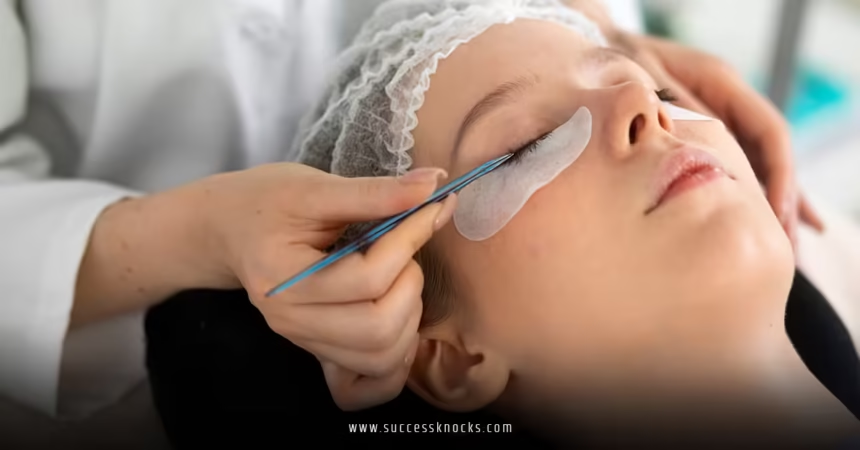
False eyelash application techniques can make or break your entire makeup look, transforming you from amateur to artist with just a few strategic moves. Whether you’re aiming for natural enhancement or dramatic flair, the right technique determines everything.
Essential False Eyelash Application Fundamentals:
- Proper eye preparation creates the foundation for long-lasting wear
- Adhesive selection and timing directly impact hold strength and comfort
- Placement precision affects both appearance and wearability throughout the day
- Blending techniques seamlessly integrate falsies with natural lashes
- Removal methods preserve both lash health and strip reusability
Let’s dive into the professional secrets that separate flawless application from obvious falsies.
Understanding Different Lash Types and Their Applications
Not all false lashes are created equal. Your application technique needs to adapt based on the specific type you’re working with.
Strip Lashes: The most common variety, these come as a single band designed to cover your entire lash line. They’re perfect for beginners and offer consistent, predictable results.
Individual Lashes: Applied one cluster at a time, these provide the most natural-looking enhancement but require significantly more skill and time.
Magnetic Lashes: Use magnetic strips above and below your natural lashes, eliminating the need for adhesive but requiring precise alignment.
Specialty Styles: From wispy and natural to bold and dramatic—like the increasingly popular Silly George lashes—each demands adapted techniques.
The key insight? Your application method should match your lash choice, not the other way around.
Pre-Application Preparation: The Foundation of Success
This step separates professionals from amateurs. Proper preparation accounts for 70% of application success.
Eye Area Preparation:
- Remove all traces of eye makeup with gentle, oil-free remover
- Ensure lids are completely clean and dry—any residual oils prevent proper adhesion
- Apply eyeshadow and eyeliner before lashes, never after
- Curl natural lashes and apply one thin coat of mascara
- Allow mascara to dry completely before proceeding
Lash Strip Preparation:
- Remove lashes carefully from packaging using tweezers
- Gently flex the band to increase pliability
- Hold against your eye to measure proper length
- Trim from the outer edge only, preserving the inner taper
- Test fit again before applying adhesive
Pro Tip: Many people skip the fitting step and regret it later. Take the extra minute—it prevents disasters.
Adhesive Selection and Timing Mastery
Your glue choice dramatically impacts both application ease and wear time. Here’s what professionals know:
Adhesive Types:
| Type | Best For | Pros | Cons |
|---|---|---|---|
| Clear Drying | Beginners, natural looks | Forgiving, invisible when dry | Slightly weaker hold |
| Dark Drying | Bold looks, winged liner | Strong hold, acts as liner | Unforgiving placement |
| Latex-Free | Sensitive eyes | Hypoallergenic | May require more coats |
| Waterproof | Long events, humid conditions | Superior longevity | Difficult removal |
The Timing Secret: Apply adhesive to the lash band and wait 15-30 seconds until it becomes tacky. This step is non-negotiable. Wet glue slides around; tacky glue grips immediately upon contact.
Application Amount: Use just enough to coat the band—about the thickness of a hair. More isn’t better; it’s messier.
Step-by-Step Professional Application Method
Now for the main event. This technique works for 90% of false lash styles with minor adaptations.
The Setup Phase:
- Position yourself in front of a well-lit mirror at eye level
- Have tweezers, a small scissor, and cotton swabs within reach
- Apply adhesive to the lash band using the included applicator or a toothpick
- Wait for the glue to become tacky—this is crucial
The Application Process:
- Look down into a mirror (don’t tilt your head back)
- Using tweezers, position the lash strip at the center of your lash line
- Press the center down first, then work toward both corners
- Use the flat end of tweezers or a clean fingertip to secure the band
- Make micro-adjustments before the glue fully sets
The Finishing Touches:
- Wait 60 seconds for initial setting
- Apply thin eyeliner over the lash band if needed
- Blend with one coat of mascara, focusing on the roots
- Check for any lifting at the corners and press down if necessary
The entire process should take 3-5 minutes per eye once you’ve developed muscle memory.
Advanced Techniques for Different Eye Shapes
Your eye shape determines which false eyelash application techniques work best. Here’s how to adapt:
Hooded Eyes:
- Focus placement slightly higher than the natural lash line
- Choose shorter styles to avoid touching the hood when eyes are open
- Apply extra attention to outer corner security
Round Eyes:
- Emphasize length at outer corners to create elongation
- Use longer styles on the outer two-thirds of the eye
- Avoid overly dramatic center placement
Almond Eyes:
- Most lash styles work well with standard application
- Experiment with different densities and textures
- Focus on enhancing your natural shape rather than changing it
Monolid Eyes:
- Use curled styles to add dimension
- Apply slightly above the natural lash line for visibility
- Consider magnetic options for easier placement
Common Application Mistakes and Professional Fixes
Let’s address the errors that derail even experienced users.
Mistake #1: Rushing the Glue Timing The adhesive needs those 15-30 seconds to reach optimal tackiness. Rushing creates sliding, uneven placement, and weak hold.
Professional Fix: Set a timer. Use those seconds to do final mirror positioning and take deep breaths.
Mistake #2: Wrong Placement Direction Many people try to place lashes from inner to outer corner, fighting the natural curve.
Professional Fix: Always start in the center and work outward. This follows your eye’s natural contour.
Mistake #3: Over-Trimming Cutting too much off the lash strip, especially from multiple sides, ruins the designed proportions.
Professional Fix: Only trim from the outer edge, and do it gradually. You can always cut more.
Mistake #4: Ignoring Your Natural Lashes Applying falsies over uncurled, unmascara’d natural lashes creates obvious separation.
Professional Fix: Always prep your natural lashes first. They should blend seamlessly with the falsies.
Mistake #5: Using Expired Adhesive Old glue loses effectiveness and can cause irritation.
Professional Fix: Replace adhesive every 3-6 months and store in a cool, dry place.
Blending Techniques for Seamless Integration
The difference between obvious falsies and professional results lies in the blending.
Mascara Integration: Apply mascara to your natural lashes before false lash application, then use a clean spoolie to blend the falsies with your natural lashes after the glue sets. This creates seamless integration.
Eyeliner Camouflage: A thin line of eyeliner over the lash band hides any visible glue or unnatural-looking bands. Use gel or liquid liner for precise application.
Curling Considerations: Curl your natural lashes before application, but avoid curling the falsies themselves—this can damage the fibers and alter the designed shape.

Specialty Applications: Beyond Basic Strip Lashes
Individual Lash Clusters: These require a completely different approach. Apply from outer corner to inner, placing each cluster between your natural lashes rather than on top of them.
Magnetic Lashes: Sandwich your natural lashes between magnetic strips. The top strip goes above your lashes, the bottom strip goes underneath. Requires steady hands but eliminates glue entirely.
Bottom Lashes: Use shorter, sparser styles specifically designed for lower lash lines. Apply with extra precision since the skin is more sensitive.
Creative Styles: For dramatic or avant-garde looks—think festival makeup or artistic photography—traditional rules can be bent. Focus on achieving your artistic vision while maintaining comfort.
Removal and Aftercare Best Practices
Proper removal preserves both your natural lashes and the false ones for future use.
Safe Removal Process:
- Use oil-free makeup remover or specialized lash adhesive remover
- Gently massage the remover along the lash band with a cotton swab
- Wait 30-60 seconds for the adhesive to dissolve
- Slowly peel the lashes off from the outer corner inward
- Never pull or yank—this damages both false and natural lashes
Lash Strip Maintenance: Remove excess glue with tweezers, clean any makeup residue with micellar water, and store in original packaging. Quality strips can be reused 5-10 times with proper care.
Natural Lash Care: Follow removal with gentle cleansing and consider using lash serums to maintain natural lash health.
Troubleshooting Common Application Issues
Problem: Lashes Won’t Stay Put Solutions: Check glue freshness, ensure tacky timing, verify clean application area, consider stronger adhesive formula.
Problem: Visible Glue Lines Solutions: Use less adhesive, try clear-drying formula, apply eyeliner over band, improve blending technique.
Problem: Uncomfortable Wear Solutions: Trim band to proper length, choose softer band material, check for allergic reactions to adhesive.
Problem: Unnatural Appearance Solutions: Better blend with mascara, choose appropriate style for your eye shape, improve placement precision.
Professional Tips for Special Occasions
Photography/Events: Use slightly more dramatic styles than feel comfortable in person—they’ll photograph beautifully without overwhelming real-life interactions.
Long Wear Situations: Invest in waterproof adhesive and setting spray. Bring touch-up tools: small tweezers and extra glue for corner lifting.
Travel Applications: Pack lashes in hard cases to prevent damage. Bring backup pairs and travel-sized adhesive remover.
Key Takeaways
- Preparation accounts for 70% of application success—never skip eye cleaning and lash fitting
- Adhesive timing is crucial: always wait for tackiness before application
- Start placement from the center of your eye and work outward for natural curvature
- Adapt your technique based on eye shape and desired look rather than using one-size-fits-all methods
- Blending with mascara and strategic eyeliner creates seamless, professional results
- Proper removal and maintenance extend both natural lash health and false lash lifespan
- Practice makes perfect—expect a learning curve but stick with proper technique fundamentals
- Quality tools and products significantly impact both application ease and final results
Conclusion
Mastering false eyelash application techniques transforms your makeup game from amateur to artist. The difference lies not in expensive products or natural talent, but in understanding and consistently applying proven methods.
Start with quality basics, practice the fundamentals, and gradually experiment with advanced techniques. Your future self will thank you for taking the time to build this skill properly.
Remember: even professionals didn’t nail this overnight. Be patient with yourself, and focus on improvement over perfection.
Time to grab those lashes and start practicing.
Frequently Asked Questions
Q: How long should I wait between removing false lashes and applying new ones?
A: Give your natural lashes at least 24 hours to recover between applications. This prevents damage and allows any adhesive residue to fully clear from the lash line.
Q: Can I sleep in false eyelashes?
A: Never sleep in false lashes. The adhesive can damage your natural lashes, and the strips can shift or fall off during sleep, creating hygiene and comfort issues.
Q: What’s the difference between drugstore and professional adhesives?
A: Professional adhesives typically offer stronger hold, longer wear time, and better flexibility. They’re often latex-free and designed for sensitive skin, making them worth the extra investment for regular users.
Q: How do I know if I’m allergic to lash adhesive?
A: Perform a patch test by applying a small amount of adhesive to your inner wrist 24-48 hours before use. Watch for redness, itching, or swelling. If reactions occur, switch to latex-free or hypoallergenic formulas.
Q: Should I curl false lashes after application?
A: Avoid curling false lashes after application—this can damage the fibers and alter their designed shape. Instead, curl your natural lashes beforehand and choose falsies that already have your desired curl pattern.