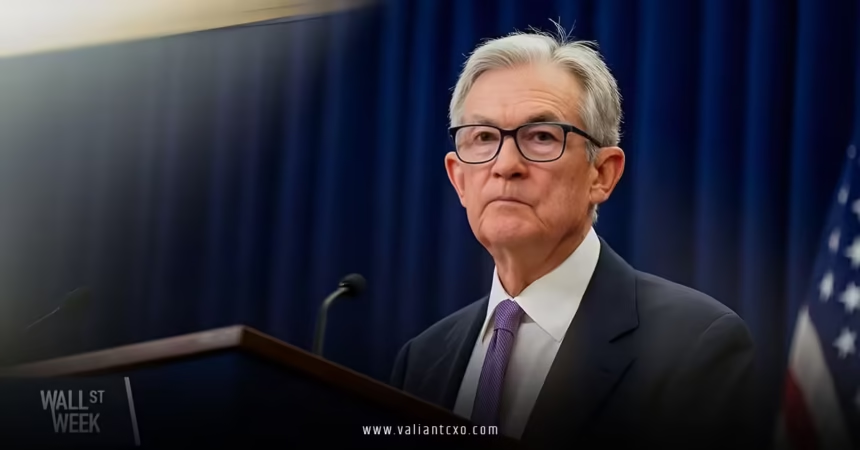
Federal Reserve Independence Under Trump Administration has rarely faced such intense scrutiny as it does right now in early 2026. With President Trump’s repeated calls for aggressive interest rate cuts, threats to remove officials, and the dramatic escalation involving DOJ subpoenas, the question on everyone’s mind is simple: Can the Fed truly remain independent when political pressure reaches this level?
As a cornerstone of U.S. economic stability, the Federal Reserve’s independence allows it to make tough, data-driven decisions without bending to short-term political demands. Yet, under the current Trump administration, that wall of separation is being tested like never before. Let’s dive into what’s happening, why it matters, and how events like the Thom Tillis statement on DOJ subpoena Federal Reserve January 2026 highlight the growing tension.
Why Federal Reserve Independence Matters: A Quick Refresher
Picture the Federal Reserve as a referee in a championship game. If the referee starts taking cues from one team’s coach, the whole match loses credibility. That’s the role the Fed plays in the economy—setting interest rates, regulating banks, and steering monetary policy to balance maximum employment and stable prices.
Independence isn’t a luxury; it’s essential. Economists widely agree that politically influenced central banks often lead to higher inflation, boom-bust cycles, and eroded investor confidence. The U.S. learned this lesson the hard way before the 1951 Treasury-Fed Accord, which solidified the central bank’s autonomy. Fast-forward to today, and that hard-won separation feels under threat.
Under Trump, the pressure has been relentless. The president has publicly demanded lower rates to fuel growth, criticized Chair Jerome Powell repeatedly, and even suggested he should have a direct say in Fed decisions. This isn’t just rhetoric—it’s translated into actions that raise serious alarms.
Trump’s Ongoing Pressure Campaign on the Federal Reserve
Since returning to office, President Trump has made no secret of his frustration with the Fed’s pace of rate cuts. He wants faster reductions to boost the economy, lower borrowing costs (including for government debt), and support markets. But the Fed, led by Powell, has stuck to a data-driven approach—cutting rates when evidence shows weakening employment outweighs inflation risks, but not rushing ahead of schedule.
This clash peaked dramatically in January 2026. On January 9, the Department of Justice served grand jury subpoenas on the Federal Reserve, tied to Powell’s June 2025 congressional testimony about the $2.5 billion headquarters renovation project. Powell, in a rare public video statement on January 11, called the probe a “pretext” for broader pressure over interest rates. He stated plainly that the threat of criminal charges stemmed from the Fed’s refusal to follow political preferences on monetary policy.
Markets reacted immediately—the dollar weakened, and gold prices rose as investors worried about eroding central bank credibility. This wasn’t an isolated incident; it built on months of threats, including earlier suggestions of firing Powell and removing board members like Lisa Cook (whose dismissal is still in legal limbo).
Thom Tillis Statement on DOJ Subpoena Federal Reserve January 2026: A Republican Pushback
Perhaps the most striking response came from within the GOP itself. Senator Thom Tillis (R-NC), a member of the powerful Senate Banking Committee, issued a blistering statement on January 11, 2026. He declared: “If there were any remaining doubt whether advisers within the Trump Administration are actively pushing to end the independence of the Federal Reserve, there should now be none.”
Tillis went further, questioning the DOJ’s own “independence and credibility” and vowing to oppose confirmation of any Federal Reserve nominee—including the critical upcoming chair replacement—until the legal matter is resolved. This was no mild comment; coming from a Republican senator on the committee that vets Fed picks, it signaled real potential roadblocks for the administration’s plans.
Why does this matter so much? Tillis’s stance shows bipartisan concern (echoed by Democrats like Elizabeth Warren) that using criminal investigations as leverage crosses a dangerous line. It underscores how deeply the Thom Tillis statement on DOJ subpoena Federal Reserve January 2026 has resonated as a defense of institutional integrity.
Historical Context: Has This Happened Before?
Trump’s approach isn’t entirely new—presidents have grumbled about the Fed for decades. Nixon pressured Arthur Burns for easy money ahead of elections, and even earlier administrations blurred lines. But the current situation feels unprecedented due to the tools involved: threats of removal, public attacks, and now a DOJ criminal probe framed around policy disagreements.
The Supreme Court has weighed in indirectly, noting the Fed’s “uniquely structured” nature in recent rulings. Yet experts warn that sustained interference could lead to “fiscal dominance,” where monetary policy serves government borrowing needs over economic health—often a recipe for higher inflation.
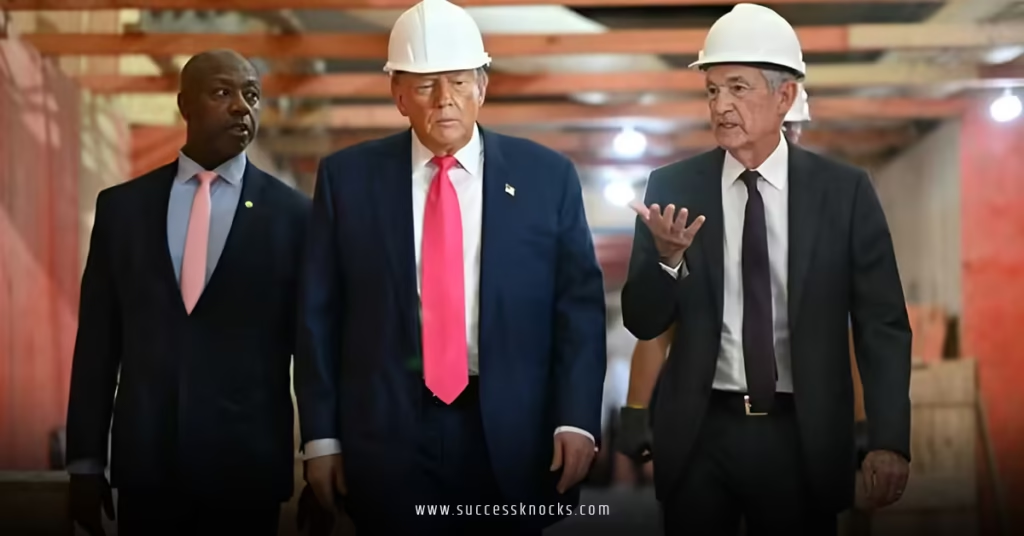
Market and Economic Implications in 2026
Investors hate uncertainty. When the Fed’s independence seems compromised, volatility spikes. Higher perceived risk can mean pricier borrowing, weaker dollar confidence, and shifts toward safe-haven assets like gold. For everyday Americans, it could translate to unpredictable mortgage rates, savings returns, and overall economic stability.
As Powell’s chair term ends in May 2026, the choice of successor becomes pivotal. Trump has signaled he wants someone aligned with faster rate cuts—potentially figures like Kevin Hassett. But with senators like
Tillis drawing lines in the sand, confirmation battles could drag on, leaving leadership gaps.
Looking Ahead: Can the Fed Hold Its Ground?
The coming months will tell us a lot. Will the DOJ probe lead to charges, or fade as political theater? Can the Senate Banking Committee maintain its oversight role amid partisan pressures? And most importantly, will the Federal Reserve continue making decisions based on data, not directives?
Events like the Thom Tillis statement on DOJ subpoena Federal Reserve January 2026 serve as a powerful reminder that protecting central bank independence requires vigilance—from lawmakers, markets, and the public. History shows that when the referee stays impartial, everyone wins in the long run.
In the end, Federal Reserve independence under Trump administration isn’t just a policy debate—it’s about preserving a system that has helped deliver decades of relative stability. The stakes are high, and the world is watching. What happens next could shape the U.S. economy for years to come. Stay engaged; your financial future might depend on it.
FAQ :
1. What is the main threat to Federal Reserve independence under the Trump administration in 2026?
The primary concern stems from ongoing political pressure on the Fed to cut interest rates faster than data supports, culminating in the DOJ’s grand jury subpoenas served on January 9, 2026, targeting Fed Chair Jerome Powell. Powell described these as a pretext for intimidation over monetary policy decisions, rather than genuine issues with the $2.5 billion headquarters renovation he testified about in 2025. This escalation has sparked widespread fears that the administration is using legal tools to undermine the Fed’s ability to operate free from short-term political influence.
2. What did Senator Thom Tillis say in his statement on DOJ subpoena Federal Reserve January 2026?
In his January 11, 2026, statement, Republican Senator Thom Tillis (a member of the Senate Banking Committee) declared that “if there were any remaining doubt whether advisers within the Trump Administration are actively pushing to end the independence of the Federal Reserve, there should now be none.” He further questioned the DOJ’s own “independence and credibility” and pledged to oppose confirmation of any Federal Reserve nominee—including the upcoming chair replacement—until the legal matter is fully resolved. This rare GOP pushback highlighted bipartisan alarm over potential erosion of central bank autonomy.
3. How has the Trump administration responded to claims of interfering with Federal Reserve independence?
President Trump has repeatedly denied that the DOJ subpoenas relate to interest rate disagreements, stating in interviews that he “wouldn’t even think of doing it that way” and emphasizing that high rates themselves should pressure Powell. However, Powell’s public video statement on January 11, 2026, directly linked the criminal threats to the Fed’s refusal to follow political preferences on rates. The administration has framed the probe as oversight of taxpayer spending on the Fed’s renovation project, while critics view it as part of a broader campaign to exert greater control over monetary policy.
4. What are the potential economic consequences if Federal Reserve independence is compromised under the Trump administration?
Eroding the Fed’s independence could lead to higher long-term inflation, market volatility, and reduced investor confidence, as central banks that bow to political pressure often prioritize short-term growth over price stability. In the immediate aftermath of the January 2026 subpoenas, the U.S. dollar weakened and gold prices rose, signaling investor unease. Sustained interference might also complicate future rate decisions, increase borrowing costs unpredictably for consumers (like mortgages), and risk boom-bust cycles—outcomes economists warn have historically followed politicized monetary policy.
5. What happens next for Federal Reserve independence following the Thom Tillis statement on DOJ subpoena Federal Reserve January 2026?
The investigation remains ongoing as of mid-January 2026, with Powell’s chair term ending in May 2026 (though his governor term extends to 2028). Senator Tillis’s vow to block nominees adds significant hurdles to Trump’s plans for a new Fed chair. The situation could lead to prolonged Senate confirmation battles, leadership vacancies, or even legal challenges. Many observers see this as a pivotal test of institutional safeguards—whether the Fed can continue making independent, data-driven decisions amid intense political scrutiny.