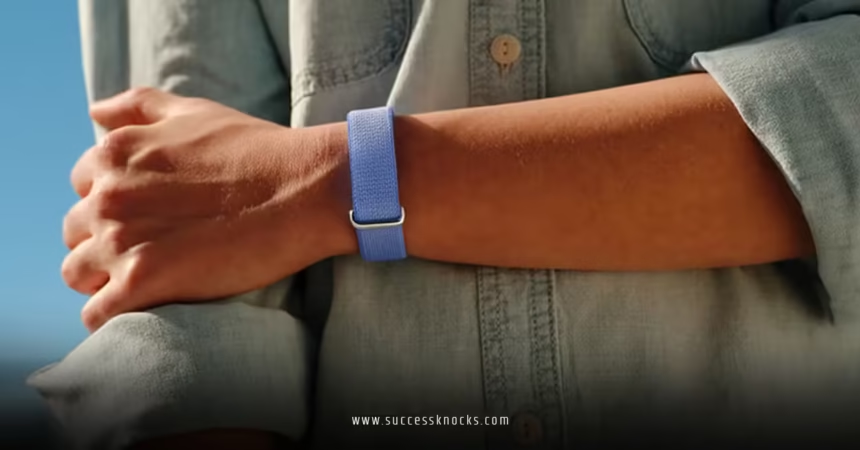
Fitbit Air review and features deliver exactly what many fitness beginners and intermediates have been waiting for: a lightweight, distraction-free tracker that nails the basics without overwhelming you.
No always-on screen. No constant buzzing notifications. Just solid 24/7 health data delivered through your phone.
This thin band weighs next to nothing—about 12 grams with the band, even less without. It launched in May 2026 at $99.99, positioning itself as an accessible rival to subscription-heavy options like Whoop. Core tracking stays free, with optional Google Health Premium upgrades for deeper insights.
- Screen-free design: Focuses purely on tracking without distractions.
- Battery life: Up to 7 days, with fast charging (a full day in 5 minutes).
- Key sensors: 24/7 heart rate, SpO2, skin temperature, HRV, sleep stages, and activity.
- App integration: New Google Health app with Gemini AI coach for personalized advice.
- Band flexibility: Swappable options in multiple styles and colors—check the full Fitbit Air bands colors and options breakdown for style ideas.
Here’s the thing. In a sea of bulky smartwatches, the Air feels refreshing. It disappears on your wrist so you forget you’re wearing it.
Fitbit Air design and build: Minimal meets practical
Google went ultra-light with the Fitbit Air. The tracker module pops in and out of bands for easy swaps. At just a few millimeters thick, it slips under sleeves effortlessly.
Three core body colors—Obsidian (black), Lavender (soft purple), and Berry (vibrant pink-red)—give you a solid starting point. The included band feels comfortable right out of the box, but the real power comes from mixing and matching.
What usually happens is you start with the default, then grab an Active band for workouts and an Elevated one for work. The quick-release system works smoothly—no fiddly tools needed.
It’s water-resistant enough for showers and swims. Sweat-proof materials on the Active bands handle tough sessions without irritation.
Core features that actually matter
The Fitbit Air shines in passive tracking. It monitors heart rate continuously, tracks sleep stages with impressive detail (Google claims some of its best-yet algorithms here), and logs blood oxygen, skin temperature variations, and HRV for recovery insights.
40+ exercise modes let you manually start specific workouts. It auto-detects many activities too. Daily Readiness-style metrics help you decide when to push or rest.
The kicker? Integration with the Google Health app. Gemini AI delivers straightforward coaching—like “Your recovery looks solid today—maybe add a short walk” or tailored plans based on your data. No more generic advice.
Women’s health tracking covers cycle and pregnancy insights. Stress management uses EDA-like signals and breathing prompts. It even supports irregular heart rhythm notifications (ECG-capable in some modes).
Rhetorical question: Why stare at numbers on your wrist mid-run when your phone can give you the full picture later?
For full customization potential, explore Fitbit Air bands colors and options to match your lifestyle.
Battery life, accuracy, and real-world performance
Google rates the Fitbit Air at up to 7 days. Real-world tests early on confirm 5–7 days depending on usage—strong for continuous heart rate and sleep tracking. Five-minute quick charge gives you another full day. Nice safety net.
Accuracy sits in line with recent Fitbit devices. Heart rate holds steady during steady efforts; it can lag slightly in high-intensity intervals, typical for wrist-based optical sensors. Sleep staging feels refined, especially compared to older models.
SpO2 and temperature trends prove useful for spotting patterns over time rather than single readings. HRV data helps gauge recovery without needing a lab.
What I’d do if buying today: Wear it 24/7 for two weeks straight. Log workouts manually at first to train the auto-detection. Sync nightly and review the AI insights in the morning.
Pros and cons comparison
| Aspect | Pros | Cons |
|---|---|---|
| Design & Comfort | Ultra-light, discreet, swappable bands | No on-wrist display for quick glances |
| Battery | 7 days real-world, fast charge | Shorter than some pure screenless rivals |
| Tracking | Strong sleep, HRV, 24/7 metrics | Workout HR can spike in accuracy |
| App & AI | Free core features, smart coaching | Premium unlocks advanced plans |
| Price | $99.99 entry, affordable extras | Bands add cost for full variety |
| Ecosystem | Deep Google Health integration | Best with Android/Pixel devices |
This table cuts through the noise fast.
Who should buy the Fitbit Air?
Beginners love the simplicity. No learning curve on a tiny screen—just wear it and check the app. Intermediates who already use Google services get seamless data flow.
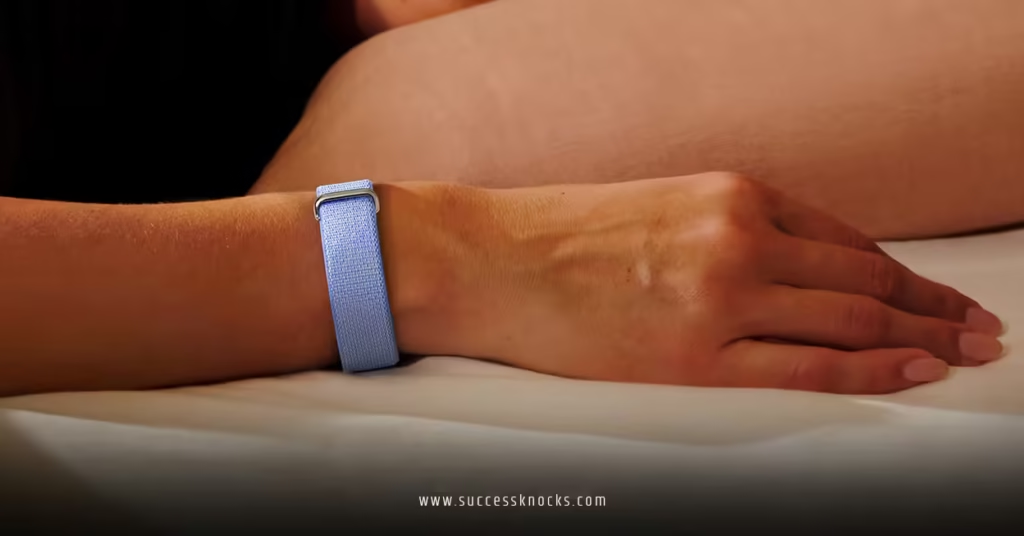
It pairs nicely with a Pixel Watch for daytime glances and nighttime comfort. Perfect if you hate bulky watches during sleep or intense training.
Skip it if you need built-in GPS, music controls, or always-visible stats. Those still require a full smartwatch.
Read official specs directly on the Google Store Fitbit Air page.
Step-by-step setup for new users
- Charge fully before first use.
- Download the Google Health app and pair via Bluetooth.
- Enter your profile details for accurate baselines.
- Choose your band style and swap if needed.
- Wear consistently—tight but comfortable for best readings.
- Review daily insights each morning and adjust habits.
- Experiment with exercise modes during your first workouts.
Follow this and you’ll have meaningful data within days.
Common mistakes & how to fix them
Many expect watch-like features and feel disappointed by the lack of screen. Fix: Embrace the phone-as-hub mindset from day one.
Inconsistent wear kills sleep and recovery data. Solution—make it part of your nightly routine like brushing teeth.
Ignoring band sizing on Active versions leads to slippage or discomfort. Measure your wrist properly upfront.
Over-relying on single-day metrics instead of trends. Zoom out to weekly views in the app for better perspective.
Not using the AI coach prompts. Those personalized nudges separate good trackers from great ones.
Key takeaways
- Fitbit Air review and features highlight a $99.99 screenless tracker built for comfort and long-term wear.
- Exceptional battery, solid sleep and recovery tracking, and AI coaching make it stand out.
- Swappable bands turn it into a style-friendly daily essential.
- Free core features lower the barrier compared to subscription models.
- Best for users who want data without distractions.
- Accuracy suits everyday fitness and health monitoring.
- Pairs beautifully with other Google devices.
- Lightweight design disappears on the wrist for all-day (and night) comfort.
Bottom line: The Fitbit Air delivers reliable tracking in the least intrusive package yet. If you’re tired of screens and subscriptions but still want actionable health insights, this one deserves serious consideration. Head to the Google Store, pick your color and band combo, and start tracking smarter today.
FAQs
How does the Fitbit Air compare to the Charge 6 or Inspire series?
The Air focuses on screen-free comfort and deeper recovery metrics with longer battery life, while Charge models offer built-in displays for quick checks.
Is a subscription required for Fitbit Air features?
No—core tracking, sleep insights, and basic AI advice are free. Premium unlocks more advanced coaching and detailed reports.
How accurate is the Fitbit Air for sleep and heart rate tracking?
It performs strongly on sleep staging and 24/7 heart rate trends, with typical wrist-based limitations during very intense intervals. Consistent wear improves overall results.