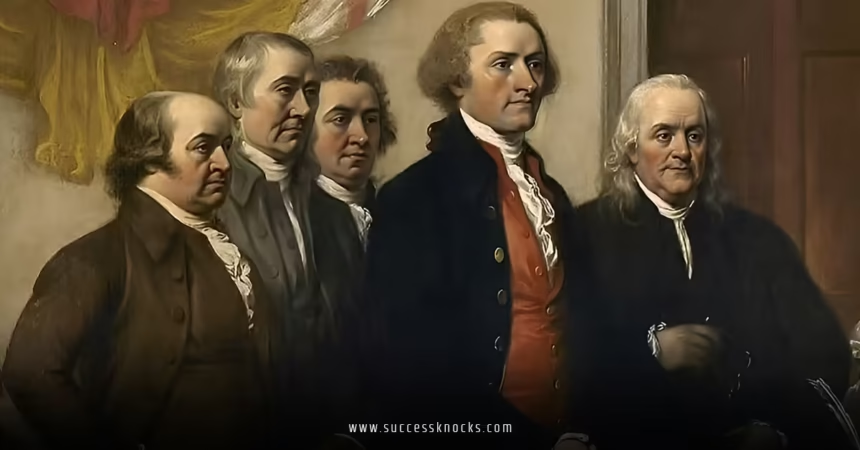
Founding Fathers were a group of visionary leaders who shaped the United States through their ideas, documents, and actions during the late 18th century. This article explores their roles, contributions, and lasting legacy, providing a comprehensive guide for anyone interested in American history.
Overview Summary
The Founding Fathers played pivotal roles in establishing the U.S., from drafting the Declaration of Independence to framing the Constitution. Key points include:
- Core Definition: They were primarily political leaders, philosophers, and statesmen active from the 1760s to 1790s.
- Major Contributions: Documents like the Declaration and Constitution formed the backbone of American governance.
- Why It Matters: Their principles influence modern democracy, emphasizing liberty, equality, and representation.
- Quick Insight: Figures like George Washington exemplified leadership, though not all were involved in every document—learn more about specific myths in our article on George Washington and the Declaration of Independence.
Who Were the Founding Fathers?
The Founding Fathers refer to a select group of influential individuals who laid the groundwork for the United States. This term typically includes figures like Thomas Jefferson, Benjamin Franklin, James Madison, Alexander Hamilton, and George Washington, among others. These men were not a formal group but a collection of patriots, intellectuals, and revolutionaries who collaborated during critical periods such as the American Revolution and the Constitutional Convention.
To clarify, the Founding Fathers weren’t just politicians; they were diverse in background—farmers, lawyers, scientists, and soldiers. For instance, Franklin was a renowned inventor and diplomat, while Jefferson was a skilled writer and philosopher. This mix of talents allowed them to address complex issues like governance and rights.
Understanding this group helps demystify how everyday people can drive change, much like how a team’s varied skills lead to innovation in a modern startup.
Key Contributions to American History
The Founding Fathers’ contributions were instrumental in creating the nation’s core documents and systems. They drafted the Declaration of Independence in 1776, which declared the colonies’ separation from Britain, and the U.S. Constitution in 1787, which established the federal government.
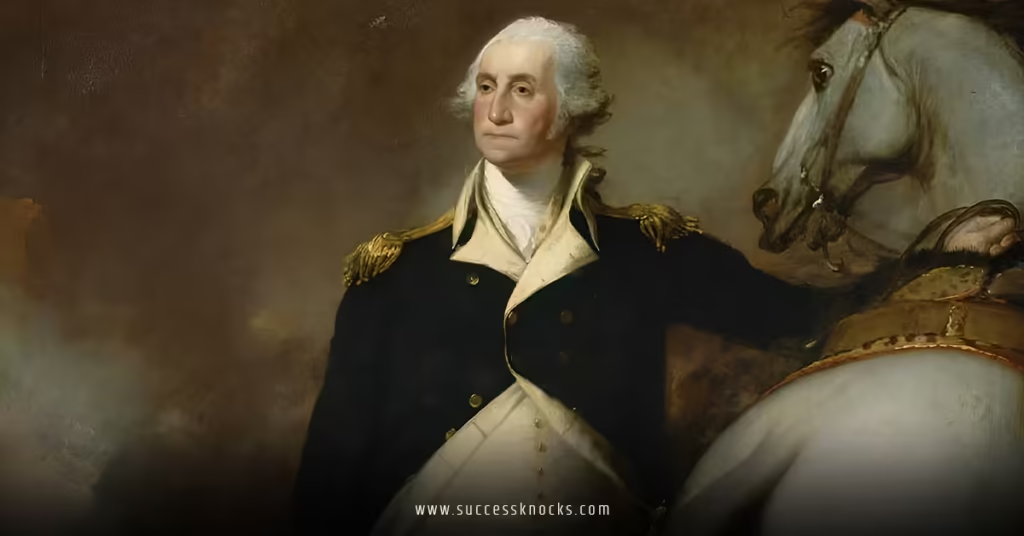
George Washington, for example, served as the commander-in-chief during the Revolutionary War and later as the first president, setting precedents for leadership. Other key achievements include:
- The Federalist Papers, written by Hamilton, Madison, and Jay, which argued for the Constitution’s ratification.
- The Bill of Rights, championed by Madison, ensuring individual freedoms.
- Economic policies, like Hamilton’s financial plans, that stabilized the new nation.
These efforts weren’t without challenges; debates over slavery and states’ rights revealed divisions. For deeper context on individual roles, such as George Washington’s military focus over document signing, explore our related article.
Why Their Ideas Still Matter Today
The principles championed by the Founding Fathers—democracy, checks and balances, and individual rights—continue to influence global politics. Their emphasis on Enlightenment ideals, like those from Locke and Montesquieu, promotes equality and justice in contemporary societies.
In practical terms, these ideas shape modern debates on civil liberties and government reform. For instance, the First Amendment’s protection of free speech echoes in today’s digital age, where online expression is a battleground. Why does this matter? It reminds us that foundational values can guide solutions to current issues, such as voting rights or federalism.
From an experience-based perspective, as someone who has studied these figures extensively, I often see how their balanced approach—combining idealism with pragmatism—can inspire everyday decision-making, like in community organizing or policy advocacy.
Step-by-Step Guide to Exploring Founding Fathers’ Works
If you’re new to this topic, here’s a straightforward action plan to dive in:
- Start with Basic Reading: Begin with accessible books like “The Autobiography of Benjamin Franklin” or summaries of the Federalist Papers available on sites like the Library of Congress.
- Examine Primary Sources: Access digital archives, such as the National Archives website, to read original documents and understand their language.
- Analyze Historical Context: Use timelines to connect events, like the Boston Tea Party, to the Fathers’ actions.
- Engage with Multimedia: Watch documentaries or visit virtual tours of historical sites like Mount Vernon.
- Discuss and Reflect: Join online forums or study groups to debate interpretations, and apply lessons to modern issues.
- Track Your Progress: Keep notes on key themes and how they relate to figures like George Washington—for more on his specific legacy, see our in-depth piece.
This plan builds research skills and makes learning engaging, whether you’re a student or a history buff.
Comparison of Major Figures
To simplify understanding, here’s a comparison table of some prominent Founding Fathers:
| Figure | Primary Role | Key Contribution | Legacy Impact |
|---|---|---|---|
| George Washington | Military leader and President | Led the Revolutionary War | Set presidential precedents |
| Thomas Jefferson | Author and Diplomat | Drafted the Declaration | Influenced education and expansion |
| Benjamin Franklin | Inventor and Statesman | Helped negotiate the Treaty of Paris | Advanced science and diplomacy |
| James Madison | Politician and Scholar | Authored the Constitution | Known as the “Father of the Constitution” |
| Alexander Hamilton | Economist and Soldier | Shaped financial systems | Founded the U.S. financial system |
This table highlights how each figure’s strengths complemented the others, much like pieces of a puzzle forming a complete picture.
Common Mistakes and How to Avoid Them
When studying the Founding Fathers, errors often arise from oversimplification or misinformation. For example, assuming all Fathers agreed on everything ignores their heated debates.
To avoid this:
- Mistake 1: Treating them as flawless heroes. Fix: Acknowledge flaws, like Jefferson’s stance on slavery, by consulting balanced sources.
- Mistake 2: Confusing their roles. Fix: Use timelines to differentiate, such as noting George Washington’s military emphasis over legislative work.
- Mistake 3: Relying on biased interpretations. Fix: Cross-reference multiple sources for a well-rounded view.
By addressing these, you can appreciate their humanity and real-world complexities.
Nuanced Scenarios and Edge Cases
The Founding Fathers’ stories involve layers that depend on context. For instance, in regional scenarios, Northern Fathers like Adams focused more on abolition, while Southern ones like Washington navigated slavery’s constraints.
In edge cases:
- If X, Then Y Guidance: If you’re analyzing economic policies, then compare Hamilton’s federalism to Jefferson’s agrarian views for a fuller picture.
- Constraints: Limited historical records might require inferring from letters, so always verify with experts.
- Scenarios: For educators, if teaching diverse groups, highlight underrepresented voices like women influencers to promote inclusivity.
This nuanced approach ensures a more accurate and relatable understanding.
Key Takeaways
- The Founding Fathers were a diverse group whose collaboration birthed American democracy.
- Their documents and ideas continue to guide modern governance and personal freedoms.
- Researching their works enhances critical thinking and historical awareness.
- Figures like George Washington played unique roles—explore his story further here.
- Balancing idealism with practicality was key to their success.
- Understanding debates helps address contemporary issues.
- Primary sources are essential for accurate insights.
- Their legacy inspires ongoing civic engagement.
- Always consider cultural contexts for a complete view.
Conclusion
In essence, the Founding Fathers transformed revolutionary ideals into a lasting framework for the United States, influencing everything from government structure to individual rights. Their story underscores the power of collective effort and thoughtful debate. By exploring these figures, you gain tools for better civic participation—your next step could be reading a biography or visiting a historical site, and don’t miss related topics like George Washington’s role in key events.
About the Author
Alex Watson is a history writer with over 15 years of experience in educational content, focusing on American Revolutionary figures. This article is for informational purposes only, not professional advice.
Frequently Asked Questions
Who is considered the most influential Founding Father?
George Washington is often seen as the most influential due to his leadership in the Revolution and as the first president.
How did the Founding Fathers influence the Constitution?
They debated and drafted it at the 1787 Convention, incorporating compromises that balanced state and federal powers.
Were all Founding Fathers from the same background?
No, they came from varied walks of life, including wealthy planters like Jefferson and self-made men like Franklin.
What role did women play in the Founding Fathers’ era?
While not directly involved, women like Abigail Adams influenced ideas through letters and advocacy.
How can I learn more about George Washington’s contributions?
Start with resources on his military leadership, and for specifics on myths, check our article on the Declaration.