


Free range vs pasture raised—two terms that sound fancy but leave most shoppers scratching their heads in the grocery aisle. Here’s the thing: these aren’t just marketing buzzwords slapped on premium packaging to justify higher prices.
What You Need to Know Right Now
- Free range means animals have “access” to outdoor space—but that could be a tiny door to a concrete yard
- Pasture raised means animals spend most of their lives on actual grass, foraging naturally
- Price difference: Pasture raised typically costs 30-50% more than free range
- Nutritional impact: Pasture raised products often contain higher omega-3s and vitamins
- Regulation reality: Both terms have loose federal oversight—third-party certifications matter more
The kicker is that neither term guarantees what most people think it does. Let’s break down what’s really happening behind these labels.
The Free Range Reality Check
What Free Range Actually Means
When you see “free range” on that chicken breast or carton of eggs, the USDA requires animals have “access to the outside.” But here’s where it gets interesting.
That access could mean:
- A small door that’s open for just a few hours daily
- A concrete yard with zero vegetation
- Outdoor space that only 5% of the flock actually uses
- Areas accessible only during certain weather conditions
No kidding—there’s no requirement for how much time animals spend outdoors, how much space they get per bird, or what that outdoor environment looks like.
The Free Range Experience (From the Animal’s Perspective)
Picture a warehouse with 20,000 chickens and a couple of pop-hole doors leading to a gravel lot. Technically free range? Absolutely. What most consumers envision? Not even close.
The reality varies wildly between producers. Some genuinely provide meaningful outdoor access with vegetation and adequate space. Others? They’re checking boxes for marketing purposes while changing very little about conventional production methods.
Pasture Raised: A Different Game Entirely
The Pasture Raised Standard
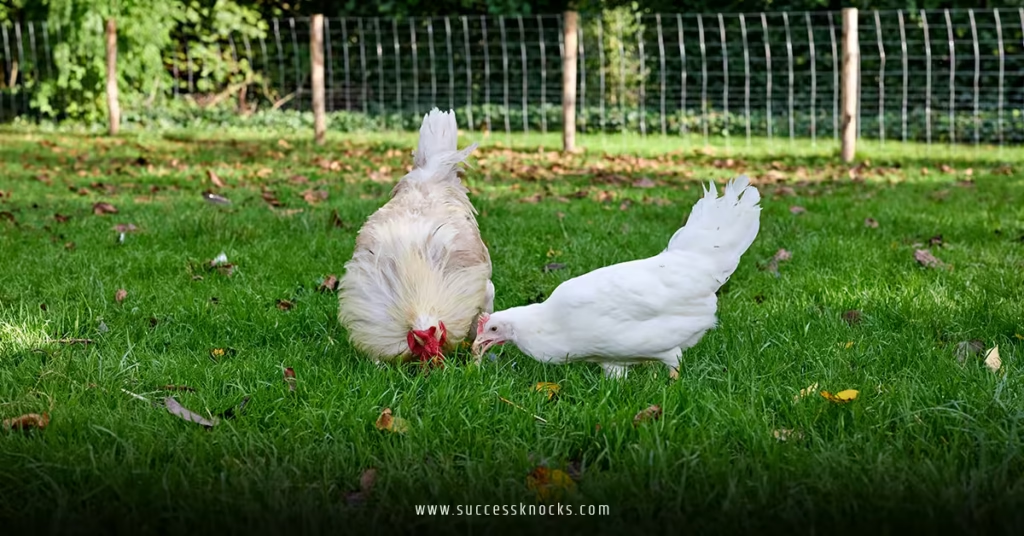
Pasture raised animals spend the majority of their lives outdoors on actual pasture—think grass, bugs, sunshine, and natural foraging behaviors. The American Grassfed Association defines pasture raised as animals that derive most of their nutrition from pasture throughout their lives.
Key differences from free range:
- Space requirements: Often 108-120 square feet per bird (vs. no federal requirement for free range)
- Time outdoors: Year-round access except during severe weather
- Diet composition: Significant portion from foraging, not just supplemental feed
- Movement freedom: Ability to express natural behaviors like pecking, scratching, dust bathing
What Pasture Raised Looks Like in Practice
These animals live closer to their natural state. Chickens scratch for insects, pigs root in soil, cattle graze on diverse grasslands. It’s not just about outdoor access—it’s about living as these species evolved to live.
The trade-off? Higher production costs translate directly to higher consumer prices. But you’re paying for fundamentally different farming practices, not just a label upgrade.
Free Range vs Pasture Raised: Side-by-Side Breakdown
| Aspect | Free Range | Pasture Raised |
|---|---|---|
| Federal regulation | Minimal USDA oversight | No specific federal standards |
| Outdoor access | Required but undefined | Majority of life outdoors |
| Space per animal | No minimum requirement | 108-120 sq ft per bird (varies by certifier) |
| Diet | Primarily feed-based | Significant foraging component |
| Price premium | 20-40% over conventional | 50-100% over conventional |
| Nutritional differences | Modest improvements | Notable omega-3 and vitamin increases |
| Animal welfare | Somewhat improved | Substantially improved |
| Environmental impact | Mixed results | Generally positive with proper management |
The Nutritional Reality
What the Research Actually Shows
Pasture raised products consistently show higher nutrient density compared to conventional and free range options. Studies from Penn State have found pasture raised beef contains:
- 2-3 times more omega-3 fatty acids
- Higher levels of vitamin E and beta-carotene
- Better omega-6 to omega-3 ratios
- Increased levels of conjugated linoleic acid (CLA)
For eggs, pasture raised versions typically contain:
- 4-6 times more vitamin D
- Higher omega-3 content
- Better protein quality profiles
- Richer, more orange yolks (indicating higher carotenoid content)
The Free Range Nutritional Picture
Free range products show modest improvements over conventional options, but the benefits depend heavily on how much outdoor access animals actually receive and use. The nutritional differences are real but less dramatic than pasture raised alternatives.
Certifications That Actually Matter
Third-Party Standards Worth Trusting
Federal oversight is loose, so third-party certifications provide more meaningful standards:
For Pasture Raised:
- Certified Humane Pasture Raised: 108 sq ft per hen minimum
- Animal Welfare Approved: Highest welfare standards, continuous pasture access
- Global Animal Partnership Step 4+: Multi-step welfare rating system
For Free Range:
- Certified Humane Free Range: 2 sq ft per bird minimum outdoors
- USDA Organic: Requires outdoor access but standards vary
Red Flags to Avoid
Watch out for vague marketing terms without third-party verification:
- “Natural” (meaningless term)
- “Farm fresh” (no regulatory definition)
- “Cage-free” (doesn’t mean outdoor access)
- Generic “pasture raised” without certification details
The Cost-Benefit Analysis
Breaking Down the Price Premium
Here’s what you’re actually paying for with each option:
Free Range Premium (20-40% more):
- Some outdoor access
- Slightly better animal welfare
- Modest nutritional improvements
- Variable quality depending on producer practices
Pasture Raised Premium (50-100% more):
- Significant outdoor living time
- Natural behavior expression
- Notable nutritional advantages
- Consistent quality with proper certification
- Environmental benefits when well-managed
Making the Math Work
If budget is tight, focus your premium spending on products you consume most. A dozen pasture raised eggs might cost $6 versus $2 for conventional, but that’s still just $4 extra for a week’s worth of breakfasts.
For meat, consider buying pasture raised for special occasions while choosing free range for regular weeknight dinners. You’re still supporting better practices while managing costs.
Common Mistakes to Avoid
The “All Premium Labels Are the Same” Trap
The mistake: Assuming free range and pasture raised offer identical benefits.
The fix: Read certification details and understand what you’re paying for. A $3 premium might buy you minimal outdoor access, while a $6 premium gets you genuine pasture living.
The “Organic Equals Pasture Raised” Confusion
The mistake: Thinking USDA Organic automatically means pasture raised standards.
The fix: Organic focuses on feed and chemical inputs, not necessarily outdoor access quality. Look for specific pasture raised certifications.
The “All or Nothing” Approach
The mistake: Feeling like you need to buy premium everything or nothing at all.
The fix: Prioritize products where the difference matters most to you—whether that’s nutritional content, animal welfare, or environmental impact.
Ignoring Seasonal Availability
The mistake: Expecting consistent pasture raised availability year-round.
The fix: Understand that true pasture raised products may have seasonal variations in availability and price, especially in regions with harsh winters.
Step-by-Step Shopping Guide
Before You Shop
Step 1: Decide your priorities—nutrition, animal welfare, or budget balance.
Step 2: Research your local stores’ premium options and certification standards.
Step 3: Set a realistic budget increase (start with 20-30% for key products).
At the Store
Step 4: Read labels carefully—look for third-party certifications, not just marketing claims.
Step 5: Compare price per pound/unit, not just package prices.
Step 6: Start with one or two products rather than switching everything at once.
Building Your Strategy
Step 7: Track which premium products provide value you can taste or feel.
Step 8: Adjust your mix based on budget and satisfaction over 2-3 months.
Step 9: Build relationships with local farmers if available—often better value and transparency than retail.
Environmental Considerations
The Pasture Raised Advantage
Well-managed pasture raised systems can actually improve soil health, increase biodiversity, and sequester carbon. Animals grazing and fertilizing land naturally often beats industrial monoculture in terms of environmental impact.
The catch? This only works with proper rotational grazing and appropriate stocking rates. Poor pasture management can lead to overgrazing and erosion.
Free Range Environmental Impact
Free range systems fall somewhere between conventional and pasture raised in environmental terms. The impact depends heavily on implementation—a concrete lot with outdoor access provides minimal environmental benefit.
Regional Variations and Availability
What to Expect by Region
West Coast: Abundant options, higher baseline standards, premium pricing.
Northeast: Growing availability, strong local farm networks, seasonal variations.
Southeast: Increasing options, climate advantages for year-round pasture.
Midwest: Traditional farming regions with emerging pasture raised operations.
Mountain West: Limited options but growing, focus on beef and lamb.
Key Takeaways
- Free range provides some outdoor access but standards vary wildly—certification details matter more than the label
- Pasture raised offers genuine outdoor living and natural behaviors, with corresponding nutritional and welfare benefits
- Price reflects value: The 50-100% premium for pasture raised pays for fundamentally different farming practices
- Third-party certifications provide more reliable standards than federal regulations alone
- Start selectively: Focus premium spending on products you consume most or care most about
- Read the fine print: Marketing terms without certification backing often mean minimal actual differences
- Local matters: Direct relationships with farmers can provide better value and transparency than retail chains
- Seasonal reality: True pasture raised products may have availability fluctuations based on weather and natural cycles
The Bottom Line
Free range vs pasture raised isn’t just about label preferences—it’s about understanding what you’re buying and whether the premium matches your values and budget. Free range offers a step up from conventional with meaningful but modest improvements. Pasture raised represents a fundamental shift in how animals live, with corresponding benefits in nutrition, welfare, and often environmental impact.
The sweet spot? Know what you’re paying for, start with products that matter most to you, and build from there. Your wallet and your values don’t have to be at war—they just need a strategy.
Choose based on your priorities, not marketing pressure. That’s the real freedom in food choices.
Frequently Asked Questions
Q: Is free range vs pasture raised worth the extra cost for eggs specifically?
A: For eggs, the nutritional difference is substantial—pasture raised eggs contain 4-6 times more vitamin D and significantly higher omega-3s. If you eat eggs regularly, the health benefits often justify the premium. Free range eggs offer modest improvements but less dramatic nutritional gains.
Q: Can you taste the difference between free range vs pasture raised chicken?
A: Yes, typically. Pasture raised chicken often has firmer texture, richer flavor, and less water content. Free range chicken may have slight flavor improvements over conventional, but the difference is usually more noticeable with pasture raised options due to the varied diet and exercise.
Q: Are there any safety differences between free range vs pasture raised products?
A: Both face similar food safety standards and inspection requirements. Pasture raised systems may have slightly lower pathogen risks due to outdoor living and natural behaviors, but proper handling and cooking remain essential regardless of production method.
Q: How can I verify if free range vs pasture raised claims are legitimate?
A: Look for specific third-party certifications like Certified Humane, Animal Welfare Approved, or Global Animal Partnership rather than relying on producer claims alone. These organizations have defined standards and conduct inspections to verify compliance.
Q: Does free range vs pasture raised make a difference for dairy products?
A: Absolutely. Pasture raised dairy typically contains higher omega-3 fatty acids, CLA, and fat-soluble vitamins. The milk often has seasonal color and flavor variations reflecting the cows’ grass diet. Free range dairy shows moderate improvements over conventional confined systems.


