
Gen Z shopping habits in 2026 are mobile-first, social-first, and brutally value-aware. They browse fast, compare harder, and buy when the offer feels useful, authentic, and low-friction.[1][2][8]
- Gen Z shops with a value filter on. Nearly half switch brands for better cost or value, and many use cashback, loyalty, and price-comparison tools.[1]
- Social discovery still leads. A majority say social media beats traditional retail for finding new products.[1][11]
- Mobile is the default storefront. Gen Z expects shopping, payment, and service to work cleanly on a phone.[2][6]
- Convenience matters, but so does trust. Product quality, peer validation, and clear proof can outweigh discounts.[13][20]
- Gen Z spending behavior August 2026 is the backstory. Their shopping habits make more sense when you see how selective, tactical, and budget-aware their spending has become.[1][14]
Gen Z does not shop like a generation waiting to be persuaded. They shop like a generation already half-convinced and looking for a reason to say yes. That’s a big difference.
Gen Z shopping habits in 2026: the short answer
Gen Z shopping habits in 2026 are shaped by three forces: mobile convenience, social influence, and price discipline.[2][6][8]
They discover products on TikTok, Instagram, and other social channels, compare prices before buying, and lean toward seamless checkout experiences that do not waste time.[1][3][11] If a brand adds friction, Gen Z moves on. Fast.
What Gen Z actually wants when shopping
The pattern is consistent across major 2026 reports. Gen Z wants shopping to feel:
- Fast
- Personal
- Affordable
- Trustworthy
- Easy to complete on mobile
TGM Research says Gen Z is mobile-first, socially influenced, and convenience-oriented, but not simply impulsive.[8] That last part matters. A lot.
The old stereotype says Gen Z buys on vibes alone. Not quite. They research, compare, verify, and then often buy through the easiest path available.[6][11]
Gen Z shopping habits in 2026 and product discovery
Discovery is where the game starts.
Dentsu reports that 61% of Gen Z say social media is better than traditional retail for discovering new products.[1] EMARKETER also notes that Gen Z’s social media buyer rate is far above the general population, with TikTok and Instagram playing a major role in product discovery.[11]
What does that mean in practice?
It means the “first impression” is no longer a homepage banner. It’s a short video, a creator recommendation, a peer comment, or a quick product demo in a feed.
That is the doorway. Not the destination.
Why price still rules the decision
Gen Z shopping habits in 2026 are price-aware without being purely discount-driven.
Dentsu found that nearly half of Gen Z are more likely to switch brands because of cost or value, and many use cashback apps, loyalty apps, price-comparison tools, coupon extensions, BNPL, and budgeting apps as part of routine shopping.[1] TGM Research similarly found that price is the top priority, followed by free or low-cost shipping and fast delivery.[6]
But here’s the kicker: price is not the whole story.
EMARKETER says product quality outweighs discounts for close to half of Gen Zers and millennials.[13] So yes, Gen Z wants a deal. But they also want the deal to feel smart, not cheap.
| What Gen Z is optimizing for | What it means in real shopping behavior | What brands should do |
|---|---|---|
| Price | They compare before they commit | Show value clearly and early |
| Speed | They want quick discovery and checkout | Remove friction from the funnel |
| Trust | They lean on peer proof and social validation | Use reviews, UGC, and creator demos |
| Convenience | They prefer low-effort shopping paths | Prioritize mobile UX and payment ease |
| Quality | They will pay for products that feel worth it | Make benefits concrete, not vague |
Gen Z shopping habits in 2026: the channels that matter most
Gen Z does not live in one channel. They bounce.
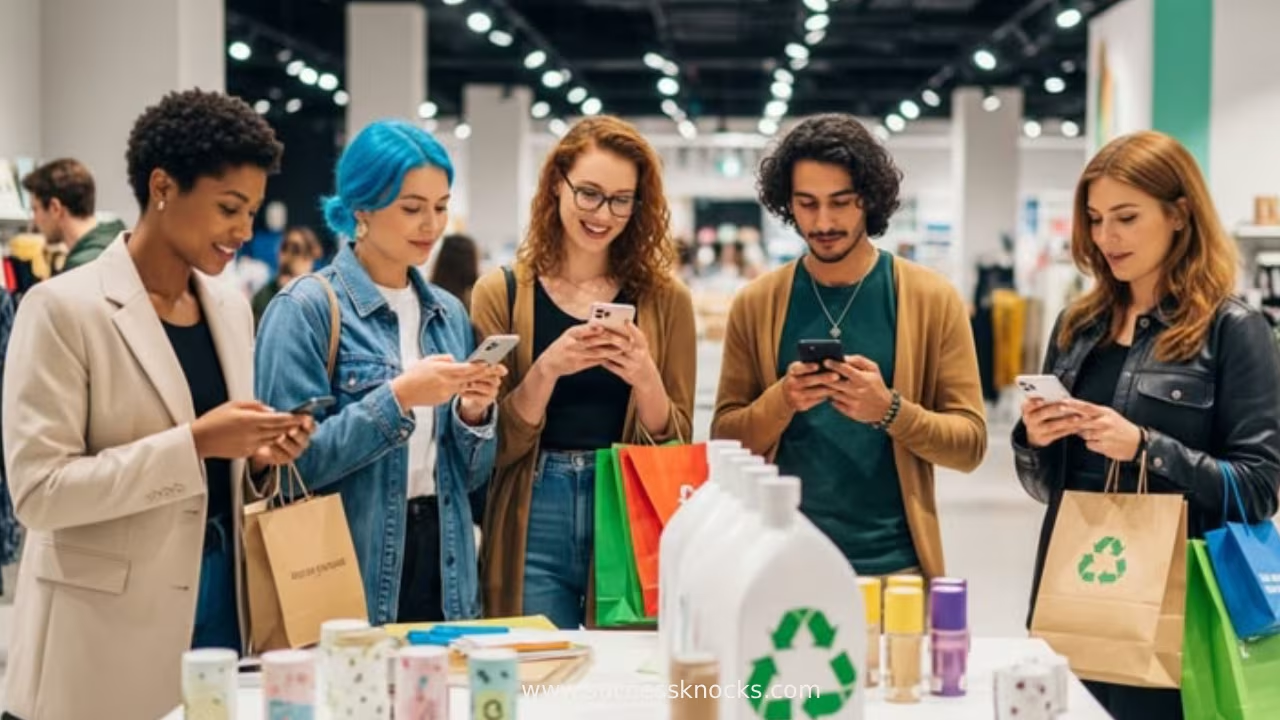
They may discover a product on social media, check reviews elsewhere, compare prices on mobile, and then buy in-app, online, or sometimes in-store.[2][3][11] That’s omnichannel behavior, but without the marketing buzzword fog.
Mintel says online shopping is routine for Gen Z, with many shopping at least weekly.[14] Cropink also reports strong mobile and social buying behavior, including mobile preference and direct purchases from social platforms.[2]
The takeaway is simple. If your brand only performs in one channel, you are losing part of the journey.
Gen Z shopping habits in 2026 and the role of social proof
Social proof is not decoration. It is decision fuel.
For Gen Z, peer validation often carries more weight than polished ad copy.[19][20] They want to know:
- Does this work?
- Does it look the way it does online?
- Do real people actually like it?
- Is this worth the money?
If the answers are fuzzy, the sale gets delayed or lost.
Step-by-step plan for brands and marketers
If you want to win with Gen Z shopping habits in 2026, start here.
- Audit your discovery points.
Check where Gen Z first sees your product: TikTok, Instagram, search, retail shelves, creator content, or direct referrals. - Fix the mobile path first.
Make sure product pages, cart, checkout, and customer service work smoothly on a phone.[2][6] - Show value in plain language.
Do not bury the payoff. Lead with what the product does, why it matters, and why it is worth the price. - Use proof that feels real.
Reviews, UGC, before-and-after demos, and creator walkthroughs beat vague branding every time.[11][19] - Offer a low-friction purchase option.
Free shipping thresholds, bundles, trial sizes, and flexible payment options can help turn interest into conversion.[1][6] - Watch the comparison stage.
Gen Z compares aggressively. If your price, shipping, or benefits look weak next to competitors, expect drop-off. - Plan for repeat behavior.
Gen Z loyalty is earned after the first order. Make the post-purchase experience worth coming back for.
Common mistakes brands make with Gen Z shopping habits in 2026
- Mistake: treating Gen Z like one big trend bucket
Fix: segment by need state, not just age. - Mistake: over-investing in polished messaging
Fix: make proof, reviews, and product clarity do the heavy lifting. - Mistake: ignoring social commerce
Fix: build content for discovery where Gen Z already scrolls. - Mistake: making checkout feel like homework
Fix: reduce steps, fields, and confusion. - Mistake: leading with discounts only
Fix: pair price with quality, convenience, or identity value.
What Gen Z shopping habits in 2026 mean for retailers
Retailers need to stop thinking in terms of “online versus offline.” Gen Z does not shop that way.[3][11][20]
They move between channels depending on context. In-store can still matter for touch, fit, and confidence. Online wins for speed, selection, and convenience. Social wins for discovery. The best-performing brands connect all three without making the shopper do the stitching.
Think of it like a relay race. Every handoff has to be clean. One fumble, and the runner drops.
Gen Z shopping habits in 2026 vs. old-school shopping logic
| Old-school logic | Gen Z reality in 2026 |
|---|---|
| Brand awareness comes first | Discovery often starts in social feeds |
| Discounts always close the sale | Value plus trust closes the sale |
| Website traffic is the main goal | Multi-channel discovery is the real game |
| Loyalty is stable | Loyalty is conditional and easily lost |
| Polished messaging wins | Useful proof wins |
How Gen Z spending behavior August 2026 connects to shopping
Gen Z shopping habits do not exist in a vacuum. They are downstream from Gen Z spending behavior August 2026, where budget pressure, selective splurges, and value hunting shape what gets bought and when.[1][14]
That’s why the same shopper who delays one purchase will happily buy a “little treat” or a product that fits their identity. The spending logic is tighter, not colder.
Key takeaways
- Gen Z shopping habits in 2026 are driven by mobile, social discovery, and value-first decision-making.
- Social media is a major product-discovery engine for Gen Z.[1][11]
- Price matters, but perceived quality and trust matter too.[13]
- Gen Z uses tools like cashback, loyalty, coupon extensions, and price comparisons to stretch budgets.[1]
- Mobile checkout and fast delivery can make or break conversion.[2][6]
- Social proof and creator content are stronger than generic advertising.
- Omnichannel shopping is normal for Gen Z, not exceptional.[3][20]
- Gen Z spending behavior August 2026 explains why this generation shops with so much restraint and selectivity.[1][14]
Gen Z shopping habits in 2026 reward brands that are clear, fast, and credible. If your offer feels useful and easy to buy, Gen Z will listen. If it feels inflated, slow, or fake, they’re gone.
FAQs
What are the biggest Gen Z shopping habits in 2026?
The biggest habits are mobile-first browsing, social media discovery, price comparison, and preference for brands that feel authentic and easy to buy from.[1][2][8]
How does Gen Z spending behavior August 2026 affect shopping habits?
It makes Gen Z more selective. They still spend, but they look harder for value, convenience, and personal relevance before buying.[1][14]
Do Gen Z shoppers still buy in-store in 2026?
Yes. Gen Z still uses in-store shopping, especially when they want to see, touch, or verify products before making a purchase.[3][11][20]