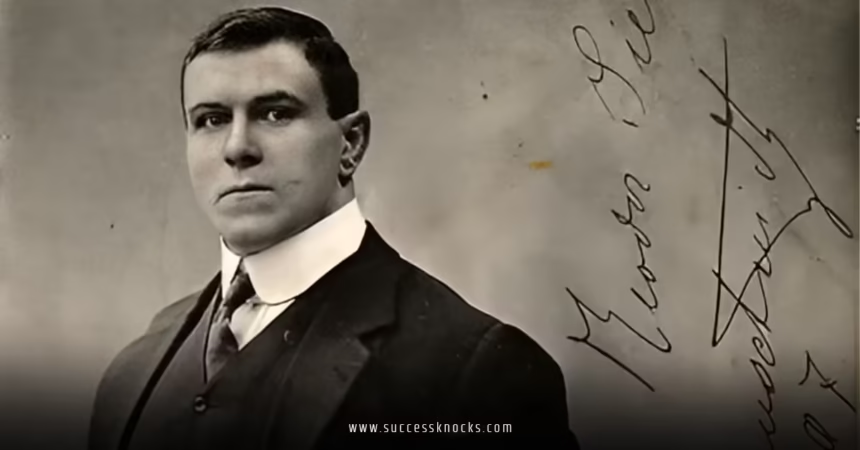
George Hackenschmidt stands as one of the most influential and captivating figures in the history of professional wrestling, a man whose legacy transcends the squared circle and continues to inspire athletes, historians, and wrestling enthusiasts worldwide. Born in the late 19th century in Imperial Russia, Hackenschmidt transformed himself from a circus performer into a legendary wrestler whose dominance shaped the entire sport during the early 1900s. His story is one of exceptional athleticism, strategic brilliance, and an unwavering commitment to excellence that few modern athletes can truly comprehend.
When we talk about George Hackenschmidt, we’re essentially discussing the foundational era of professional wrestling—a period when the sport was still establishing its rules, its heroes, and its place in popular entertainment. The Russian Lion, as Hackenschmidt was affectionately known, didn’t just participate in wrestling’s evolution; he fundamentally directed its trajectory. His matches drew unprecedented crowds, his techniques revolutionized grappling methodology, and his business acumen demonstrated that professional wrestling could be a lucrative and respectable profession.
Who Was George Hackenschmidt? Understanding the Legend
George Hackenschmidt’s early life provides crucial context for understanding how he became such a dominant force in professional wrestling. Born in 1878 in Dorpat (modern-day Tartu, Estonia), then part of the Russian Empire, Hackenschmidt grew up in an environment where physical strength and athletic prowess were highly valued. His family background wasn’t particularly wealthy, which made his eventual rise to fame even more remarkable. Young George developed an intense passion for physical culture—the movement emphasizing strength training and bodybuilding that was gaining popularity across Europe during the fin de siècle period.
The transformation that created George Hackenschmidt began when he started training in weightlifting and wrestling while still in his teenage years. Rather than following a conventional path, he joined a traveling circus where he performed feats of strength that astonished audiences. This circus background proved invaluable; it taught him how to entertain crowds, how to build narrative tension, and how to command attention—skills that would become his greatest assets when he transitioned to professional wrestling.
The Path to Wrestling Prominence
George Hackenschmidt didn’t stumble into professional wrestling by accident. His transition from circus performer to professional wrestler was deliberate and strategic. By the early 1900s, he had already established a reputation as an extraordinarily strong man, capable of remarkable feats that seemed almost superhuman to contemporary observers. When he finally entered the professional wrestling arena around 1899-1900, he brought with him a level of legitimate athletic credibility that few wrestlers possessed.
What made George Hackenschmidt different from his contemporaries was his fusion of legitimate grappling knowledge with theatrical presentation. He understood that professional wrestling needed both elements to succeed—the matches needed to showcase real technical skill and strength while simultaneously telling compelling stories that captivated audiences. This balance became his trademark.
The Championship Years: George Hackenschmidt’s Dominance
Becoming the Heavyweight Champion
George Hackenschmidt’s ascension to the heavyweight championship represents one of professional wrestling’s most significant milestones. Between 1901 and his eventual championship victory, Hackenschmidt defeated numerous top-tier competitors and established himself as the sport’s premier heavyweight. His victory to claim the title wasn’t merely a wrestling achievement; it was a validation of a new wrestling philosophy—one that emphasized legitimacy, strength, and technical prowess.
When George Hackenschmidt held the heavyweight championship, the title meant something genuinely consequential. Wrestlers literally traveled the globe challenging him, and his matches attracted massive audiences. The championship wasn’t merely a prop in a theatrical production; it represented genuine sporting supremacy, even if the outcomes were predetermined or negotiated in advance.
The Era of Undisputed Dominance
The period when George Hackenschmidt reigned as champion fundamentally changed professional wrestling’s economic structure and social standing. His championship defenses took place in packed arenas and theaters throughout North America and Europe. Audiences paid substantial money to witness Hackenschmidt compete because they recognized his exceptional abilities and genuine strength.
Interestingly, George Hackenschmidt’s dominance created a peculiar problem for wrestling promoters. His supremacy was so apparent that credible challengers seemed scarce. Every match carried the weight of expectation—would this be the night someone finally defeated the seemingly invincible Russian Lion? This narrative tension, combined with Hackenschmidt’s legitimately impressive physique and strength, created compelling entertainment that transcended mere theatrical spectacle.
The Legendary Hackenschmidt vs. Frank Gotch Match
Wrestling’s Most Famous Championship Contest
Perhaps no match in professional wrestling history captures the imagination quite like the encounters between George Hackenschmidt and Frank Gotch, his eventual successor. These matches represented more than just wrestling competitions; they symbolized the struggle between different wrestling philosophies and national wrestling traditions—Russian versus American styles, in essence.
The first Hackenschmidt-Gotch match in 1908 is particularly legendary. Gotch, an American wrestler of exceptional skill, challenged the seemingly invincible Hackenschmidt for the heavyweight title. The match lasted over an hour, and contemporary accounts describe it as a battle of wills and technique, not mere entertainment spectacle. When Gotch eventually defeated Hackenschmidt and won the title, it shocked the wrestling world. George Hackenschmidt’s reign of dominance appeared to have ended.
The Rematch That Defined an Era
Two years later, George Hackenschmidt demanded a rematch, confident he could reclaim his championship. The second Hackenschmidt-Gotch encounter in 1911 became even more famous than their first meeting. This match generated unprecedented interest, with wealthy patrons paying extraordinary sums for ringside seats. The contest itself became legendary for its length, intensity, and technical complexity.
In this rematch, George Hackenschmidt faced a psychological challenge perhaps as demanding as the physical one. Gotch had already proven he could defeat him once, introducing doubt where previously existed only certainty. The rematch’s outcome—though historians debate various accounts—marked a turning point in professional wrestling’s narrative structure. George Hackenschmidt’s era of undisputed dominance was definitively ending, though his legacy would only grow stronger.
George Hackenschmidt’s Wrestling Techniques and Innovation
Revolutionary Grappling Methods
One reason George Hackenschmidt commanded such respect in professional wrestling circles involved his technical innovations. He didn’t merely rely on overwhelming strength; he developed sophisticated grappling techniques that influenced wrestling instruction for decades afterward. His understanding of leverage, positioning, and submission holds represented a quantum leap forward in wrestling methodology.
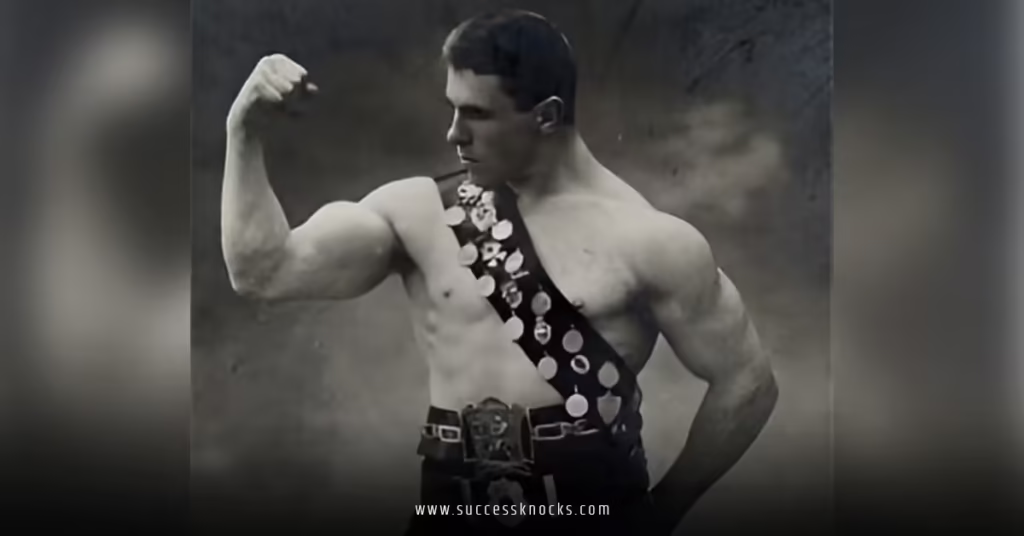
George Hackenschmidt pioneered techniques that became foundational in professional wrestling. His emphasis on hip leverage, his development of particular submission holds, and his strategic approach to wearing down opponents through systematic grappling established patterns that wrestling trainers still teach. When modern wrestling enthusiasts study classical wrestling technique, they’re frequently studying approaches developed or popularized by Hackenschmidt.
The Science Behind His Strength
George Hackenschmidt wasn’t simply a strong man; he was a thinking athlete who understood the biomechanics of wrestling and strength. He engaged with physical culture movements of his era, studied anatomy as it related to wrestling performance, and continuously refined his approach to training and competition. This intellectual approach to wrestling separated him from many contemporaries who relied primarily on raw strength and experience.
His training methods, while primitive compared to modern standards, represented cutting-edge athletic science for the early 1900s. George Hackenschmidt kept detailed records of his training, experimented with different approaches to strength development, and maintained rigorous physical conditioning year-round. For a professional wrestler in the early 20th century, this level of dedication and systematic approach was genuinely exceptional.
The Global Impact of George Hackenschmidt’s Career
International Wrestling Tours and Influence
George Hackenschmidt’s fame transcended national boundaries in an era when international travel and communication were far more challenging than today. He toured throughout Europe, North America, and other regions, carrying professional wrestling’s prestige wherever he competed. These tours didn’t merely entertain local audiences; they established professional wrestling as a legitimate international sporting attraction.
When George Hackenschmidt traveled to different countries, he brought with him wrestling’s credibility and excitement. Local wrestlers aspired to face him, promoters competed fiercely to host his matches, and audiences embraced the opportunity to witness the legendary champion. His international presence helped establish professional wrestling as entertainment that transcended cultural and national boundaries.
Establishing Wrestling as Legitimate Sport and Entertainment
George Hackenschmidt’s career occurred during a fascinating historical moment when professional wrestling was transitioning from carnival attraction to legitimate sporting enterprise and theatrical entertainment. His presence and prestige helped legitimize professional wrestling during this crucial developmental period.
The combination of Hackenschmidt’s genuine strength, technical skill, and championship status created a powerful validation of professional wrestling as both sporting competition and entertainment. Audiences could watch him and recognize genuine athletic excellence, even while understanding that matches followed predetermined outcomes or negotiated finishes. George Hackenschmidt embodied this duality perfectly—he was simultaneously legitimate athlete and entertainment performer.
The Business Acumen Behind George Hackenschmidt’s Success
Marketing and Promotion Innovation
Beyond his wrestling abilities, George Hackenschmidt demonstrated sophisticated understanding of how to market himself and maximize his earning potential. During an era when professional wrestlers were frequently exploited by promoters, Hackenschmidt negotiated favorable terms, maintained significant control over his career trajectory, and built substantial wealth through wrestling.
George Hackenschmidt recognized that his name, reputation, and championship status represented valuable commodities. He leveraged these assets effectively, sometimes refusing matches unless terms met his standards, and sometimes organizing his own wrestling events rather than relying solely on established promoters. This entrepreneurial approach was relatively uncommon among wrestlers of his era.
Legacy of Professional Standards
George Hackenschmidt’s approach to his wrestling career established important precedents regarding how professional wrestlers should conduct themselves. He maintained dignified public behavior, cultivated relationships with journalists and social elites, and positioned himself as a respectable athlete rather than a carnival curiosity. This elevation of wrestling’s social status had lasting implications for how future generations understood and valued professional wrestling.
Decline and Later Years: George Hackenschmidt’s Continued Influence
Retirement from Active Competition
Eventually, even champions must accept the physical realities of age and competition. George Hackenschmidt gradually transitioned away from active wrestling competition, though he remained involved in the sport through training, promoting, and wrestling history. His retirement wasn’t a disappearance; rather, it represented a transition to different roles within professional wrestling.
Some accounts suggest Hackenschmidt retired voluntarily, confident in his accomplishments and ready to pursue other interests. Other narratives emphasize the toll that decades of physical competition exacted. Regardless of the specific circumstances, George Hackenschmidt’s departure from active wrestling marked the end of an era while simultaneously ensuring his legendary status would endure.
Later Years and Historical Reflection
George Hackenschmidt lived into the 1960s, witnessing professional wrestling’s continued evolution. He saw the sport transformed by new technologies, new promotional methods, and new wrestling philosophies. The wrestling world that emerged during his lifetime bore his fingerprints throughout—his technical innovations persisted, his championship legacy remained recognized, and his example influenced how wrestlers conducted their careers.
During his later years, George Hackenschmidt reflected on his wrestling career and its historical significance. He provided interviews, shared wrestling knowledge, and contributed to wrestling’s historical record. These reflections helped ensure that George Hackenschmidt’s legacy wasn’t merely preserved through wrestling folklore but documented through direct testimony.
George Hackenschmidt’s Enduring Legacy in Professional Wrestling
Influence on Wrestling Technique and Training
The techniques George Hackenschmidt developed and popularized became foundational to professional wrestling instruction. Subsequent generations of wrestlers studied his methods, adapted his approaches, and transmitted his knowledge throughout the wrestling world. When modern wrestlers learn classical wrestling technique, they’re frequently learning approaches that trace directly back to Hackenschmidt’s innovations.
George Hackenschmidt demonstrated that professional wrestling could accommodate both legitimate athletic prowess and theatrical entertainment. This insight—that these elements could coexist rather than contradict—became central to professional wrestling’s successful evolution. Modern professional wrestling continues to reflect this Hackenschmidt principle: audiences value both legitimate athletic skill and compelling narrative storytelling.
The Championship Legacy
George Hackenschmidt’s championship reign established the heavyweight championship as professional wrestling’s premier prize. Though championship titles had existed previously, Hackenschmidt’s dominance and prestige transformed the heavyweight championship into something genuinely significant. Subsequent champions inherited both the technical challenge of defending the title and the enormous prestige that George Hackenschmidt’s reign had established.
Cultural Impact Beyond Wrestling
George Hackenschmidt’s fame extended beyond wrestling enthusiasts into broader popular culture. He embodied the early 20th century’s fascination with physical culture, strength, and masculine athleticism. His popularity reflected and reinforced cultural preoccupations with physical development, athletic achievement, and sporting excellence. Through Hackenschmidt, professional wrestling connected to larger cultural movements emphasizing personal physical development and athletic achievement.
The Historical Debate: George Hackenschmidt’s True Legacy
Legitimate Strength versus Predetermined Outcomes
Contemporary wrestling historians occasionally debate the extent to which George Hackenschmidt’s matches represented legitimate contests versus predetermined theatrical performances. The reality appears to be that Hackenschmidt existed within a complex space where matches sometimes involved genuinely competitive wrestling, sometimes followed predetermined outcomes, and sometimes represented hybrid scenarios blending both elements.
What matters most isn’t resolving every historical ambiguity about individual match outcomes. Instead, the significant insight involves recognizing that George Hackenschmidt’s exceptional strength, technical knowledge, and athletic abilities were genuine, regardless of whether specific matches followed predetermined trajectories. He represented legitimate athletic excellence functioning within professional wrestling’s entertainment-oriented business model.
Comparison with Contemporary and Subsequent Champions
When wrestling historians compare George Hackenschmidt with other legendary champions, interesting questions emerge regarding the different eras’ characteristics and how comparative assessment should function. Hackenschmidt operated in wrestling’s earliest championship era, before standardized rules, before widespread photography and film documentation, and before professional wrestling had fully established its current form.
This historical context doesn’t diminish Hackenschmidt’s accomplishments; rather, it requires understanding his achievements within his specific era’s parameters. George Hackenschmidt was arguably the most dominant wrestling champion of his time, accomplished within wrestling’s competitive environment, and demonstrated exceptional abilities relative to his contemporaries.
Learning from George Hackenschmidt: Lessons for Modern Athletes
Combining Strength with Strategy
George Hackenschmidt’s career illustrates how physical abilities achieve maximum effectiveness when combined with strategic thinking. Modern athletes across various sports can learn from Hackenschmidt’s example—raw strength and physical talent, while valuable, achieve greater results when integrated with intelligent analysis, technical refinement, and strategic planning.
Building Sustainable Careers
George Hackenschmidt demonstrated that sustainable athletic careers require more than initial talent. His longevity stemmed from continuous learning, systematic training, strategic career management, and willingness to evolve approaches when necessary. These principles remain relevant for contemporary athletes seeking to extend their careers and maximize their professional impact.
The Business of Athletic Excellence
George Hackenschmidt’s business acumen provides valuable lessons regarding how athletes should approach career management. He recognized that athletic achievement, reputation, and marketability represent valuable assets deserving careful management. Modern athletes often benefit from Hackenschmidt’s example—understanding that athletic success should connect to appropriate financial compensation and career control.
Conclusion
George Hackenschmidt represents far more than merely a historical wrestling figure from professional wrestling’s earliest championship era. He embodies the convergence of legitimate athletic excellence, theatrical entertainment, entrepreneurial vision, and strategic brilliance. His dominance as heavyweight champion transformed professional wrestling from a carnival attraction into a respected sporting enterprise capable of commanding enormous audiences and generating substantial revenue.
The Russian Lion’s technical innovations revolutionized how wrestling was performed and taught. His business acumen demonstrated that professional wrestlers could achieve financial success while maintaining control over their careers. His international prominence helped establish professional wrestling as entertainment transcending national and cultural boundaries. Most importantly, George Hackenschmidt established a template for how champions should conduct themselves—with dignity, strategic intelligence, and commitment to excellence.
When contemporary wrestling enthusiasts study professional wrestling history, they inevitably encounter George Hackenschmidt. His influence persists through wrestling techniques still practiced today, through championship legacy standards he established, and through the precedents he created regarding how professional wrestling could balance legitimacy and entertainment. Understanding George Hackenschmidt means understanding professional wrestling’s foundational era and recognizing how early decisions and developments shaped the sport’s subsequent evolution.
The lessons George Hackenschmidt’s career teaches extend beyond professional wrestling specifically. Athletes across diverse sports can learn from his combination of physical excellence, strategic intelligence, technical mastery, and business acumen. In an era when many athletes achieve fame without necessarily understanding the business dimensions of their careers, George Hackenschmidt’s example remains relevant and instructive. His legacy endures because it encompasses not merely sporting accomplishment but genuine innovation in how athletes should approach their careers, their development, and their professional responsibilities.
External References for Further Reading
- Professional Wrestling Hall of Fame – Historical Champions – Comprehensive documentation of professional wrestling’s championship history and legendary champions like George Hackenschmidt
- International Sports History Database – Early Wrestling Records – Detailed historical records documenting professional wrestling’s earliest championship era and competitors
- Athletic Innovation Archives – Strength and Technique Development – Historical documentation of physical culture movement and wrestling technique evolution influenced by pioneers like George Hackenschmidt
Frequently Asked Questions About George Hackenschmidt
1. Who exactly was George Hackenschmidt, and why is he considered such an important figure in wrestling history?
George Hackenschmidt was a Russian-born wrestler who dominated professional wrestling during the early 1900s as heavyweight champion. He revolutionized the sport by combining legitimate athletic excellence with theatrical entertainment, establishing professional wrestling as a respectable and lucrative profession. George Hackenschmidt’s technical innovations, championship prestige, and business acumen shaped professional wrestling’s foundational era and influenced the sport’s subsequent development. His impact extends beyond specific wrestling techniques to encompassing how athletes should conduct their careers professionally and strategically.
2. What made George Hackenschmidt’s wrestling style unique compared to his competitors?
George Hackenschmidt distinguished himself through sophisticated grappling technique, biomechanical understanding, and strategic approach to wrestling. Rather than relying exclusively on raw strength, he developed leverage-based techniques emphasizing hip control and submission holds that became foundational to professional wrestling instruction. George Hackenschmidt also brought intellectual rigor to wrestling training, maintaining detailed records and continuously refining his methodology. His combination of legitimate strength, technical mastery, and strategic sophistication created a wrestling style that competitors struggled to match.
3. How did George Hackenschmidt’s matches with Frank Gotch influence professional wrestling’s development?
The Hackenschmidt-Gotch matches represented professional wrestling’s most famous championship contests, drawing unprecedented audiences and generating enormous interest. George Hackenschmidt’s eventual defeat by Gotch demonstrated that even seemingly invincible champions could be overcome, introducing narrative complexity and unpredictability to professional wrestling. These matches helped establish that professional wrestling could provide compelling entertainment through the tension of genuine competition, regardless of predetermined outcomes. The legendary status of Hackenschmidt-Gotch encounters influenced how subsequent wrestling promoters understood championship matches and their potential to captivate audiences.
4. What were George Hackenschmidt’s major wrestling accomplishments beyond holding the heavyweight championship?
Beyond his championship reign, George Hackenschmidt established important precedents regarding wrestler compensation, career autonomy, and professional conduct. He negotiated favorable terms with promoters, organized his own wrestling events, and maintained dignified public behavior that elevated wrestling’s social status. George Hackenschmidt’s international wrestling tours helped establish professional wrestling as global entertainment. He also pioneered training methods, developed technical innovations, and created educational materials that influenced wrestling instruction for decades. His accomplishments encompassed not merely championship success but fundamental contributions to how professional wrestling operated as both sport and entertainment.
5. How does George Hackenschmidt’s legacy remain relevant to modern professional wrestling and contemporary athletes?
George Hackenschmidt’s legacy influences modern professional wrestling through technical foundations still taught today, championship legacy standards he established, and precedents regarding how athletes should manage their careers. Contemporary wrestlers continue studying Hackenschmidt’s techniques, promoters recognize championship prestige he established, and wrestling historians reference his accomplishments when contextualizing the sport’s history. Beyond professional wrestling specifically, George Hackenschmidt’s career provides valuable lessons regarding combining physical excellence with strategic thinking, building sustainable athletic careers, understanding the business dimensions of athletic achievement, and conducting oneself with professional dignity. His example remains instructive for contemporary athletes seeking to maximize their impact and build lasting legacies.