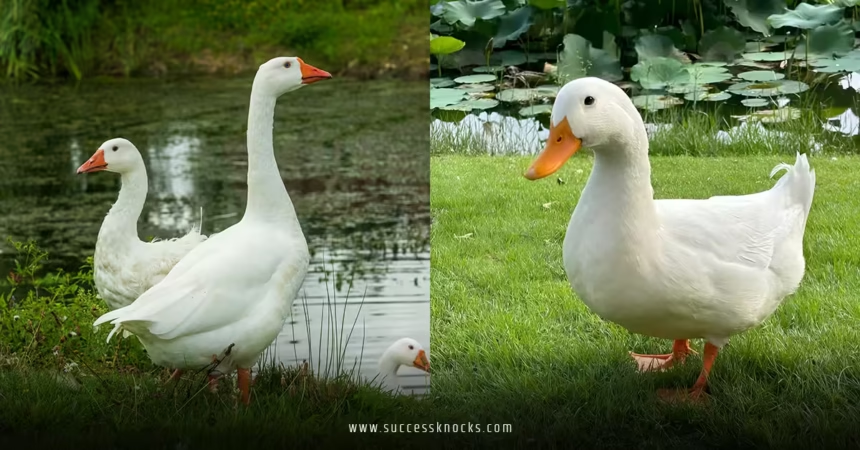
Goose vs duck identification trips up even experienced birdwatchers, but the differences become crystal clear once you know what to look for. While both are waterfowl that paddle around ponds and parks, geese are significantly larger with longer necks, different feeding habits, and distinct social behaviors that set them apart from their smaller duck cousins.
Here’s what separates these feathered neighbors:
- Size matters: Geese typically weigh 8-14 pounds while most ducks clock in at 1-4 pounds
- Neck length: Geese sport elongated necks perfect for grazing; ducks have compact, proportional necks
- Bill shape: Geese have broad, flat bills for vegetation; ducks vary wildly based on diet
- Social structure: Geese form tight family units; ducks are more loosely social
- Flight patterns: Geese fly in V-formations; ducks prefer scattered flocks
Physical Differences Between Geese and Ducks
Size and Body Structure
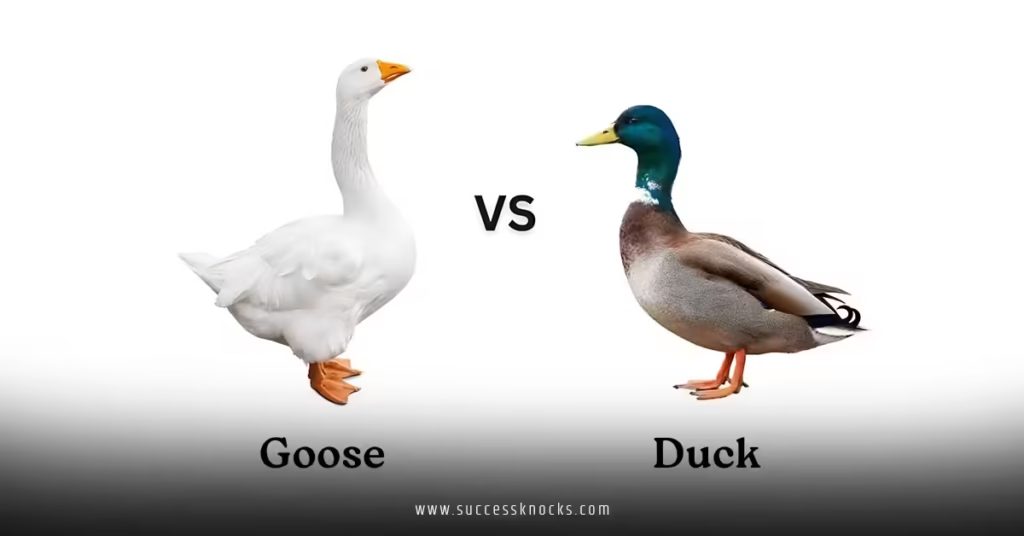
The size difference hits you immediately. Canada geese, the most common North American species, stand 30-43 inches tall with wingspans reaching 50-67 inches. Compare that to a mallard duck—our most recognizable duck—at just 20-26 inches long.
But here’s the kicker: it’s not just about overall size.
Body proportions tell the real story. Geese evolved as primarily terrestrial grazers. Their longer legs and upright posture let them walk efficiently on land while reaching vegetation. Ducks? They’re built for aquatic acrobatics. Lower-slung bodies, webbed feet positioned further back—everything screams “water specialist.”
Neck and Head Characteristics
Goose necks are engineering marvels. That extended reach isn’t just for show—it’s functional design. Geese need to graze on grass, aquatic plants, and crops while keeping their bodies upright. The neck acts like a flexible crane.
Duck necks vary dramatically by species, but they’re generally shorter and more proportional. A wood duck’s compact neck works perfectly for dabbling in shallow water. A diving duck like a canvasback needs a streamlined profile for underwater hunting.
Head shapes reflect feeding strategies too. Goose heads are relatively small compared to their bodies, with those characteristic flat, broad bills. Duck heads show incredible diversity—from the spoon-shaped bill of a northern shoveler to the saw-toothed edges of a merganser.
Behavioral Differences: Goose vs Duck Lifestyles
Feeding Habits and Diet
Geese are the vegetarians of the waterfowl world. Roughly 90% of their diet consists of plant matter—grasses, sedges, aquatic vegetation, and agricultural crops. You’ll spot them methodically grazing on lawns, golf courses, and farm fields like feathered lawn mowers.
Their feeding technique? Systematic and efficient. They walk forward while cropping grass with those flat bills, occasionally “tipping up” to reach submerged plants.
Ducks are dietary generalists with specialized techniques. Depending on the species:
- Dabblers (mallards, pintails) tip forward to strain food from water surface
- Divers (canvasbacks, ring-necks) disappear underwater for mollusks and aquatic insects
- Mergansers chase fish with saw-toothed bills designed for gripping slippery prey
- Shovelers filter-feed tiny organisms through specialized bill filters
Social Behavior and Flocking
Geese are family-oriented traditionalists. They mate for life, migrate as family units, and maintain complex social hierarchies. A Canada goose pair will return to the same nesting territory year after year, teaching their offspring the route.
During migration, those iconic V-formations aren’t just pretty—they’re aerodynamically efficient. The lead bird breaks wind resistance while trailing birds ride the updraft, taking turns at the front when the leader tires.
Duck social structures are more… flexible. Most ducks form pair bonds for a single breeding season. Outside of breeding, they gather in loose flocks based on feeding opportunities rather than family ties.
Identification Guide: Goose vs Duck in the Field
Quick Visual ID Checklist
When you spot waterfowl, run through this mental checklist:
Body size and posture:
- Large, upright stance = likely goose
- Smaller, low-slung profile = probably duck
Neck length:
- Long, snake-like neck = goose
- Short, proportional neck = duck
Bill shape:
- Broad, flat, orange or dark = goose
- Varies widely but generally smaller = duck
Behavior:
- Walking on land, grazing grass = goose
- Swimming, diving, or dabbling = could be either, but swimming behavior often indicates duck
Common Species Comparison
| Feature | Canada Goose | Mallard Duck | Wood Duck |
|---|---|---|---|
| Length | 30-43 inches | 20-26 inches | 18-21 inches |
| Weight | 8-14 pounds | 2-3 pounds | 1-2 pounds |
| Primary Habitat | Lawns, fields, parks | Ponds, marshes | Wooded swamps |
| Diet | Grass, aquatic plants | Omnivorous | Seeds, insects |
| Flight Speed | 20-25 mph | 40-55 mph | 30-35 mph |
Migration Patterns: Goose vs Duck
Geese are the marathon runners of waterfowl migration. Canada geese can fly 1,500 miles non-stop, covering distances of 2,000+ miles from Arctic breeding grounds to southern wintering areas. They follow established flyways passed down through generations.
Duck migration is more like a road trip with stops. Most ducks make shorter hops between wetlands, refueling frequently. A mallard might island-hop through prairie potholes, staying a few days at each productive feeding area.
The timing differs too. Geese typically migrate later in fall and earlier in spring than ducks, following temperature patterns rather than food availability.
Breeding and Nesting: Family Life Differences
Goose Family Dynamics
Geese are committed parents. Both sexes defend territory aggressively during breeding season—and yes, that includes chasing joggers and golfers who venture too close to goslings.
Nest sites are typically on the ground near water, hidden in tall grass or reed beds. The female incubates 4-6 eggs for about 28 days while the male stands guard nearby.
Here’s what’s remarkable: goslings are precocial, meaning they hatch ready to walk, swim, and feed themselves within 24 hours. Parents lead them to water immediately, teaching foraging techniques through example.
Duck Reproductive Strategies
Duck parenting varies dramatically by species. Most ducks are seasonal monogamists, forming new pair bonds each breeding season. Some, like wood ducks, are cavity nesters using old woodpecker holes or nest boxes 30+ feet above water.
Mallards are ground nesters like geese, but they’re more secretive about it. The female chooses sites away from water—sometimes several hundred yards away—to avoid predators.
Brood care differs significantly. While goose families stick together through their first migration, most duck broods disperse within 6-10 weeks. The female does most parental care while males often abandon duties to molt in safety.
Habitat Preferences: Where to Find Each
Goose Habitats
Modern geese are suburbanites. Canada geese have adapted remarkably well to human-modified landscapes. Golf courses, city parks, corporate campuses—anywhere there’s short grass near water becomes prime real estate.
Natural habitats include:
- Prairie potholes and wetland edges
- Agricultural fields (especially corn and wheat stubble)
- Large lakes and reservoirs
- Coastal marshes and estuaries
The key requirement: open sight lines. Geese need to spot predators while feeding, so they avoid heavily wooded or enclosed areas.
Duck Habitats
Ducks are habitat specialists. Each species evolved for specific ecological niches:
Shallow water dabblers prefer:
- Prairie potholes with emergent vegetation
- Flooded agricultural fields
- Marsh edges with varying water depths
Deep water divers need:
- Large lakes and reservoirs
- Coastal bays and estuaries
- Areas with abundant submerged aquatic vegetation
Wood ducks are unique, requiring:
- Wooded swamps and bottomland forests
- Tree cavities for nesting
- Slow-moving streams with overhanging branches
Conservation Status: Goose vs Duck Populations
Success Stories and Challenges
Canada geese represent a conservation triumph. From a low of about 1 million birds in the 1960s, populations now exceed 5 million according to the North American Bird Conservation Initiative. In some areas, they’ve become so successful that management focuses on population control rather than protection.
Duck populations face more complex challenges. The U.S. Fish and Wildlife Service estimates North American duck populations at about 38 million birds—down from historical highs but stable in recent years.
Habitat loss drives most waterfowl declines. Prairie potholes, often called “duck factories,” have lost 50% of their original extent to agriculture. Coastal marshes face pressure from development and sea-level rise.
Management Differences
Goose management often involves reduction strategies:
- Egg addling (preventing hatching) in urban areas
- Extended hunting seasons in agricultural zones
- Habitat modification to reduce attractiveness
Duck management emphasizes habitat conservation:
- Wetland restoration through programs like the Conservation Reserve Program
- Hunters contributing over $1 billion annually through license sales and excise taxes
- International cooperation through the North American Waterfowl Management Plan
Common Mistakes in Goose vs Duck Identification
Rookie Errors to Avoid
Assuming all large waterfowl are geese. Some ducks are surprisingly hefty. A common merganser female can reach 3+ pounds and appears goose-like from a distance. Look for the neck length and feeding behavior—mergansers dive frequently while geese rarely do.
Confusing young geese with ducks. Goslings and juvenile geese can appear duck-sized until late summer. The proportionally longer neck remains the giveaway, even in young birds.
Seasonal plumage confusion. Male ducks in breeding plumage look dramatically different from their fall/winter appearance. That flashy green-headed mallard becomes a brown, hen-like bird by August. Geese maintain relatively consistent plumage year-round.
Context Clues That Help
Location matters enormously. Geese on a golf course are almost certainly Canada geese. Ducks in a wooded creek could be wood ducks or mallards. Diving birds in deep water are definitely ducks—geese rarely dive.
Group behavior provides hints. A family group with 4-6 young following two adults in single file? Probably geese. A mixed flock of various-sized birds scattered across a wetland? Likely ducks.
Flight patterns seal the deal. That distinctive goose V-formation is unmistakable. Duck flocks fly in loose, irregular patterns.
Step-by-Step Identification Action Plan
Step 1: Assess the situation
- Note the habitat—urban park, natural wetland, agricultural field
- Observe from a distance to avoid disturbing the birds
Step 2: Check body size and proportions
- Compare to familiar references (robin-sized, crow-sized, goose-sized)
- Note neck length relative to body size
Step 3: Observe behavior
- Are they walking on land or swimming?
- What’s their feeding strategy?
- How are they interacting socially?
Step 4: Examine specific features
- Bill shape and color
- Leg color and positioning
- Overall coloration and markings
Step 5: Consider context clues
- Time of year (migration timing differs)
- Geographic location
- Associated species nearby
Key Takeaways
- Size is the first indicator: Geese are significantly larger than most ducks, with longer necks and more upright posture
- Feeding behavior reveals identity: Geese graze on land; ducks employ diverse aquatic feeding strategies
- Social structures differ dramatically: Geese form tight family units; ducks are more loosely social
- Habitat preferences reflect evolutionary adaptations: Geese favor open areas with grass; ducks need specific wetland types
- Migration patterns follow different strategies: Geese make long-distance flights in formation; ducks hop between wetlands
- Both groups face different conservation challenges: Geese have rebounded dramatically; duck populations require active habitat management
- Context clues improve identification accuracy: Location, season, and group behavior provide valuable hints
- Practice makes perfect: Regular observation in local parks and wetlands builds identification skills quickly
The beauty of waterfowl identification lies in understanding these evolutionary adaptations. Each difference—from bill shape to social behavior—tells the story of how these birds carved out their ecological niches over millions of years.
Conclusion
Understanding the goose vs duck distinction opens up a fascinating window into waterfowl ecology and evolution. Once you grasp these fundamental differences—size, behavior, habitat needs, and social structures—identifying these birds becomes second nature.
The next time you’re at a local park or wetland, take a moment to observe. Notice how those longer-necked birds systematically graze while the smaller ones dabble and dive. Watch the family dynamics and flight patterns. Each observation builds your skills and deepens your appreciation for these remarkable birds.
Start with your local park pond. The basics you learn there will serve you well whether you’re birding prairie potholes or coastal marshes.
Frequently Asked Questions
Q: Can geese and ducks interbreed?
A: While extremely rare, some hybridization occurs between closely related species. Canada geese occasionally hybridize with cackling geese, and various duck species can produce fertile hybrids. However, goose vs duck hybridization is virtually impossible due to genetic differences.
Q: Why do geese migrate in V-formations while ducks don’t?
A: V-formations provide aerodynamic benefits for large, heavy birds making long-distance flights. The lead bird breaks wind resistance while trailing birds ride the updraft. Smaller ducks making shorter flights don’t need this energy-saving formation.
Q: Are domestic ducks and geese the same as wild ones?
A: Domestic waterfowl are descendants of wild species but have been selectively bred for different traits. Domestic geese typically derive from greylag or swan geese, while most domestic ducks trace back to mallards. They retain basic characteristics but often appear quite different.
Q: How can I attract ducks vs geese to my pond?
A: Ducks prefer ponds with varying depths, emergent vegetation, and diverse food sources. Geese favor open areas with short grass nearby for grazing. If you want to deter geese, eliminate mowed lawn areas adjacent to water and plant tall grasses along shorelines.
Q: Do geese and ducks get along when sharing habitat?
A: Generally yes, with geese typically dominant due to size. During breeding season, both can become territorial, but outside nesting periods they often share feeding and roosting areas peacefully. Competition is minimal since they exploit different food resources.