The gray whale migration California is one of nature’s most epic annual journeys, drawing wildlife lovers from around the world to the state’s stunning Pacific coastline. Every year, thousands of these massive, barnacle-covered giants travel up to 12,000–14,000 miles round-trip between their Arctic feeding grounds and the warm lagoons of Baja California, Mexico. Along the way, they hug California’s shores closely—often within a mile or two—making it one of the best places on Earth to witness this incredible spectacle up close.
If you’re planning a trip, February stands out as prime time, especially for those interested in Whale watching festivals California February 2026, when peak southward travelers mix with early northbound moms and playful calves, creating unforgettable viewing opportunities.
The Epic Journey: Understanding the Gray Whale Migration Route
Picture this: a 40-ton animal swimming day and night, averaging about 75 miles per day at a leisurely 5 mph. That’s the reality for eastern North Pacific gray whales during their migration.
The route starts in late summer/early fall (September–October), when whales leave nutrient-rich Arctic waters in the Bering and Chukchi Seas. They head south along the coast, passing Alaska, British Columbia, Washington, Oregon, and then California. By December–January, most are cruising past the Golden State’s shores on their way to calving and breeding lagoons in Baja (like San Ignacio, Ojo de Liebre, and Magdalena Bay).
Come mid-February, the return trip begins. Females with newborns lead the way north more slowly, hugging the coast for protection from predators like orcas. This northward leg peaks in March–April, with stragglers continuing into May.
California’s continental shelf keeps them close—perfect for sightings. The migration isn’t a straight line; whales follow underwater contours, currents, and shallow zones that offer safety and occasional feeding stops.
Timing of the Gray Whale Migration in California
Timing is everything when chasing the gray whale migration California.
- Southbound (December–February): Pregnant females lead, followed by others. Peak sightings along California often hit mid-January to early February. Whales travel steadily, spouting frequently.
- Northbound (mid-February–May): Starts early February as new moms and calves depart Baja. Calves are curious and energetic, often breaching or spy-hopping. March–April brings the highest numbers off California, with moms and calves closer to shore.
In 2026, as of early February, reports show the migration in full swing—strong southbound flows wrapping up and northbound beginning. February offers a sweet spot: lingering southbounders plus early returners with babies.
Why does this matter? Cooler winter weather means calmer seas in many spots, higher visibility for spouts, and fewer summer crowds.
Best Places to Witness the Gray Whale Migration California
California’s 840-mile coastline offers prime viewing from boats or shore. Here are standout locations:
Southern California: San Diego to Orange County
San Diego’s Cabrillo National Monument provides elevated shore views—scan the horizon for spouts from the lighthouse trail. Boat tours from Mission Bay boast 95%+ success rates in peak months.
Dana Point and Newport Beach shine too. Whales pass close in the nutrient-rich Santa Barbara Channel. Operators here often guarantee sightings during the gray whale migration California.
Central Coast: Monterey Bay and Big Sur
Monterey Bay’s deep canyon draws year-round marine life, but winter migration brings grays close. Shore spots like Point Lobos offer dramatic cliffs and frequent sightings.
Big Sur’s Highway 1 pullouts are legendary—imagine watching spouts against rugged headlands. Places like Julia Pfeiffer Burns State Park or Ragged Point give breathtaking panoramas.
Northern California: Point Reyes and Beyond
Point Reyes National Seashore claims some of the best odds—94% of migrating grays pass within a mile. The lighthouse overlook or Chimney Rock trail deliver epic views.
Bodega Head in Sonoma County and MacKerricher State Park near Fort Bragg add northern gems with boardwalks and bluffs perfect for scanning.
For immersive experiences, book boat tours—naturalists explain behaviors while you get closer (safely).
Fascinating Behaviors During the Gray Whale Migration California
Gray whales aren’t just travelers—they’re full of personality.
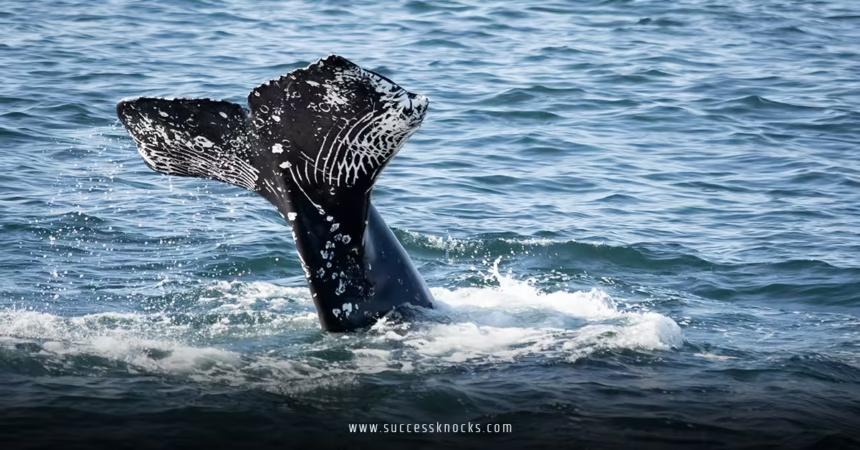
Southbound, they’re focused: steady swimming, regular blows (spouts up to 10–15 feet), occasional fluking (tail raise before deep dives).
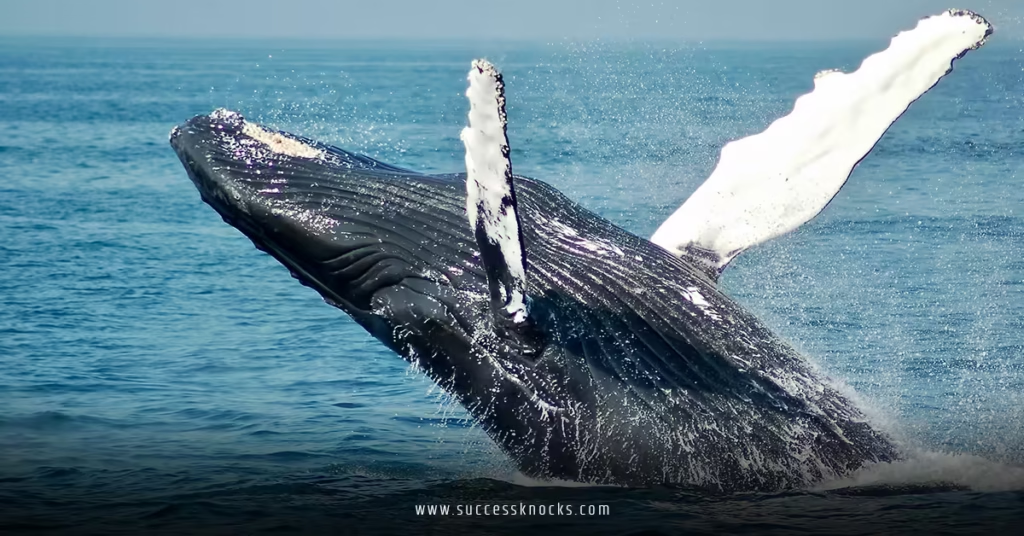
Northbound changes everything. Calves breach playfully, spy-hop (head out of water to look around), or rub against mom. Some “friendlier” individuals approach boats curiously—especially in Baja, but echoes appear off California.
They bottom-feed by rolling on sides, stirring sediment for amphipods—leaving “feeding pits” on the seafloor.
Breaching, tail-slapping, and spy-hopping add drama. Spotting a 45-foot whale launch itself is breathtaking.
Conservation Efforts and Challenges for Gray Whales
The eastern North Pacific gray whale population has rebounded impressively—from near-extinction due to 19th–20th-century whaling to around 20,000–25,000 today. Protections under the Marine Mammal Protection Act and international bans helped.
Challenges persist: climate change disrupts Arctic food, ship strikes, entanglements in fishing gear, noise pollution. Unusual mortality events (like 2019–2023) highlight vulnerabilities.
Responsible tourism matters. Choose eco-certified operators, keep distance on boats, avoid disturbing resting whales. Supporting organizations like NOAA Fisheries or The Marine Mammal Center aids research and rescues.
By experiencing the gray whale migration California responsibly, you’re part of their ongoing success story.
Why February 2026 Is Ideal for Gray Whale Watching
Right now—in February 2026—the migration delivers peak drama. Southbound stragglers mix with northbound families, calves appear, and special events pop up. Many tie into Whale watching festivals California February 2026, featuring themed cruises, shore talks, and conservation-focused outings around World Whale Day (February 20-ish some years).
Whether from a bluff or boat deck, the sight of these ancient mariners gliding by inspires awe.
Conclusion
The gray whale migration California showcases resilience, endurance, and the Pacific’s wild beauty. From December through May, these gentle giants grace our coast, offering chances for profound connections with nature. Plan ahead, pick your spot, respect the animals, and witness one of Earth’s greatest spectacles. The whales are on the move—will you be there to see them?
Here are three high-authority external links for more details:
- NOAA Fisheries – Gray Whale
- Oceanic Society – Gray Whale Migration
- The Marine Mammal Center – Gray Whales
FAQs
When is the peak of the gray whale migration California?
The southbound peak hits December–February, with northbound strongest March–April. February often blends both directions for diverse sightings.
What are the best shore spots for gray whale migration California?
Top free viewpoints include Cabrillo National Monument (San Diego), Point Reyes Lighthouse, Bodega Head, Point Lobos, and Big Sur turnouts—elevated spots maximize visibility.
How long is the gray whale migration route through California?
Whales cover roughly 1,000–1,200 miles along California’s coast each way, part of their 10,000–14,000-mile round-trip.
Are gray whales friendly during migration California?
Many are curious, especially northbound calves. While not all interact, some approach boats gently— a highlight for observers.
How can I link gray whale migration California to whale watching events?
February sightings align perfectly with Whale watching festivals California February 2026, offering narrated tours, educational programs, and festive vibes during peak migration.