

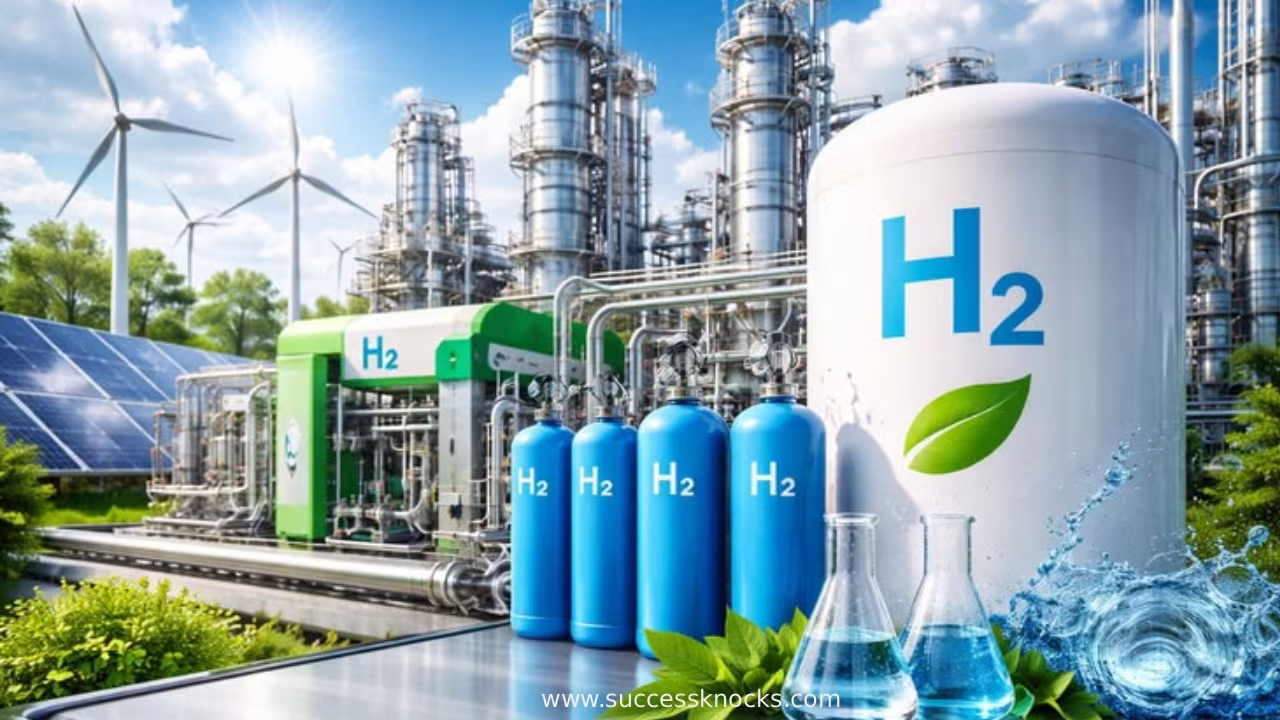
Green hydrogen explained: business opportunities beyond production is one of the most under-discussed angles in the entire clean energy conversation — and that’s exactly where the smart money is starting to look.
Everyone’s heard about the electrolyzers. The gigawatt solar farms. The billion-dollar production hubs. But here’s the thing: the production side is only the first chapter. The real commercial story — the one with room for smaller players, service businesses, and specialists — is unfolding downstream.
If you want the full strategic picture, the green hydrogen business opportunities guide covers the entire landscape. This piece drills into the specific layer that gets skipped: what happens after the hydrogen is made, and who can profit from it.
Quick Overview: What You Need to Know
- Green hydrogen is hydrogen produced via electrolysis powered by renewable energy — zero carbon emissions at the point of creation.
- Most public attention focuses on production, but the real commercial ecosystem sits in storage, transport, distribution, end-use integration, and supporting services.
- The U.S. Department of Energy targets 10 million metric tonnes (MMT) of clean hydrogen annually by 2030, creating demand across the entire value chain — not just at the production end. [¹]
- You don’t need to build an electrolyzer to participate. Roles in consulting, logistics, software, maintenance, and retail fueling are all open entry points.
- This is still an early market, which means positioning now can yield outsized advantages as infrastructure scales through 2030 and beyond.
Green Hydrogen Explained: Business Opportunities Beyond Production — The Full Value Chain
Think of green hydrogen like the internet in 1996. The infrastructure builders (ISPs, fiber layers) got the headlines, but the fortunes were made later — in software, services, e-commerce, and application layers that nobody had mapped yet.
That’s exactly where green hydrogen sits today.
The hydrogen value chain runs in a clear sequence: produce → store → transport → distribute → use → support. Production gets the spotlight. Everything after it is where business models are still being written.
What Does “Beyond Production” Actually Mean?
Here’s a clean breakdown of the non-production commercial layers:
| Value Chain Layer | What It Involves | Business Entry Point | Capital Required |
|---|---|---|---|
| Storage | Compressed tanks, liquefaction, underground caverns | Engineering, equipment supply, site leasing | Medium–High |
| Transportation & Logistics | Tube trailers, pipelines, cryogenic tankers | Fleet operations, route planning, hazmat logistics | Medium |
| Distribution & Dispensing | Retail fueling stations, industrial delivery | Station development, fueling network management | Medium |
| End-Use Integration | Fuel cells, industrial feedstock, heating blends | Systems integration, retrofitting, maintenance contracts | Low–Medium |
| Supporting Services | Consulting, compliance, software, workforce training | Service firms, SaaS platforms, training academies | Low |
Storage: The Bottleneck Nobody Talks About Enough
Green hydrogen has an awkward physical property — it’s the lightest element on the periodic table, and storing it safely at scale is genuinely hard. That challenge is a business opportunity.
Compressed gas storage at 700 bar, liquid hydrogen at -253°C, and chemical carriers like ammonia each have different cost and use-case profiles. Companies that can engineer, supply, maintain, or operate storage systems are in demand right now. And that demand is only accelerating.
What I’d do if I were entering this space: focus on the maintenance-as-a-service model. Storage hardware gets built once. Inspection, calibration, and safety services are recurring revenue for years.
Transportation and Logistics: The Quiet Gold Rush
Moving hydrogen from point A to point B is currently one of the messiest parts of the supply chain — and that friction is commercial gold.
Specialized tube trailers, cryogenic tankers, and eventually dedicated pipeline spurs are all in short supply relative to projected demand. The U.S. plans 76 green hydrogen production projects over the next five years backed by $36 billion in investment — and most of those facilities will need logistics partners from day one. [²]
Hazardous materials transportation expertise, routing software, and driver certification programs are specific gaps in the market. If your background is in industrial logistics or freight, this lane is already yours to enter.
Want to understand exactly which roles exist across this chain before you commit? The green hydrogen supply chain roles breakdown maps each position in granular detail.
Distribution and Retail Fueling: The Last Mile Opportunity
There are currently fewer than 60 open retail hydrogen fueling stations in the entire United States — a number the DOE’s own roadmap calls out as a critical bottleneck to adoption. [¹]
That’s not a problem. That’s a market gap dressed in work clothes.
Retail hydrogen fueling for heavy-duty trucks, transit fleets, and passenger vehicles powered by fuel cells is a legitimate growth business, especially near port cities, logistics corridors, and major freight routes in California, Texas, and the Gulf Coast. Projects like the Southern California Green Hydrogen Project (operational 2026) are specifically designed to fuel up to 100 fuel cell trucks and buses per day — those vehicles need somewhere to fuel. [²]
Station development, fueling network management, and hydrogen retail operations all sit in this category. Capital requirements are real, but not at electrolyzer-plant scale.
Green Hydrogen Explained: Business Opportunities Beyond Production — The Services Layer
This is where I think the most overlooked opportunity lives for early-stage entrepreneurs and small businesses. Services require knowledge, not a construction crew.
Consulting and Strategy
The regulatory environment around green hydrogen is new, patchwork, and changing fast. Businesses entering the sector — industrial companies looking to switch feedstocks, logistics firms adding hydrogen fleets, municipalities building fueling infrastructure — all need expert guidance.
If you have a background in energy policy, chemical engineering, ESG compliance, or supply chain, positioning yourself as a green hydrogen consultant is a legitimate path right now. The market is hungry and the competition is thin. For a more detailed look at whether this path makes sense for your budget, check out how to enter green hydrogen without heavy capital.
Software and Data Platforms
Hydrogen fleet management, dispensing network optimization, electrolyzer performance monitoring, and compliance tracking are all software categories that barely exist yet. Think about what fleet management software did for trucking. That same transformation is coming for hydrogen infrastructure operations.
Workforce Training and Certification
Who certifies the technicians who service cryogenic storage tanks? Who trains the drivers handling hydrogen tube trailers? Who runs safety programs for industrial sites switching to hydrogen feedstock?
Right now, the answer in most regions is: nobody established. That’s an opening.
Step-by-Step Entry Plan for Beginners
You don’t need $50 million to get started. Here’s a pragmatic entry roadmap:
Step 1 — Anchor your existing skillset. What do you already do well? Logistics, software, consulting, maintenance, training? Green hydrogen needs all of it. Start there.
Step 2 — Learn the regulatory landscape. Study DOE’s National Clean Hydrogen Strategy and the clean hydrogen hub programs. Understand the Inflation Reduction Act’s Section 45V hydrogen production tax credit — it’s reshaping the economics of the entire sector. [³]
Step 3 — Identify your local market. Hydrogen activity is regionally concentrated right now — California, Texas, the Gulf Coast, and the Pacific Northwest. Map where production projects are planned near you.
Step 4 — Build targeted relationships. Attend industry events (the annual DOE Hydrogen Program Annual Merit Review is a critical networking venue). Join organizations like the Fuel Cell and Hydrogen Energy Association (FCEA).
Step 5 — Start with a pilot contract, not a full business pivot. Subcontract into an existing hydrogen project. Offer a pilot consulting engagement. Build credibility before you build overhead.
Step 6 — Track incentives and grants actively. The DOE’s Regional Clean Hydrogen Hubs program is distributing billions in funding — many of those hubs actively seek local service partners. Don’t wait for the money to come to you; apply to be part of the ecosystem.
Common Mistakes and How to Fix Them
Mistake #1: Assuming you need to be in production to matter.
This is the biggest one. Production is capital-intensive, technically complex, and already crowded with well-funded incumbents. The services and infrastructure layers have far more entry points. Fix: Reframe your role as an enabler of the production ecosystem.
Mistake #2: Treating green hydrogen like it’s already mainstream.
It isn’t. Demand is still being created. If you build for a customer base that doesn’t fully exist yet, you’ll run out of runway. Fix: Validate demand with real conversations before investing. Identify two or three paying pilot customers first.
Mistake #3: Ignoring the regulatory complexity.
Hydrogen sits at the intersection of energy, transportation, and environmental law. Compliance gaps can kill a project fast. Fix: Budget for legal and regulatory counsel from the start — it’s not optional.
Mistake #4: Underestimating the safety dimension.
Hydrogen is flammable over a wide concentration range. Cutting corners on safety protocols isn’t just dangerous — it’s a liability. Fix: Over-invest in safety certifications and training, and use it as a competitive differentiator.
Mistake #5: Going wide instead of deep.
Trying to do storage AND logistics AND software AND consulting simultaneously is a mistake most early movers regret. Fix: Pick one segment of the value chain, become the best at it, then expand.
Key Takeaways
- Green hydrogen‘s real commercial story is in the layers after production: storage, transport, distribution, end-use integration, and services.
- The U.S. has 76 green hydrogen projects in the pipeline backed by $36 billion — creating massive downstream demand for logistics, infrastructure, and support services.
- Services (consulting, software, training, compliance) are the lowest-capital entry points and the most underserved part of the market.
- Retail hydrogen fueling is a critical infrastructure gap — fewer than 60 stations operate nationwide against rising fuel cell vehicle adoption.
- You don’t need a background in energy to enter. Logistics, software, legal, training, and project management skills all translate directly.
- Early positioning in a fast-forming market is worth more than a late entry with perfect timing.
- The DOE’s clean hydrogen hubs program and 45V tax credits are reshaping investment economics — understanding these policies is a competitive advantage.
What’s Next
Green hydrogen explained: business opportunities beyond production comes down to a simple insight — the infrastructure gold rush doesn’t reward only the miners. It rewards the people who sell the picks, build the roads, and run the supply stores.
The production buildout is happening. What comes next is everything else. The question isn’t whether opportunities exist beyond production. The question is which one you’re going to claim first.
FAQs
Q: How does green hydrogen explained: business opportunities beyond production apply to someone with no energy sector background?
A: Completely directly. The downstream layers of the hydrogen value chain — logistics, software, workforce training, consulting, retail fueling operations — require general business competencies more than energy-specific credentials. If you understand supply chain management, SaaS development, regulatory compliance, or professional training design, those skills map onto open gaps in the green hydrogen ecosystem right now.
Q: Are green hydrogen business opportunities beyond production available outside California and Texas?
A: Yes, though regional concentration matters. The DOE’s Regional Clean Hydrogen Hubs program is deliberately distributing development activity across the country — including the Midwest, Gulf Coast, and Pacific Northwest. That said, practical near-term activity is densest in states with early production projects. Mapping your local project pipeline before committing resources is always the right first move.
Q: What’s the single highest-priority action for a beginner exploring green hydrogen explained: business opportunities beyond production?
A: Anchor your existing skillset first, then identify where it intersects with the value chain gaps listed above. Most people over-research and under-act. Two or three real conversations with people already inside the sector will teach you more than six months of passive reading. The Fuel Cell and Hydrogen Energy Association (FCEA) is a practical first door to knock on.


