Green hydrogen vs. other clean energy business bets is the argument every serious investor and small operator is having right now, usually over a second cup of coffee and a spreadsheet full of guesses. Everyone’s chasing the “next big thing” in energy, and hydrogen keeps getting hyped as the golden ticket. But is it actually the smarter bet compared to solar, wind, or battery storage? Depends who you ask — and depends on your risk tolerance, honestly.
Here’s the quick version before we get into the weeds:
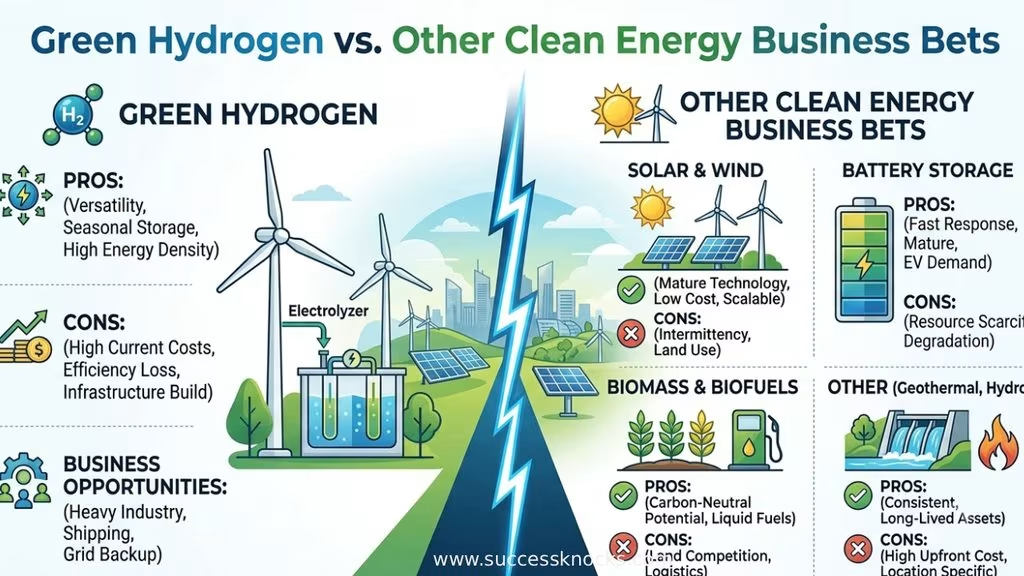
- Green hydrogen has huge long-term potential but needs heavy infrastructure and patient capital.
- Solar and wind are mature, bankable, and easier for beginners to enter today.
- Battery storage is riding a demand wave tied directly to EVs and grid stability.
- Green hydrogen fits niche industrial and transport uses that batteries and solar can’t touch.
- The “best” bet isn’t universal — it depends on your capital, timeline, and appetite for risk.
If you want the full breakdown of where the sector is heading, the green hydrogen business opportunities landscape covers the bigger picture beyond just this comparison.
What’s Actually Being Compared in the Green Hydrogen vs. Other Clean Energy Business Bets Debate?
Let’s get one thing straight. This isn’t a fair fight between identical technologies. Green hydrogen is an energy carrier — it stores and moves energy. Solar and wind generate it. Batteries hold it. They solve different problems, even though they all get lumped into “clean energy.”
That’s why the green hydrogen vs. other clean energy business bets conversation gets messy fast. People compare apples to jet engines and wonder why the numbers don’t line up.
What matters for a business decision is simpler: capital required, time to revenue, regulatory support, and where demand is actually growing — not just where headlines are loudest.
Comparing the Contenders: Solar, Wind, Batteries, and Green Hydrogen
Green Hydrogen vs. Other Clean Energy Business Bets Short version? Solar and wind are the reliable workhorses. Batteries are the fast-growing sidekick. Green hydrogen is the long-shot with a massive potential payout — if the infrastructure catches up.
Here’s how they stack up on the metrics that actually matter to someone deciding where to put money or time.
| Clean Energy Bet | Typical Capital Needed to Start | Time to Meaningful ROI | Market Maturity (2026) | Biggest Business Risk |
|---|---|---|---|---|
| Green Hydrogen | High (production) / Low (services) | 3–7+ years | Early-growth stage | Infrastructure & offtake uncertainty |
| Solar (Commercial/Residential) | Low to Moderate | 1–3 years | Mature | Price compression, competition |
| Wind (Utility-Scale) | Very High | 5–10 years | Mature | Permitting delays, siting fights |
| Battery Storage / EV Charging | Moderate | 2–4 years | Rapid growth | Supply chain, tech obsolescence |
Notice something? Green hydrogen doesn’t lose because it’s a bad idea. It loses on speed. That’s the trade-off you’re actually weighing.
Where Green Hydrogen Wins the Green Hydrogen vs. Other Clean Energy Business Bets Fight
Green hydrogen has one thing the others don’t: it decarbonizes stuff electricity can’t touch easily. Steel furnaces. Heavy shipping. Long-haul trucking. Ammonia production.
Batteries are too heavy and solar can’t directly power a blast furnace. Hydrogen can. The U.S. Department of Energy’s Hydrogen Shot initiative is betting big on exactly this — driving down production costs to make hydrogen competitive for these hard-to-electrify sectors[1].
If your business plays in industrial services, logistics, or heavy manufacturing supply chains, that’s your opening. Not glamorous. But real.
Where Other Clean Energy Bets Pull Ahead
Solar wins on simplicity. Wind wins on scale and grid contracts already locked in. Batteries win on speed, since every EV sold needs one, and grid operators are buying storage capacity faster than it can be built.
The International Energy Agency has repeatedly noted that battery and renewables deployment is scaling faster than most hydrogen production pathways, largely because the supply chains and financing models are already proven[2].
In my experience, that maturity is the real edge. Investors don’t love the unknown. Solar and wind have twenty years of performance data behind them. Hydrogen has a lot of promise and a lot of pilot projects.
Step-by-Step Action Plan: How Beginners Should Approach This Decision
Don’t overthink this into paralysis. Here’s what I’d actually walk a beginner through.
- Define your capital ceiling first. If you’ve got under $50K to deploy, hydrogen production is off the table — but hydrogen-adjacent services (inspection, logistics, consulting) aren’t.
- Pick a timeline you can live with. Need cash flow in 18 months? Solar services or EV charging infrastructure fit better than hydrogen plays.
- Study your regional demand. Some states are building hydrogen hubs; others are pure solar/wind territory. Location changes everything.
- Check the risk tolerance test. Would a 5-year wait with no revenue break you? If yes, hydrogen production isn’t your lane yet.
- Diversify instead of picking one horse. Plenty of savvy operators blend a stable solar or storage business with a smaller hydrogen-adjacent bet on the side.
That last point is the one people skip, and it’s usually the smartest move on the table.
Common Mistakes & How to Fix Them
Green Hydrogen vs. Other Clean Energy Business Bets Even sharp operators trip on the same handful of errors here.
Mistake #1: Treating hydrogen like a “sure thing.” It’s not. Fix it by pairing hydrogen exposure with a mature revenue stream — don’t bet the whole business on one unproven pathway.
Mistake #2: Ignoring regional policy differences. What works in Texas won’t necessarily pencil out in California. Fix it by researching state-level incentives before committing capital.
Mistake #3: Underestimating capital intensity. People assume hydrogen production costs are “like solar, but newer.” They’re not close. Fix it by getting a real cost estimate from an engineering firm before writing a business plan.
Mistake #4: Skipping the risk-adjusted comparison entirely. Comparing raw ROI numbers without weighing risk is a rookie move. If you want a clearer picture of what can actually go wrong sector-wide, the risks and challenges of entering the green hydrogen sector lays it out plainly.
Mistake #5: Waiting for “perfect certainty.” There isn’t any — not in hydrogen, not in solar, not in storage. Fix it by starting small, testing assumptions, and scaling what works.
Key Takeaways
- Green hydrogen and other clean energy bets solve different problems — direct comparisons need context.
- Solar, wind, and batteries offer faster ROI and more mature markets right now.
- Green hydrogen shines in heavy industry, shipping, and hard-to-electrify sectors.
- Capital intensity for hydrogen production is significantly higher than most beginner-friendly clean energy bets.
- Regional policy and infrastructure access heavily influence which bet makes sense for you.
- Blending a stable clean energy revenue stream with a smaller hydrogen play reduces overall risk.
- The U.S. Energy Information Administration tracks hydrogen production and consumption trends that are worth monitoring before committing capital[3].
There’s no universal winner in the green hydrogen vs. other clean energy business bets debate — and honestly, anyone who tells you otherwise is selling something. Hydrogen is the marathon runner still lacing up its shoes. Solar and wind are already three miles in. Batteries are sprinting. Pick your race based on how long you can stay in it, not on which one sounds coolest at a dinner party.
If you’re just starting to map out where you fit into this sector, get grounded in the fundamentals first, then come back and stress-test your specific bet against the numbers above.
FAQs
Is green hydrogen a better long-term bet than solar or wind?
Not necessarily “better” — different. Green hydrogen targets industrial and transport niches solar and wind can’t reach directly, but it carries higher capital risk and a longer runway to profitability.
What’s the safest entry point if I’m weighing green hydrogen vs. other clean energy business bets with limited capital?
Service and consulting roles — inspection, logistics, project development support — let you participate in hydrogen’s growth without shouldering production-level capital costs.
Will green hydrogen eventually outperform battery storage as a business bet?
Possibly in specific verticals like heavy shipping or steel, where batteries are impractical. For general grid storage and EV-driven demand, batteries are likely to stay ahead through the next several years.