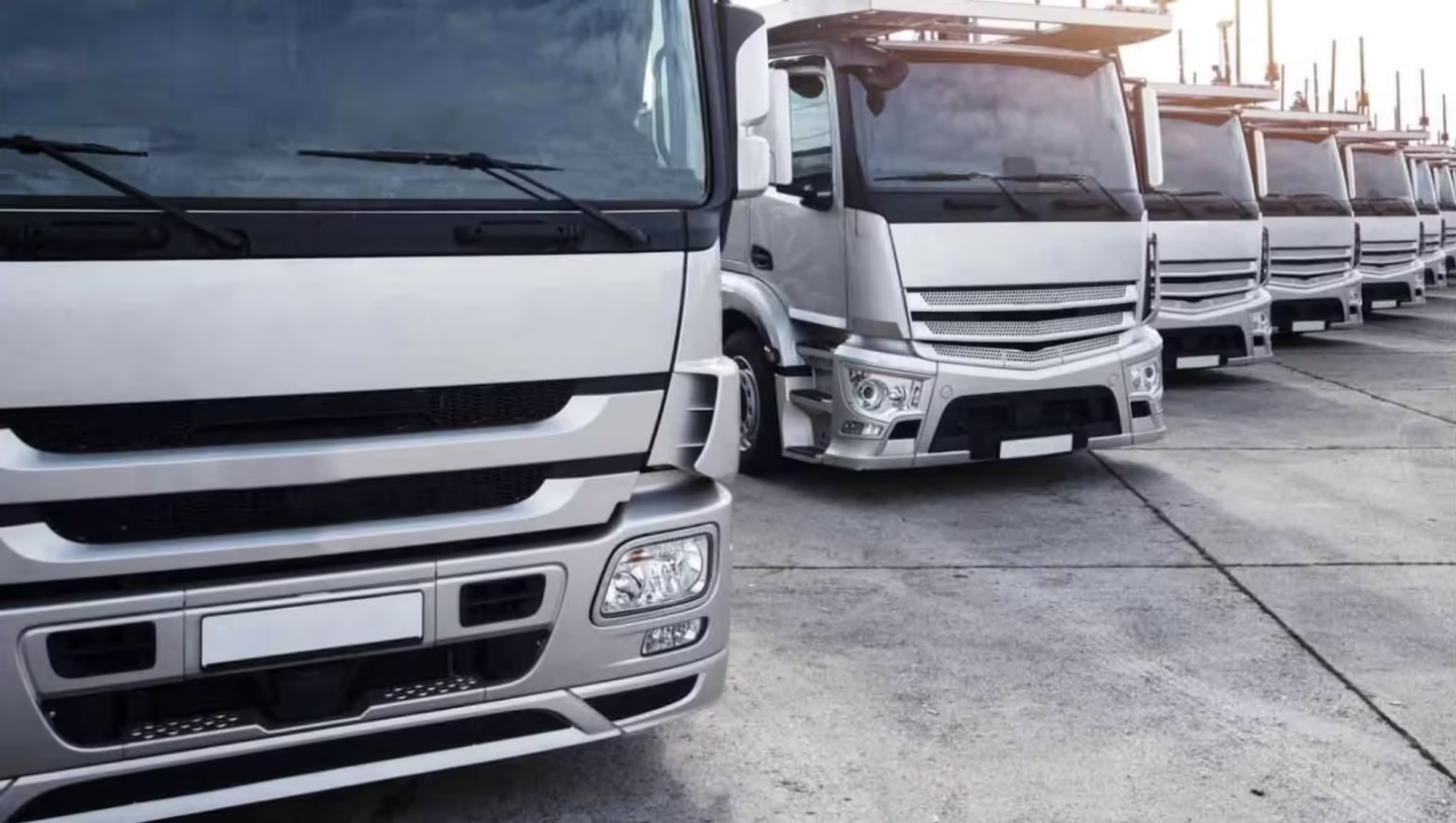
Handling risk management is a vital part of modern business. Today, risk comes from many different angles, and this includes company fleets. Cars, vans, and trucks are inherently dangerous, and the roads are unpredictable with many variables. Therefore, fleets must be addressed in order to manage a major part of the risk to a modern business. But how? From competency training for drivers to route optimization, here are some handy suggestions.
Establish Clear Risk Policies
Issues like driver conduct, vehicle use, and emergency responses should have specifically defined rules. For example, there needs to be policies for wearing seatbelts, managing driver fatigue, and distracted driving. These are essential to ensure safety for drivers and pedestrians, but also to ensure your insurance policies stay valid. Policies for commercial truck insurance could become void if drivers and your company have been found to be negligent with safety.
Handling Risk Management with Driver Training
There are around 50,000 commercial vehicle crashes each year in the US. While your drivers can’t control how others drive, they can be better drivers themselves. Driver training can help avoid some of the most serious issues and can be a massive advantage to the fleet:
- Defensive driving courses can help drivers avoid the bad driving of others.
- Fatigue awareness will help your drivers avoid driving when they are tired.
- Competency courses can enhance driver skills with targeted training.
Use Advanced Monitoring Technology
Wireless technology today does more than allow you to listen to music over Bluetooth. For risk management and even insurance policies, you can use telematics systems. These are small devices that record everything that happens in a vehicle, kind of like a plane’s black box. They can report things like vehicle speed, driving smoothness, and when brakes are applied. Just knowing that these devices are onboard will encourage a driver to handle a vehicle responsibly.
Install AI-Enabled Cameras
Dashcams are a major advantage for a company fleet. At the very least, they can help exonerate drivers when an incident happens. However, they can also detect bad behavior from drivers, encouraging them to behave better and drive more professionally. For example, AI systems in cameras today can detect if a driver is smoking while driving, using their phone, or even displaying signs of fatigue. These systems can also report this data back in real time.
Handling Risk Management with Maintenance
From electric scooters to robotaxis and airtaxis, it is recommended that a commercial vehicle be inspected every 4 to 13 weeks. It depends on how heavily company vehicles are used, but maintenance is a major part of ensuring everything runs fine and will avoid an incident.
Create a maintenance schedule
Many fleet managers repair problems more as a reaction, as and when needed, rather than as a matter of course. A schedule for inspections and repairs helps catch problems much earlier.
Focus on critical issues
At the very least, a schedule must focus on the critical systems of a vehicle. A FLOWER (Fuel, Lights, Oil, Water, Electronics, Rubber) check will help keep the car in working order.
Use digital logs
Digital maintenance logs are a reliable way to keep up with compliance and prevent mechanical failures, as everyone involved can refer back to precise data when performing a vehicle check.
Maintenance is one of the most important aspects of keeping a fleet in excellent working order. When cars, vans, and trucks are regularly inspected, the chance of a serious issue causing an incident is dramatically reduced, and driver and pedestrian safety is increased massively.
Automate Compliance and HOS
Staying compliant is a major advantage when it comes to reducing risk and managing it moving forward. Driving hours are a major point of contention in the fleet sector, as they can contribute to accidents through tiredness. However, there are powerful systems you can use for automating compliance and hours of service. Electronic logging devices will record overall driver hours digitally, avoiding the chance of mistakes and human intervention for accurate records.
Assess Drivers Regularly
In a perfect world, all fleets would have great drivers, and everyone else on the road would be attentive. However, there are so many variables for both that there is always the chance of an issue. Recording driver statistics either manually or with automated systems can help assess drivers. If there is a high frequency of serious breaches of safety protocols, such as telematics speeding data, regular assessments can help you catch the data and take necessary actions.
Handling Risk Management with Better Routes
A UK survey found that the British economy loses £7.7 billion each year because of road congestion. Optimized routes will help your business avoid some of the worst traffic and increase the efficiency of your fleet while keeping costs down and avoiding driver stress:
- Install route software in vehicles to avoid roadworks, congestion, and bad weather.
- Avoid crime by using dynamic route assignments instead of the same one each time.
- Use software like OneFleet to alert you when a driver deviates from a safe path.
Incentivize a Safety Culture
It would be nice to think fleet drivers go out on the roads with a safety attitude, but some don’t. You shouldn’t have to incentivise good driving, but it can be a powerful way to ensure drivers stay committed to safety on the road. For example, you can offer a salary bonus to the safest driver of the month. You can also use team or individual scoring so drivers compete to be the safest for rewards such as a day off. Real-time data systems will help capture what you need.
Summary
Having clear risk policies that everyone understands will help when handling risk management for fleets. This includes wearing seatbelts, restricted phone use, and speed limits. However, it isn’t all down to the drivers. A company maintenance plan will help catch issues with cars, vans, and trucks so they go out on the roads as safely as possible. To further increase the chance of a safer fleet, it can also help to offer incentives to drivers to drive as safely as possible.