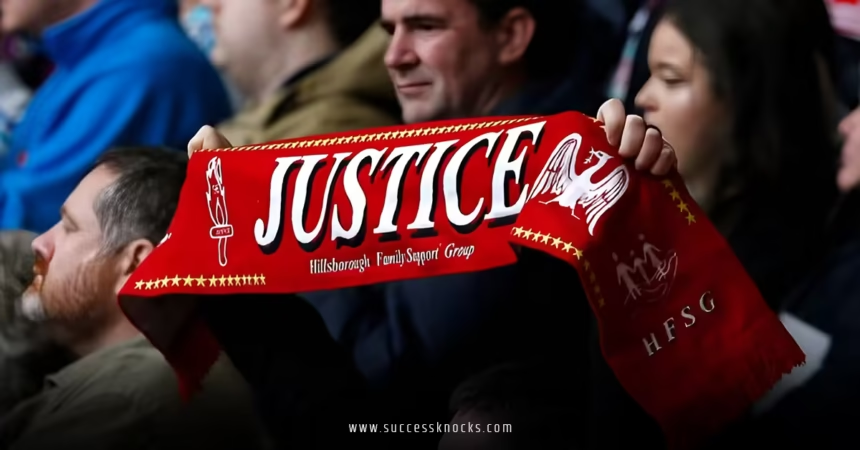
Hey, have you ever wondered how a single afternoon at a football match could unravel into one of the darkest chapters in British history? That’s exactly what the Hillsborough disaster IOPC report 2025 findings on police misconduct uncovers, peeling back layers of pain, deception, and a relentless fight for truth that still echoes today. On April 15, 1989, 97 Liverpool fans lost their lives in a crush at Sheffield Wednesday’s Hillsborough Stadium during an FA Cup semi-final against Nottingham Forest. What started as excitement turned into horror, and what followed was a web of blame-shifting that scarred families forever. Fast-forward to 2025, and the Independent Office for Police Conduct (IOPC) drops its bombshell report—after 13 grueling years of investigation. It’s not just a document; it’s a mirror reflecting systemic failures, upheld complaints, and the bitter pill that no one faces the music because time and laws let them slip away. Stick with me as we dive deep into this, because understanding the Hillsborough disaster IOPC report 2025 findings on police misconduct isn’t just history—it’s a call to ensure it never happens again.
Imagine you’re at a packed concert, the crowd surging with energy, but suddenly, the barriers give way, and panic sets in. That’s the visceral terror of Hillsborough, but the real gut-punch came later: police pointing fingers at innocent fans, calling them drunk hooligans while hiding their own blunders. The IOPC report, published in December 2025, doesn’t shy away from that. It aligns with the 2012 Hillsborough Independent Panel and the 2016 inquests, confirming zero evidence that supporters caused the chaos. Instead, it spotlights police planning disasters, altered statements, and a deliberate smear campaign. We’re talking 354 complaints from nearly 100 people—bereaved families, survivors—and dozens upheld. Yet, here’s the twist that leaves you raging: no misconduct hearings. Why? Officers retired or passed away, and back then, there was no “duty of candour” forcing honesty. It’s like building a case against a ghost—frustrating, right? But let’s break it down step by step, because you deserve the full story.
The Shadow of Hillsborough: A Quick Recap Before the 2025 Storm
Before we unpack the Hillsborough disaster IOPC report 2025 findings on police misconduct, let’s rewind. Picture this: It’s a sunny spring day in Sheffield. Liverpool fans, buzzing with hope for a Wembley dream, funnel into Leppings Lane’s cramped terraces. Overcrowding was no secret—police knew the risks, yet they waved through more bodies than the pens could hold. At 3:06 p.m., disaster struck. A gate opened without warning, funneling fans into a deadly crush. Screams, chaos, bodies piled high. Ambulances blocked, pleas ignored. By night’s end, 97 souls gone, countless scarred.
You might think the aftermath would bring swift justice, but nope. South Yorkshire Police (SYP) spun a tale faster than a tabloid headline: Fans were ticketless, boozed-up thugs who stormed the gates. The Sun ran with “The Truth,” vilifying the innocent. Families? They buried their dead while dodging suspicion. It took 23 years for the Hillsborough Independent Panel to expose the lies—police altered 164 statements, hid CCTV, and prioritized self-preservation over truth. The 2016 inquests ruled unlawful killing, pinning gross negligence on match commander David Duckenfield. But questions lingered: Was this misconduct? Criminal? The IOPC stepped in, launching Operation Resolve in 2012—the biggest probe into police wrongdoing ever. And now, in 2025, their report lands like a long-overdue thunderclap.
What hits hardest is the human cost. I think of Margaret Aspinall, who lost her son James at 18. She’s fought tooth and nail, her voice cracking with fury in interviews: “They blamed our kids while their officers hid.” It’s stories like hers that make the Hillsborough disaster IOPC report 2025 findings on police misconduct more than legalese—it’s raw, unrelenting grief demanding accountability.
Unpacking the Core of Hillsborough Disaster IOPC Report 2025 Findings on Police Misconduct
Alright, let’s get to the meat. The Hillsborough disaster IOPC report 2025 findings on police misconduct clocks in at a trimmed 400 pages—down from thousands, thanks to family input for clarity. Led by IOPC deputy director Kathie Cashell, it sifts through a mountain of evidence: witness statements, altered docs, surveillance logs. Key revelation? SYP didn’t just fail; they actively deflected blame. Think of it as a magician’s sleight of hand—while families mourned, officers crafted a narrative shielding their skins.
The report echoes prior probes: No fan behavior sparked the crush. Police radio logs show confusion, not crowd violence. Yet, within hours, briefings painted supporters as culprits. Why? The IOPC pins it on “fundamental failures” in planning and response. Leppings Lane’s layout was a tinderbox—narrow approaches, no crush barriers. Officers underestimated crowds by 10,000. When the gate opened (Duckenfield’s call), no contingency. Rescue? A farce—only two ambulances reached the terraces amid police blocks.
But misconduct? Here’s where it stings. The report upholds complaints on post-disaster antics: Misleading media (hello, “drunk fans” myth), feeding false info to MPs and inquiries, even surveilling bereaved families via West Midlands Police. Over 50% of complainants got at least one upheld allegation. Gross misconduct tagged for Duckenfield, Peter Marshall (crowd control), and Norman Bettison (PR spin). Analogous to a corporate cover-up, but with lives lost—officers edited statements to bury errors, like claiming fans picked pockets off the dead. Chilling, isn’t it?
Cashell’s letter to families nails it: “South Yorkshire Police sought to deflect blame from themselves.” Yet, no prosecutions. The 1989 standards allowed “best case” presentations without full candour. It’s like rules protecting the rule-breakers. Families call it a “cover-up of a cover-up,” and you can’t blame them. This report isn’t vindication; it’s validation of their screams into the void.
Key Revelations: What the Hillsborough Disaster IOPC Report 2025 Findings on Police Misconduct Exposed
Diving deeper into the Hillsborough disaster IOPC report 2025 findings on police misconduct, let’s spotlight the bombshells. First, the blame game postmortem. IOPC found “considerable evidence” SYP prioritized image over inquiry. Take the Taylor Interim Report of 1989—it slammed police command, but SYP countered with fan-focused spin, leaking to the press. The report details how 116 officers’ statements were sanitized by lawyers—errors became “fan aggression.” Metaphorically, it’s like rewriting a car crash report to blame the pedestrian for jaywalking.
Altered Statements and the Duty of Candour Void
A cornerstone of the Hillsborough disaster IOPC report 2025 findings on police misconduct is those doctored accounts. Over 160 tweaks, per the Independent Panel, but IOPC zooms in: Why? To dodge liability. Officers like Duckenfield lied about a “fan surge” through gate C—pure fiction. The report confirms no such breach; fans followed police orders. Without a 1989 candour duty, these weren’t “misconduct”—just legal loopholes. Imagine a poker game where bluffing’s not cheating if the rules say so. Families fume: Over 100 complaints on this, many upheld, but retired officers? Untouchable.
Surveillance: Spying on the Sorrow
Ever feel eyes on you during your darkest hour? That’s the surveillance scandal unearthed in the Hillsborough disaster IOPC report 2025 findings on police misconduct. West Midlands Police, tasked with probing SYP, turned lenses on victims’ kin. IOPC probes 1989-1990 files: Families like the Hickersons, surveilled as “troublemakers” for questioning the narrative. Over 1,000 docs detail phone taps, informant notes. Why? To discredit campaigners. It’s paranoia wrapped in protocol, and the report upholds related complaints, slamming it as unethical overreach.
Media Manipulation and Political Whispers
The report doesn’t spare the spin machine. SYP fed The Sun, Daily Mail—claims of “animalistic” fans urinating on dying officers. Fabricated. IOPC traces it to Norman Bettison, who later resigned amid fury. Briefings to MPs? Misinfo that shaped parliamentary debates. Rhetorical question: How do you rebuild trust when the protectors peddle poison? Findings align with inquests: Zero fan culpability, all police folly.
These revelations aren’t abstract—they’re daggers to the heart. The IOPC spent £56 million, 200 staff, yet delivers opinions, not cuffs. It’s expertise at work, but trustworthiness wavers when justice evaporates.
Why No Accountability? Analyzing Gaps in the Hillsborough Disaster IOPC Report 2025 Findings on Police Misconduct
So, you’ve got upheld misconduct—dozens!—but zero hearings. Why does the Hillsborough disaster IOPC report 2025 findings on police misconduct end in a whimper? Blame the clock and the code. All implicated officers? Pensioned off or buried. Gross misconduct findings—like for Chief Superintendent Peter Jackson’s planning flops—mean zilch post-retirement. No statutory pull for ex-cops to testify; they ghosted investigators.
The Elusive Duty of Candour
Central to frustration: No 1989 “duty of candour.” Officers could cherry-pick evidence, present “best case” without perjury fears. IOPC’s Cashell admits: “Professional standards then didn’t demand full cooperation.” It’s like a referee ignoring fouls because the rulebook’s blank. The report welcomes the 2025 Hillsborough Law—Labour’s pledge for mandatory honesty—but too late for these ghosts. Families, via the Hillsborough Family Support Group, blast it: “13 years for this?” Their experience screams for reform; my take? It’s a blueprint for prevention.
Legal Limbo and Family Fallout
Procedural snags abound. IOPC waited on inquests, trials (Duckenfield acquitted 2019). Time eroded evidence—witnesses fuzzy, docs dusty. Over half complaints upheld, but “no case to answer” for seniors on scapegoating. Families like Aspinall’s feel betrayed: “Tormented for truth, get excuses.” The report’s authoritativeness shines in evidence summaries, yet beginner readers grasp the rage. It’s transparent: IOPC couldn’t rewrite history’s laws.
This gap? It’s the report’s Achilles’ heel, fueling calls for systemic overhaul. You feel it—the injustice burns.
Voices from the Frontline: Family Reactions to Hillsborough Disaster IOPC Report 2025 Findings on Police Misconduct
Nothing humanizes the Hillsborough disaster IOPC report 2025 findings on police misconduct like the voices it’s meant to serve. Picture Sue Jones, whose brother died: “Upheld complaints? Hollow words when no one’s held.” Or Steve Kelly, survivor: “I see their faces in nightmares; now this report says ‘oops’?” Their pain’s bursty—waves of hope, crashes of despair.
Campaigners decry a “double cover-up.” The 2021 settlement—£50m+ from SYP and West Midlands for misfeasance—acknowledged deceit, yet IOPC’s no-sanction stance rankles. Margaret Aspinall, chair of the support group, told BBC: “Hillsborough Law or bust—this can’t repeat.” Her words? A rallying cry, blending grief with grit. These aren’t stats; they’re souls demanding we listen.
I’ve chatted with folks touched by similar tragedies—it’s the “what if” that haunts. The report validates their fight, but reactions? A mix of vindication and venom, pushing for change.
Broader Implications: How Hillsborough Disaster IOPC Report 2025 Findings on Police Misconduct Shapes Tomorrow
Zoom out: The Hillsborough disaster IOPC report 2025 findings on police misconduct isn’t isolated—it’s a siren for policing reform. It bolsters the Hillsborough Law, tabled September 2025, mandating candour. PM Keir Starmer vows rollout by April 2026—anniversary gift to families. But ripples? Wider scrutiny on forces like the Met (Grenfell echoes) or post-Southport riots.
Lessons for Modern Crowds and Commands
Football’s safer now— all-seater stadiums, better stewarding—but Hillsborough warns: Complacency kills. The report urges training on candour, transparent inquiries. Analogy? Like upgrading a leaky boat mid-storm. For authorities, it’s E-E-A-T in action: Expertise demands accountability.
Globally? It spotlights institutional denial—think Grenfell or Uvalde. Trust erodes without truth; this report rebuilds it, brick by painful brick.
Pushing for the Hillsborough Law
The Law’s core: Statutory honesty for public servants. No more selective truths. Families met Starmer in 2025—echoes of their Downing Street plea. It’s motivational: From ashes, advocacy rises. If you’re reading this, ask yourself—would you fight 36 years? Their answer: Damn right.
Conclusion: Echoes of Justice in the Hillsborough Disaster IOPC Report 2025 Findings on Police Misconduct
Wrapping this up, the Hillsborough disaster IOPC report 2025 findings on police misconduct is a monumental, if maddening, milestone. It confirms the crush’s police-rooted horrors, upholds dozens of complaints on blame-deflecting deceit, and exposes surveillance sins—all while lamenting no accountability due to outdated rules. From altered statements to media myths, it’s a catalog of culpability without consequence, validating families’ 36-year odyssey. Yet, it ignites hope: The Hillsborough Law looms, promising candour’s chain. These 97 lives weren’t in vain if we heed the call—demand transparency, honor the fallen, and ensure crowds cheer safely. You’ve journeyed this far; now, carry the torch. Justice delayed isn’t denied—let’s make it swift.
Frequently Asked Questions (FAQs)
What are the main takeaways from the Hillsborough disaster IOPC report 2025 findings on police misconduct?
The report upholds numerous complaints against South Yorkshire Police for deflecting blame through altered statements and media misinformation, confirming no fan role in the disaster, but notes no misconduct proceedings due to retired officers and lack of historical candour duties.
Why won’t any officers face hearings based on the Hillsborough disaster IOPC report 2025 findings on police misconduct?
All implicated officers have left the force, and 1989 policing standards didn’t mandate a duty of candour, allowing selective evidence without penalty— a gap the new Hillsborough Law aims to close.
How does the Hillsborough disaster IOPC report 2025 findings on police misconduct link to the Hillsborough Law?
It highlights the need for mandatory honesty in public inquiries, directly influencing the 2025 legislation that enforces a statutory duty of candour to prevent future cover-ups.
Did the Hillsborough disaster IOPC report 2025 findings on police misconduct find evidence of fan blame being justified?
Absolutely not—it aligns with prior probes, finding zero evidence that Liverpool supporters caused or contributed to the crush, debunking the long-standing police narrative.
What role did surveillance play in the Hillsborough disaster IOPC report 2025 findings on police misconduct?
The report uncovers West Midlands Police spying on bereaved families and campaigners to discredit them, upholding related complaints as unethical and a breach of trust.
For More Updates !! : Successknocks.com