The history of the Protestant Reformation reshaped Christianity and still echoes in churches across the USA today. One direct result? The rise of Baptist traditions that stand in clear contrast to Catholic practices.
Picture this: A single monk in 1517 nails a list of complaints to a church door. What starts as a call for reform explodes into a movement that splits Western Christianity. No single spark did it all, but that act lit the fuse.
Here’s the quick overview:
- Spark in 1517: Martin Luther posts his 95 Theses criticizing indulgences and other Church practices.
- Core Ideas: “Sola scriptura” (Scripture alone), “sola fide” (faith alone), and priesthood of all believers.
- Key Players: Luther in Germany, John Calvin in Switzerland/France, and others like Huldrych Zwingli.
- Outcomes: New Protestant branches form, including paths leading to Baptist churches, while the Catholic Church responds with the Counter-Reformation.
- Lasting Link: Understanding this history clarifies many differences in baptist church vs catholic worship, authority, and baptism today.
What Triggered the Protestant Reformation?
Corruption played a big role. In the early 1500s, some Church leaders sold indulgences — payments promising reduced time in purgatory. Many saw this as exploiting the faithful for building projects like St. Peter’s Basilica.
The printing press, invented around 1440, changed everything. Ideas spread faster than ever. People read the Bible in their own languages instead of Latin. Nationalism rose too. Rulers wanted less interference from Rome.
Luther, an Augustinian monk and theology professor, had wrestled with guilt over sin. He concluded that salvation comes through faith in Christ alone, not through good works or payments. That insight drove him.
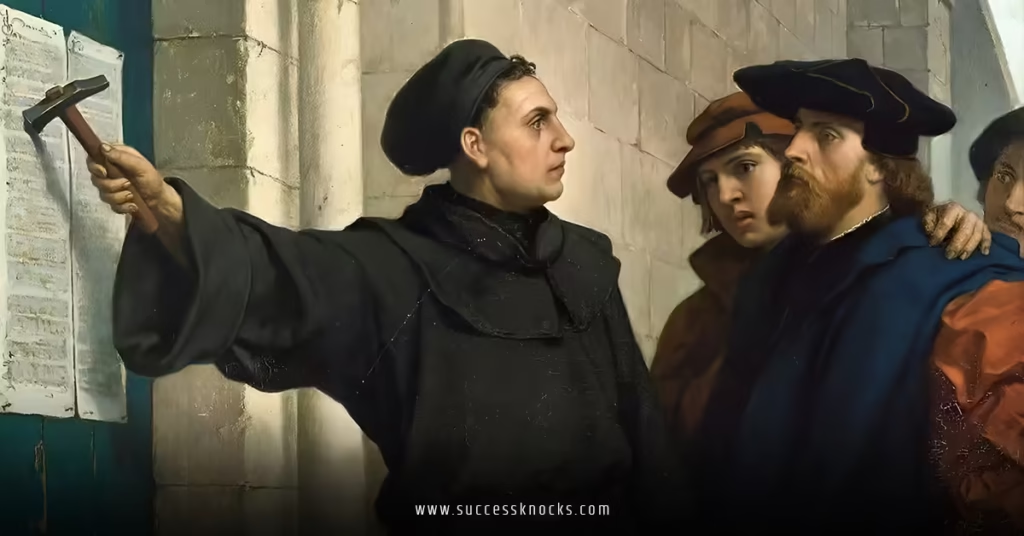
On October 31, 1517, he sent his 95 Theses to church superiors. Legend says he nailed them to the Castle Church door in Wittenberg, Germany, for public debate. Whether nailed or posted, the document spread like wildfire.
Major Events in the History of the Protestant Reformation
The timeline moves fast once it starts.
1517–1521: Luther’s Stand
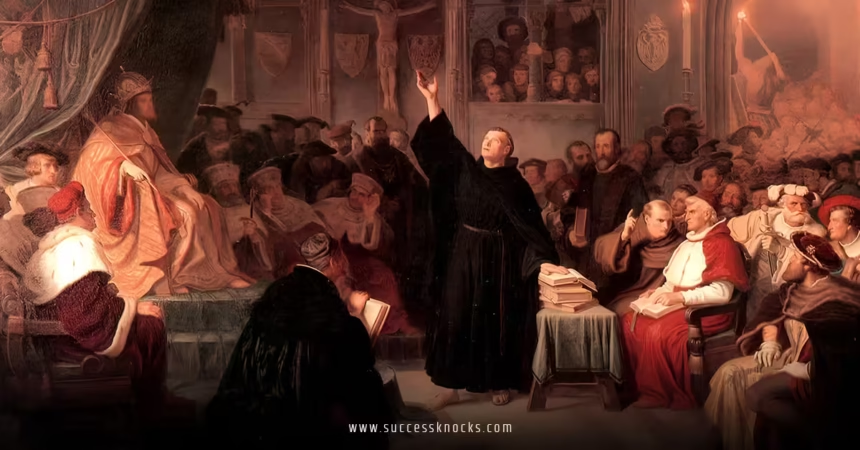
Luther debates opponents and refuses to recant at the Diet of Worms in 1521. Emperor Charles V declares him an outlaw. Friends hide him in Wartburg Castle, where he translates the New Testament into German.
1520s: Spread and Splits
Huldrych Zwingli leads reform in Switzerland, pushing simpler worship and rejecting some Catholic rituals. Differences emerge — Luther and Zwingli disagree on the Lord’s Supper, for example.
In 1529, protesters at the Diet of Speyer earn the label “Protestant.”
1530s–1540s: Calvin and England
John Calvin publishes Institutes of the Christian Religion in 1536. His ideas on predestination and church discipline shape Reformed traditions. In England, King Henry VIII breaks with Rome over his divorce, creating the Church of England (Anglican).
1545–1563: Catholic Response
The Council of Trent clarifies Catholic doctrine, reforms abuses, and launches the Counter-Reformation. Jesuits strengthen education and missions.
1555: Peace of Augsburg
Rulers in the Holy Roman Empire can choose Lutheranism or Catholicism for their lands — “whose realm, his religion.”
Wars follow, including the brutal Thirty Years’ War (1618–1648), but the Reformation’s core ideas take root.
Short version: One man’s questions snowballed into continent-wide change.
Key Theological Shifts That Still Matter
Reformers rallied around five “solas”:
- Sola Scriptura: Bible alone as authority, not tradition or popes.
- Sola Fide: Justification by faith alone.
- Sola Gratia: Grace alone.
- Solus Christus: Christ alone as mediator.
- Soli Deo Gloria: Glory to God alone.
These directly challenged Catholic emphasis on Scripture plus Tradition, faith plus works, and the role of priests and sacraments.
The priesthood of all believers meant every Christian could approach God directly. No need for a special clerical class as intermediary.
This history directly feeds into modern baptist church vs catholic differences. Baptists, emerging later from Anabaptist and Puritan roots, took “believer’s baptism” and congregational independence to heart — ideas with Reformation DNA.
How the Reformation Gave Rise to Baptist Traditions
Anabaptists (“re-baptizers”) went further, insisting on adult baptism only. They faced persecution from both Catholics and other Protestants.
In the 1600s, English Separatists and Particular Baptists formed groups stressing immersion baptism for believers and local church autonomy. These ideas traveled to America, shaping the Southern Baptist Convention and other Baptist bodies.
So when you compare baptist church vs catholic today — immersion vs infant baptism, Bible alone vs Scripture and Tradition, local governance vs hierarchy — you’re seeing Reformation fault lines still visible.
Luther wanted to reform the existing Church. He didn’t plan a full split. But once unleashed, the movement splintered into Lutheran, Reformed, Anglican, Anabaptist, and eventually Baptist streams.
Comparison Table: Before and After the Reformation
| Aspect | Pre-Reformation (Catholic Unity) | Post-Reformation (Protestant Developments) |
|---|---|---|
| Authority | Pope, Tradition, and Scripture | Scripture alone (sola scriptura) |
| Salvation | Faith + works + sacraments | Faith alone (sola fide), grace alone |
| Baptism | Infants, pouring/sprinkling | Often believers only (especially among Baptists/Anabaptists) |
| Worship | Latin Mass, elaborate rituals | Preaching in local languages, simpler services |
| Church Structure | Hierarchical under Rome | Varied: congregational (Baptists), presbyterian, etc. |
| Clergy | Celibate priests | Many married pastors; priesthood of all believers |
This table shows why baptist church vs catholic conversations often circle back to 1517.
Lasting Impacts on Society and Faith
The Reformation boosted literacy. People wanted to read the Bible themselves. It influenced education, capitalism debates (think Max Weber’s Protestant work ethic thesis), and even democracy through ideas of individual conscience.
In the USA, Protestant diversity — including strong Baptist presence — shaped religious freedom. The First Amendment owes something to Reformation-era fights against state churches.
Yet it also brought conflict. Wars killed millions. Families divided. Old wounds linger, though ecumenical dialogues since the 20th century have brought more understanding.
In my experience talking with pastors on both sides, the history helps lower defenses. You see shared roots in early Christianity before later developments diverged.
Common Mistakes When Studying the History of the Protestant Reformation
Mistake 1: Thinking it was just about indulgences.
It was deeper — authority, salvation, access to God.
Mistake 2: Assuming Luther wanted to start new denominations.
He sought internal reform at first.
Mistake 3: Ignoring the Catholic Counter-Reformation.
Trent brought real changes and renewed zeal.
Fix: Read primary sources. Luther’s writings. Calvin’s Institutes. The Council of Trent documents. Balance perspectives.
Step-by-Step Guide to Exploring This History
- Start with the basics — Read a neutral timeline of key dates from 1517 to 1648.
- Dive into Luther — Study the 95 Theses and his “Tower Experience” on justification.
- Branch out — Learn about Calvin, Zwingli, and English reformers.
- Connect to today — Visit a Baptist service and a Catholic Mass. Note the differences rooted in Reformation debates.
- Read original voices — Grab a modern translation of key texts.
- Discuss openly — Talk with believers from different traditions without trying to “win.”
- Reflect — Ask how these 500-year-old ideas shape your own faith questions.
This approach keeps it practical. No need to become a scholar overnight.
Key Takeaways from the History of the Protestant Reformation
- It began as a protest against specific abuses but grew into a theological revolution.
- Core principles like Scripture alone and faith alone redefined Christian practice.
- The movement splintered into many Protestant groups, including those leading to Baptist churches.
- Catholic responses strengthened doctrine and addressed real problems.
- Understanding this history illuminates ongoing baptist church vs catholic differences in authority, sacraments, and worship.
- It promoted Bible access and personal faith but also caused division and conflict.
- Its effects still influence education, politics, and religious freedom in the West.
- The Reformation reminds us that questioning can lead to renewal — or rupture.
Conclusion
The history of the Protestant Reformation wasn’t clean or simple. One bold challenge in Wittenberg cracked open centuries of unified practice and let fresh air — and chaos — in.
Whether you lean Baptist, Catholic, or somewhere else, knowing this story helps you appreciate why churches look and feel so different on Sunday mornings. It turns “us vs them” into “we share roots, yet took different paths.”
Next step? Pick up a short biography of Luther or attend a Reformation-focused Bible study. History hits different when you see its fingerprints on your own faith community.
External Link :
- Reformation Timeline from Encyclopaedia Britannica.
- Protestant Reformation Overview from National Geographic Education.
- The Reformation from HISTORY.com.)
FAQ
1. What started the Protestant Reformation and why does it still matter today?
The Protestant Reformation kicked off on October 31, 1517, when Martin Luther posted (or sent) his 95 Theses challenging the sale of indulgences and other Church practices. It matters today because it created the theological foundation for Protestant groups, including Baptists. Many differences you see in baptist church vs catholic — like authority, salvation by faith alone, and believer’s baptism — trace directly back to Reformation debates.
2. Did Martin Luther want to split the Church or just fix it?
Luther originally wanted reform within the Catholic Church, not a full break. He attacked abuses like indulgences but kept hoping for change from inside. Once excommunicated and the movement spread, permanent divisions formed. This unplanned split eventually led to new traditions, including the Baptist emphasis on Scripture alone and local church independence.
3. How did the Reformation influence baptism practices in Baptist churches?
Reformers questioned infant baptism and the role of sacraments. Radical groups like the Anabaptists insisted on baptizing only believers who could confess faith — a view that influenced early Baptists in the 1600s. That’s why today, in baptist church vs catholic comparisons, you see full immersion for adults or older believers versus infant baptism with pouring in Catholic practice.
4. What was the Catholic Church’s official response to the Reformation?
The Church called the Council of Trent (1545–1563), which clarified doctrines on justification, the sacraments, Scripture and Tradition, and reformed internal abuses such as clergy training and indulgences. This Counter-Reformation strengthened Catholic identity while Protestants continued to develop their own branches. The decisions made at Trent still shape many of the clear lines drawn in modern baptist church vs catholic discussions.
5. Can someone be both Baptist and Catholic, or do the differences make that impossible?
Formal membership in both isn’t possible because of core disagreements on authority (Bible alone vs. Scripture + Tradition + Magisterium), the nature of the Lord’s Supper, and baptism. However, many Christians appreciate elements from both traditions in personal devotion. Exploring the history of the Protestant Reformation helps you understand why these lines exist and decide which path fits your faith journey best.