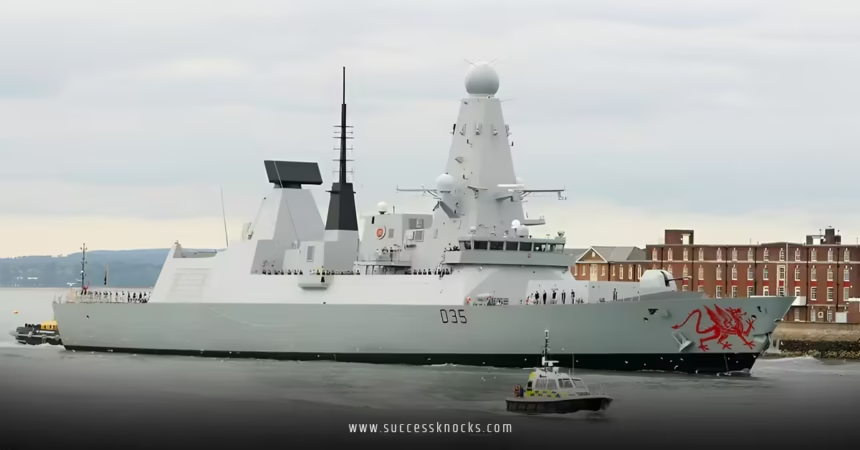
HMS Dragon docks after leaving Portsmouth for Cyprus air base protection, marking a significant deployment in the Royal Navy’s ongoing Mediterranean operations. This Type 45 destroyer’s mission represents a critical component of Britain’s commitment to regional security and alliance partnerships, particularly in supporting RAF Akrotiri’s strategic operations in Cyprus.
Quick Overview:
- HMS Dragon deployed from Portsmouth Naval Base to provide air defense coverage for Cyprus operations
- The mission supports RAF Akrotiri and broader Mediterranean security objectives
- Type 45 destroyers like HMS Dragon are equipped with advanced SAMPSON radar and Aster missiles
- Deployment timeline typically spans 6-9 months for such operations
- Mission aligns with NATO commitments and UK defense strategy in the Eastern Mediterranean
Understanding HMS Dragon’s Strategic Role
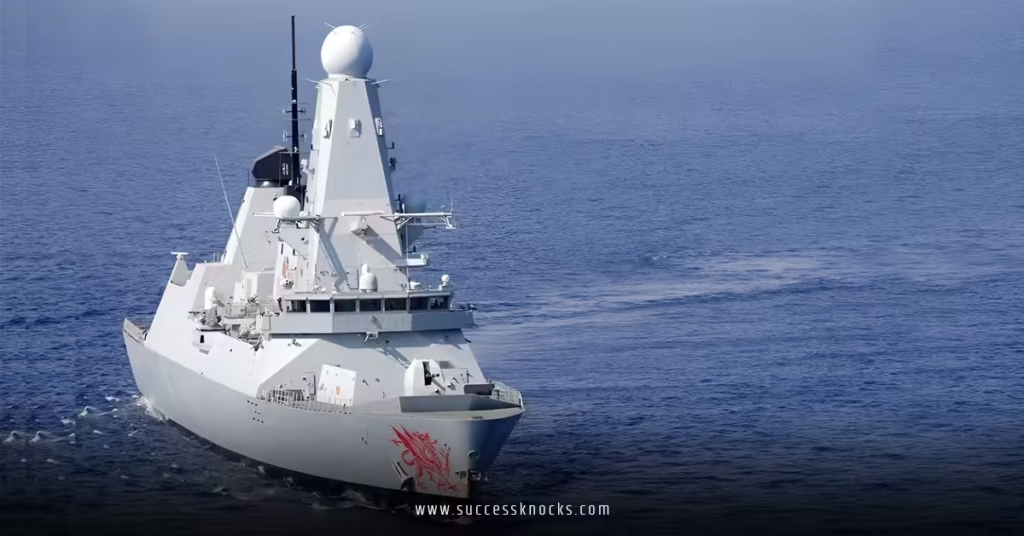
The deployment isn’t just routine patrol work. HMS Dragon’s advanced air defense systems make her uniquely suited for protecting critical infrastructure like Cyprus air bases. Her SAMPSON radar can track hundreds of targets simultaneously while her Sea Viper missile system provides layered defense against aerial threats.
Here’s the thing: Cyprus sits at a strategic crossroads. RAF Akrotiri operates as a forward base for Middle Eastern operations, intelligence gathering, and humanitarian missions. When tensions rise in the region, protecting this asset becomes paramount.
Why Cyprus Air Base Protection Matters
The Eastern Mediterranean has become increasingly contested. Russian naval presence, Iranian proxy activities, and regional instability make air base protection more than academic exercise.
Strategic Importance of Cyprus Operations:
- Forward staging area for Middle East operations
- Intelligence, surveillance, and reconnaissance hub
- Humanitarian mission launch point
- NATO southern flank security
- Counter-terrorism operations support
HMS Dragon’s presence sends a clear message about Britain’s commitment to maintaining operational freedom in these waters. The destroyer’s sophisticated radar coverage extends well beyond the immediate area, creating an umbrella of protection that benefits multiple allied operations.
HMS Dragon’s Capabilities Breakdown
| System | Capability | Range | Primary Function |
|---|---|---|---|
| SAMPSON Radar | Multi-function radar | 400+ km | Target tracking/engagement |
| Sea Viper (Aster 30) | Surface-to-air missiles | 120+ km | Long-range air defense |
| Sea Viper (Aster 15) | Surface-to-air missiles | 30+ km | Point defense |
| 4.5-inch Gun | Naval gunfire support | 27+ km | Surface/shore targets |
| Phalanx CIWS | Close-in weapon system | 3+ km | Last-line defense |
The kicker is HMS Dragon’s ability to integrate with other defense systems. She can share radar data with RAF aircraft, coordinate with land-based air defenses, and provide early warning for the entire operational area.
Deployment Timeline and Operations
When HMS Dragon docks after leaving Portsmouth for Cyprus air base protection, the deployment typically follows established patterns. Based on recent Royal Navy operations, these missions generally last 6-9 months with potential extensions based on regional requirements.
Typical Deployment Phases:
- Transit through Bay of Biscay and Gibraltar
- Mediterranean patrol and familiarization
- Integration with Cyprus-based operations
- Active protection and patrol duties
- Coordination with allied naval forces
- Return transit with potential port visits
The timeline isn’t rigid. Regional developments can extend deployments or modify mission parameters. The UK Ministry of Defence maintains operational flexibility to respond to emerging threats.
HMS Dragon Docks: What Happens Next
Once docked, HMS Dragon undergoes rapid integration with local command structures. This isn’t a simple matter of parking the ship and waiting for orders. The process involves:
Immediate Integration Steps:
- Communication link establishment with RAF Akrotiri
- Radar coverage coordination with existing systems
- Crew briefings on local threat assessments
- Logistics and supply chain integration
- Joint training exercises with Cyprus-based units
The destroyer’s crew works around the clock during initial deployment phases. They’re not just operating independently—they’re becoming part of a larger defensive network that includes RAF aircraft, Army units, and intelligence assets.
Regional Security Context
The Mediterranean isn’t the peaceful tourist destination many imagine. Recent years have seen increased Russian submarine activity, Iranian proxy operations, and migration-related security challenges. HMS Dragon’s deployment addresses multiple threat vectors simultaneously.
Think of it like this: Cyprus sits at the intersection of three continents, making it a natural hub for both legitimate operations and potential threats. The NATO Maritime Command recognizes this strategic reality, which is why allied naval presence remains constant in these waters.
Common Mistakes in Understanding Naval Deployments
Mistake 1: Assuming deployments are reactive Fix: These missions are planned months in advance as part of broader defense strategy.
Mistake 2: Thinking HMS Dragon operates alone Fix: The destroyer works as part of integrated multinational operations.
Mistake 3: Believing air base protection is purely defensive Fix: These deployments enable offensive capabilities and power projection.
Mistake 4: Underestimating logistics complexity Fix: Modern naval operations require extensive supply chain coordination.
Mistake 5: Assuming mission parameters are fixed Fix: Deployments adapt to changing regional security requirements.
Step-by-Step: How Air Base Protection Works
Phase 1: Threat Assessment
- Intelligence gathering from multiple sources
- Risk analysis for air and surface threats
- Coordination with allied intelligence services
Phase 2: Defensive Positioning
- Optimal radar coverage positioning
- Missile engagement zone establishment
- Coordination with land-based systems
Phase 3: Active Protection
- 24/7 radar surveillance
- Threat identification and classification
- Engagement decision protocols
Phase 4: Response Coordination
- Allied asset notification
- Escalation procedures
- Post-incident analysis
No kidding—this process repeats continuously throughout the deployment. The crew maintains constant vigilance because threats can emerge with minimal warning.
Technology Integration Challenges
HMS Dragon’s sophisticated systems don’t automatically play nice with every allied platform. Integration requires careful planning and often real-time adjustments. The Royal Navy has developed standardized procedures, but local variations always exist.
Integration Priorities:
- Communication protocol alignment
- Radar data sharing standardization
- Engagement rule coordination
- Logistics network integration
- Emergency procedure synchronization
The destroyer’s crew trains extensively for these scenarios, but real-world deployment always presents unique challenges. Equipment compatibility, communication delays, and procedural differences require constant attention.
Impact on Regional Security Architecture
When HMS Dragon docks after leaving Portsmouth for Cyprus air base protection, the deployment shifts regional security dynamics. Other nations—both allies and potential adversaries—adjust their own operations accordingly.
The presence of a Type 45 destroyer creates what naval strategists call a “deterrent bubble.” Potential threats must account for HMS Dragon’s capabilities when planning any operations in the area. This often leads to de-escalation simply through presence.
Crew Life During Extended Deployments
Six to nine months at sea isn’t a vacation cruise. HMS Dragon’s crew of approximately 190 personnel faces unique challenges during extended deployments. The Royal Navy has developed comprehensive support systems, but deployment stress remains a significant factor.
Crew Support Systems:
- Regular satellite communication with families
- Recreational facilities onboard
- Mental health support programs
- Port visits for rest and resupply
- Crew rotation for essential leave
Modern deployments prioritize crew welfare because mission effectiveness depends on personnel readiness. A stressed, exhausted crew can’t maintain the vigilance required for effective air base protection.
Key Takeaways
- HMS Dragon’s deployment represents long-term British commitment to Mediterranean security
- Air base protection involves complex integration with multiple allied systems
- Type 45 destroyers provide unique capabilities that other platforms cannot match
- Regional security requires constant presence, not just crisis response
- Modern naval operations depend heavily on international cooperation
- Technology integration challenges require extensive planning and flexibility
- Crew welfare directly impacts mission effectiveness
- These deployments serve both defensive and deterrent functions
Looking Ahead: Future Implications
HMS Dragon’s current deployment sets precedents for future Royal Navy operations in the region. The lessons learned will inform planning for subsequent missions and potentially influence procurement decisions for future naval assets.
The Eastern Mediterranean will likely remain a focus area for British naval operations. Regional instability, great power competition, and alliance obligations create enduring requirements for capable naval presence.
Conclusion
HMS Dragon docks after leaving Portsmouth for Cyprus air base protection as part of a broader strategy that recognizes the Mediterranean’s critical importance to British interests. This isn’t just about one ship protecting one base—it’s about maintaining the maritime freedom that enables everything from counter-terrorism operations to humanitarian missions.
The deployment demonstrates how modern naval operations integrate technology, international cooperation, and strategic positioning to achieve security objectives. For HMS Dragon’s crew, it represents months of challenging but vital work in service of national and alliance interests.
Your next step? Follow Royal Navy announcements for updates on HMS Dragon’s operations and similar deployments that shape Mediterranean security.
The sea never sleeps, and neither do those who guard it.
Frequently Asked Questions
Q: How long will HMS Dragon remain deployed for Cyprus air base protection?
A: Typical deployments last 6-9 months, though mission requirements can extend or modify timelines based on regional security developments and operational needs.
Q: What specific threats does HMS Dragon protect against around Cyprus?
A: The destroyer’s systems counter aerial threats including aircraft, missiles, and drones, while also providing early warning for surface and submarine activity in the surrounding waters.
Q: How does HMS Dragon coordinate with RAF operations at Akrotiri?
A: Through integrated communication systems, shared radar data, and coordinated command structures that allow real-time information sharing and synchronized response protocols.
Q: Can HMS Dragon’s protection extend beyond just the Cyprus air base?
A: Yes, her radar coverage and missile range create a protective umbrella that benefits multiple facilities and operations across the region, not just the immediate air base area.
Q: What happens if HMS Dragon docks after leaving Portsmouth for Cyprus air base protection encounters Russian naval forces?
A: Professional protocols govern such encounters, with established communication procedures and rules of engagement designed to prevent escalation while maintaining operational security.