
Key Takeaways:
- Targeted audience segmentation enhances marketing efficiency and return on ad spend (ROAS).
- Advancements in AI and data analytics are revolutionizing segmentation strategies.
- Balancing personalization with consumer privacy is crucial in modern marketing.
The Evolution of Audience Segmentation
Audience segmentation has always been a vital part of successful marketing campaigns. By dividing a broad audience into more specific groups, marketers can create personalized messages that resonate deeply. Traditional segmentation methods typically relied on basic demographic variables such as age, gender, and income. However, today’s digital landscape demands a more nuanced approach. As consumers interact with brands across multiple devices and channels, understanding those behaviors has become even more critical to campaign success.
This ongoing evolution of segmentation means brands must harness powerful tools and partnerships to stay competitive. Platforms like Konovo help marketers use enriched audience data for more precise targeting. By connecting with audiences based on real behaviors instead of assumptions, brands can deliver the right messages at the right moments.
Alongside quantitative data, qualitative research, such as ethnographic studies, interviews, and focus groups, provides marketers with additional context about customer motivations and triggers. Integrating both quantitative and qualitative approaches gives a more holistic view of market segments, allowing brands to truly understand the varied preferences and needs within their target audience. Furthermore, by incorporating psychographic and behavioral data, marketers can move beyond basic attributes to create messaging that feels personal and emotionally resonant.
Advancements in Data Analytics and AI
The emergence of advanced analytics and artificial intelligence has taken audience segmentation to the next level. Marketers now have access to vast datasets that go far beyond surface-level demographics. AI-driven platforms can sift through this information to identify patterns and trends that would be nearly impossible for humans to spot manually. These data-rich insights enable segmentation that is not only granular but also dynamic, reflecting the ever-changing interests and needs of consumers.
With machine learning and predictive modeling, marketers are able to anticipate what consumers might want next. This forward-thinking approach improves both the timing and relevance of communications. As noted by the Harvard Business Review, companies using advanced analytics for audience targeting see stronger long-term engagement and brand loyalty.
As these technologies become increasingly accessible, even small and medium-sized businesses can reap the benefits of powerful segmentation once reserved for industry giants. Trend analysis, customer journey mapping, and AI-based recommendations empower brands at any scale to align content or offers with consumers’ unique interests and behaviors. This democratization of advanced segmentation tools is leveling the playing field, fostering innovation and experimentation across industries.
Enhanced Return on Ad Spend (ROAS)
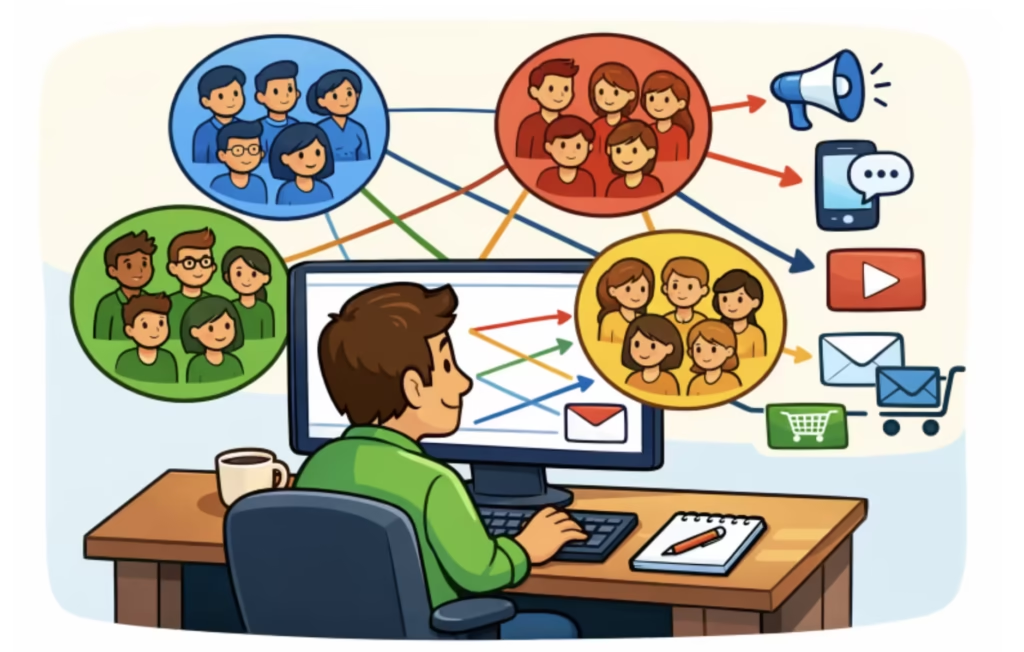
One of the clearest benefits of refined audience segmentation is a noticeable increase in return on ad spend. According to a study by TransUnion, companies that employ precise targeting techniques consistently achieve a ROAS that is several times higher than those using generic strategies. This is because segmentation ensures the marketing budget is focused on users who are most likely to take action, reducing wasted impressions and boosting overall campaign performance.
By leveraging advanced segmentation, businesses can further tailor the customer journey, adjusting ad creatives and bids for each unique segment. This enables a more strategic allocation of ad dollars, focusing resources on high-potential audiences. In addition to optimizing spend, marketers are able to improve customer experience, reduce churn rates, and boost conversion rates by speaking directly to each group’s specific needs.
Balancing Personalization and Privacy
The push for more personalized marketing also brings challenges, especially surrounding consumer privacy. Many consumers appreciate tailored content, but dislike it when it feels invasive. Marketers need to find a careful balance, offering personalization while respecting privacy preferences. Openness about how data is collected and used, as well as obtaining clear consent, can help build trust and long-term consumer relationships.
Guidelines from authorities such as the Federal Trade Commission stress the importance of transparent data policies and responsible data handling practices. As privacy laws around the world tighten, brands must adapt quickly or risk losing consumer trust and facing legal consequences.
To address these concerns, marketers should implement best practices like data minimization, anonymization, and frequent policy updates to stay ahead of evolving regulations. Educating consumers on privacy features, making preference management easy, and providing opt-out options are essential steps in reinforcing ethical data stewardship.
Real-Time Data and Predictive Analytics
Real-time data integration and predictive analytics are reshaping the way businesses interact with audiences. Marketers can adjust their strategies instantly as new data is collected, making campaigns agile and responsive to changing consumer trends. For example, if a sudden spike in engagement is observed from a particular segment, campaigns can be shifted or expanded instantly to capitalize on that interest.
Predictive analytics allows marketers to forecast future behaviors, empowering them to proactively address shifts in demand and consumer sentiment. This capability is particularly valuable in today’s fast-moving market, where being one step ahead can mean the difference between success and irrelevance. For more insights on the uses of predictive analytics, see this overview from Forbes.
As technology continues to evolve, we can expect real-time decision-making and automation to become standard in segmentation strategies. Combining these advances with creative campaign elements will help brands appeal to consumers in ever more sophisticated ways while maintaining transparency and adaptability.
Challenges in Audience Segmentation
Despite its benefits, modern segmentation presents unique challenges. Consumer data is now scattered across a dizzying array of platforms and devices, making it more difficult to form cohesive and accurate segments. Additionally, traditional identifiers such as third-party cookies have become less effective, prompting a shift towards first-party data and contextual targeting.
Marketers must also navigate measurement difficulties due to the fragmentation of digital ecosystems. Ensuring accuracy across platforms and reconciling different data sets are ongoing hurdles that require smart tools and cross-functional collaboration.
Those interested in how the landscape is adapting to a cookieless future can find helpful analysis in this recent article from Adweek.
Additionally, building a unified customer view often requires significant investments in integration technologies and data governance. Cross-device identification, privacy-compliant data onboarding, and consistent audience taxonomy are essential for robust segmentation but can strain internal resources. Marketers who successfully manage these complexities will set their brands apart in an increasingly competitive and complex digital marketplace.
The Future of Audience Segmentation
The future of audience segmentation lies in continuous innovation. Emerging technologies will keep pushing the boundaries of what is possible, making segmentation smarter and marketing more effective. Marketers must remain agile, proactive, and always conscious of consumer privacy as they navigate new tools and regulatory landscapes.
As a discipline that sits at the crossroads of technology, psychology, and data science, audience segmentation will remain crucial for brands aiming to build genuine connections. By properly leveraging the latest advancements and fostering trust, businesses can look forward to developing more meaningful and profitable relationships with their target audiences.
Forward-thinking organizations are already experimenting with multi-layered segmentation models, using everything from location-based triggers to purchase frequency and sentiment analysis. These innovations will continue to evolve, supporting even more agile, relevant, and respectful marketing. Ultimately, success in this arena will belong to those who view segmentation as an ever-evolving practice, one that balances human insight, technological advancement, and a deep respect for consumer autonomy.
In summary, targeted audience segmentation serves as the foundation of effective modern marketing. Success depends on a careful blend of deep data insights, respect for privacy, continuous adaptation, and the drive to personalize every interaction while nurturing trust.