How lockup periods affect stock prices is a simple idea with a big market impact: when insiders finally get the green light to sell, more shares can hit the market at once, and that can pressure prices lower. If you run a business, understand this well, because it shows how supply, demand, and investor psychology can move valuation fast. In this article, we’re going to be taking a look at how lockup periods affect stock prices, and how you can use that knowledge to read market signals more clearly. If you would like to find out more, feel free to read on.
Pic – CC0 License
What a lockup period is
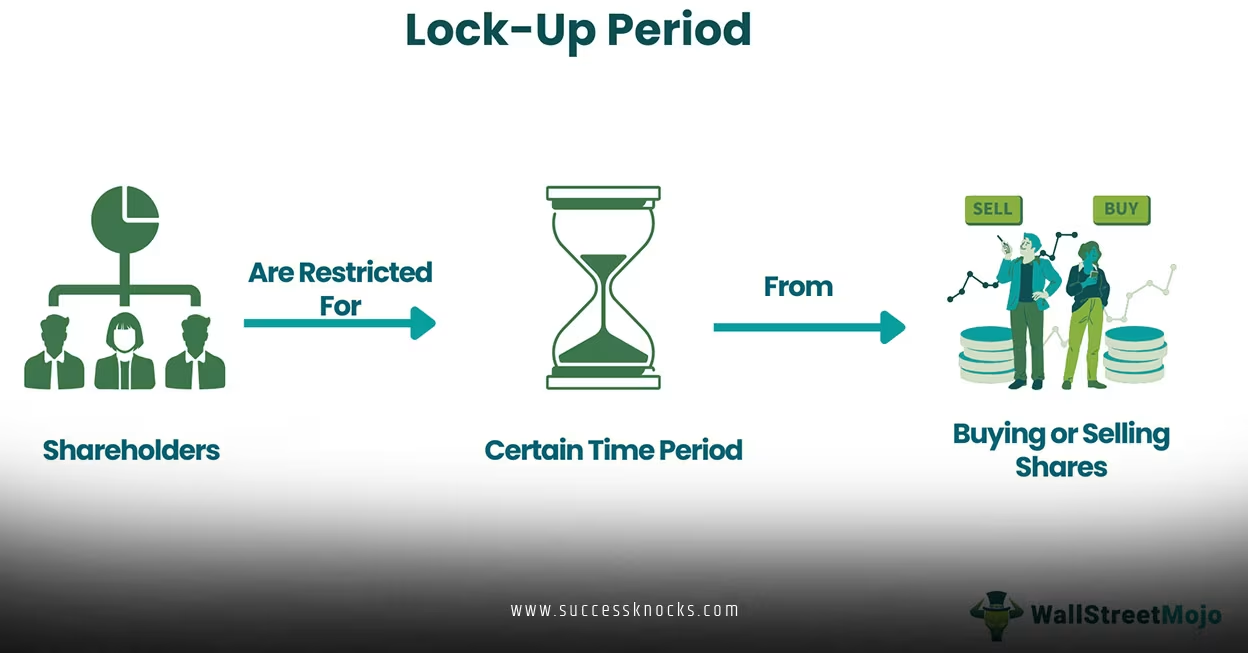
A lockup period is a set time after an IPO or other share event when insiders, early investors, or employees are not allowed to sell their shares.[1][2] The goal is to help stabilize the stock and avoid a flood of selling right after listing.[1][6]
In plain English, the company is trying to give the market room to settle. Without that pause, a large batch of shares could come to market all at once and make price swings worse.[1][18]
How lockup periods affect stock prices
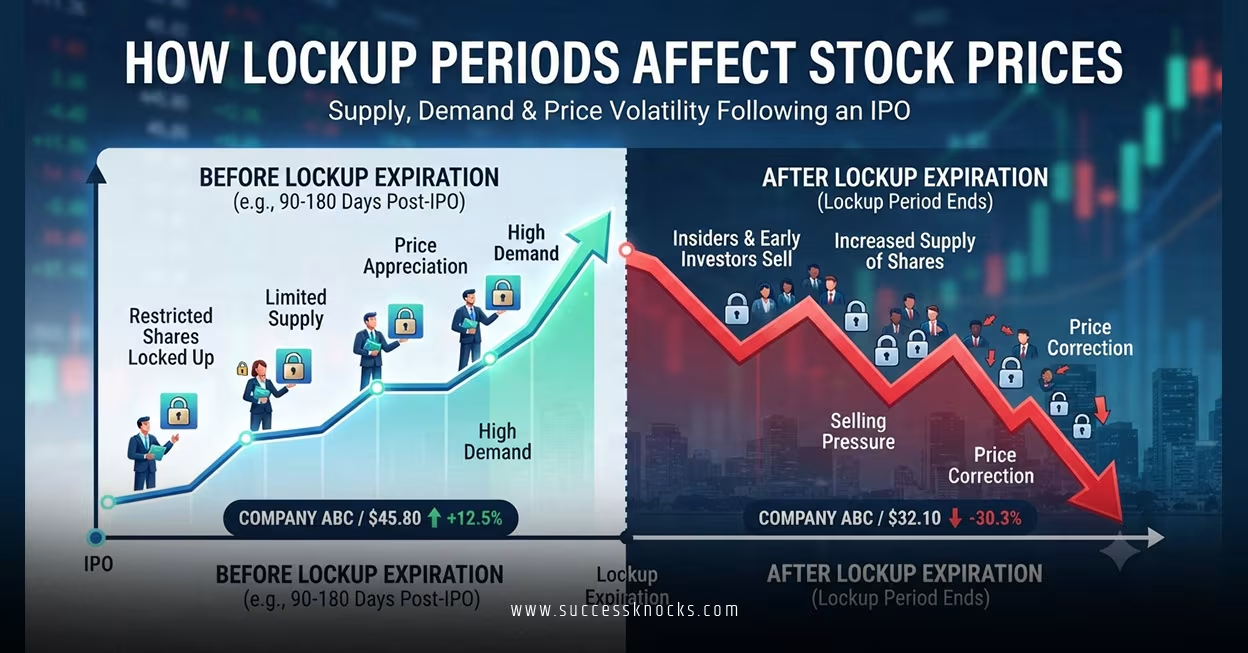
How lockup periods affect stock prices usually comes down to supply. When the lockup ends, more shares become available, and that extra supply can push prices down if demand does not rise enough to match it.[1][2][8]
That is why many stocks see more volatility around the expiration date.[1][4] Research and market commentary both note that prices often weaken as the date approaches, because traders may sell ahead of time or position for the expected increase in supply.[4][7][8]
The effect is not guaranteed, though. If investors believe the company is growing fast, or if the market sees the unlock as already priced in, the stock may hold up better than expected.[4][16]
Why the market often reacts early
Markets do not wait politely for the exact unlock date. Traders often anticipate the event, so prices can start moving days or weeks before the lockup ends.[4][8]
That is one reason the headline number matters less than the setup around it. If the stock has already risen sharply since the IPO, early holders may have a stronger incentive to sell, which can add more pressure once restrictions lift.[4]
For founders, the lesson is clear: expectations matter as much as the event itself. Once the market starts believing supply is coming, that belief can move prices before a single share is sold.[4][7]
What entrepreneurs can learn from lockup expirations
If you are building a company, how lockup periods affect stock prices is really a lesson in timing and confidence. A great product does not stop market pressure if too many shares become available too quickly.[1][18]
Here are the main takeaways for business owners:
- Watch supply — More shares for sale can weaken price if buyers do not step in fast enough.[1][2]
- Expect volatility — Lockup expirations often bring bigger swings in trading volume and price.[1][7][13]
- Read sentiment — If the market expects selling, the drop can begin before the unlock date.[4][8]
- Think long term — A short-term dip does not always mean the business has gotten worse.[16]
This is especially useful if you are planning fundraising, hiring with equity, or preparing for an eventual exit. Investors care not only about your growth story, but also about when shares can be sold and how much pressure that could create.
Why this matters for SpaceX watchers
The same basic logic helps explain interest in SpaceX SPCX stock price after August 2026 lockup unlock. When a high-profile private company faces a major unlock, investors focus on how much new supply may enter the market and whether demand is strong enough to absorb it.[1][18]
That does not mean the price must fall. It means the unlock becomes a test of confidence, liquidity, and investor appetite. In a private market, those three forces can matter just as much as revenue or headlines.
If you want to understand the mechanics behind market reactions more broadly, Investopedia’s lock-up period guide gives a clear overview of the basic structure.[1] For a simple explanation of the investing side, Stash’s guide to lockup periods and stock prices is also helpful.[2]
How to judge the impact on a stock
If you are trying to figure out whether a lockup will hurt or help a stock, keep your eye on a few things:
- How large the unlock is compared with normal trading volume.[8][13]
- Whether insiders are likely to sell or seem happy to hold.[4][15]
- Whether the company is still delivering strong news around the same time.[4][16]
- Whether the market has already priced in the event before the date arrives.[4][7]
That is the practical way to think about it. A lockup expiration is not magic. It is a supply event, and supply events can move prices when demand is thin or sentiment is shaky.[1][2][18]
We hope that you have found this article enlightening in some way, because the real business lesson is simple: when you understand how share supply changes, you understand why prices move. If you are tracking a future unlock, or comparing it with SpaceX SPCX stock price after August 2026 lockup unlock, you will be better prepared to read the market with a calmer head and a sharper eye.