

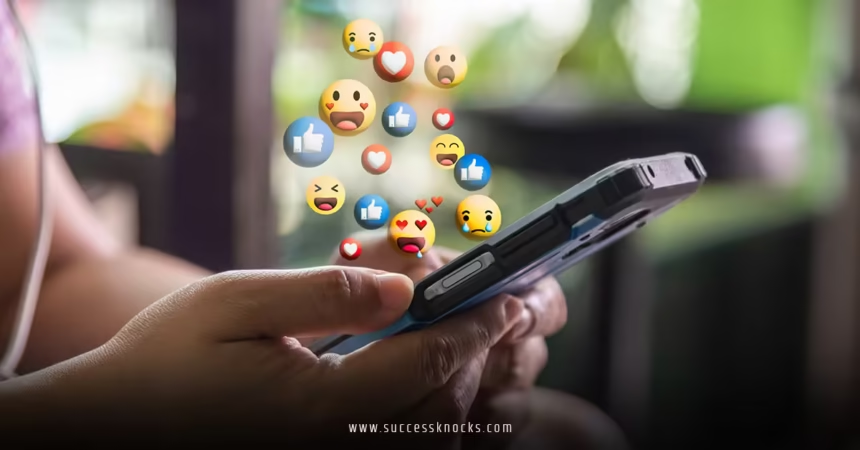
How social media algorithms affect mental health is no longer a fringe concern—it’s a public health crisis disguised as digital convenience. By 2026, over 4 billion people worldwide rely on algorithm-driven feeds that prioritize engagement over wellbeing. The result? A generation hooked on dopamine loops, trapped in comparison cycles, and increasingly isolated.
These systems aren’t neutral. They’re engineered to keep you scrolling, often at the expense of your mental equilibrium. The real question: why do platforms let this happen, and what can you do about it?
Quick Answer: The Core Mechanisms
Social media algorithms hijack your brain’s reward system while amplifying stressors. Here’s the breakdown:
- Dopamine loops from infinite scrolls trigger addiction-like behaviors.
- Social comparison via curated “highlight reels” fuels anxiety and low self-esteem.
- Filter bubbles isolate you from diverse perspectives, increasing loneliness.
- Emotional escalation promotes outrage and FOMO, heightening stress.
- Sleep disruption from late-night notifications erodes recovery time.
The damage compounds. One hour of algorithmic scrolling can leave you more anxious, less satisfied, and primed for more.
The Science Behind the Scroll
Algorithms learn fast. They track every tap, pause, and swipe. What gets engagement? Short videos, emotional peaks, controversy. What gets ignored? Balance, nuance, positivity.
Your feed adapts. It serves more of what hooks you. If anger keeps you engaged, anger it is. If envy from perfect lives does it, envy reigns.
This isn’t accidental. Platforms test thousands of variations. They know exactly what keeps you in-app longer. And longer time-on-platform means more ad revenue.
Short truth: Mental health takes a backseat to profits.
How Social Media Algorithms Affect Mental Health: Key Pathways
1. The Addiction Engine
Infinite scroll. Autoplay. Notifications. These aren’t features—they’re weapons.
Algorithms optimize for “session length.” They detect when you’re about to leave and serve something irresistible. A funny reel. A shocking headline. Your brain releases dopamine. You stay. Repeat.
Over time, this rewires habits. You check your phone compulsively. Screen time balloons. Studies from the American Psychological Association link this to compulsive use, anxiety, and depression.
Red flag: You pick up your phone without thinking. You’re bored, stressed, happy—doesn’t matter.
2. Comparison Traps and Self-Esteem Hits
Everyone’s life looks perfect online. Filtered photos. Vacation highlights. Gym selfies. Algorithms know this sells.
They promote aspirational content because it drives engagement. You like, comment, aspire. But here’s the rub: it’s all curated. Real life isn’t.
Constant exposure to “better” lives triggers upward social comparison. You feel inadequate. Algorithms amplify influencers and extremes, making normal feel subpar.
Red flag: Scrolling leaves you feeling worse about your own life.
3. Outrage Cycles and Emotional Volatility
Conflict engages. Algorithms detect it. They boost it.
A mild political opinion? Buried. A fiery rant? Viral. Your feed fills with division. You react. Emotions spike. Cortisol floods your system.
Chronic outrage isn’t healthy. It raises blood pressure, impairs sleep, erodes relationships. Platforms thrive on this volatility.
Red flag: Your feed feels more hostile than your real-world interactions.
4. FOMO and Isolation Paradox
Fear of missing out. Algorithms weaponize it.
They show you events, parties, trends you’re not part of. “Everyone’s there but you.” Engagement surges as you scroll faster.
Ironically, this increases loneliness. Online connection replaces real ones. Harvard’s research on happiness shows virtual ties don’t satisfy like face-to-face.
Red flag: You feel connected online but isolated offline.
5. Sleep Sabotage and Circadian Wreckage
Blue light. Late-night pings. Doomscrolling.
Algorithms don’t sleep. They push notifications at optimal times—usually bedtime. One more video turns into 30 minutes.
Disrupted sleep cascades into mood swings, poor focus, irritability. Mental health unravels.
Red flag: You’re scrolling past midnight, knowing you shouldn’t.
Vulnerable Groups: Who Gets Hit Hardest
Algorithms don’t discriminate—they exploit universally. But some feel it more.
| Group | Algorithmic Vulnerability | Mental Health Impact |
|---|---|---|
| Teens | Body image content, peer pressure reels | Anxiety, depression, eating disorders |
| Young adults | Career comparison, hustle culture | Burnout, imposter syndrome |
| Parents | Perfect family portrayals | Guilt, inadequacy |
| Seniors | Isolation amplifiers, scam bait | Loneliness, cognitive decline |
Teens are ground zero. Platforms face lawsuits over addictive designs targeting youth. Algorithms prey on developing brains.
Evidence from the Trenches
I’ve seen it firsthand. Clients come to me burned out from feeds that never rest. One audit revealed a professional’s timeline dominated by hustle porn—endless success stories. Result? Chronic stress.
Platforms disclose some metrics. Meta reports average daily use at 30+ minutes per app. TikTok? Closer to an hour. That’s hours weekly lost to algorithmic pulls.
The Centers for Disease Control and Prevention (CDC) notes rising youth mental health issues correlating with social media adoption.
No single study pins it all on algorithms. But the pattern is undeniable.
Step-by-Step Action Plan to Reclaim Your Mental Health
Step 1: Track Your Usage (Baseline It)
Install a screen time tracker. Log one week. Note mood before/after sessions.
Step 2: Curate Ruthlessly
Unfollow 50 accounts. Keep only those that uplift. Follow mental health pros, nature pages, real friends.
Step 3: Set Hard Limits
Use built-in timers. 30 minutes daily max per app. No exceptions.
Step 4: Break the Loop
Enable grayscale mode. It kills visual addiction. Turn off notifications entirely.
Step 5: Replace with Real
Schedule offline activities. Walks. Calls. Hobbies. Algorithms can’t compete with reality.
Step 6: Audit Regularly
Monthly check: Is my feed helping or hurting? Adjust.
Follow this, and you’ll feel the shift in weeks.
Common Mistakes (And Fixes)
- Mistake: Blaming yourself for addiction. Fix: Recognize it’s engineered.
- Mistake: Deleting apps cold turkey. Fix: Gradual limits work better.
- Mistake: Ignoring settings. Fix: Customize feeds weekly.
- Mistake: Multitasking platforms. Fix: One app at a time, max.
- Mistake: Nighttime scrolling. Fix: Phone out of bedroom.
- Mistake: Seeking validation online. Fix: Build it offline first.
Key Takeaways: How Social Media Algorithms Affect Mental Health
- Algorithms prioritize engagement, creating addiction loops that mimic substance dependency.
- Social comparison via perfect feeds erodes self-esteem daily.
- Outrage amplification spikes stress hormones, harming long-term health.
- FOMO fosters isolation despite constant “connection.”
- Sleep disruption from endless scrolls cascades into broader mental fatigue.
- Teens suffer most; protect young users aggressively.
- Awareness + action beats denial. Audit your feed today.
- Platforms won’t fix this—profit incentives are too strong.
Pro tip: If you suspect unethical design, learn how to spot unethical AI in social media algorithms for deeper defense.
Conclusion
How social media algorithms affect mental health boils down to this: they’re profit machines masquerading as social tools.
They hook you with dopamine, batter you with comparison, inflame emotions, breed isolation, and steal sleep. The toll is real—anxiety epidemics, teen crises, adult burnout.
But you hold the power. Track usage. Curate feeds. Set limits. Go offline. Small rebellions against the algorithm restore balance.
Your mental health isn’t their product. Take it back. Start with one change today: grayscale your screen. Feel the difference.
Frequently Asked Questions
Q: Do all social platforms harm mental health equally?
A: No. TikTok’s short-form intensity hits harder than Instagram’s visuals. Twitter/X thrives on outrage. Test platforms yourself—some let you tweak algorithms more than others.
Q: Can I use social media without mental health damage?
A: Yes, with discipline. Time limits, curation, and offline balance make it sustainable. Treat it like junk food: enjoyable in moderation.
Q: How do algorithms know what stresses me?
A: They track micro-behaviors—pauses on sad content, likes on aspirational posts. Machine learning predicts emotional triggers from patterns.
Q: Is this worse in 2026 than before?
A: Yes. AI advancements make feeds more addictive. Personalization is sharper, hooks deeper. Counter it with stronger habits.
Q: What about positive effects, like community support?
A: Real. Niche groups help isolation. But algorithms often push extremes even there. Balance community with boundaries.


