
How to build a winning pitch deck for tech startups starts with understanding exactly what investors want to see—and nothing more. In 2026, angels and early VCs slice through noise faster than ever. They spend under three minutes on most decks. Your job is to make those minutes count by speaking directly to their criteria, especially if you’re targeting angel investors for small tech startups.
Skip the 40-slide monstrosity. The best decks stay lean—10 to 15 slides max—and laser-focus on problem, solution, traction, team, market, and ask. Nail this and you don’t just raise money. You build momentum.
- Keep it brutally simple. One clear story, strong visuals, minimal text.
- Lead with traction. Even modest wins beat beautiful visions.
- Align to investor priorities. Show you understand angel investors criteria small tech startups look for: team strength, big market potential, and early validation.
- Design for skimmability. Big fonts, high-contrast visuals, short bullets.
- Tell the truth. Exaggerated claims get spotted instantly in diligence.
Why Most Pitch Decks Fail (And Yours Won’t)
Here’s the thing: 90% of decks look the same—generic problem slides and hockey-stick charts with zero proof. Investors see hundreds yearly. Yours needs to stand out by being specific, honest, and tied to real progress.
What usually happens is founders fall in love with their product features instead of the business outcome. Angels don’t fund features. They fund outcomes that scale.
A winning pitch deck for tech startups answers the unspoken questions: Why you? Why now? Why will this make me money? And it does so without forcing them to dig.
Essential Slides for a Winning Pitch Deck for Tech Startups
Structure matters more than fancy animations. Here’s the proven flow that works for small tech startups raising from angels:
- Title / Cover Slide
Company name, tagline, your name, contact, and a striking visual. One sentence that hints at the massive problem you’re solving. - Problem
Make it painful and relatable. Use real customer quotes or data. Show the cost of the status quo. Avoid broad claims like “everyone struggles with productivity.” - Solution
Show your product in action. Screenshots, simple demo flows, or before/after. Keep it to one or two key benefits. Link it back to how it directly attacks the problem. - Market Opportunity
Total Addressable Market (TAM), Serviceable Obtainable Market (SOM), and why it’s growing now. For small tech startups, prove the beachhead is real before claiming world domination. Angels love $1B+ TAMs with clear tailwinds. - Traction
This is your money slide. Metrics, revenue, users, pilots, waitlist growth, or technical benchmarks. Even pre-revenue? Show usage, engagement, or LOIs. This directly addresses angel investors criteria small tech startups prioritize. - Business Model
How you make money. Pricing, unit economics basics (LTV, CAC payback). Keep it straightforward—no 17 revenue streams on day one. - Go-to-Market Strategy
How you’ll acquire and retain customers. Channels that actually work for your niche. Be realistic about sales cycles. - Competition
Honest 2×2 matrix or comparison table. Explain your unfair advantage or moat—tech, data, distribution, or speed. - Team
Bios with relevant experience only. Highlight why this specific team wins. Include key advisors if they add credibility. Team remains one of the heaviest weighted factors in angel investors criteria small tech startups. - Financials
Three-to-five-year projections. Conservative base case plus upside. Key assumptions called out. Monthly burn and runway post-raise. - The Ask
Exactly how much you’re raising, at what valuation or terms (SAFE, priced round), and clear use of funds. Tie it to milestones: “This $750K gets us to $X MRR and Series A readiness.” - Vision / Closing
End with the big picture and a memorable line. Thank them and include next steps.
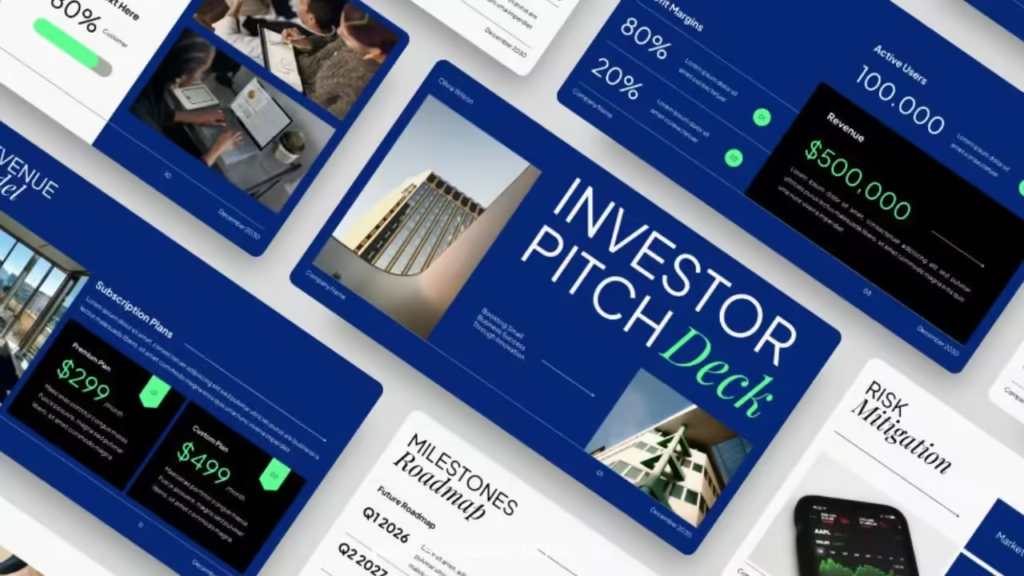
Pitch Deck Design Tips That Actually Move the Needle
Clean beats clever every time. Use consistent fonts (two max), plenty of white space, and high-quality visuals. Tools like Figma, Canva Pro, or Pitch work fine—investors care about content over pixel perfection in early decks.
- One idea per slide.
- No more than 5-7 lines of text.
- Charts should be instantly understandable.
- Include your logo and slide numbers.
- Create a PDF version and a live demo link version.
Pro move: Build two versions—one detailed for email, one shorter for in-person pitches.
Step-by-Step Action Plan: Building Your Deck in Two Weeks
Week 1:
- Interview 5-10 recent customers or prospects.
- Gather every traction metric you have.
- Draft the problem, solution, traction, and team slides first.
Week 2:
- Fill market, model, and ask.
- Get brutal feedback from 3-4 mentors or other founders.
- Design and iterate. Cut anything that doesn’t serve the story.
What I’d do: Record yourself presenting the deck. Time it under 10 minutes. If you can’t explain it clearly, the deck isn’t ready.
Common Mistakes When Building a Pitch Deck for Tech Startups
- Too many slides or too much text. Fix: Ruthlessly edit. If it needs explanation, move it to appendix or speaker notes.
- Ignoring angel investors criteria small tech startups. Fix: Explicitly address team, traction, and market size early.
- Hockey-stick fantasy numbers. Fix: Show conservative and optimistic cases with clear assumptions.
- Weak team slide. Fix: Focus on relevant accomplishments, not generic “serial entrepreneur.”
- No clear ask. Fix: Be specific about amount, terms, and milestones.
Remember: Your deck is a conversation starter, not a legal document. Save deep diligence for later.
How a Strong Deck Aligns with Angel Investors Criteria Small Tech Startups
Smart founders treat the pitch deck as proof they understand what angels actually evaluate. Strong team bios? Check. Early traction metrics? Highlighted. Realistic market sizing with a focused beachhead? Present. Clear path to scalability? Explained.
When your deck directly reflects those priorities, meetings convert at higher rates. Investors see you did your homework.
For deeper reading on what angels specifically look for, check this guide on angel investors criteria small tech startups.
Also review the Angel Capital Association for current US angel market data and Y Combinator’s Startup School resources for battle-tested advice.
Key Takeaways for Building a Winning Pitch Deck for Tech Startups
- Limit to 10-15 slides focused on problem, traction, team, market, and ask.
- Lead with proof—metrics beat vision slides every time.
- Design for three-minute skims, not deep reads.
- Directly address angel investors criteria small tech startups in your narrative.
- Get external feedback before sending.
- Make the ask crystal clear with use of funds and milestones.
- Keep language honest and specific—no hype.
- Test your deck by presenting it out loud.
Build this right and your deck stops being a hurdle. It becomes your best salesperson.
Start today: Open a blank deck and draft only the Problem and Traction slides using real customer language and numbers. Momentum starts with action.
FAQs
How long should a pitch deck for tech startups be in 2026?
10-15 slides maximum. Angels and early investors prefer concise decks that get to the point fast.
What is the most important slide in a winning pitch deck for tech startups?
Traction usually wins, followed closely by Team. Investors need evidence you can execute before they care about the vision.
Should I mention valuation in my pitch deck for tech startups?
Yes—in the Ask slide. Be specific about amount, pre-money valuation or SAFE terms, and exactly what the capital achieves. Vague asks kill momentum.