


Let’s be honest. Gaming gets expensive fast. One minute you’re just looking for something to unwind with, the next you’re staring at a new release price and thinking, surely this can’t be the only option. You tell yourself to just grin and bear it, maybe buy one game and make it last. Or you just deal with the backlog guilt and stop playing altogether for a bit.
We’ve all been there. You still love games, but the cost side of it starts to quietly ruin the fun.
The good news? Enjoying games on a tight budget isn’t about giving things up. It’s about changing how you think about them.
The pressure to keep up is the real problem
A lot of the frustration doesn’t come from gaming itself. It comes from the feeling that you’re always behind. New releases drop constantly. Events expire. Friends move on to the next thing. And suddenly it feels like if you’re not playing right now, you’re missing out.
That pressure is exhausting.
At some point, most of us realise we’re not actually enjoying the chase anymore. We’re just trying to escape the fear-of-missing-out that the industry quietly feeds on. Once that clicks, things start to feel lighter.
You don’t need every game. You don’t need to be there on day one. And you definitely don’t need to turn gaming into another monthly bill that stresses you out.
Free doesn’t have to mean boring
When money’s tight, the word “free” can feel like a downgrade. Like you’re settling. But that’s not really true anymore.
There are loads of free games that offer proper depth, long playtimes, and genuine fun without asking for upfront cash. The trick is knowing when to step back and avoid in-game spending that slowly turns “free” into expensive.
Set boundaries early. Decide what you’re comfortable with and stick to it. Once you stop feeling tempted by every limited-time offer, these games become a solid way to enjoy yourself without regret.
And on quieter days, something simple like online solitaire can be surprisingly relaxing. No pressure. No grind. Just a game doing exactly what it’s meant to do: help you switch off.
Subscriptions can work if you use them properly
Subscriptions get a bad reputation, and sometimes they deserve it. But used the right way, they can stretch your budget rather than drain it.
If you already own a console, choosing to subscribe to PlayStation Plus can make sense if you actually play the included games. It’s not about chasing every monthly title. It’s about seeing it as a rotating library instead of a must-play list.
Dip in when something interests you. Skip months when it doesn’t. You don’t owe the service your attention. That mindset alone makes it feel less stressful.
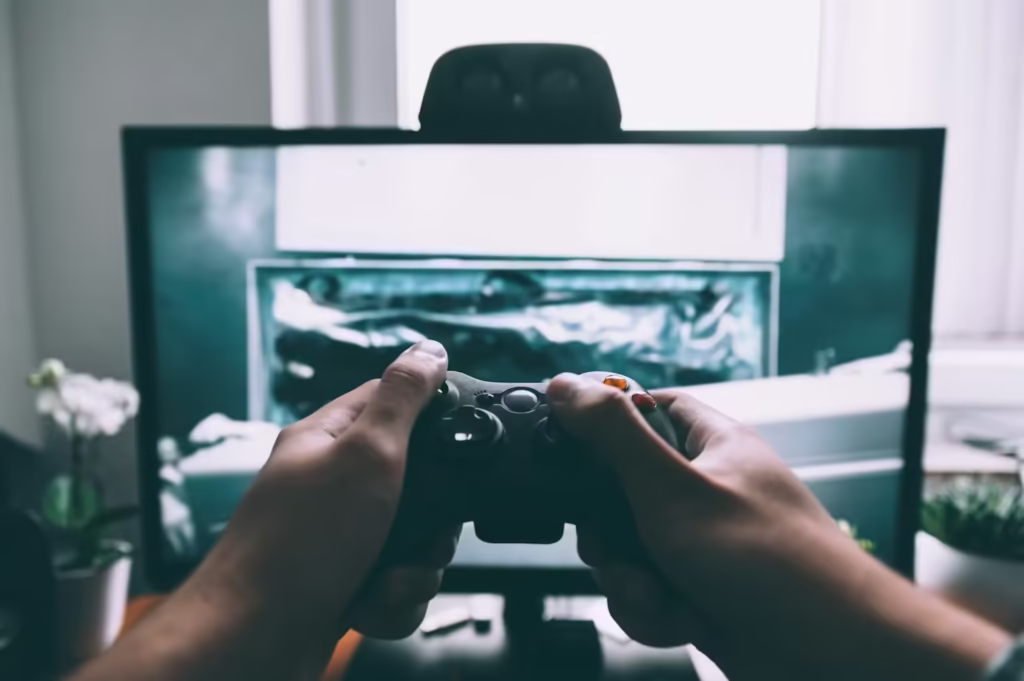
Source: Unsplash (CC0)
You stop buying games for who you think you should be
This one creeps up quietly. You realise you’ve been buying games for a version of yourself that doesn’t really exist. The one with endless time, unlimited energy, and no budget worries.
When you stop doing that, something clicks. You start choosing games that actually fit your life now. Slower. Familiar. Comfortable. And somehow, that feels way better than chasing the latest thing just because it’s new.
This is another one: avoiding free-to-play games because you think they’re low-quality, budget, and just designed to steal your money. Loads of people used to think this, instead choosing to pay for all of their games because surely they would be higher quality. Not the case anymore.
These days, free-to-play stuff arguably has an even higher budget than most other games because they make so much money on microtransactions and extras. So much so they can afford to pump out incredibly good content for no cost to the player. Just goes to show how much money the “whales” spend if they’re able to sustain these games.
Old games don’t suddenly stop being fun
There’s a strange idea that games have an expiry date. Like once something isn’t new, it’s no longer worth your time. That’s nonsense, and deep down we all know it.
This is usually when people start getting into retro games without even meaning to. You revisit something familiar. Or try something you missed the first time around. And suddenly you’re having more fun than you did with half the new releases you forced yourself to play.
Older games are often cheaper, simpler, and more focused on gameplay than monetisation. They respect your time in a way modern games sometimes forget to.
Enjoyment comes from how you play, not what you buy
Here’s the thing no one really says out loud: gaming stops being fun when it starts feeling like an obligation. Like you need to keep up, spend more, or justify every purchase.
When money’s tight, you’re forced to slow down. And weirdly, that’s often when gaming becomes enjoyable again. You play what you already have. You finish games. You stop rushing.
You realise you don’t need a massive library. You just need something that fits your mood.
Short sessions are still real gaming
There’s this unspoken idea that gaming only counts if you’ve got hours to sink into it. Long sessions. Big progress. Massive story beats. But when money’s tight, time often is too, right?
Short sessions are still valid. Jumping in for twenty minutes after a long day. Doing one level. One match. One puzzle. That’s still gaming. Letting go of the pressure to make every session feel productive makes the whole thing lighter and easier to enjoy.
The real shift happens quietly
There’s no big moment where everything changes. It usually happens slowly. You skip a release. You don’t care. You find a game that costs nothing and still holds your attention. You replay something old and actually enjoy it.
And at some point, you realise this was never about money. It was about expectations.
Once those drop, gaming feels like what it was meant to be all along. A way to relax. A way to escape. A way to enjoy your time, without worrying about your wallet every step of the way.


