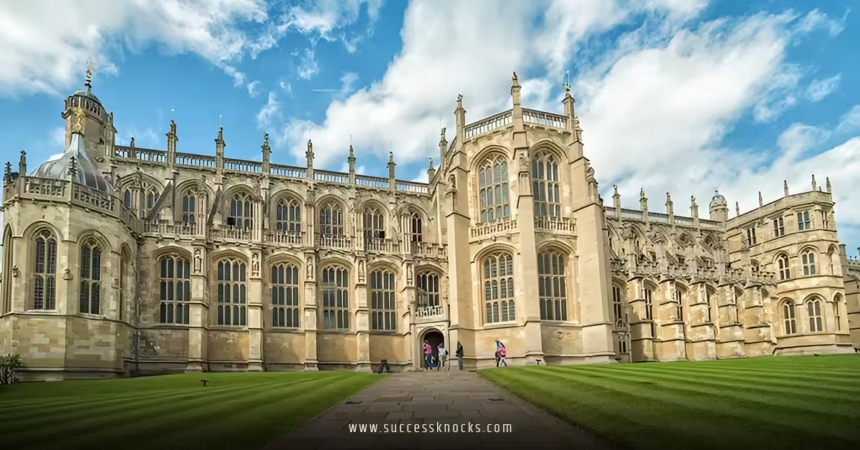
King George VI Memorial Chapel is a small, intimate annex attached to the north side of St George’s Chapel at Windsor Castle in England. It serves as the final resting place for King George VI, Queen Elizabeth The Queen Mother, Princess Margaret, Prince Philip Duke of Edinburgh, and Queen Elizabeth II.
This modern addition, completed in 1969, blends 20th-century design with the historic Gothic surroundings while honoring a king who led Britain through World War II.
- Location: North quire aisle of St George’s Chapel, Windsor Castle.
- Purpose: Private royal burial chapel commissioned by Queen Elizabeth II for her father and immediate family.
- Key occupants: Five members of the immediate royal family, including the late Queen and her husband.
- Design highlight: Pale stone structure with striking stained-glass windows by John Piper and Patrick Reyntiens.
- Access: Viewed during standard Windsor Castle visits (chapel interior visible but burial area respected with dignity).
The chapel offers a quiet counterpoint to the grand medieval spaces around it. Think of it as the royal family’s personal footnote in a centuries-old book of stone and ceremony. No fanfare. Just solemn continuity.
What Makes the King George VI Memorial Chapel Special
You step into St George’s Chapel expecting soaring Perpendicular Gothic arches, fan vaults, and the weight of 500+ years of history. Then you reach this modest extension tucked behind the north quire aisle.
It feels different on purpose.
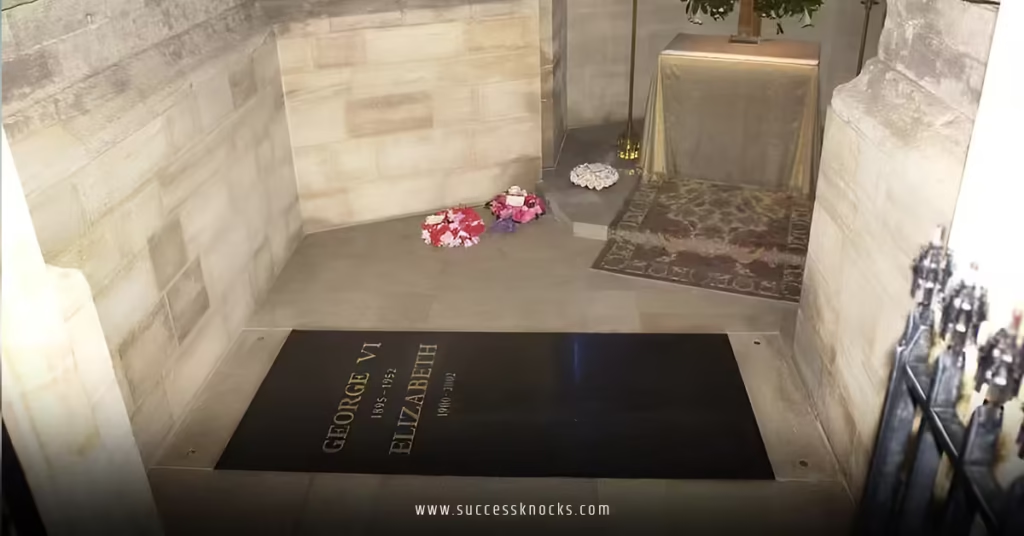
The King George VI Memorial Chapel measures roughly 18 feet high, 10 feet wide, and 14 feet deep. Architect George Pace designed it with clean lines that echo the older chapel yet speak a 1960s language. Pale Clipsham stone from Rutland forms the walls. A black ledger stone set into the floor marks the interment chamber below.
Red and blue stained-glass windows by artist John Piper and craftsman Patrick Reyntiens add subtle color. The roof features black-and-white paintwork with embedded gold leaf. An altar holds a bronze relief portrait of George VI by Sir William Reid Dick.
The whole space feels restrained. Intentional. Like a quiet room added to a noisy house so the family could have one place that was truly theirs.
Queen Elizabeth II commissioned the chapel in 1962. Her father had died unexpectedly in 1952 at age 56. He was first placed in the Royal Vault. No permanent spot had been prepared. The new chapel fixed that. Construction finished in 1969 at a cost of £25,000 (a significant sum then, funded privately by the Queen). King George VI’s remains moved there on 26 March 1969. The chapel was dedicated days later.
Who Is Buried in the King George VI Memorial Chapel
This isn’t a sprawling mausoleum. Space is deliberately limited.
Here’s the current list of those interred:
- King George VI (died 1952, moved here 1969)
- Queen Elizabeth The Queen Mother (died 2002)
- Princess Margaret, Countess of Snowdon (died 2002, ashes)
- Prince Philip, Duke of Edinburgh (died 2021)
- Queen Elizabeth II (died 2022)
All rest together in the vault beneath the chapel floor. A single black stone slab covers the area above. No individual monuments crowd the small space. The simplicity reinforces the message: this is a family plot, not a public spectacle.
Compare that to the main St George’s Chapel, where earlier monarchs like Henry VIII, Charles I, and others have more prominent tombs or vaults. The memorial chapel keeps things intimate on purpose.
Why the Queen Chose This Spot
King George VI’s reign was defined by duty during crisis. He never expected the throne—his brother Edward VIII abdicated—but he rose to the moment. The “reluctant king” became a symbol of steady leadership through war, rationing, and national strain.
His daughter Elizabeth II wanted a burial place that reflected personal respect rather than grand royal tradition. She picked the site herself and oversaw the project. Later, she and Prince Philip joined her parents and sister there.
In a way, the chapel completes a circle. George VI’s quiet strength shaped the modern monarchy. His daughter’s long reign extended that legacy. Now they lie side by side in the space she created.
Visiting the King George VI Memorial Chapel
You won’t enter the memorial chapel itself as a regular visitor. It’s a private royal space within the active place of worship. But you can see the exterior and approach the area during your tour of St George’s Chapel.
Here’s a practical visitor checklist:
- Ticket: Included with standard Windsor Castle admission (book via the Royal Collection Trust).
- Best days: Mondays, Thursdays, Fridays, Saturdays. Chapel generally open 10am–4pm, though access may close earlier if crowds build.
- Closed days: Typically Tuesdays, Wednesdays, and Sundays for general visitors (worshippers may attend services).
- What you’ll see: The pale stone annex on the north side, behind the North Quire Aisle. Look for the modern lines contrasting with medieval buttresses.
- Etiquette: Keep voices low. No photos inside the main chapel during services. Respect the solemn nature near the memorial area.
Pro tip from experience: Arrive early in the day. Visitor numbers can limit access after 2:30pm. Combine your visit with the State Apartments or the castle grounds for a full half-day experience.
Services in St George’s Chapel remain open to the public on many days—no ticket needed if you come specifically for worship. The choir and music often make those moments memorable.
Design and Architecture Breakdown
Pace’s design bridges eras without shouting about it.
The chapel projects from the north wall between two buttresses. It uses traditional materials but in a restrained 20th-century idiom. No excessive ornamentation. The focus stays on light, proportion, and quiet dignity.
Key features at a glance:
| Feature | Description | Why It Matters |
|---|---|---|
| Stone | Pale Clipsham limestone | Harmonizes with existing chapel |
| Windows | Red/blue stained glass by Piper & Reyntiens | Adds subtle modern color |
| Roof | Black/white with gold leaf | Elegant contrast |
| Altar | Bronze relief of George VI | Personal tribute |
| Floor | Black ledger stone over vault | Simple, unified marker |
| Size | ~18 ft high, 10 ft wide, 14 ft deep | Intimate family scale |
The result? A space that feels contemporary yet timeless. It doesn’t compete with St George’s medieval glory. It complements it.
Step-by-Step: Planning Your Windsor Castle Visit Focused on the Chapel
Beginners often feel overwhelmed by the scale of Windsor. Here’s a straightforward action plan:
- Book tickets online in advance through the official Royal Collection Trust site. Choose a morning slot if possible.
- Enter the castle and head toward the Lower Ward. St George’s Chapel sits prominently on the north side.
- Start inside the main chapel. Walk the nave and quire first to appreciate the Gothic context.
- Move to the north quire aisle. Pause near the memorial chapel extension. Take in the exterior details and the overall setting.
- Attend a service if your schedule allows. It’s free and gives a living sense of the space.
- Exit respectfully and explore the castle grounds or town afterward.
Rule of thumb: Allow at least 45–60 minutes for the chapel area alone. Add time for security queues and crowds.
What I’d do: Pair this with a walk along the Long Walk or a look at the changing of the guard (check timings). It turns a history stop into a fuller day.
Common Mistakes Visitors Make (and How to Fix Them)
- Mistake: Expecting to stand directly over the burial stone or take close-up photos.
Fix: Understand the area is treated with dignity. View from appropriate distance and focus on the architecture. - Mistake: Showing up on a Tuesday or Wednesday expecting full access.
Fix: Double-check current opening days on official sites before travel. Schedules can shift for services or events. - Mistake: Rushing through without context.
Fix: Read a bit about George VI beforehand. The visit lands differently when you know the king’s story. - Mistake: Ignoring crowd flow in peak season.
Fix: Go early or late in the allowed window. Or visit off-peak months if your schedule is flexible.
Key Takeaways
- The King George VI Memorial Chapel is a compact 1969 annex to St George’s Chapel at Windsor Castle.
- It was built specifically as a family burial place for King George VI and his immediate descendants.
- Five royals now rest there: George VI, the Queen Mother, Princess Margaret, Prince Philip, and Queen Elizabeth II.
- The design by George Pace mixes modern restraint with historic respect.
- Visitors can view the exterior and setting during standard castle hours (Mondays, Thursdays–Saturdays).
- The space emphasizes personal family continuity over public grandeur.
- It reflects Queen Elizabeth II’s wish to honor her father thoughtfully.
- Access requires a Windsor Castle ticket; the chapel remains an active worship site.
Conclusion
The King George VI Memorial Chapel doesn’t try to steal the show from the grand medieval masterpiece next door. It doesn’t need to. Its power lies in quiet purpose—a dedicated space where a wartime king, his queen, their daughters, and a modern consort rest together.
For beginners exploring British royal history, it offers a tangible link between past duty and present legacy. You see the continuity in stone. You feel the weight of a family’s private choice amid public tradition.
Next step? Book that Windsor Castle ticket and walk the same paths generations of royals have taken. Stand near the pale stone extension. Let the details speak for themselves.
Simple. Powerful. Worth the journey.
FAQs
1. What is the King George VI Memorial Chapel?
The King George VI Memorial Chapel is a small, intimate annex attached to the north side of St George’s Chapel at Windsor Castle. Commissioned by Queen Elizabeth II and completed in 1969, it serves as the private final resting place for King George VI, Queen Elizabeth The Queen Mother, Princess Margaret, Prince Philip Duke of Edinburgh, and Queen Elizabeth II.
2. Who is buried in the King George VI Memorial Chapel?
Five members of the British royal family are interred there: King George VI (moved in 1969), Queen Elizabeth The Queen Mother (2002), Princess Margaret (ashes, 2002), Prince Philip, Duke of Edinburgh (2022), and Queen Elizabeth II (2022). They rest together in a vault beneath a single black ledger stone.
3. Can visitors go inside the King George VI Memorial Chapel?
No, the King George VI Memorial Chapel is a private royal burial space and is not open to the public for entry. Visitors can view its pale stone exterior and setting from within St George’s Chapel during standard Windsor Castle opening hours.
4. When was the King George VI Memorial Chapel built and why?
Construction of the King George VI Memorial Chapel began in 1962 and was completed in 1969. Queen Elizabeth II commissioned it as a dignified, family-focused burial place for her father, King George VI, who had initially been placed in the Royal Vault. It later became the resting place for her mother, sister, husband, and herself.
5. How does the King George VI Memorial Chapel connect to St George’s Chapel Windsor Castle?
The King George VI Memorial Chapel is physically attached to the north quire aisle of the historic St George’s Chapel. Designed by architect George Pace, its clean 20th-century lines respectfully complement the 15th–16th century Perpendicular Gothic architecture of the main chapel while providing a more personal space for recent royal burials.