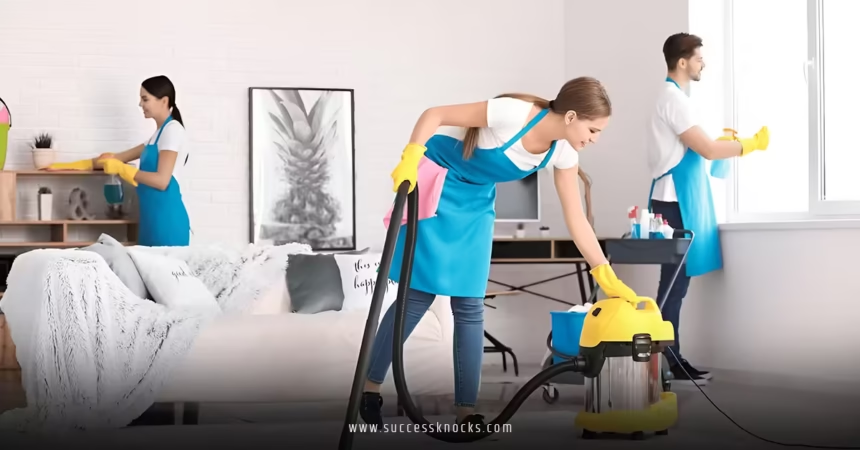
Launching a cleaning business in 2026 offers a promising path to entrepreneurship, blending low startup costs with high demand in residential and commercial sectors.
Overview Summary
Starting a cleaning business involves strategic planning, legal setup, and smart marketing to build a sustainable operation. In 2026, leverage trends like eco-friendly services and digital tools for a competitive edge.
- Key steps covered: From idea validation to scaling, including budgeting, hiring, and SEO strategies.
- Essential tools: Free resources like business plan templates and online marketing platforms.
- Potential returns: Small cleaning businesses can achieve 20-30% profit margins with efficient operations, based on industry reports from the Small Business Administration.
- Why act now: With the cleaning industry growing due to post-pandemic hygiene focus, early movers can capture market share.
- Quick tip: Begin with market research to identify your niche, such as specialized services for offices or homes.
Why Launch a Cleaning Business in 2026
The cleaning industry is booming, with projections from the International Cleaning Association indicating a 5-7% annual growth rate through 2026, driven by increased awareness of health and sustainability. Launching now allows you to tap into this demand while incorporating innovative practices like green cleaning products, which appeal to eco-conscious consumers.
A cleaning business offers flexibility—you can start small from home and scale up, with low entry barriers compared to other sectors. Whether focusing on residential deep cleans or commercial janitorial services, the potential for recurring revenue through contracts makes it a resilient choice in uncertain economies.
Market Research and Niche Selection
Before diving in, thorough market research ensures your cleaning business meets real needs and stands out.
Market research is the process of gathering data on your target audience, competitors, and trends to inform your strategy.
- Identify your niche: Options include residential cleaning, office maintenance, eco-friendly services, or specialized areas like post-construction cleanup. For instance, in 2026, demand for eco-friendly options is rising due to regulations.
- Analyze competitors: Use tools like Google Trends or SEMrush to evaluate local players. Look for gaps, such as underserved areas or unique services.
- Gather customer insights: Conduct surveys or interviews to understand pain points, like the need for reliable scheduling or pet-safe products.
- Trend spotting: Stay ahead by following reports from sources like the Environmental Protection Agency, which highlight the shift toward sustainable cleaning methods.
This step helps you tailor your offerings, avoiding the generic approach that many new businesses overlook.
Creating a Solid Business Plan
A well-crafted business plan acts as your roadmap, outlining goals, strategies, and financial projections.
Start with an executive summary that captures your vision, then detail your market analysis, services, marketing plan, and financial forecasts.
- Set clear objectives: Define short-term goals, like acquiring 20 clients in the first six months, and long-term ones, such as expanding to multiple locations.
- Financial projections: Estimate startup costs (e.g., equipment at $1,000–$5,000) and ongoing expenses. Include break-even analysis based on average rates of $20–$50 per hour.
- SWOT analysis: Assess strengths (e.g., your expertise), weaknesses (e.g., lack of experience), opportunities (e.g., growing demand), and threats (e.g., economic downturns).
- Resource tools: Use free templates from the Small Business Administration to streamline the process.
A strong plan not only guides your operations but also attracts investors if needed.
Legal and Financial Setup
Navigating legal requirements is crucial to avoid pitfalls and ensure compliance.
- Business structure: Choose between sole proprietorship, LLC, or corporation based on liability needs. For a cleaning business, an LLC offers protection and is straightforward to set up.
- Licenses and insurance: Obtain necessary permits, like a business license, and secure liability insurance to cover accidents—essential in 2026’s stricter regulations.
- Financial aspects: Open a business bank account and track taxes using software like QuickBooks. Consider funding options, such as small loans from the U.S. Department of Commerce.
- Edge cases: If operating in multiple states, check for varying regulations to prevent compliance issues.
This foundation builds trust with clients and protects your investment.
Branding and Naming Your Business
Branding sets you apart, starting with a memorable name that reflects your identity.
When launching a cleaning business, your name is key to first impressions. For inspiration and detailed strategies, explore our guide on cleaning firm names, which covers creative ideas and best practices.
- Develop your brand: Create a logo, color scheme, and tagline that convey reliability and professionalism.
- Naming tips: Opt for names that are easy to spell and search-friendly, incorporating keywords like “clean” or “shine.”
- Digital presence: Secure a domain and social media handles early to establish your online footprint.
Effective branding enhances customer loyalty and SEO performance.
Operations and Service Delivery
Efficient operations ensure repeat business and positive reviews.
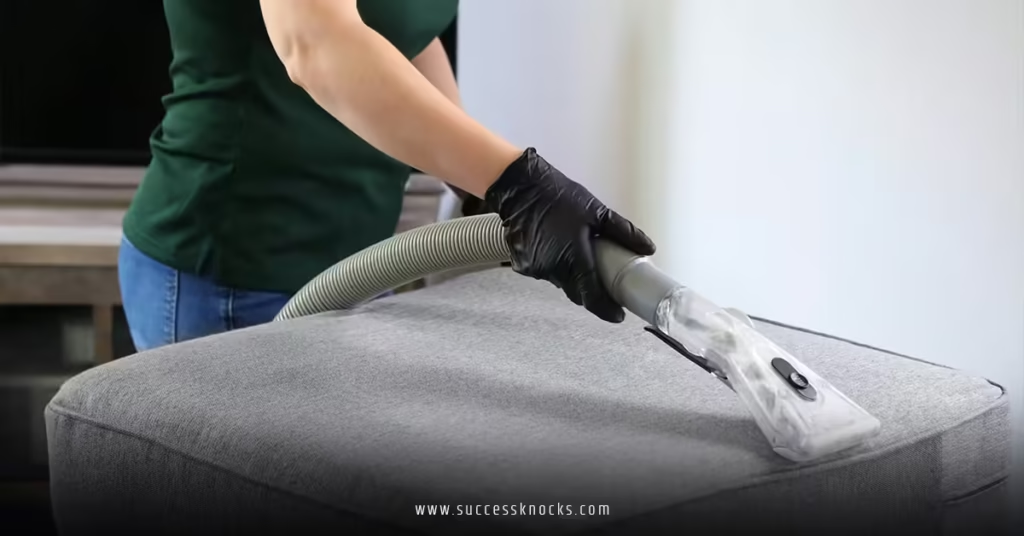
- Equipment and supplies: Invest in quality tools like vacuums and eco-friendly cleaners, budgeting for initial costs.
- Hiring and training: Start solo or hire reliable staff; provide training on safety and customer service.
- Service standardization: Create checklists for jobs to maintain consistency, such as pre- and post-cleaning inspections.
- Technology integration: Use apps for scheduling and invoicing, like those from Google Workspace, to streamline workflows.
For scenarios like seasonal demand, plan flexible staffing to handle fluctuations.
Marketing Strategies for Growth
In 2026, digital marketing is non-negotiable for visibility.
- SEO basics: Optimize your website with keywords like “launching a cleaning business” in titles and content to rank higher on search engines.
- Social media and content: Share tips on platforms like Instagram, and create blog posts to attract organic traffic.
- Local tactics: Use Google My Business for listings and offer promotions to build a client base.
- Paid advertising: Experiment with targeted ads on Facebook, focusing on ROI through conversion tracking.
Track metrics like website traffic to refine your approach, ensuring a strong return on investment.
Common Mistakes and How to Avoid Them
New entrepreneurs often face hurdles; here’s how to navigate them.
- Mistake 1: Underestimating costs. Fix: Build a detailed budget with a 20% buffer for unexpected expenses.
- Mistake 2: Ignoring marketing. Fix: Allocate at least 10-15% of your budget to promotion from day one.
- Mistake 3: Poor customer service. Fix: Train staff on communication and follow-up to foster loyalty.
- Mistake 4: Scaling too quickly. Fix: Focus on a few clients initially to refine processes.
- Mistake 5: Neglecting legalities. Fix: Consult resources like the Internal Revenue Service for tax guidance.
Step-by-Step Action Plan for Beginners
Follow this timeline to launch smoothly within three months.
- Month 1: Research and Planning – Conduct market analysis and write your business plan.
- Month 2: Setup Phase – Handle legal registrations, branding, and initial marketing.
- Month 3: Launch and Grow – Start operations, gather feedback, and scale services.
- If-then guidance: If you face funding issues, explore grants; if demand surges, hire immediately.
Question: What Are the Biggest Challenges in Launching a Cleaning Business?
Direct answer: The main challenges include competition, cash flow management, and maintaining quality standards.
Details: In 2026, standing out in a crowded market requires strong branding and SEO, while cash flow can be managed through careful budgeting. According to insights from the American Cleaning Institute, consistent training helps uphold service quality.
Experience-Based Tips from the Field
With years in the industry, I’ve seen what works.
- What I’d recommend: Focus on niche services, like eco-cleaning, for higher margins.
- What to avoid: Overpromising on timelines, which can lead to negative reviews.
- Proven strategies: Use referral programs to grow your client base organically.
- Real insight: One startup I advised doubled revenue by prioritizing online reviews.
Key Takeaways
- Conduct thorough market research to identify your niche.
- Develop a comprehensive business plan for guidance.
- Ensure legal and financial setups are in place early.
- Invest in branding, including a strong name.
- Streamline operations and marketing for efficiency.
- Learn from common mistakes to build a resilient business.
- Follow the action plan for a structured launch.
Conclusion
Launching a cleaning business in 2026 can lead to rewarding growth with the right preparation. By implementing these strategies, you’ll create a foundation for success and client satisfaction. Take the first step today by outlining your plan.
About the Author
Alex Watson
With 12 years in business development, I’ve launched multiple service-based ventures.
FAQs
What steps are involved in launching a cleaning business?
Start with market research, then move to planning, legal setup, and marketing for a solid foundation.
How important is branding when launching a cleaning business?
Crucial, as it differentiates you; check our cleaning firm names guide for ideas.
What marketing strategies work best for a new cleaning business?
Focus on SEO, social media, and local networking to attract initial clients.
How can I handle financial challenges?
Budget carefully and consider low-cost tools from government sites.
Is launching a cleaning business scalable?
Yes, with proper planning, you can start small and expand to multiple services or locations.