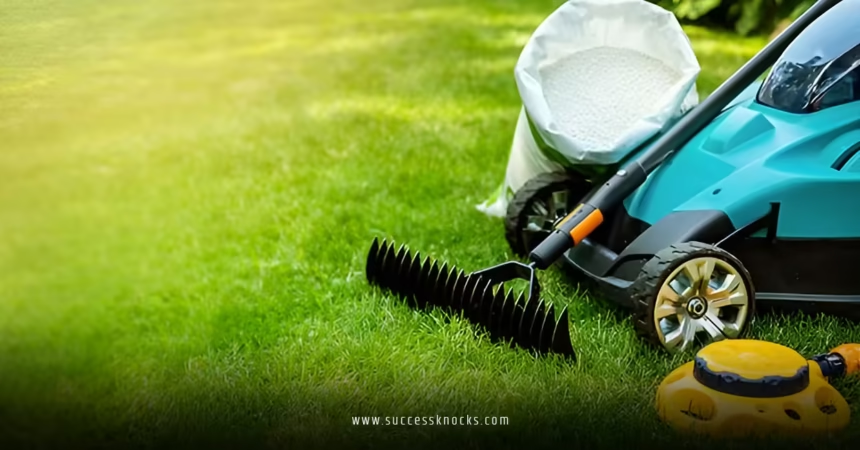
Lawn care equipment financing can make or break your business dreams before they even start. Quality commercial mowers, trimmers, and trucks aren’t cheap—we’re talking $15,000 to $50,000+ for a basic setup. But here’s the reality: you need professional-grade gear to compete, and most entrepreneurs don’t have that kind of cash sitting around.
Smart financing bridges the gap between ambitious plans and practical limitations. The trick is choosing the right funding strategy that accelerates growth without crushing cash flow.
Quick Financing Overview for Lawn Care Equipment
• Equipment loans: 3-7 year terms, equipment as collateral, rates from 6-20% • Leasing options: Lower monthly payments, upgrade flexibility, tax advantages • SBA loans: Government-backed, competitive rates, longer approval process • Alternative funding: Faster approval, higher costs, shorter terms • Dealer financing: Convenient but often expensive, limited to specific brands
The lawn care industry generates consistent revenue streams, making it attractive to lenders. But not all financing is created equal.
Why Equipment Financing Makes Sense for Lawn Care
Think of equipment financing like a mortgage for your business. You’re borrowing against an asset that generates income from day one. Unlike unsecured business loans, equipment serves as collateral, reducing lender risk and your interest rates.
The cash flow advantage is huge. Instead of depleting your entire savings account on equipment, financing preserves working capital for marketing, fuel, insurance, and unexpected expenses. That financial cushion often determines which businesses survive their first challenging season.
Tax benefits sweeten the deal. Section 179 deduction allows businesses to write off up to $1,160,000 in equipment purchases for 2026, according to the IRS guidelines. Even financed equipment qualifies for these deductions.
Faster growth trajectory. Quality equipment handles more properties efficiently, enabling quicker customer base expansion. The revenue difference between commercial and residential-grade equipment often justifies financing costs within the first season.
Equipment Financing Options: The Complete Breakdown
Traditional Equipment Loans
Banks and credit unions offer equipment loans specifically for business purchases. The equipment itself secures the loan, typically covering 80-100% of purchase price.
Advantages:
- Lower interest rates than unsecured loans
- Fixed monthly payments for budget planning
- Build business credit history
- Own equipment immediately
Disadvantages:
- Requires good credit score (typically 650+)
- Down payment often required (10-20%)
- Lengthy approval process (2-6 weeks)
- Personal guarantees usually required
Best for: Established operators with solid credit looking to upgrade or expand fleet.
Equipment Leasing Programs
Leasing is essentially renting equipment with option to purchase at lease end. Monthly payments are typically 20-30% lower than loan payments.
| Lease Type | Ownership | Tax Treatment | Best For |
|---|---|---|---|
| Capital Lease | Yes (eventually) | Depreciation deduction | Long-term equipment needs |
| Operating Lease | No | Full payment deduction | Frequent upgrades, seasonal use |
| Lease-to-Own | Yes | Varies by structure | Testing equipment before committing |
The upgrade advantage: Technology evolves rapidly in lawn care. Leasing allows access to latest equipment without being stuck with outdated gear.
Hidden costs watch out for: Maintenance requirements, mileage limits, wear-and-tear charges, and early termination fees can add up quickly.
SBA Equipment Financing
Small Business Administration loans offer government backing that reduces lender risk, resulting in better terms for borrowers. The SBA 504 program specifically targets equipment and real estate purchases.
SBA 504 Program highlights:
- Up to $5.5 million in financing
- Fixed rates (currently 6-8% range)
- 10-20 year terms
- Requires 10% down payment
The catch? Approval takes 60-90 days and requires extensive paperwork. But for major equipment purchases, the savings justify the hassle.
Eligibility requirements include operating for-profit business, meeting size standards, and using equipment primarily in the U.S. Most lawn care operations qualify easily.
Dealer and Manufacturer Financing
Equipment dealers often partner with finance companies to offer on-the-spot approval. Walk in, pick your mower, drive away financed—it’s convenient but usually expensive.
Dealer financing pros:
- Instant decisions
- Promotional rates (sometimes 0% for qualified buyers)
- One-stop shopping experience
- Established equipment relationships
The downsides:
- Limited to specific brands/dealers
- Higher rates than bank financing
- Pressure sales tactics
- Less negotiation flexibility
Pro tip: Get pre-approved elsewhere before visiting dealers. Use outside financing as leverage for better pricing or terms.
Alternative Lending Solutions
Online lenders and fintech companies have revolutionized business financing. They prioritize speed and convenience over traditional credit requirements.
Alternative options include:
- Equipment-specific online lenders
- Merchant cash advances
- Revenue-based financing
- Peer-to-peer lending platforms
The trade-off: Faster approval and relaxed credit requirements come with higher costs. Interest rates can range from 15-50% annually, making these options expensive for long-term financing.
When alternative lending makes sense: Emergency equipment replacement, seasonal cash flow gaps, or when traditional financing isn’t available.
Calculating the True Cost of Equipment Financing
Numbers don’t lie, but financing terms can be confusing. Here’s how to compare options accurately.
Total cost formula: (Monthly Payment × Number of Payments) + Down Payment + Fees – Residual Value = Total Cost
Example comparison for $25,000 mower:
| Option | Down Payment | Monthly Payment | Term | Total Cost |
|---|---|---|---|---|
| Cash Purchase | $25,000 | $0 | 0 | $25,000 |
| Bank Loan (8%) | $2,500 | $456 | 60 months | $29,860 |
| Equipment Lease | $0 | $389 | 60 months | $23,340* |
| Dealer Finance (12%) | $1,000 | $534 | 60 months | $33,040 |
*Assumes $5,000 residual value
The hidden costs lurking in contracts:
- Origination fees (1-5% of loan amount)
- Documentation fees ($100-500)
- Early payoff penalties
- Insurance requirements
- Maintenance obligations
Interest rate reality check: A 5% difference in interest rates costs thousands over a 5-year term. Shopping around pays off literally.
Equipment Categories and Financing Strategies
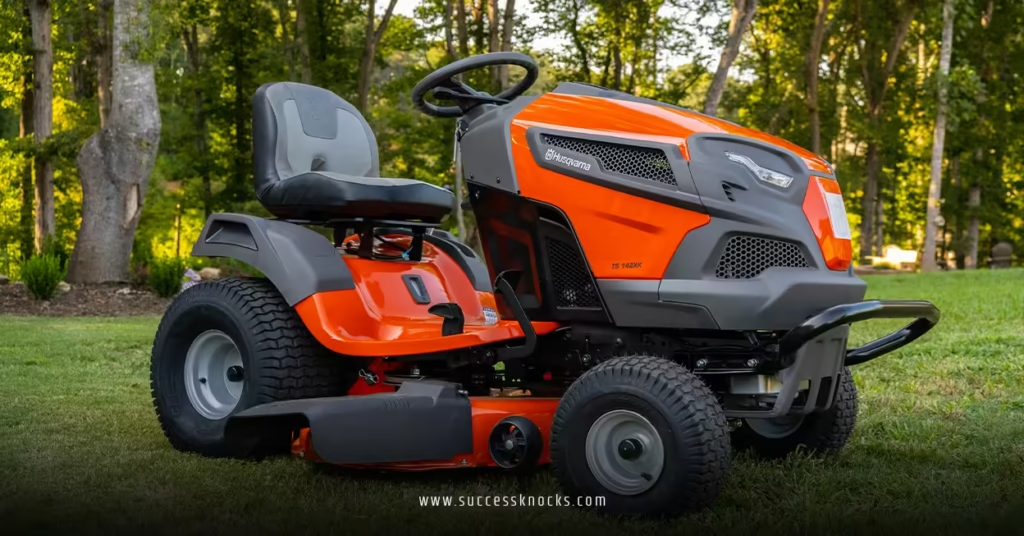
Commercial Mowers ($8,000 – $50,000)
Zero-turn mowers are the workhorses of lawn care operations. These represent your largest equipment investment and generate the most revenue.
Financing recommendation: Traditional equipment loan or SBA financing for large purchases. The long useful life (7-10 years) justifies longer repayment terms.
Lease vs. buy consideration: Leasing makes sense if you plan to upgrade every 3-4 years or operate seasonally. Buying builds equity for businesses planning long-term growth.
Trucks and Trailers ($15,000 – $60,000)
Transportation is non-negotiable for lawn care operations. Reliable vehicles impact every aspect of your business from customer perception to operational efficiency.
Commercial vehicle financing often offers better rates than standard auto loans. Some lenders specialize in work trucks and understand lawn care industry needs.
The trailer decision: Enclosed trailers protect equipment and project professional image but cost 40-60% more than open trailers. Consider your target market and security needs.
Hand Tools and Accessories ($2,000 – $8,000)
Trimmers, blowers, and hand tools typically don’t require financing individually. But a complete toolkit adds up quickly.
Credit line strategy: Business credit line provides flexibility for smaller purchases and seasonal equipment needs. Pay down during busy season, use available credit for repairs or replacements.
Qualifying for Equipment Financing: What Lenders Want
Credit score impact:
- 740+: Prime rates and best terms
- 650-740: Good rates with standard terms
- 580-650: Higher rates, larger down payments
- Below 580: Alternative lenders or cosigner required
Financial documentation lenders require:
- 2+ years of tax returns
- Recent bank statements (3-6 months)
- Profit & loss statements
- Equipment quotes and specifications
- Personal financial statement
For new businesses lacking financial history, lenders focus on:
- Industry experience and expertise
- Personal credit and assets
- Business plan quality and realism
- Down payment amount
The personal guarantee reality: Most small business equipment loans require personal guarantees, putting personal assets at risk. Factor this into your decision-making process.
Strategic Financing for Growth
Timing your equipment purchases around cash flow cycles maximizes financing efficiency. Many lawn care operators finance major purchases in fall/winter when rates are competitive and equipment dealers are motivated.
The fleet expansion strategy: Instead of buying all equipment upfront, finance one quality mower and add equipment as customer base grows. This approach matches debt payments with revenue increases.
Seasonal considerations:
- Spring: Equipment demand peaks, financing may be more expensive
- Summer: Focus on revenue generation, avoid major purchases
- Fall: Equipment deals available, plan next year’s purchases
- Winter: Best financing rates, manufacturer incentives
How to start a lawn mowing business with limited capital often requires creative financing combinations. Many successful operators blend personal savings, equipment financing, and credit lines to minimize startup costs while maintaining growth flexibility.
Common Financing Mistakes That Cost Money
Mistake #1: Focusing only on monthly payment Fix: Compare total cost of financing, not just monthly payment. A longer term with lower payment often costs more overall.
Mistake #2: Ignoring residual values in lease calculations Fix: Factor in equipment value at lease end. High residual values make leasing more expensive than it appears.
Mistake #3: Financing depreciating assets for maximum terms Fix: Match financing term to equipment useful life. Avoid being upside-down on loans longer than necessary.
Mistake #4: Neglecting insurance requirements Fix: Factor insurance costs into financing decisions. Some lenders require comprehensive coverage that adds significant monthly expense.
Mistake #5: Not shopping around Fix: Get quotes from banks, credit unions, online lenders, and dealers. Rate differences of 2-3% are common between lenders.
Building Equipment Credit for Future Growth
Establish dedicated business credit separate from personal credit. This protects personal assets and provides access to larger credit lines as business grows.
Payment history matters most. Making equipment loan payments on time builds credibility for future financing needs. Late payments damage relationships and increase future costs.
Relationship banking pays dividends. Developing relationships with local banks or credit unions often leads to preferential rates and faster approvals for future equipment needs.
The credit utilization strategy: Maintaining available credit demonstrates financial stability to future lenders. Don’t max out all available financing immediately.
Key Financing Takeaways
• Match financing term to equipment life: Avoid paying for equipment longer than its useful business life • Shop multiple lender types: Banks, credit unions, online lenders, and dealers all offer different advantages • Calculate total cost, not monthly payment: Lower payments often mean higher total costs over time • Preserve working capital: Financing enables equipment purchase while maintaining cash for operations • Build business credit systematically: Equipment loans help establish credit history for future growth • Consider lease vs. buy based on usage: Frequent upgrades favor leasing, long-term use favors purchasing • Factor tax benefits into decisions: Section 179 deductions and depreciation affect true equipment costs • Plan for seasonal cash flow variations: Equipment payments continue year-round while revenue fluctuates
Alternative Strategies When Traditional Financing Falls Short
Equipment rental for peak season. Short-term rentals handle increased demand without long-term debt commitment. Daily rates seem expensive, but the flexibility has value for growing businesses.
Used equipment financing opens doors when new equipment budgets are stretched. Many lenders finance equipment up to 10 years old if it’s well-maintained.
Partnership arrangements with established operators can provide access to equipment and training. Some experienced business owners mentor newcomers in exchange for labor or revenue sharing.
The gradual acquisition strategy: Start with essential equipment and add pieces as revenue supports additional payments. This approach builds credit history while matching debt to income.
Conclusion
Lawn care equipment financing transforms business dreams into operating reality. The right financing strategy provides access to professional equipment while preserving cash flow and enabling sustainable growth.
Don’t let equipment costs derail your lawn care ambitions. Multiple financing paths exist for every credit situation and business stage. The key is matching financing terms to your specific needs and growth timeline.
Smart financing accelerates success. Poor financing decisions create unnecessary obstacles. Choose wisely, and watch your equipment work for you instead of against you.
Start comparing your options today. Your future customers are waiting for the professional service that quality equipment makes possible.
Frequently Asked Questions
Q: What credit score do I need for lawn care equipment financing?
A: Most traditional lenders prefer credit scores of 650 or higher for equipment loans. Scores above 740 qualify for the best rates. Alternative lenders may approve scores as low as 580, but at significantly higher costs.
Q: Should I lease or buy lawn care equipment?
A: Buy if you plan to use equipment for its full useful life (7-10 years for mowers). Lease if you want to upgrade frequently, operate seasonally, or need to preserve cash flow. Consider total cost, not just monthly payments.
Q: How much down payment is required for equipment financing?
A: Traditional equipment loans typically require 10-20% down payment. SBA loans require 10% minimum. Some dealer financing programs offer zero down for qualified buyers, but usually at higher interest rates.
Q: Can I finance used lawn care equipment?
A: Yes, many lenders finance used equipment up to 10 years old. Interest rates are typically 1-3% higher than new equipment financing. The equipment’s condition, age, and brand affect approval and terms.
Q: What happens if I can’t make equipment loan payments?
A: The lender can repossess the equipment since it serves as loan collateral. This damages business credit and may require personal assets to cover any remaining loan balance after equipment sale.