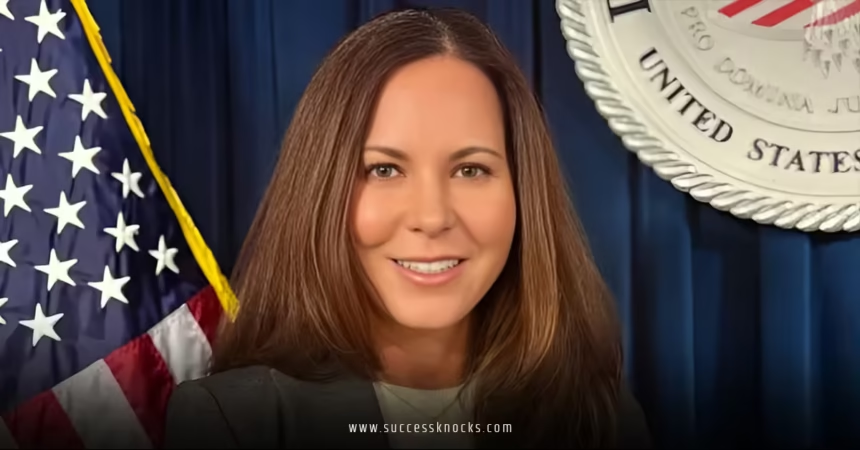
Leah Foley SNAP benefits fraud case Massachusetts has captured widespread attention recently, shining a spotlight on how vulnerabilities in public assistance programs can be exploited. As the U.S. Attorney for the District of Massachusetts, Leah Foley stepped up to announce a major crackdown on a multimillion-dollar scheme that diverted funds meant for struggling families. Have you ever wondered how something designed to help the needy could turn into a lucrative criminal operation? Let’s dive into the details—it’s a story that mixes greed, oversight gaps, and a push for accountability.
Understanding the Leah Foley SNAP Benefits Fraud Case Massachusetts
At its core, the Leah Foley SNAP benefits fraud case Massachusetts revolves around federal charges against two Boston-area store owners accused of trafficking nearly $7 million in Supplemental Nutrition Assistance Program (SNAP) benefits. Leah Foley, leading the prosecution, highlighted how these small storefronts in Mattapan became hubs for illegal transactions, exchanging EBT cards for cash instead of food.
Think about it: SNAP is like a lifeline for over a million Massachusetts residents, providing electronic benefits to buy groceries. But in this instance, the system was allegedly gamed in a way that left taxpayers footing the bill while genuine recipients potentially went without full support. The case underscores the delicate balance between aiding those in need and preventing abuse.
Key Players in the Leah Foley SNAP Benefits Fraud Case Massachusetts
Leah Foley, the U.S. Attorney, took center stage in revealing the allegations during a press conference. She didn’t mince words, describing the operation as turning a vital safety net into a “criminal enterprise.” The accused are Antonio Bonheur, owner of Jesula Variety Store, and Saul Alisme, owner of Saul Mache Mixe Store—two modest shops sharing a storefront on Blue Hill Avenue.
These weren’t sprawling supermarkets with aisles of produce and meats. One was barely 150 square feet, the other around 500, with sparse shelves and no shopping carts. Yet, they reportedly redeemed hundreds of thousands in SNAP benefits monthly—far outpacing legitimate large grocers. It’s like expecting a lemonade stand to outsell a major chain; the numbers just didn’t add up.
How the Alleged Fraud Operated in the Leah Foley SNAP Benefits Fraud Case Massachusetts
Ever hear the phrase “too good to be true”? That’s the vibe here. Prosecutors claim the owners personally handled transactions, swiping EBT cards for fake purchases or direct cash handouts, often at a discount—recipients might get 50 cents on the dollar. Undercover agents reportedly walked in, handed over benefits, and walked out with cash, no questions asked.
Adding insult to injury, the stores allegedly sold ineligible items like liquor and even donated meal packs from charities meant for overseas aid—not for profit in a corner shop. One owner even applied for and received his own SNAP benefits while running the scheme, claiming no income despite business ownership. Leah Foley pointed out the glaring red flags that went unaddressed.
The Scale and Red Flags in the Leah Foley SNAP Benefits Fraud Case Massachusetts
Picture this: a typical full-service supermarket in the area redeems about $82,000 in SNAP monthly. These tiny outlets? Up to $500,000 in a single month. Over years, it tallied nearly $7 million. Investigators noted consistent site visits showing minimal stock changes—no fridges, scant food—yet explosive transaction volumes.
It’s a classic analogy to a leaky bucket: money poured in for nutrition assistance, but much leaked out through fraud. The Leah Foley SNAP benefits fraud case Massachusetts exposes how simple trafficking—cash for benefits—can thrive without robust checks.
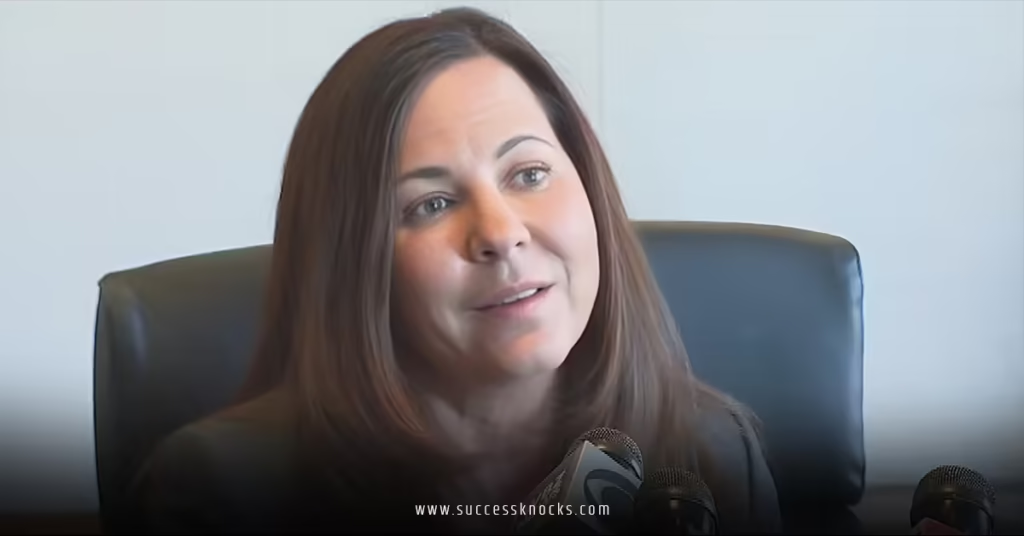
Leah Foley’s Role and Statements in the SNAP Benefits Fraud Case Massachusetts
Leah Foley didn’t just announce charges; she used the platform to call for better oversight. She criticized the state’s Department of Transitional Assistance (DTA) for what she saw as insufficient diligence, especially in vetting one defendant’s personal benefits application. “This was not a sophisticated fraud scheme,” she noted, implying lax monitoring allowed it to flourish.
Foley emphasized that SNAP fraud rates are low overall—less than 0.1% in Massachusetts—but cases like this demand action. Her office vows ongoing probes into other suspicious stores, signaling this might be the tip of the iceberg.
Political Context Surrounding the Leah Foley SNAP Benefits Fraud Case Massachusetts
The timing adds layers. With national debates on SNAP reforms, including data-sharing for fraud detection, Foley referenced states’ resistance to federal requests. Governor Maura Healey’s administration countered that they flagged suspicious activity early and support prosecutions. It’s a reminder that welfare programs often intersect with politics—everyone agrees on helping the hungry, but disagreements arise on how to safeguard funds.
Broader Implications of the Leah Foley SNAP Benefits Fraud Case Massachusetts
Why does this matter to you and me? SNAP supports millions nationwide, funded by taxpayers. When fraud occurs, it erodes trust and diverts resources from those truly in need—like families choosing between groceries and rent. This case prompts questions: How can we tighten controls without burdening legitimate users? Better tech, like chip-enabled cards or real-time monitoring, could help.
Analogously, it’s like securing your home: locks deter burglars, but overcomplicating entry frustrates residents. The Leah Foley SNAP benefits fraud case Massachusetts pushes for that smart balance.
Prevention and Future Outlook Post-Leah Foley SNAP Benefits Fraud Case Massachusetts
Moving forward, expect more scrutiny on high-volume retailers. Federal and state collaboration is key—USDA handles retailer approvals, DTA manages recipient eligibility. Enhanced audits, undercover ops, and data analytics could catch anomalies faster.
Foley stressed taxpayer money is for preventing hunger, not enriching schemers. Charges carry potential five-year prison terms and hefty fines, sending a deterrent message.
Lessons Learned from the Leah Foley SNAP Benefits Fraud Case Massachusetts
Cases like this teach us resilience in public systems. Fraud happens, but swift action restores integrity. Have you thought about how everyday programs rely on vigilance? Community tips, retailer training, and recipient education all play roles.
In Massachusetts, with over a million on SNAP, protecting the program ensures it reaches vulnerable kids, seniors, and working poor. The Leah Foley SNAP benefits fraud case Massachusetts isn’t just a prosecution—it’s a call to strengthen the net.
Community Impact in the Wake of the Leah Foley SNAP Benefits Fraud Case Massachusetts
Mattapan, a vibrant but challenged neighborhood, feels the ripple. Local stores build trust; fraud tarnishes that. Yet, busting the scheme reassures honest businesses and residents that authorities are watching.
It’s relatable: like discovering a cheat in a game you love—it stings, but fair play wins out.
Conclusion
The Leah Foley SNAP benefits fraud case Massachusetts reveals the dark side of exploiting aid programs but also highlights proactive enforcement. From tiny stores redeeming impossible amounts to Leah Foley’s firm stance on accountability, this saga reminds us why oversight matters. Ultimately, SNAP’s goal—nourishing families—must prevail over greed. By learning from this, we can fortify systems, ensure funds feed the hungry, and maintain public trust. What do you think—could stronger tech or policies prevent future schemes? Staying informed empowers us all.
FAQs
What is the Leah Foley SNAP benefits fraud case Massachusetts about?
The Leah Foley SNAP benefits fraud case Massachusetts involves federal charges against two store owners for allegedly trafficking $7 million in SNAP benefits by exchanging them for cash in small Mattapan shops.
Who is Leah Foley in the SNAP benefits fraud case Massachusetts?
Leah Foley is the U.S. Attorney for Massachusetts who announced and is prosecuting the case, emphasizing the need for better program oversight.
How much money was involved in the Leah Foley SNAP benefits fraud case Massachusetts?
Nearly $7 million in SNAP benefits were allegedly trafficked over several years in the Leah Foley SNAP benefits fraud case Massachusetts.
What penalties do the defendants face in the Leah Foley SNAP benefits fraud case Massachusetts?
Each faces one count of food stamp fraud, potentially up to five years in prison, supervised release, and a $250,000 fine.
Will there be more investigations related to the Leah Foley SNAP benefits fraud case Massachusetts?
Yes, Leah Foley indicated her office will continue probing other stores with suspicious SNAP transaction volumes.