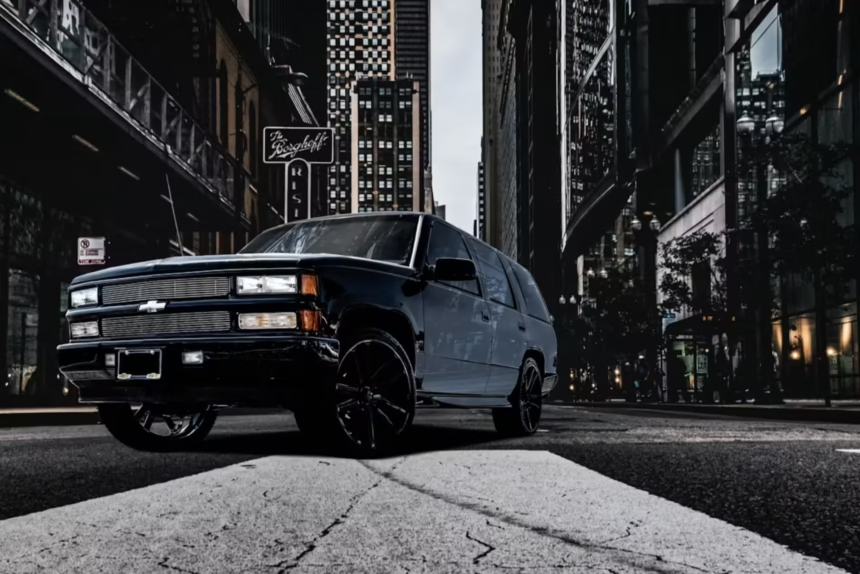
For any business that relies on transportation, vehicles are more than just a way to get from point A to B. They’re essential operational assets, mobile advertisements, and a big item on the balance sheet. Making smart automotive investments means taking a strategic approach that balances immediate needs with long-term financial health. A well-chosen vehicle or fleet can make things more efficient, improve your brand image, and directly help your bottom line.
Evaluating Vehicle Needs for Operations
Before you even look at a single vehicle, you need to thoroughly assess your operational requirements. The right vehicle perfectly fits its intended job. Start by asking critical questions about its daily use. Will it transport goods, people, or equipment? A plumbing company, for example, might need a van with custom shelving for tools and parts, while a corporate shuttle service needs a multi-passenger vehicle with comfortable seating and climate control.
Think about the typical routes and conditions your vehicles will face. A delivery service in a dense urban area will prioritize fuel efficiency and maneuverability. On the other hand, a construction firm working in rural or undeveloped areas will need durability, high ground clearance, and all-wheel drive. Make a checklist of features you absolutely need versus those that would be nice to have. This will guide your search and help you avoid overspending on unnecessary extras.
The Role of New Models in Business Growth
Investing in newer vehicle models can give you a significant competitive edge. Modern vehicles often come with advanced technology that makes them safer, more efficient, and more comfortable for drivers. Features like automatic emergency braking, blind-spot monitoring, and advanced infotainment systems can reduce accidents and keep your team connected on the road. These upgrades not only protect your employees and assets but can also lead to lower insurance premiums.
Plus, a new, clean, and modern vehicle reflects well on your business. When a client sees a well-maintained, current-model vehicle pull up, it projects an image of success and professionalism. Newer models also get better fuel economy and produce lower emissions, which can cut operational costs and appeal to environmentally conscious customers. For example, a versatile and modern SUV like the 2026 Chevy Trailblazer can handle many roles, from client transport to light equipment hauling, all while looking sharp and contemporary.
Understanding Depreciation and Resale Value
One of the highest hidden costs of owning a vehicle is depreciation, which is how much its value steadily drops over time. From the moment a new vehicle leaves the lot, its value starts to go down. For a business, understanding how car depreciation affects value is crucial for figuring out the total cost of ownership. A vehicle that costs less upfront but loses value quickly might end up being more expensive than a model that costs more but holds its value well.
Before buying, research the historical resale values for the models you’re considering. Some brands and vehicle types are known for keeping their value better than others. Trucks and commercial vans, for instance, often have strong resale markets because there’s always demand. Factoring in projected resale value helps you make a more accurate financial forecast and plan for future fleet replacements with more confidence.
Leveraging Financing for Fleet Purchases
Few small or medium-sized businesses can afford to buy a fleet of vehicles with cash. Luckily, various financing and leasing options are available to make these purchases manageable. Leasing can be a good choice for businesses that want lower monthly payments and the ability to upgrade to new models every few years. It also simplifies essential maintenance, as many lease agreements include service packages.
Buying a vehicle, often with a commercial auto loan, means you own the asset outright. This allows for unlimited mileage and customization, which is essential for many trades. Owning the vehicle also means you can take advantage of tax deductions. The IRS has specific rules for the business use of vehicles, including deductions for depreciation, fuel, and maintenance. Talk to a financial advisor to figure out which approach, leasing or buying, best fits your company’s cash flow, tax strategy, and long-term goals.
Ultimately, treating your vehicle acquisitions with the same care as any other major capital investment will secure your company’s operational future and financial stability.