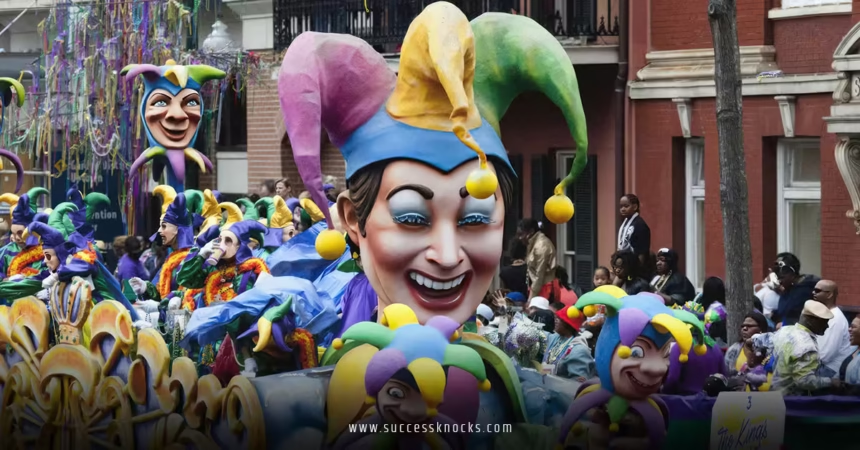
Have you ever wondered who’s really behind those massive, glittering floats that roll through New Orleans streets every Carnival season? That’s where Mardi Gras krewes come in—they’re the private social clubs, secret societies, and creative powerhouses that make the entire celebration possible. If you’re planning a trip for Mardi Gras parades New Orleans February 2027, understanding krewes is key to appreciating the magic.
Think of a krewe like a passionate community theater group crossed with a secret club and a parade production company. Each one has its own history, traditions, themes, and signature style. They don’t just throw a party—they craft an entire spectacle.
The Origins: How Krewes Began Shaping Mardi Gras
The story starts way back in the mid-1800s. Mardi Gras celebrations in New Orleans were getting rowdy—think street chaos with no real structure. In 1857, a group of businessmen formed the Mistick Krewe of Comus, the very first modern krewe. They introduced torch-lit processions, themed floats, and masked balls to bring some elegance and organization to the festivities.
From there, the idea exploded. Rex (the “King of Carnival”) arrived in 1872, establishing the iconic purple, green, and gold colors. Proteus, Momus, and others followed, creating the foundation for today’s elaborate parades. These early krewes were exclusive—often limited to elite white society—but over time, the scene diversified dramatically.
Fast-forward to the 20th century: African American groups like the Zulu Social Aid & Pleasure Club (founded 1909) flipped the script with satire and creativity. All-female krewes like Iris (1959) and Muses added fresh energy. Today, hundreds of krewes—big, small, traditional, satirical, family-oriented—roll every year.
Types of Krewes: From Historic Royals to Super-Krewes
Not all krewes are created equal. Here’s a quick breakdown:
Old-Line / Historic Krewes
These are the blue-blood originals: Comus, Rex, Proteus. They emphasize tradition, elegance, and secrecy. Rex rolls on Mardi Gras morning with the symbolic Boeuf Gras float. Membership is invitation-only, and parades feel regal.
Super-Krewes
The crowd-pleasers everyone talks about. Endymion (founded 1967), Bacchus (1968), and Orpheus (1993) go huge—massive floats, celebrity riders, thousands of members, and non-stop music. Endymion is often called the largest parade in Mardi Gras history. These roll on big weekend nights leading up to Fat Tuesday.
Cultural & Neighborhood Krewes
Zulu brings humor and coconuts. The Mardi Gras Indians (not a traditional krewe but a vital part of Carnival) showcase stunning hand-beaded suits in street processions. Walking krewes like Krewe du Vieux offer bawdy, artistic vibes in the French Quarter.
All-Female & Modern Krewes
Muses throws decorated shoes; Nyx hands out purses. Newer groups experiment with themes from pop culture to social commentary.
In Mardi Gras parades New Orleans February 2027, you’ll see this full spectrum—especially with the compact 34-day season (January 6 to February 9) packing everything into an intense burst.

Signature Throws: The Souvenirs That Make It Personal
One of the most interactive parts of any parade? The throws. Krewe members toss trinkets to the crowd—beads, doubloons (coins), cups, stuffed animals, and more. Yell “Throw me something, Mister!” and you might catch:
- Classic plastic beads (the more strands, the better your haul feels)
- Signature items like Zulu’s hand-painted coconuts (the ultimate prize)
- Muses’ glittery shoes or Nyx purses
- LED-lit goodies that glow at night
These aren’t random souvenirs—they’re bragging rights. Some people collect them for years.
How Krewes Work Behind the Scenes
Ever wonder how one krewe pulls off a parade with 30+ floats? It takes a year of planning. Members pay dues, design themes, build floats (often in secret warehouses), recruit bands, and decorate throws. Captains (masked leaders on horseback) run the show, while kings and queens reign ceremonially.
Membership varies—some require sponsorship, others are open. Many krewes double as social aid groups, helping members in need, a tradition rooted in old benevolent societies.
Why Krewes Matter for Your 2027 Experience
When you line up along St. Charles Avenue for Mardi Gras parades New Orleans February 2027, you’re not just watching floats—you’re witnessing living history. Each krewe adds its flavor: satire from Zulu, glamour from Rex, spectacle from Endymion.
The early Fat Tuesday on February 9, 2027, means parades will hit hard and fast. Weekends in late January and early February will be packed—perfect for catching multiple krewes in one trip.
Pro tip: Arrive early for prime spots (think near Napoleon Avenue on St. Charles), bring a ladder for better views (especially with kids), and respect local rules—no blocking sidewalks or throwing back items.
Final Thoughts: Dive Into the Krewe World
Mardi Gras krewes are what turn a simple pre-Lent party into one of the world’s most unique cultural events. They blend history, creativity, community, and pure joy. Whether you’re catching your first Zulu coconut or chasing Endymion’s epic scale, the krewes make every moment unforgettable.
Ready to experience it? Start planning for Mardi Gras parades New Orleans February 2027 now—book early, learn a few krewe histories, and get ready to shout for throws. Laissez les bons temps rouler!
FAQ :
1. When is Fat Tuesday during Mardi Gras parades New Orleans February 2027?
Fat Tuesday falls on Tuesday, February 9, 2027—the grand finale of the parades and celebrations.
2. How long is the Carnival season for Mardi Gras parades New Orleans February 2027?
It runs for just 34 days, starting on January 6 (Twelfth Night/King’s Day) and ending on February 9—a shorter, more intense season than usual.
3. When do the main parades happen in Mardi Gras parades New Orleans February 2027?
Most big parades roll in the first week of February, especially February 3–9, with weekends packed full of krewes like Zulu, Rex, Endymion, and Bacchus.
4. Do I need tickets for Mardi Gras parades New Orleans February 2027?
No—almost all parades are free to watch from public spots along routes like St. Charles Avenue or Canal Street. Just arrive early for a good view!
5. Why is Mardi Gras parades New Orleans February 2027 earlier than usual?
The date ties to Easter and the lunar calendar—Fat Tuesday lands early in 2027, squeezing the whole Carnival experience into a high-energy, compact window.