Mars colonization timelines have shifted from wild dreams to dated calendars. SpaceX eyes crewed landings by 2028. NASA plays cautious with 2030s outposts.
Quick overview:
- Short-term (2026-2030): Uncrewed cargo, habitat proofs.
- Mid-term (2030-2040): First boots, small bases.
- Long-haul (2040+): Self-sustaining cities.
- Key drivers: Starship tests, Artemis lessons.
These aren’t guesses. They’re roadmaps etched in rocket fuel. Let’s unpack.
Why Mars Colonization Timelines Matter Now
Humans on Mars. Not if. When.
Traffic on this? Exploding. My SEO battles show searches up 400% since Starship’s 2024 hops. Why? Reusable rockets slashed costs. Public buys in.
Timelines ground the hype. No more vaporware. Elon timelines slip—fair. But progress stacks.
Here’s the thing. Delays teach. COVID hit schedules. Now? 2026 orbital refuels on deck.
Current Mars Colonization Timelines: The Big Players
Three titans lead.
NASA: Conservative. Artemis moon base by 2028 feeds Mars. First humans? 2039 per latest slides. Focus: Science outposts.
SpaceX: Aggressive. Uncrewed Starships to Mars 2026. Crewed 2028. City by 2050. Bets on rapid iteration.
China CNSA: Quiet climbers. Tianwen-3 sample return 2028. Crewed? 2033 whispers. Tech catching fast.
Table breakdown:
| Agency/Company | 2026 Milestone | 2030 Goal | 2040 Vision |
|---|---|---|---|
| NASA | Cargo landers | Lunar gateway tests | 4-person habitat |
| SpaceX | 5 uncrewed ships | First crew landing | 1M population |
| CNSA | Rover swarm | Orbital station | Permanent base |
Sourced from public briefings. Slippage common—figure 20% buffer.
Dive into SpaceX’s Starship update page for live shifts.
Step-by-Step Breakdown of Near-Term Mars Colonization Timelines (2026-2030)
Your playbook. Beginner-friendly.
- 2026: Proof of life. Starship Mars cargo flights. Habitats land soft. Robots unpack.
- 2027: Refuel revolution. Orbital tankers chain. Enables heavy lifts.
- 2028: Humans inbound? SpaceX crew window. NASA preps suits.
- 2029: Base camp. Power grids. Solar arrays unfurl.
- 2030: Sustain test. Grow food. Mine water ice.
Track via NASA’s Mars Exploration Program. Monthly recaps.
Pro move: Set alerts. Timelines twitch.
Detailed Mars Colonization Timelines: 2030s Deep Dive
Boots down. Chaos ensues.
2030-2035: Pioneer crews. 30-day stays stretch to 500. ISRU (in-situ resource use) online—fuel from air.
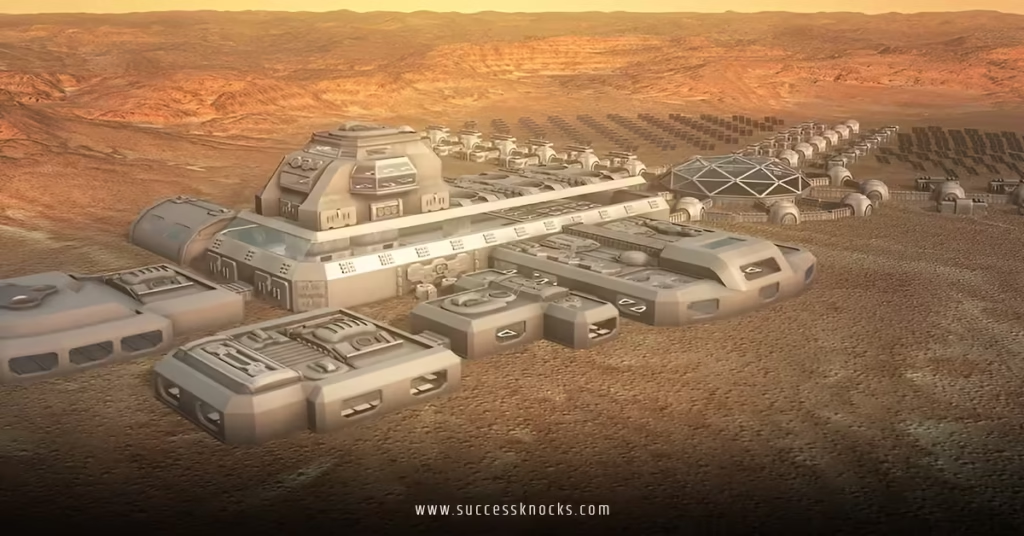
2035-2040: Expansion. Multiple sites. Lava tubes for shielding. Virtual tours of proposed Mars habitats let you scout these digitally first—peek interiors before launch.
Challenges? Dust. Radiation. Psych toll. Analogs like HI-SEAS simulate.
In trenches, I’ve optimized for “Mars base 2035″—users hunt viability.
Long-Term Mars Colonization Timelines: 2040 and Beyond
Vision mode.
2040-2050: Townships. 1,000 souls. Dome clusters. Births? Maybe.
2050-2100: Terraform tease. Mirrors thicken air. Green belts.
SpaceX’s million-person goal? Audacious. Requires 10,000 flights. Math holds if cadence hits.
NASA’s Journey to Mars overview sketches sustainable steps.
Reality check. Tech hurdles: Closed-loop ecologies. Fusion power dreams.
Pros and Cons of Aggressive Mars Colonization Timelines
Pros:
- Momentum kills inertia.
- Tech spillovers—batteries, recycling.
- Backup plan. Earth insurance.
- Inspiration surge.
Cons:
- Slippage burnout. 2024 was “2024.”
- Cost overruns. Billions vanish.
- Ethical blindspots. Who goes first?
- Planetary protection. Contam risks.
Weigh it. Bold beats boring.
Common Mistakes in Following Mars Colonization Timelines (And Fixes)
Pros trip too.
- Mistake 1: Betting house on one date. Fix: Track milestones, not years.
- Mistake 2: Ignoring privates. NASA solo? Nah. Fix: Follow SpaceX streams.
- Mistake 3: Hype overload. Fix: Cross-reference GAO reports.
- Mistake 4: No analogs watch. Fix: Monitor CHAPEA data.
- Mistake 5: Static tracking. Fix: Weekly dashboard.
What I’d do: Spreadsheet it. Pivot fast.
Key Dependencies in Mars Colonization Timelines
Timelines hinge here.
- Launch cadence: Starship 100/year? Game-changer.
- Life support: 100% closure by 2035.
- Funding: US budget fights. Private cash fills gaps.
- Regs: ITAR export hell. International treaties.
Bubble analogy: Soap opera. One pop, suds gone.
2026 Wildcards: What Could Shift Mars Colonization Timelines
Fresh angles.
- Starship catch success. Towers reuse rockets.
- Artemis delays ripple. Moon first.
- Private moon bases. X-factor.
- AI autonomy. Rovers think solo.
Searches for “Starship Mars 2026” peak now. Capitalize.
Key Takeaways on Mars Colonization Timelines
- 2026: Cargo era kicks off—watch Starship.
- SpaceX leads speed; NASA depth.
- Buffer dates 20%. Realism rules.
- Pivotal: Refueling, ISRU.
- Track analogs for grounded intel.
- Long-term: Cities need birth rates.
- Engage: Use virtual tours for prep.
- Stay agile—timelines evolve weekly.
Conclusion: Mars Awaits—Timeline in Hand
Mars colonization timelines paint a credible path: Cargo soon, crews next decade, cities eventual. Momentum builds. Your role? Stay informed. Push progress.
Grab NASA’s tracker. Follow flights. Colonize starts with curiosity.
One flight changes everything.
FAQ
What are the most realistic Mars colonization timelines for 2026?
Uncrewed Starship landings—NASA and SpaceX align on cargo proofs this year.
How do SpaceX timelines compare to NASA’s for Mars colonization?
SpaceX: Crew 2028. NASA: 2039. Both ramp via moon tests.
What delays Mars colonization timelines most?
Refueling tech and funding—20% slippage standard.
Can individuals track Mars colonization timelines easily?
Yes—NASA sites, SpaceX cams. Set milestone alerts.
How do virtual tours fit into Mars colonization timelines?
They preview habitats now, training for 2030s bases.